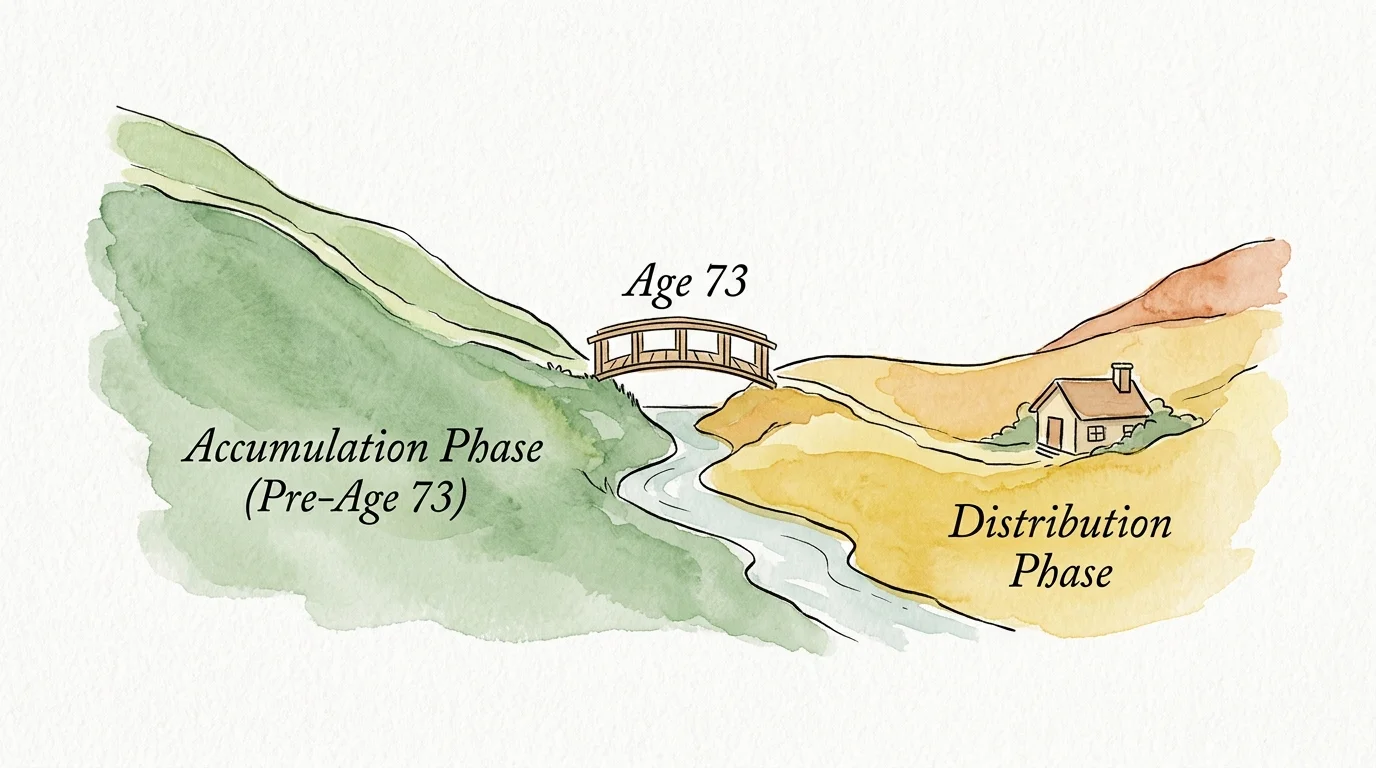
Turning 73 marks a dramatic shift in your personal finance journey, transforming your retirement strategy from building wealth to managing mandatory withdrawals. Under federal tax law, reaching this milestone unlocks your initial Required Minimum Distribution (RMD) obligation, forcing you to pull taxable funds from tax-deferred accounts like Traditional IRAs and 401(k)s. Navigating these rules successfully requires proactive planning so you can preserve your nest egg, lower your overall tax burden, and stretch your monthly cash flow without compromising your standard of living. By understanding how new tax updates impact your savings this year, you can turn complex government mandates into an actionable blueprint for lifelong financial stability.
The New Financial Landscape at Age 73
Reaching age 73 brings mandatory retirement distribution rules into full force across your investment portfolio. Under the provisions of the SECURE 2.0 Act, age 73 serves as the official starting age for mandatory withdrawals until 2033, when the threshold increases to 75. For middle-income households striving to stretch paychecks and maintain quality of life, this rule fundamentally changes how you manage monthly cash flow. Data compiled by the Federal Reserve Board shows that a substantial majority of retirement savings among older Americans resides in tax-deferred vehicles rather than taxable liquid accounts. When you turn 73, federal law requires you to start systematically withdrawing these accumulated funds so the government can collect long-deferred income taxes.
At the exact same time you reach age 73, your Social Security benefit options reach a firm plateau. Delayed retirement credits stop accumulating once you reach age 70, meaning your monthly benefit checks from the Social Security Administration are now completely capped. Because your baseline guaranteed income cannot grow any further through delayed claiming, mastering the timing and taxation of your retirement account distributions becomes your primary tool for managing annual tax exposure and protecting household wealth.
Decoding Your Required Minimum Distributions
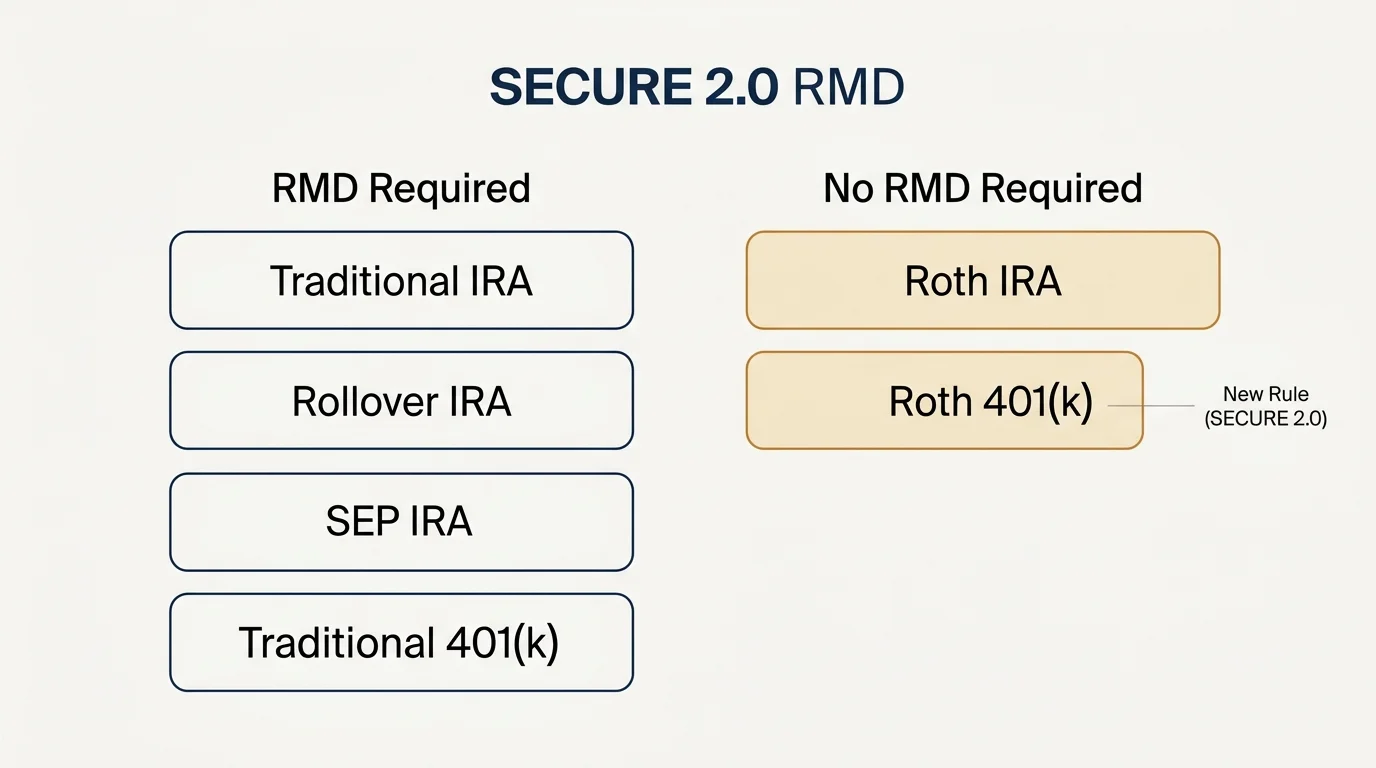
Understanding exactly which retirement accounts trigger required distributions helps you avoid costly administrative oversights. Mandatory distribution rules apply to Traditional IRAs, rollover IRAs, SEP IRAs, SIMPLE IRAs, standard 401(k) plans, and 403(b) tax-sheltered annuities. However, major regulatory revisions have introduced valuable flexibility for specific retirement plan holders. Effective since tax year 2024 under SECURE 2.0, designated employer Roth accounts—including Roth 401(k) and Roth 403(b) plans—no longer require lifetime distributions during the account owner’s lifetime. This important rule change brings workplace Roth plans into alignment with Traditional Roth IRAs, allowing your tax-free employer savings to compound undisturbed throughout your lifetime.
Active employees turning 73 can also leverage a distinct statutory exemption known as the still-working exception. Provided you do not own more than five percent of the business sponsoring your workplace plan, you can delay taking mandatory distributions from your active employer 401(k) or 403(b) until April 1 of the calendar year following the year you officially retire. Keep in mind that this exception applies exclusively to your active employer plan; it does not excuse mandatory withdrawals from personal Traditional IRAs or former workplace accounts left behind at previous employers.
Navigating the First-Year Grace Period and the Double-Tax Trap
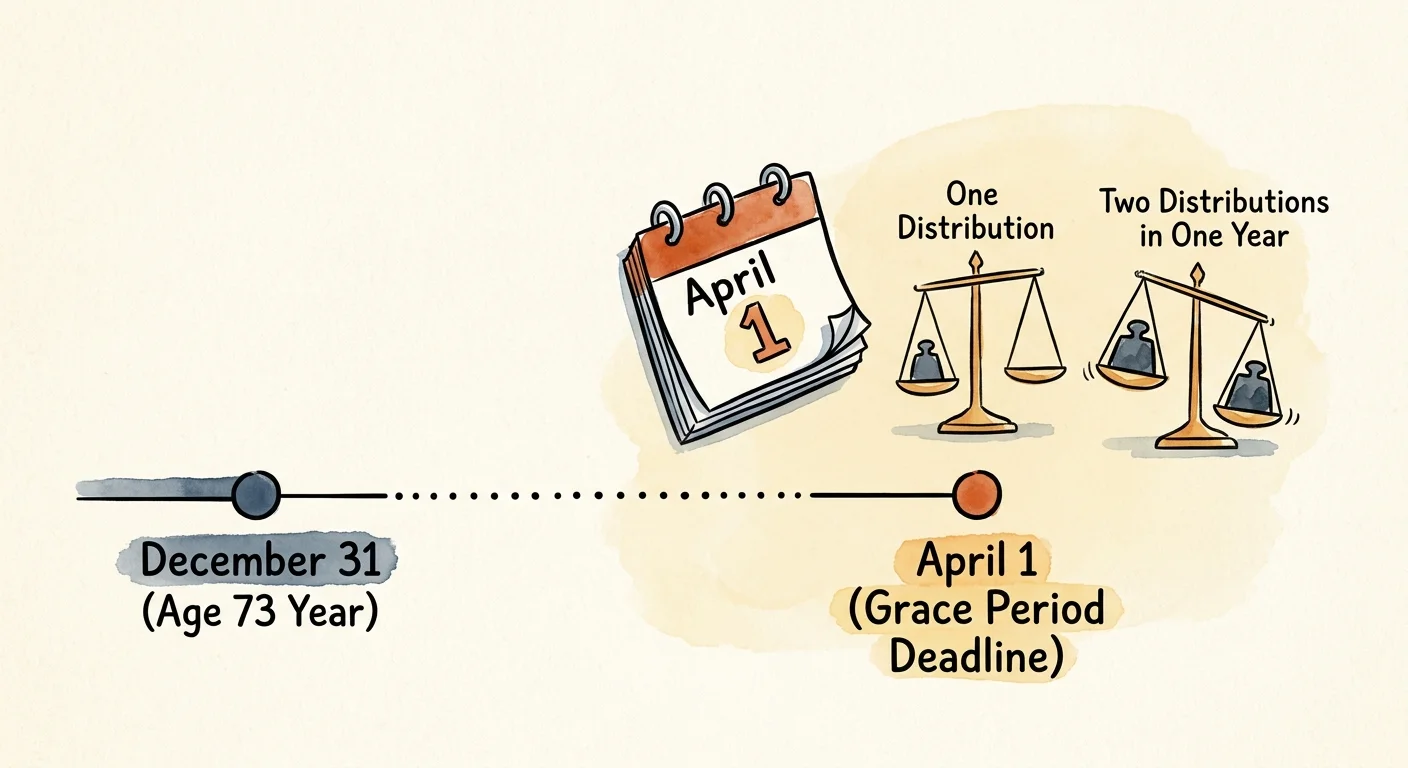
The tax code provides a unique timing option during the exact calendar year you turn 73, but taking advantage of this extension requires careful consideration. Federal rules grant you until April 1 of the calendar year following the year you turn 73 to execute your first required minimum distribution. For example, if you reach age 73 during this calendar year, you have the legal right to postpone your initial distribution until early next spring. Postponing your payout might seem appealing if you prefer extra time to organize your accounts or want to defer your initial tax bill.
However, delaying your initial withdrawal creates a notorious tax trap that frequently catches middle-income retirees off guard. If you choose to push your first distribution into the following calendar year, you must take two complete distributions within that single twelve-month tax window—your delayed initial payment by April 1 and your standard second payment by December 31. Stacking two full distributions into one tax year artificially inflates your adjusted gross income; this sudden income surge can push you into a significantly higher federal marginal tax bracket, trigger elevated Medicare Part B and Part D monthly premiums through Income-Related Monthly Adjustment Amounts, and subject a higher percentage of your Social Security payments to income tax. Taking your initial distribution by December 31 of the year you turn 73 usually maintains a lower, far more consistent tax bill.
Strategic Pillars to Optimize Cash Flow and Lower Taxes
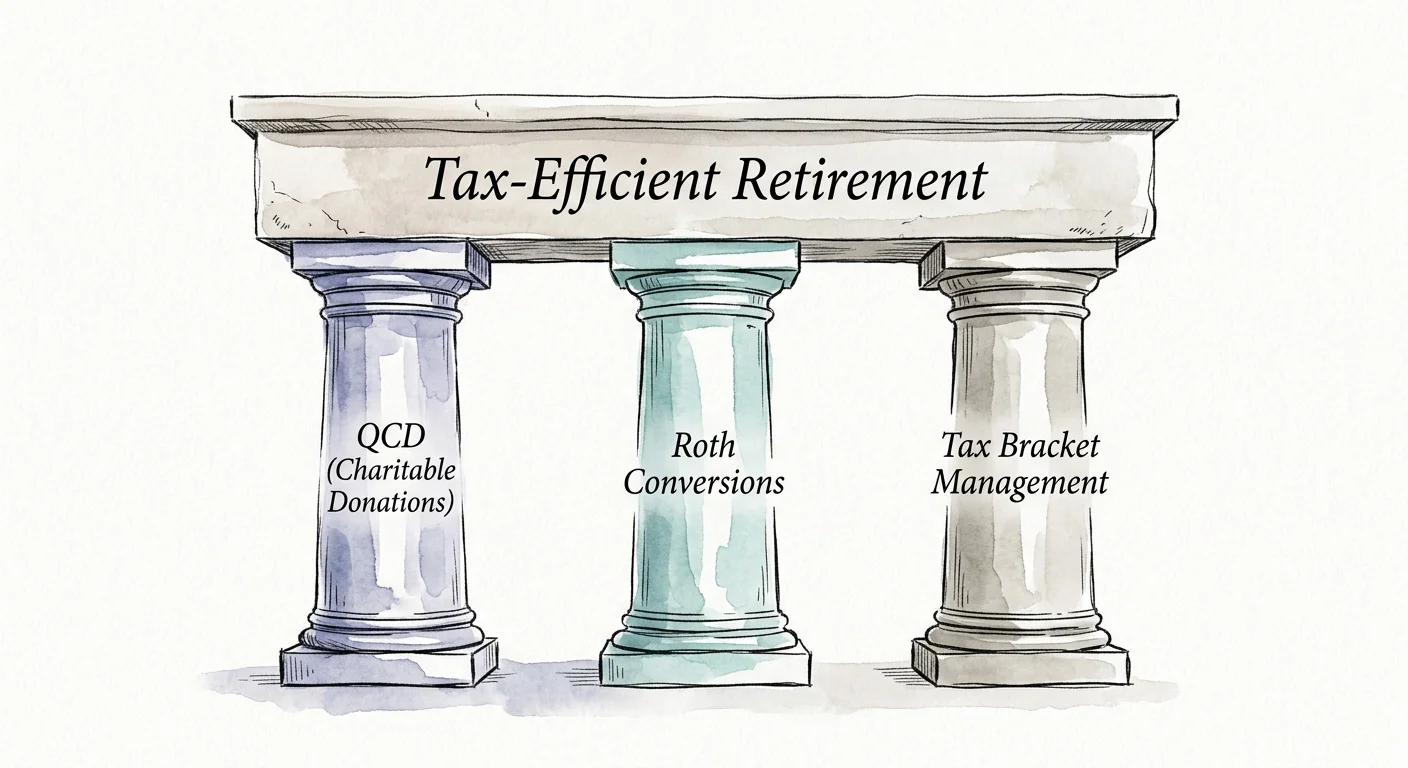
Managing your mandatory withdrawals successfully requires pairing tax-minimization techniques with thoughtful cash-flow management. The first major strategy pillar centers on Qualified Charitable Distributions (QCDs). If you regularly give to qualified charities, directing funds straight from your Traditional IRA to eligible non-profit organizations offers an exceptional tax advantage. Under federal tax law, a Qualified Charitable Distribution lets you transfer funds directly from your IRA custodian to a qualified non-profit, satisfying all or part of your mandatory distribution requirement without adding a single dollar to your adjusted gross income. You can review detailed criteria on the Internal Revenue Service tax guidelines platform.
Tax law sets the individual Qualified Charitable Distribution cap at $111,000 for tax year 2026, building upon the $108,000 threshold established in 2025. Married couples filing jointly where each spouse owns separate IRAs can donate up to $222,000 combined directly to eligible charities. Additionally, taxpayers can utilize a one-time statutory QCD allowance capped at $55,000 in 2026 to fund split-interest entities such as Charitable Gift Annuities or Charitable Remainder Trusts. Utilizing charitable distributions satisfies your required distribution math while keeping your taxable income low, helping protect your eligibility for various tax credits and lower healthcare costs.
The second strategy pillar focuses on systematic cash-flow integration through structured budget audits. Rather than viewing mandatory distributions as extra money to spend randomly, integrate these payouts into your comprehensive budget. Map out your fixed monthly living expenses alongside your guaranteed Social Security income to determine where mandatory distributions fit best. You can direct net distribution proceeds into high-yield savings accounts, transfer them into taxable investment accounts to maintain growth, or use them to pay down high-interest debt liabilities.
The third strategy pillar involves protecting your primary investment principal against market volatility. You must carefully decide which specific assets inside your tax-deferred accounts will be sold to generate cash for your distributions. Selling equity funds during market downturns to meet distribution deadlines can permanently destroy wealth; maintaining a dedicated cash reserve or short-term fixed-income bucket inside your tax-deferred accounts allows you to fulfill mandatory distribution rules smoothly without selling stocks during market dips.

Real-World Insights from Financial Experts
Professional financial planners and behavioral economists point out that turning 73 requires an essential mental transition from wealth accumulation to systematic decumulation. Certified Financial Planners frequently note that middle-income retirees experience significant stress when forced to take account distributions because withdrawing principal feels like compromising their financial safety net. Experts emphasize that taking a required distribution does not mean you are forced to spend those dollars on everyday living expenses. Moving money out of a tax-deferred shelter into a high-yielding taxable savings or brokerage account keeps your principal working actively for your future security.
Consumer guidance from the Consumer Financial Protection Bureau underscores the value of protecting senior financial assets from unnecessary fees and aggressive product pitches during milestone transition years. Financial advisors strongly recommend setting up automated recurring distribution plans with your financial institution. Automating monthly or quarterly withdrawals spreads tax withholdings evenly across the year, smooths out regular bank balances, and eliminates the emotional burden of processing a single stressful year-end transaction.
Action Lab: Walking Through a Real-World Calculation
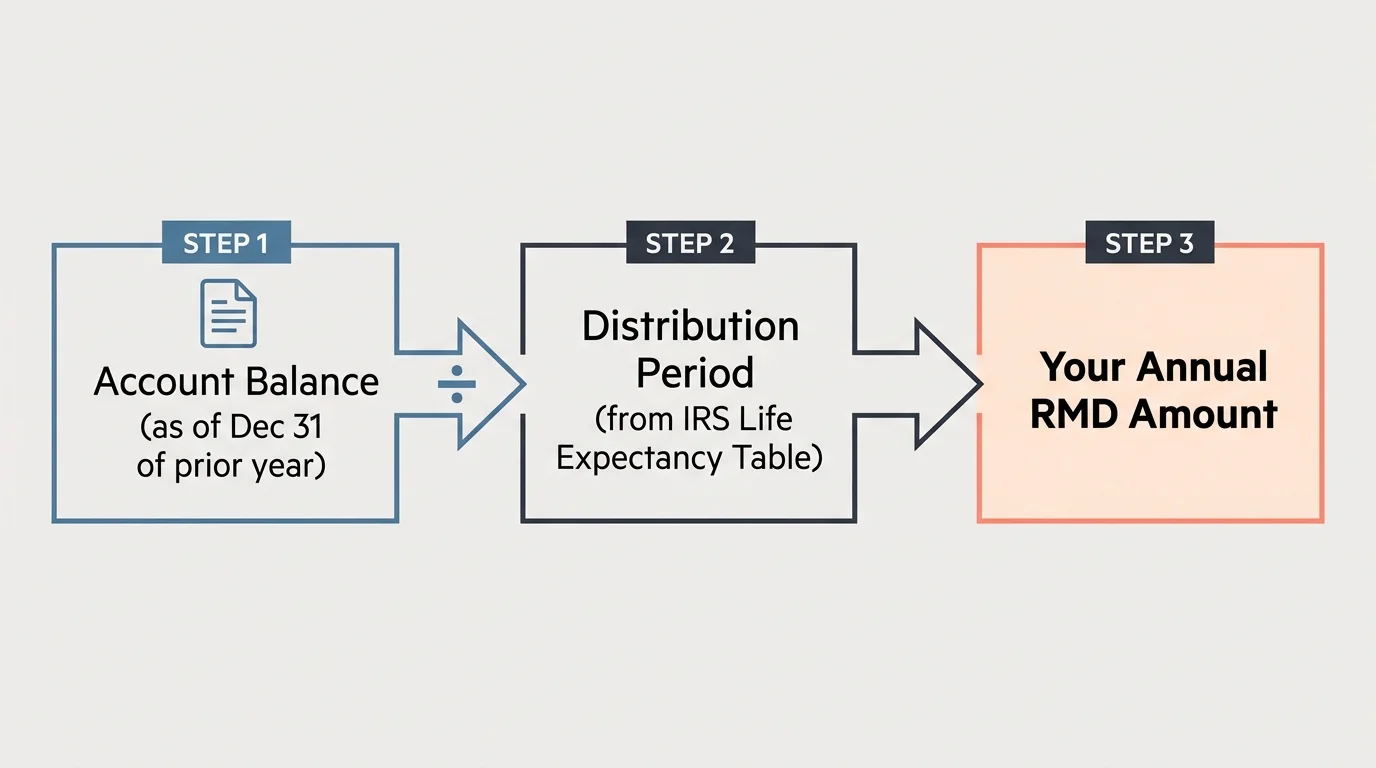
Examining a realistic financial scenario demonstrates how required distribution calculations operate in everyday life. Consider a hypothetical retiree turning 73 this year who holds a combined total of $400,000 across Traditional IRAs and rollover 401(k) accounts as of December 31 of the previous year. To determine the required distribution amount, federal regulations require using the official IRS Uniform Lifetime Table, which specifies a distribution period factor of 26.5 for individuals turning 73.
Dividing the $400,000 account total by the 26.5 factor results in a mandatory first-year distribution of approximately $15,094. This calculation dictates that you must move $15,094 out of tax-deferred status before your applicable deadline. If you reside in the 12% or 22% federal tax bracket, your account custodian can automatically withhold estimated federal and state taxes from the withdrawal, depositing the remaining net balance into your personal bank account. If you do not require these post-tax funds for immediate daily expenses, you can immediately deposit them into an automated index fund or high-yield savings vehicle, ensuring your wealth continues compounding for long-term protection.

Guardrails and Pitfalls to Avoid
Slipping up on required distribution regulations can lead to substantial financial penalties, though recent legislative changes have made the rules less punishing. Historically, failing to take a full required distribution incurred a severe 50% federal excise penalty on the unwithdrawn amount. Under SECURE 2.0, Congress reduced this penalty down to 25%. Furthermore, if you correct the error promptly and file IRS Form 5329 within a designated correction window, the excise penalty drops further to 10%. While lower penalties offer welcome relief, maintaining automated calendar reminders remains the best defense against lost retirement income.
Another frequent error involves combining distribution requirements across incompatible account types. While the IRS allows you to calculate the total required distribution for all your Traditional IRAs and withdraw the combined amount from a single Traditional IRA, you cannot aggregate accounts across different plan types. Required distributions for 401(k) or 403(b) workplace plans must be calculated and distributed separately from each individual employer plan. Treating IRA and 401(k) distribution totals as interchangeable leads to unfulfilled workplace plan requirements and triggers unnecessary tax penalties.
Frequently Asked Questions About Turning 73
Can I take my required distribution in monthly installments instead of a single lump sum?
Yes, you can establish structured installment payments throughout the year. Most financial institutions allow you to set up automated monthly or quarterly withdrawals directly into your checking account. Spreading distributions across twelve months provides predictable cash flow, simplifies household budgeting, and eliminates the stress of managing a single large transaction at the end of the year.
What happens if I continue working past age 73?
If you remain actively employed past age 73 and do not own more than five percent of the business sponsoring your plan, you can defer required distributions from your current employer 401(k) or 403(b) account until April 1 following the year you retire. However, this exception applies only to your active workplace plan and does not defer distributions required from Traditional IRAs or previous employer plans.
Do employer Roth accounts require mandatory distributions when I turn 73?
No, employer-sponsored Roth accounts no longer require lifetime minimum distributions. Under SECURE 2.0 provisions effective starting in tax year 2024, designated Roth 401(k) and Roth 403(b) accounts are fully exempt from mandatory lifetime distributions during the owner’s life, granting them the exact same tax-free growth advantages as traditional Roth IRAs.
How do Qualified Charitable Distributions count toward my required minimum distribution?
A Qualified Charitable Distribution counts dollar-for-dollar toward fulfilling your annual distribution requirement up to legal annual limits. Because the funds transfer directly from your IRA custodian to a qualified charity, the distribution fulfills your required withdrawal obligation without increasing your adjusted gross income or raising your overall tax liability.
Taking Control of Your Financial Future
Turning 73 is a major milestone that highlights decades of hard work and disciplined saving. While adapting to required minimum distributions and evolving tax laws demands initial effort, executing a clear strategy puts you firmly in command of your household budget. Review your current account balances, evaluate your upcoming tax bracket, and decide whether systematic monthly transfers or tax-free charitable gifts best serve your goals. Taking proactive charge of your distribution plan today ensures your retirement dollars work efficiently to protect your financial independence and ongoing quality of life.