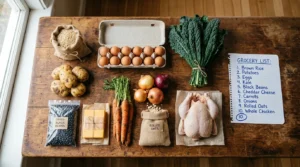
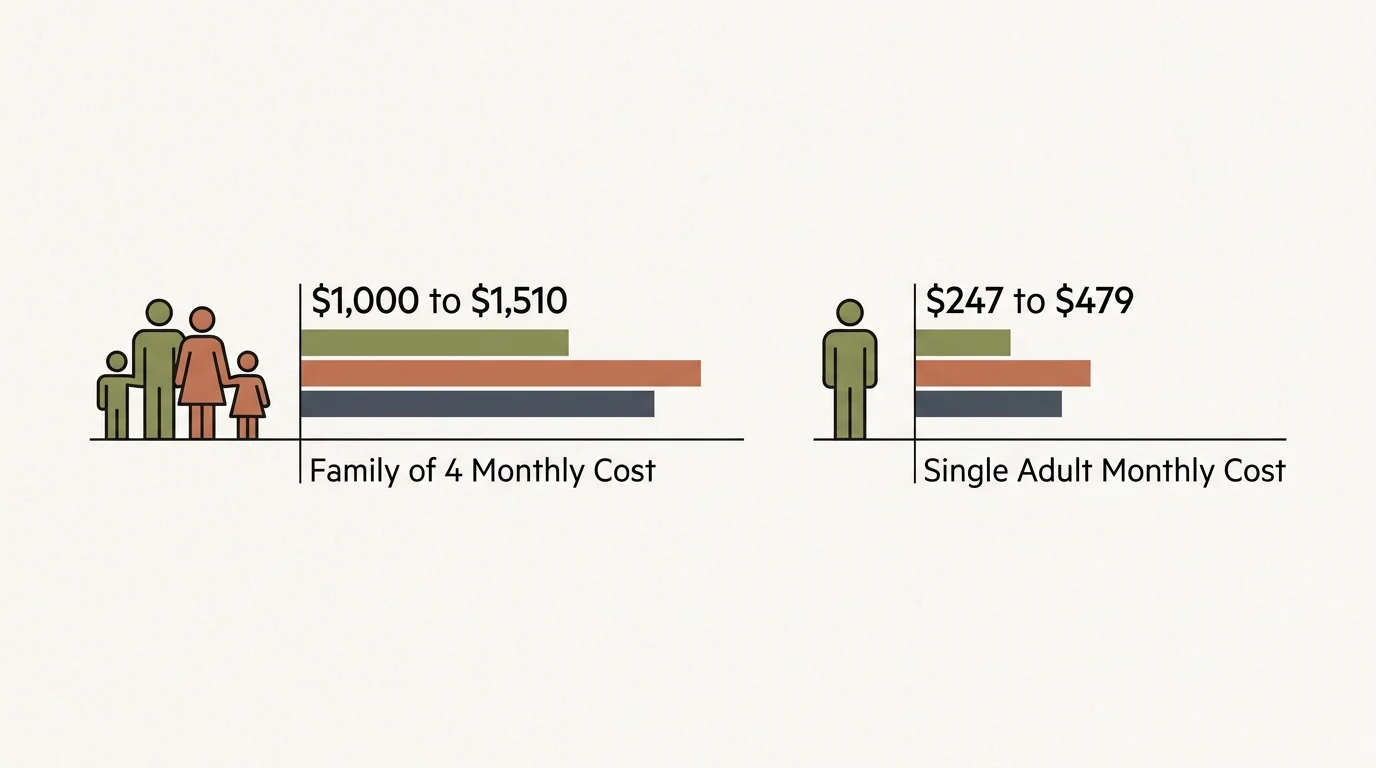
Slashing your monthly food spend does not require clipping dozens of paper vouchers or scrolling endlessly through digital coupon apps. You can trim hundreds of dollars from your grocery bill every month simply by altering how you plan meals, navigate store aisles, and manage your home pantry. Recent benchmarks show that a typical family of four spends between $1,000 and $1,510 each month on food at home; this makes grocery spending one of the largest flexible expenses in your household budget. By making a few strategic adjustments to your shopping habits, you can protect your household balance sheet without sacrificing fresh ingredients or eating uninspired meals every night.
The Real Cost of Today’s Grocery Basket
Navigating supermarket aisles has become a major source of financial friction for middle-income households. According to official USDA Cost of Food Reports, the monthly grocery expenditure for a reference family of four ranges from $1,000 to $1,028 on a basic plan, rising up to $1,510 for a moderate plan. Single adults spend between $247 and $479 monthly. While Bureau of Labor Statistics CPI tracking indicates grocery inflation has stabilized near 2.3% to 2.4% annually, baseline food prices remain elevated.
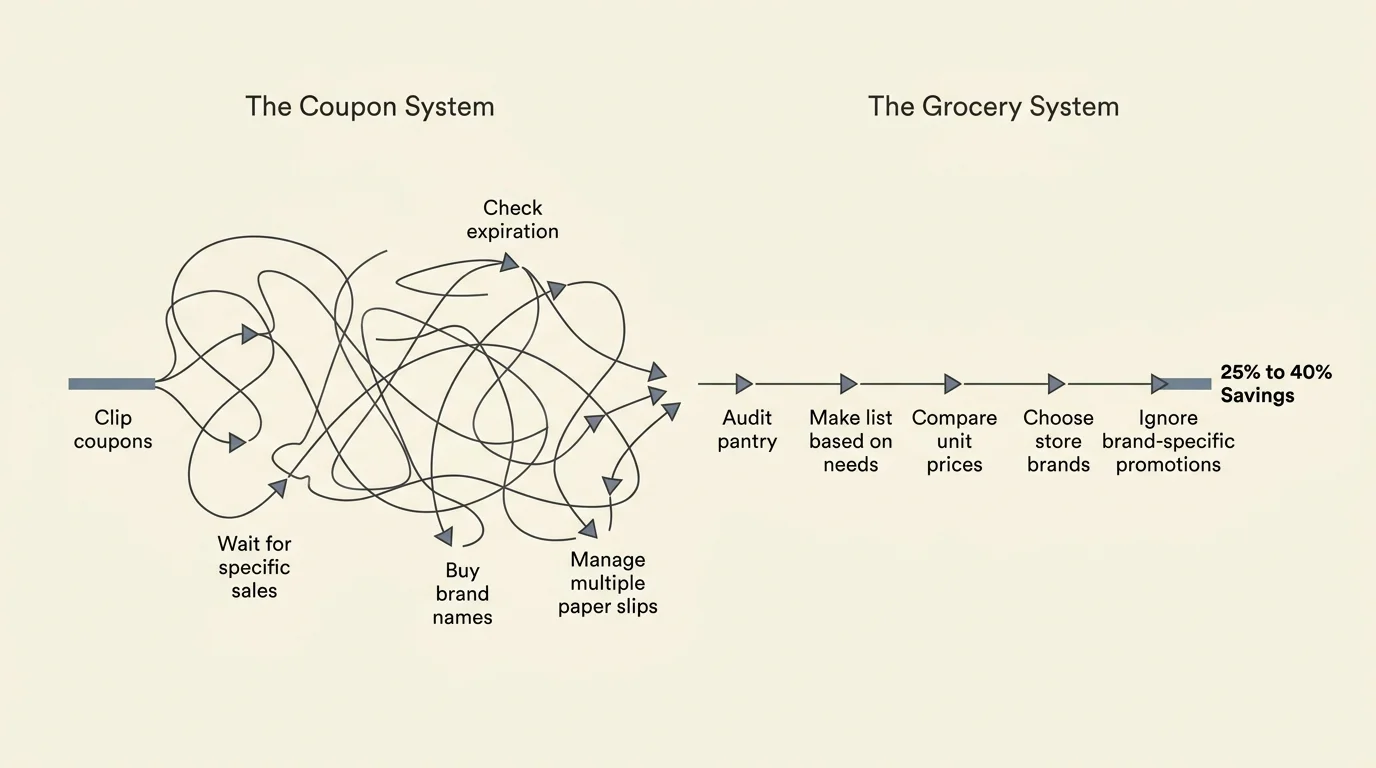
Attempting to offset high food prices through couponing often yields meager returns for the time invested; managing digital retailer applications and paper flyers takes hours busy families simply do not have. Structural changes to how you shop, store, and cook yield far greater savings—delivering continuous relief to your bottom line without ongoing administrative effort.
10 Proven Strategies to Lower Your Grocery Bill
1. Build a Reverse Meal Plan Around Existing Ingredients
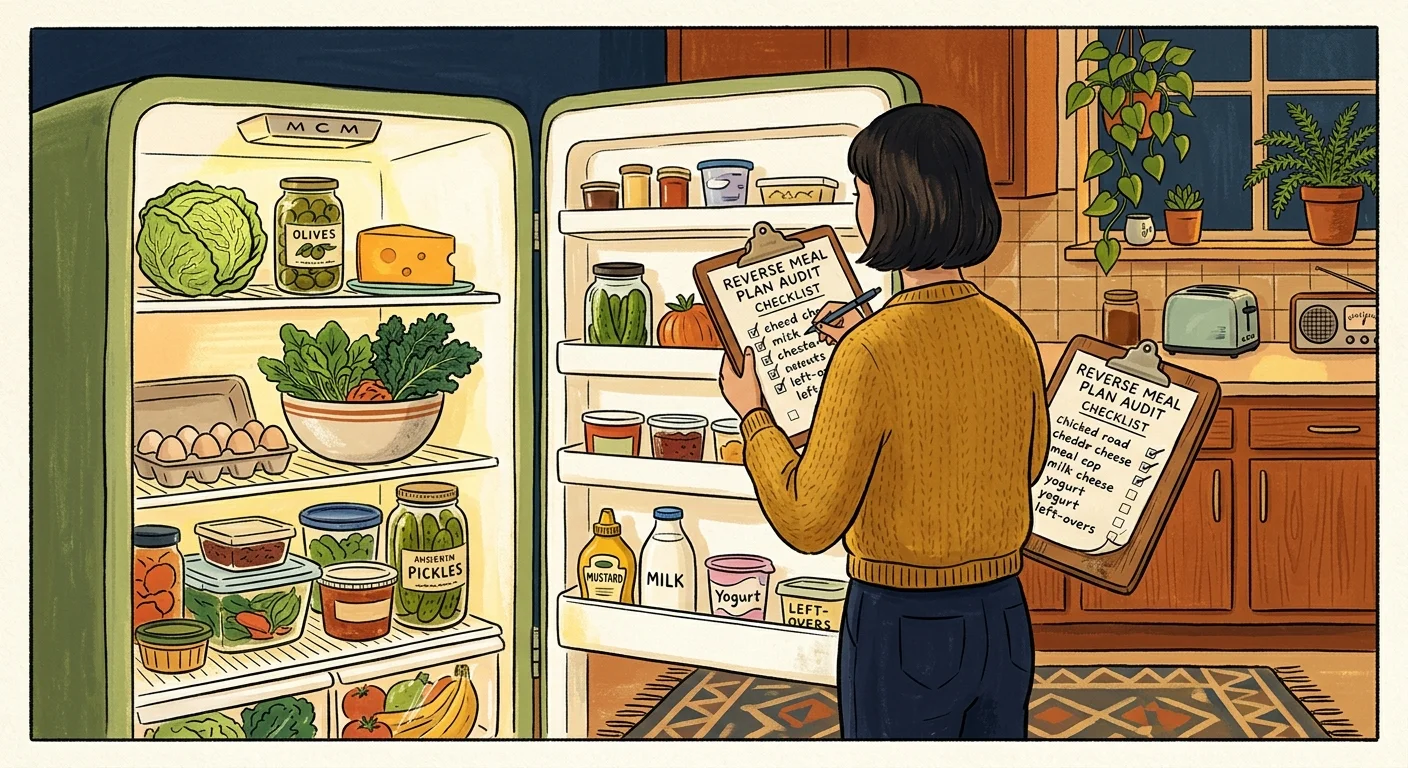
Traditional meal planning starts with choosing recipes online and writing a shopping list based on what those recipes require—a process that often leads to buying specialized ingredients that sit half-used in your pantry. A reverse meal plan starts in your own kitchen; you audit your freezer, refrigerator, and pantry first to see what core ingredients you already own. Build your weekly menu around those items, purchasing only minor fresh ingredients to complete meals. Research published in Resources, Conservation and Recycling indicates that structured meal planning reduces household food waste by 27% to 33%.
2. Switch to Store Brands and Private Labels
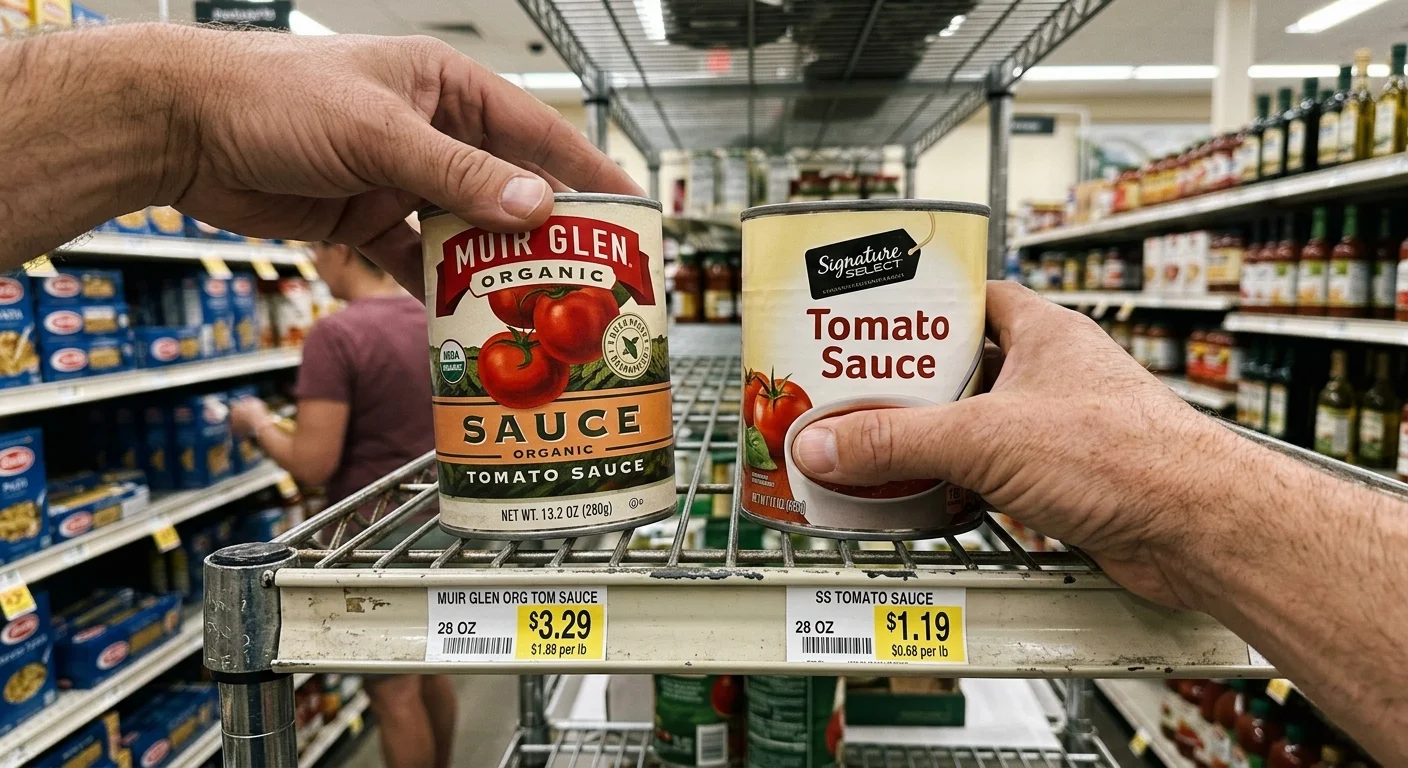
Bypassing national brand names in favor of store labels is one of the fastest ways to trim checkout costs without altering your lifestyle. Supermarket chains partner with top-tier food processors to produce private-label goods, ensuring equivalent quality and safety standards. Data from the Private Label Manufacturers Association shows that buying store brands over national brand equivalents saves consumers 25% to 40% on average across packaged goods. Swapping name-brand staples—such as canned tomatoes, pasta, cereal, and dairy—for store labels instantly lowers your weekly checkout total.
3. Calculate the Unit Price, Not the Shelf Price
Retail packaging can be visually deceptive, as food manufacturers routinely resize boxes or reduce product volume without altering shelf prices. To get the best value, ignore the large sticker price on the front of the shelf and examine the unit price displayed in small print. The unit price calculates the cost per ounce, pound, or gram; comparing unit prices often reveals that larger family sizes are not always cheaper than smaller items on sale. Focusing on unit pricing protects your wallet from subtle shrinkflation tactics.
4. Shift Your Protein Mix Toward Plant Staples
Animal proteins represent one of the single most expensive categories on any grocery receipt. You do not need to adopt a vegan diet to see savings; simply swapping animal protein for plant-based staples once or twice a week makes a significant difference. Ingredients like lentils, black beans, chickpeas, and eggs offer high nutritional value at a fraction of meat prices. You can also blend ground meat with cooked brown lentils or finely chopped mushrooms—stretching your meat portions while adding dietary fiber and retaining flavor.
5. Shop the Perimeter and the Frozen Aisle
Supermarkets design their floor layouts to push high-margin processed foods in the center aisles. Focus your shopping on the store perimeter, where fresh whole foods like produce, lean meats, and dairy are located. When fresh produce costs spike out of season, turn to the frozen section; frozen fruits and vegetables are flash-frozen at peak ripeness, preserving nutrient content while costing 20% to 30% less per pound than out-of-season fresh options. This simple shift ensures high nutritional value while eliminating food spoilage.
6. Bypass Eye-Level Retail Marketing Traps
Supermarket shelves are carefully managed selling environments. Brand manufacturers pay premium slotting fees to place their products at eye level—often called the buy level—because shoppers naturally select items that are easiest to reach. Lower-cost options, including generic store brands and bulk items, sit on top or bottom shelves. When walking down any aisle, deliberately scan from top to bottom; reaching down or looking up uncovers higher-value items that cost substantially less per unit.
7. Limit Your Supermarket Trips to Once per Week
Every store visit exposes you to thousands of marketing triggers designed to induce extra purchases. Mid-week quick runs to pick up milk or bread frequently expand into unnecessary checkout totals as impulse purchases accumulate in your basket. Restricting your food shopping to a single, well-planned trip per week imposes financial discipline. If you run out of an ingredient mid-week, substitute it with an item already in your pantry instead of visiting the store.
8. Align Fresh Purchases with Seasonal Cycles
Buying fresh produce out of season requires retailers to import items from thousands of miles away, passing transportation and storage costs directly to you. In-season produce is abundant, flavorful, and remarkably inexpensive. During summer, focus on berries, tomatoes, and squash; during autumn and winter, emphasize root vegetables, apples, and citrus fruits. Adapting your meal plan to seasonal harvests keeps produce costs low while maximizing flavor and nutritional value.
9. Slash Food Waste through Kitchen Management
Throwing away spoiled food wastes a substantial portion of your household income. According to Environmental Protection Agency food waste tracking, the average U.S. consumer loses $728 annually to wasted food—which equals $2,913 per year for a family of four, or roughly $56 weekly. Prevent this loss by storing leafy greens with paper towels, freezing surplus herbs, and creating an eat first bin in your refrigerator for perishables near expiration.
10. Use Cash-Back Tools and Rewards Mindfully
Automate your grocery savings without spending hours searching for discounts. Use a cash-back credit card that offers 3% to 6% rewards on supermarket purchases, and pair it with store loyalty programs that automatically apply digital discounts at checkout. To explore practical personal finance tools and budgeting frameworks that support your household strategy, review the financial resources hosted by the Consumer Financial Protection Bureau.
Behavioral Economics: Why Systems Beat Coupons
Understanding why traditional money-saving techniques fail comes down to human psychology. Couponing creates constant cognitive friction and demands ongoing organizational effort. Behavioral economists note that when savings methods rely on continuous willpower, consumers inevitably experience decision fatigue and return to convenience spending; structural adjustments, by contrast, create frictionless routines that save money automatically.
Financial planners emphasize that sustainable budgeting requires addressing the root causes of high food spend rather than managing symptoms. Couponing treats symptoms, whereas addressing unmanaged food waste, impulse buys, and store-brand avoidance cuts spending permanently without creating extra administrative work for busy households.
Action Lab: A Step-by-Step Grocery Budget Tweak
Consider a family of four currently spending $1,200 per month on groceries. Rather than clipping coupons, they implement three structural tweaks to their monthly routine. First, they purchase store-brand alternatives for half of their packaged groceries, saving 30% on that $600 portion to cut $180 off their bill. Second, they adopt reverse meal planning and improved produce storage, reducing food waste by half to save an additional $115 per month. Third, they run all grocery purchases through a 3% cash-back credit card, earning $27 monthly.
These three simple habits reduce their effective monthly spend from $1,200 down to $878. That delivers an immediate monthly savings of $322, placing over $3,800 back into their family savings account every year without sacrificing food quality or eating monotonous meals.
Common Pitfalls and How to Avoid Them
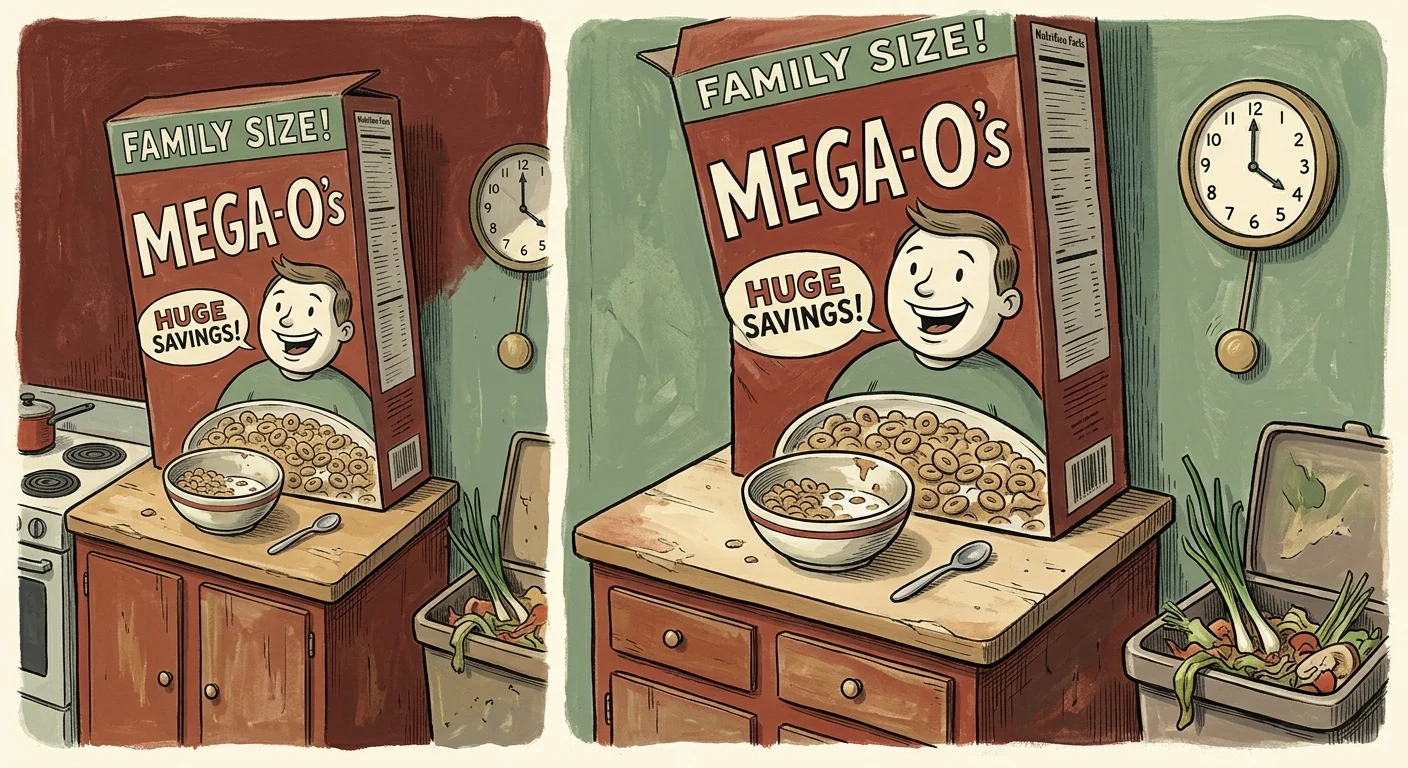
While optimizing your grocery shopping delivers big savings, watch out for common spending traps. One major pitfall is buying perishable items in bulk simply because the unit price looks low. Purchasing five pounds of fresh greens yields zero savings if half rots before you can eat it; reserve bulk purchases for non-perishables or items you can easily freeze.
Another pitfall is falling for multi-buy marketing signs like 10 for $10. In most stores, single items sell for $1 each regardless of quantity purchased. Always read shelf tags carefully to avoid buying extra inventory you do not need, and avoid shopping when tired or hungry.
Frequently Asked Questions
Is buying in bulk always cheaper than standard sizes?
Bulk buying is cheaper per unit, but it only saves money if you consume everything before it spoils. Bulk buying works best for non-perishables like rice, dried beans, and paper products. Buying perishable items in bulk often leads to food waste, which eliminates any initial savings.
Are store brands lower in quality than brand-name items?
Store-brand items usually equal or exceed national brand quality. Private-label products are often manufactured in the same facilities using identical ingredients. Brand names cost more because consumers pay for expensive national marketing and advertising campaigns.
How can I save money on groceries without time for meal planning?
Focus on simple batch cooking and basic kitchen inventory. Prepare large batches of versatile staples like brown rice, roasted chicken, or beans on weekends, then combine them with seasonal produce throughout the week to maintain flexibility while avoiding takeaway meals.
What is the best way to keep fresh produce from spoiling?
Keep delicate greens dry by wrapping them in paper towels, store unwashed berries in airtight glass jars, and separate ethylene-producing fruits like bananas from sensitive leafy greens. Freeze aging produce immediately for future use in soups and smoothies.
Take Control of Your Grocery Expenses Today
Stretching your household food budget does not require extreme sacrifice or endless coupon clipping. By embracing store brands, tracking unit pricing, curbing food waste, and shopping with clear intention, you build an automated framework that saves real money every week. Choose two or three strategies to implement on your next trip, and watch your monthly food expenses drop dramatically.