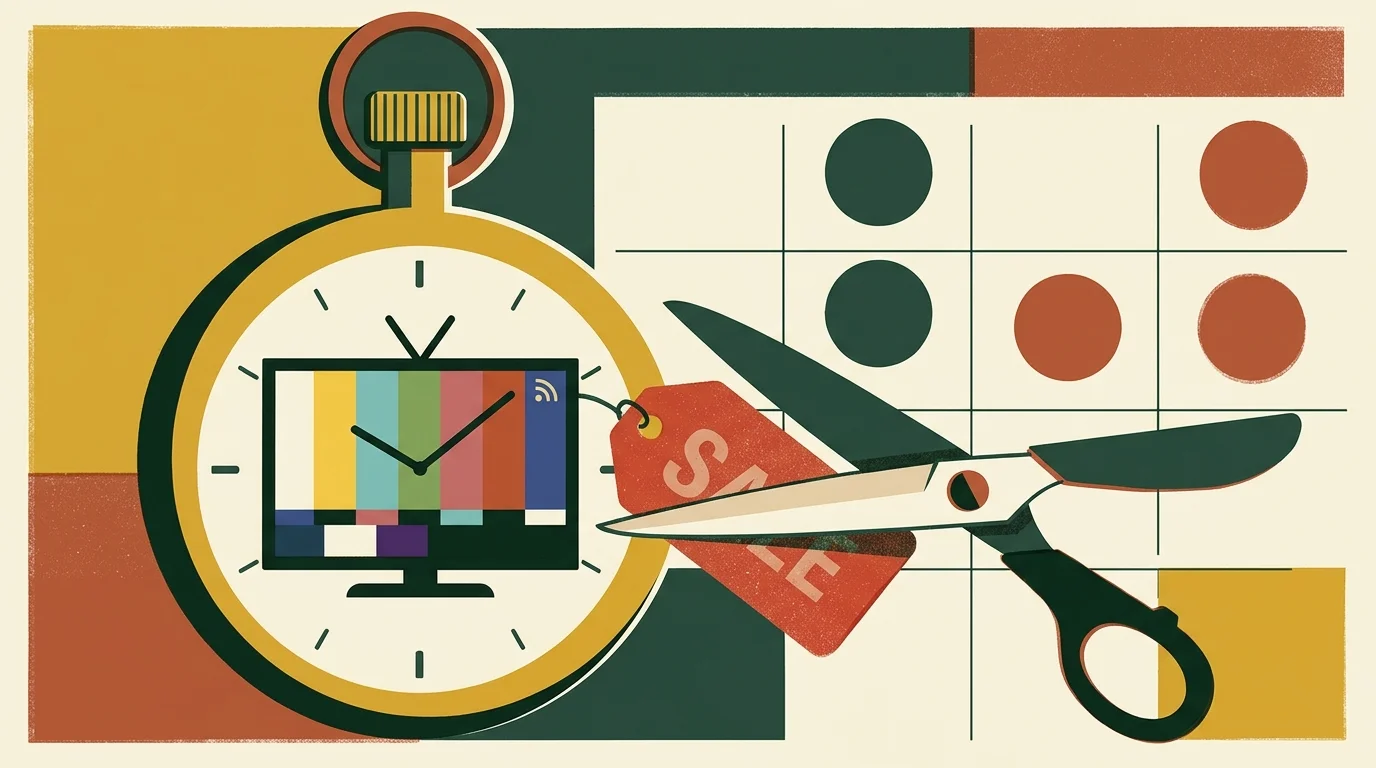
Timing your major home purchases around predictable retail cycles transforms a stressful household expense into an empowering financial win, saving you between 20% and 50% on essential equipment. When a refrigerator fails or a washing machine stops spinning, panic often drives families to pay full retail price; however, strategic patience allows you to leverage holiday promotional periods and manufacturer floor-model rollouts to protect your hard-earned paycheck. By aligning your household budget with annual clearance windows, you preserve your emergency fund while maintaining a high quality of living. This guide breaks down the optimal calendar buying opportunities and actionable strategies so you can upgrade your home with total confidence.
The Economic Reality of Appliance Shopping
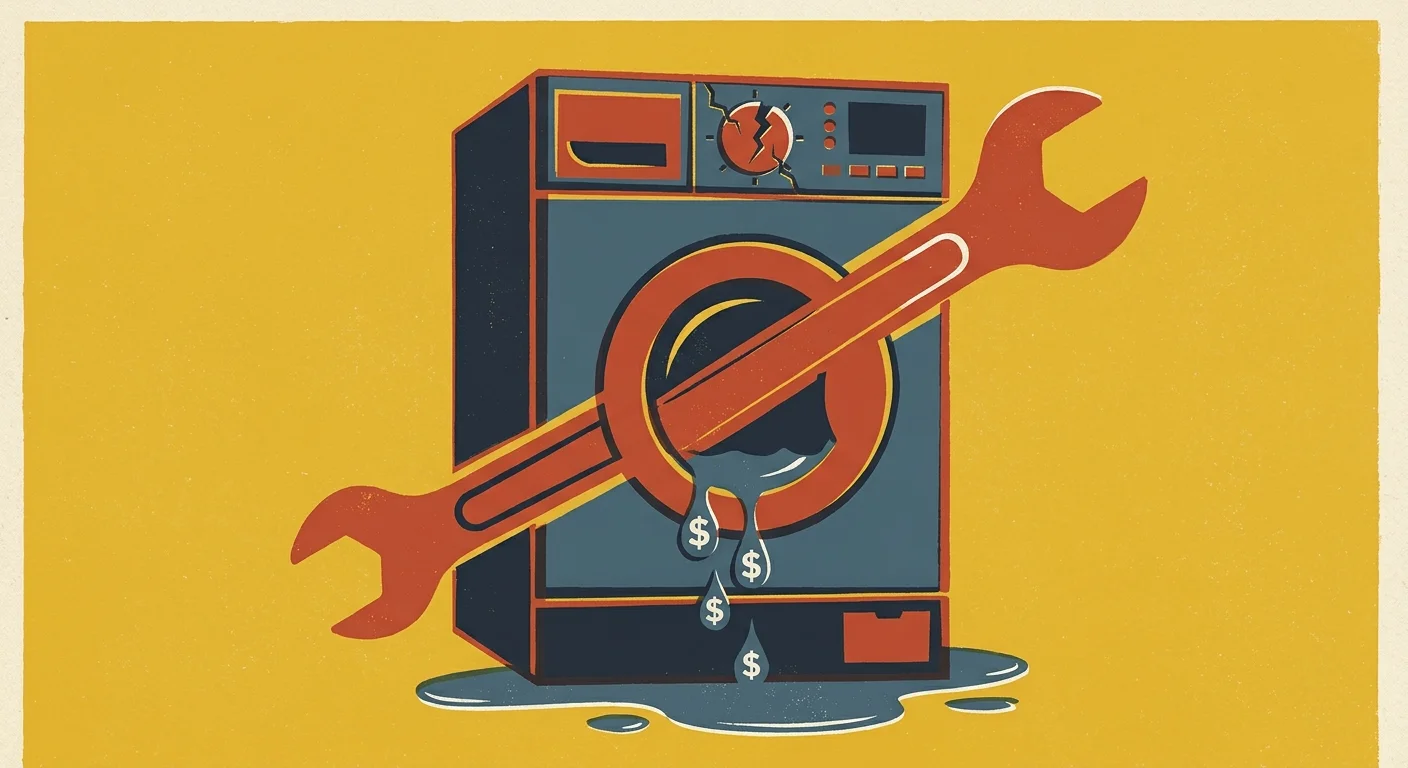
Replacing a major household appliance represents one of the largest unbudgeted expenses middle-income families face each year. According to economic research from the Federal Reserve, unexpected household repairs frequently strain monthly cash flows, forcing consumers to rely on high-interest credit cards or drain emergency savings. Furthermore, long-term tracking from the Bureau of Labor Statistics shows that durable home goods carry significant baseline costs, with new refrigerators, ranges, and laundry sets easily exceeding $1,000 to $3,000 per unit. When an unexpected breakdown occurs, emotional urgency overrides sound financial decision-making. Learning retail pricing mechanics allows you to transition from reactive panic buying to intentional shopping. Retailers operate on precise inventory lifecycles, marking down older stock to clear floor space for incoming models. By understanding these recurring sales cycles, you retain control over your household budget and capture premium products at rock-bottom prices.
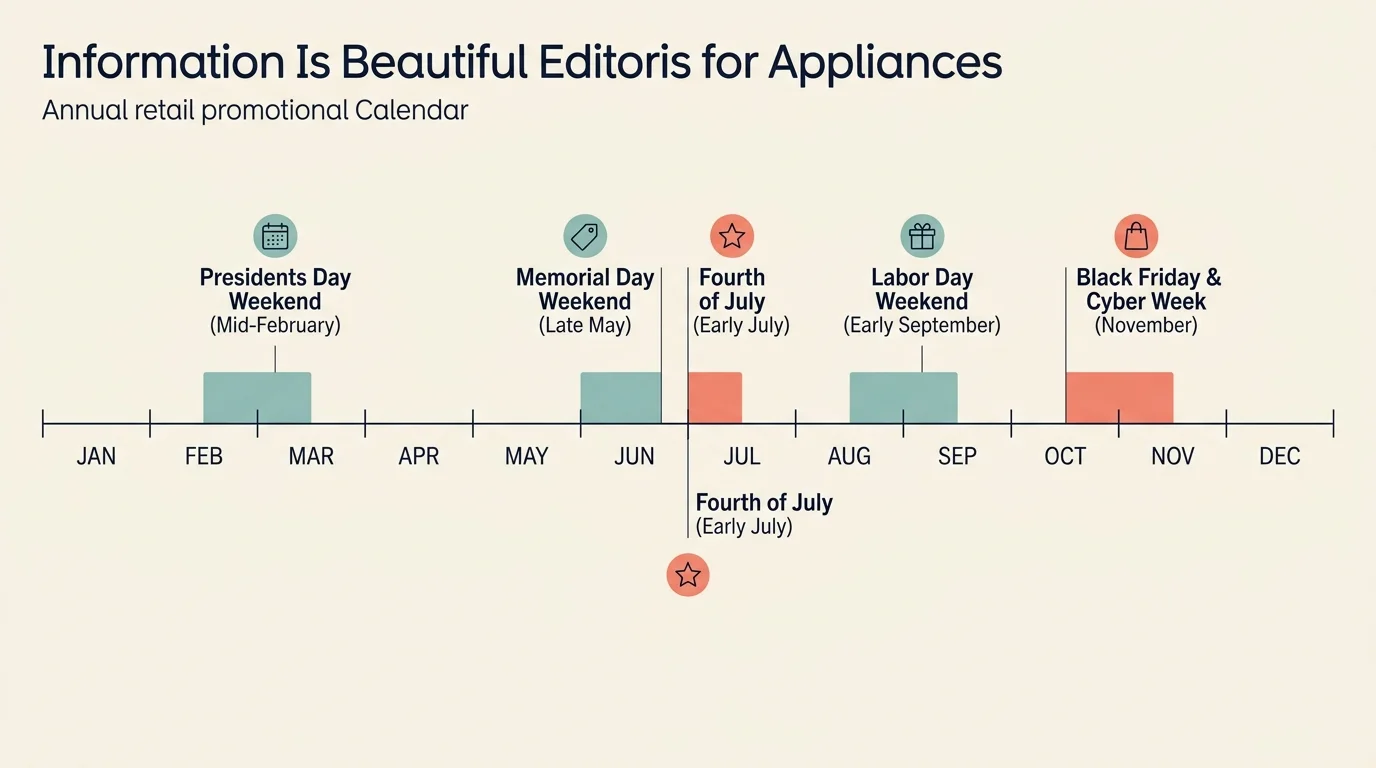
The 10 Best Times of Year to Buy Major Appliances
1. Memorial Day Weekend in Late May
Memorial Day weekend launches the summer retail promotional calendar, making late May an exceptional time to upgrade essential home equipment. Major home centers launch storewide promotional events targeting refrigerators and kitchen packages. Retailers routinely layer instant cash rebates, free installation upgrades, and free delivery perks on top of reduced sticker prices, offering savings up to 30% off standard retail pricing.
2. Labor Day Weekend in Early September
Labor Day weekend brings massive competitive discounts across all major appliance categories. Retailers aggressively mark down current-year cooking ranges, dishwashers, and laundry pairs to prepare their showrooms for autumn inventory shifts. Pairing storewide holiday discounts with local store loyalty program rewards yields substantial savings for households planning ahead.
3. Black Friday and Cyber Week in November
The retail stretch from Thanksgiving Thursday through Cyber Monday provides the year’s steepest price cuts on major appliance bundles. Big-box stores and home improvement warehouses compete fiercely for holiday shoppers, offering deep doorbuster pricing on complete kitchen suites. If you need to replace multiple appliances at once, purchasing complete sets during Cyber Week maximizes total bundle rebates.
4. Presidents Day Weekend in Mid-February
Presidents Day weekend serves as the premier late-winter promotional window for home appliances. Showroom managers push strong clearance incentives to generate store traffic during a traditionally quiet shopping month. You will find impressive discounts on leftover previous-year stock, including slide-in ranges, built-in microwaves, and quiet dishwashers that retailers need to clear immediately.
5. Fourth of July Weekend in Early July
Mid-summer holiday sales provide excellent opportunities to upgrade major household equipment. Fourth of July events highlight deep price reductions on standalone freezers, outdoor cooking stations, and high-capacity french-door refrigerators. Retailers often sweeten these holiday deals by waiving haul-away fees for old appliances or offering temporary zero-percent interest financing options.
6. The Month of May for Refrigerator Rollouts
While most home appliances see new model updates in late autumn, refrigerator manufacturers release their newest models every spring. Consequently, retail showrooms liquidate existing floor models and warehouse units throughout April and May. Buying outgoing refrigerator models during May gives you maximum bargaining leverage to secure premium features at basic price points.
7. September and October for Washers, Dryers, and Dishwashers
Manufacturers introduce updated lines of dishwashers, clothes washers, and dryers throughout early autumn. Showrooms must quickly clear existing floor inventory to accommodate incoming display units. Market analysis from Consumer Reports emphasizes that September and October represent the ideal calendar window to buy top-rated laundry pairs and dishwashers at deeply discounted liquidation prices.
8. January Clearance and Post-Holiday Sales
The start of the new year brings immediate clearance opportunities as stores liquidate open-box returns from holiday purchases. Retailers also seek to minimize taxable year-end inventory counts. Visiting store showrooms in early January allows you to negotiate steep price cuts on barely used open-box items and mint-condition floor display models carrying full original factory warranties.
9. End of the Month and Fiscal Quarter Ends
Appliance sales departments operate on strict monthly and quarterly sales volume quotas. The final three days of any month—particularly during the fiscal quarter endings in March, June, September, and December—create powerful negotiation windows. Sales reps and store managers possess extra leeway to approve direct price drops, throw in free installation kits, or match aggressive competitor quotes.
10. Amazon Prime Day and Mid-Summer Competitor Sales in July
Mid-July e-commerce sales events trigger price matching wars across brick-and-mortar competitors. National home improvement chains launch major mid-summer promotional events to capture consumer spending during online sale surges. You can leverage store price-match policies, stack store digital coupons, and earn bonus cash-back rewards on smart appliances during this high-volume July shopping period.
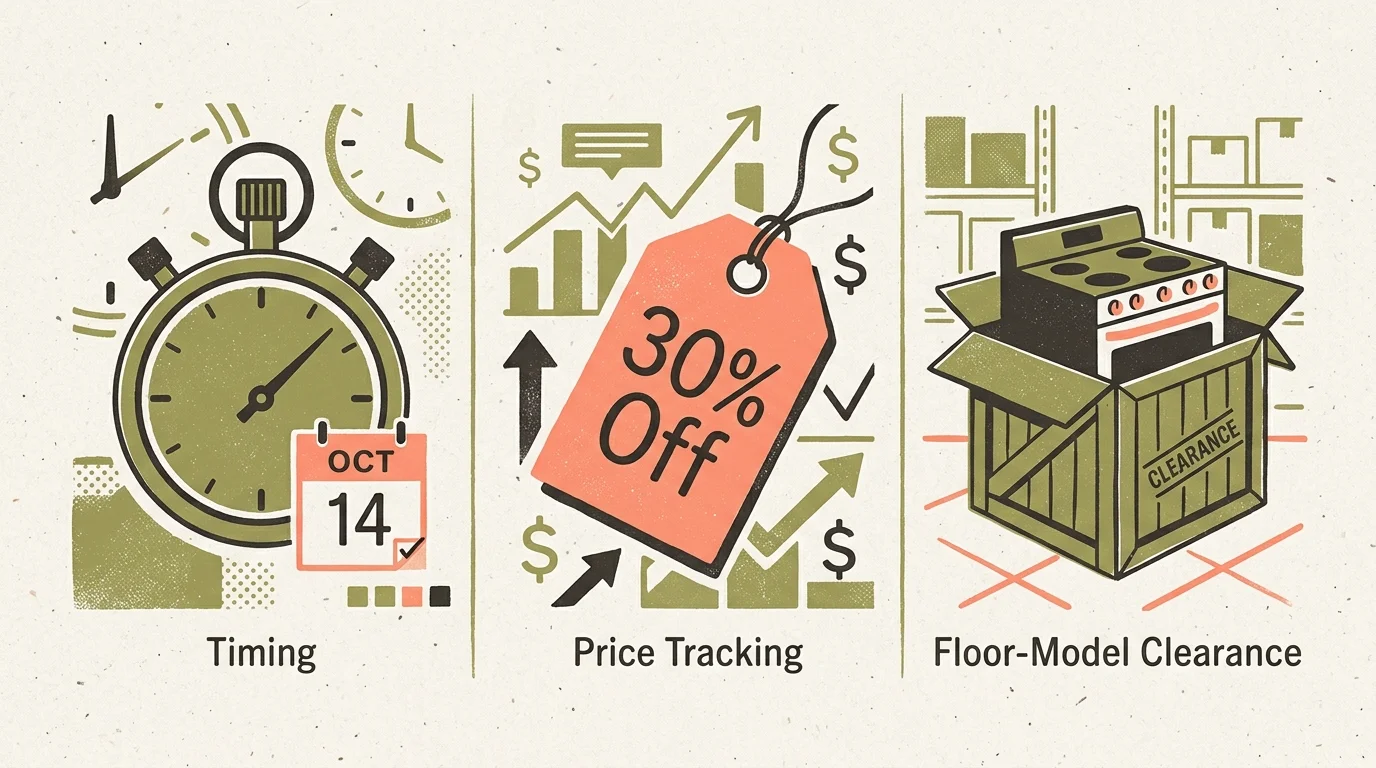
Three Pillars of Smart Appliance Purchasing
Pillar 1: Proactive Sinking Funds and Cash-Flow Management
Building a successful home maintenance strategy begins with establishing an appliance sinking fund. Instead of waiting for an unexpected mechanical failure to force an emergency purchase on a high-interest credit card, set aside $50 to $75 each month in an accessible high-yield savings account. Guidance from the Consumer Financial Protection Bureau highlights how structured emergency reserves protect consumers from high-cost debt traps. Maintaining a dedicated replacement fund allows you to shop patiently, waiting for ideal sale windows rather than buying out of immediate necessity.
Pillar 2: Strategic Exploitation of Open-Box and Floor-Model Inventory
Retail showrooms continually rotate display items, creating lucrative deals for observant shoppers. Open-box units and floor models featuring minor superficial blemishes carry discounts ranging from 30% to 60% off sticker prices. Inspect display units carefully to ensure all vital mechanical components remain flawless, confirm original warranty terms, and request additional discounts from store managers. A small scratch on an unexposed cabinet side translates directly into hundreds of dollars saved.
Pillar 3: Discount Stacking and Utility Rebate Optimization
Maximizing savings requires stacking multiple discount layers into a single purchase. Start with an existing seasonal sale price, apply store loyalty reward points, and complete the purchase using a cash-back credit card that you pay off immediately. Next, investigate regional utility rebate programs. Many electric and water utilities distribute cash rebates ranging from $50 to $200 when you purchase Energy Star certified appliances, reducing your total out-of-pocket costs even further.

Real-World Voices: Insights From Financial Experts
Financial planners emphasize that managing home expenses requires balancing emotional impulses with strategic planning. Certified financial planner Sarah Jenkins notes that emergency breakdown purchases represent the primary driver of appliance overspending. When a refrigerator stops cooling, consumers skip price comparisons, ignore open-box options, and accept costly rushed delivery fees just to fix the problem immediately. Behavioral economists recommend conducting an annual home appliance audit to evaluate the age of your equipment; replacing an aging unit during a scheduled Labor Day sale costs dramatically less than replacing it during a summer emergency breakdown.
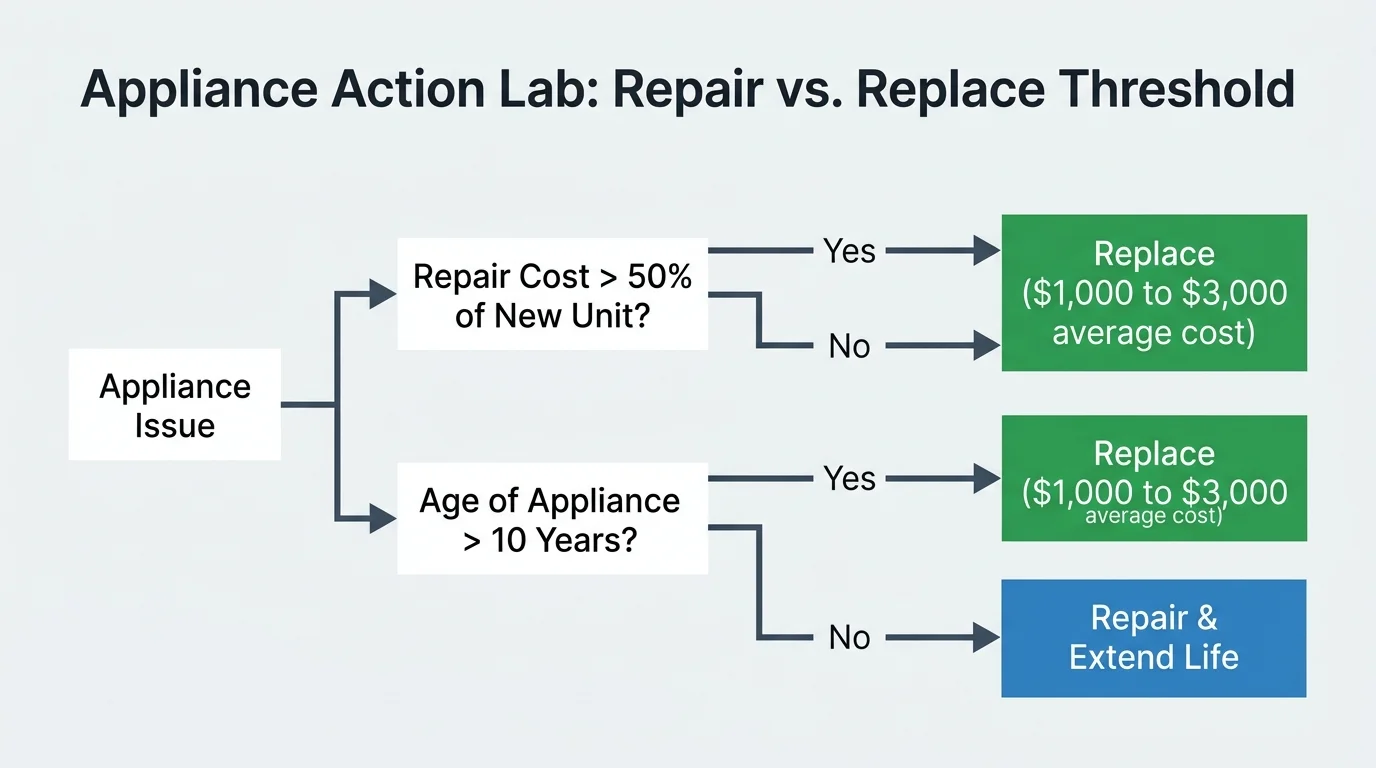
The Action Lab: Calculating Your Appliance Replacement Threshold
To evaluate whether you should repair or replace an aging home appliance, apply the 50% economic benchmark. If a repair estimate exceeds 50% of the cost of a new replacement model, and your appliance has passed half of its expected operating lifespan, purchasing a new unit offers better financial value. Consider this realistic scenario: an eight-year-old dishwasher requires a $350 pump replacement, while a brand-new, energy-efficient model costs $600 during a Presidents Day sale. Factoring in an available $50 rebate from your electric utility brings the net replacement cost down to $550. Spending $350 on an old machine yields poor return on investment, whereas spending $550 on a brand-new unit provides modern features, lower monthly utility bills, and a full manufacturer warranty. You can review detailed efficiency data on the U.S. Department of Energy platform to calculate your long-term energy savings.
Common Pitfalls and How to Avoid Them
Avoid falling into retail financing traps that undermine your promotional savings. Retailers frequently promote zero-percent APR deferred-interest financing offers during major holiday weekends. If you fail to pay off the entire balance before the promotional timeline expires, retroactively applied interest rates exceeding 29% can destroy your savings. Additionally, calculate hidden fees before signing sales agreements. High delivery fees, cord installation charges, and haul-away costs for old appliances quickly erode sale discounts. Always request itemized fee breakdowns and negotiate bundled installation services before finalizing your purchase.
Frequently Asked Questions
How do I handle an emergency appliance failure outside of major sale seasons?
If an appliance breaks during a non-sale period, browse the open-box and floor-model sections at local home improvement centers. Negotiate directly with store managers for immediate discounts, ask for free delivery, or purchase a reliable pre-owned model to bridge the gap until the next major promotional window.
Are open-box appliances covered under original manufacturer warranties?
Yes, major retailers sell open-box and floor-model appliances with full original manufacturer warranties intact. Verify with store representatives that your sales invoice marks you as the original retail buyer so your warranty coverage remains completely active.
Should I buy extended warranties on major home appliances?
Financial experts generally advise skipping store extended warranties. Instead of paying upfront fees for costly protection plans, deposit those funds into your dedicated appliance sinking fund to self-insure all household equipment.
How do local utility rebates work for new appliances?
Local electric, gas, and water utilities offer cash incentives when you install Energy Star certified appliances. Submit your purchase receipt and model number through your utility’s online portal to receive a rebate check by mail within four to six weeks.
Take the Challenge: Audit Your Home Appliances Today
Take immediate control of your household budget by auditing the age and condition of your home appliances today. Identify which machine sits closest to the end of its useful lifespan, calculate its target replacement cost, and set up an automated monthly deposit into a dedicated sinking fund. When the next major retail sale window arrives, you will possess the cash reserves and strategic leverage to secure a high-quality upgrade without financial strain. Proactive financial choices build long-term security and keep your money working for you.