
Running out of cash before the calendar turns isn’t an income problem; it is a structural cash flow trap. You can lock in stress-free finances right now by adopting deliberate distribution systems that guarantee your funds outlast every single month.
Most retirees fail because they treat their nest egg like an open checking account instead of a disciplined payroll system. Shifting how you disburse and protect your money keeps your monthly budget predictable and bulletproof.
These seven proven habits will stop the end-of-month panic and keep your hard-earned dollars working strictly on your schedule.

Tip #1: Replicate a Biweekly Paycheck Schedule
Most retirees pull one large lump sum from their savings on the first of the month. This single habit creates a dangerous illusion of abundance that fuels early overspending.
Savvy retirees mimic their former working routine by scheduling automated biweekly distributions instead. Splitting your distributions into two equal payments stabilizes your retirement cash flow instantly.
When you receive funds every fourteen days, your brain naturally paces your daily expenses. You avoid the psychological trap of seeing a swollen bank balance vanish by the third week.
Financial institutions allow you to set up recurring transfers with a few clicks. Automate distributions from your brokerage accounts directly into your everyday checking account.
This synthetic paycheck forces you to operate on a consistent, predictable income baseline. You will never have to guess how much cash remains for groceries during the final days.
Treat the money arriving on the fifteenth exactly like your mid-month corporate paycheck. That psychological boundary transforms how you manage discretionary spending throughout every single monthly cycle.
If an unexpected expense hits early, your mid-month transfer arrives before panic sets in. That biweekly rhythm creates built-in financial breathing room without requiring additional withdrawals.
Pacing your withdrawals prevents the Feast or Famine cycle that traps unorganized households. It turns a chaotic nest egg into a reliable, steady revenue stream.
Setting up this schedule takes less than ten minutes through your online banking portal. Once active, the system runs automatically and removes the stress of self-rationing.

Tip #2: Build a Dedicated Buffer Account for Lumpy Expenses
Irregular expenses wreck more household budgets than everyday living costs ever will. Semi-annual car insurance, quarterly water bills, and annual property taxes arrive predictably yet trigger sudden panic.
Successful seniors solve this volatility by operating a dedicated sinking fund account. They calculate the annual cost of all non-monthly obligations and divide that total by twelve.
Transfer that exact fraction into a separate high-yield savings account every single month. When the hefty property tax bill lands in your mailbox, the cash sits ready and waiting.
You never need to raid your daily checking account or liquidate investments at an inopportune moment. Isolating these lumpy charges protects your baseline living budget from sudden shocks.
Many online banks now let you create categorized digital sub-accounts at zero additional cost. You can label one sub-account for home maintenance and another for vehicle registration.
This division prevents the dangerous illusion that your general checking account has surplus cash. It keeps your primary monthly budget clean, transparent, and completely insulated from surprises.
Mastering these retirees budget habits ensures that annual obligations never disrupt your daily peace of mind. You stay ahead of the billing cycle instead of constantly playing defense.
Separating scheduled liabilities from daily spending money is the simplest way to preserve cash flow. It turns unpredictable annual emergencies into boring, automated non-events.
Check your annual records today to tally up every non-monthly bill you pay. Automating a twelve-month reserve allocation fixes the problem permanently.
Tip #3: Audit and Slash Silent Subscriptions Every Quarter
Subscription creep silently drains hundreds of dollars from fixed-income households every year. Streaming platforms, digital memberships, and software trials quietly renew at inflated post-promotional rates without warning.
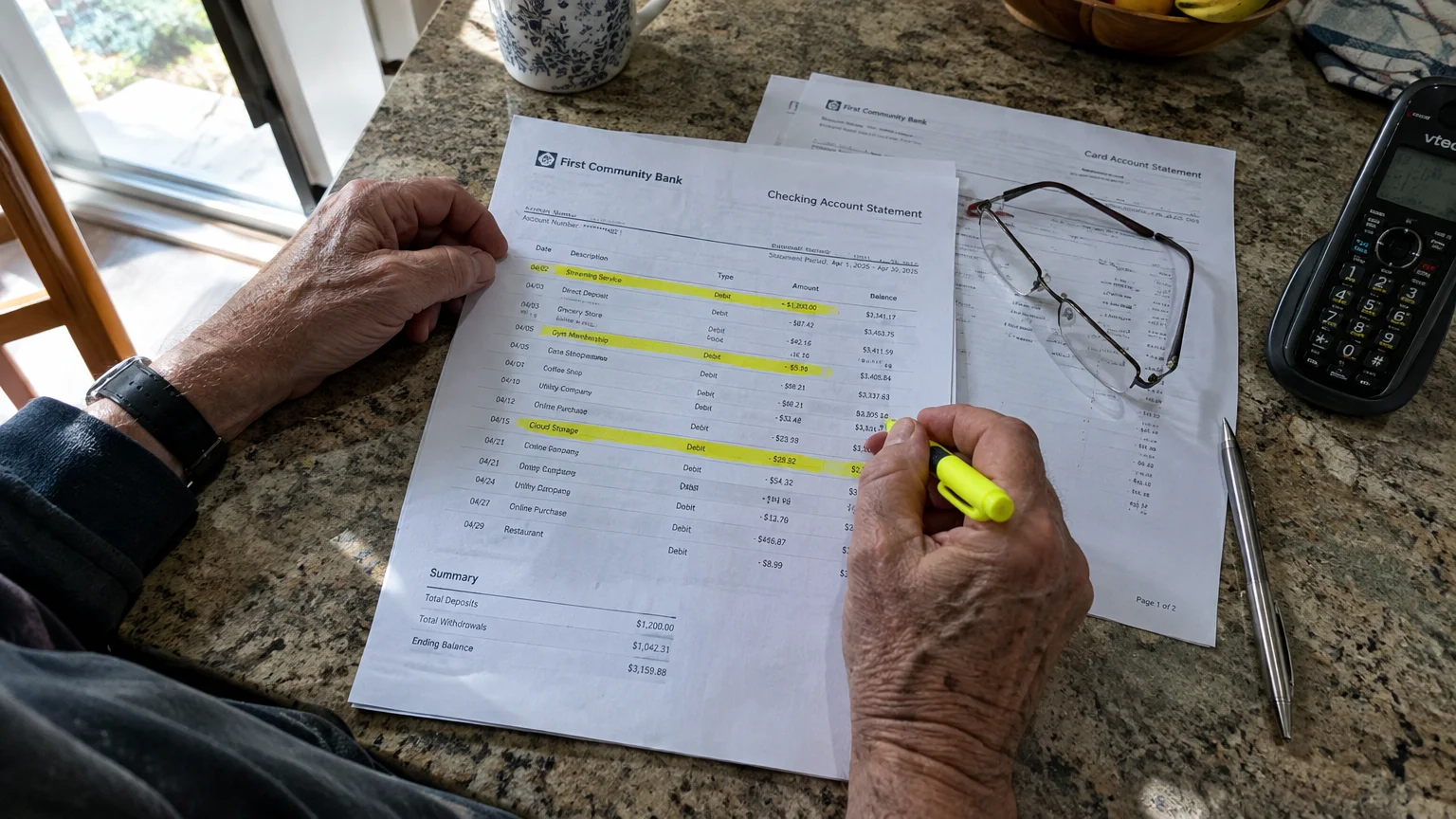
Sharp retirees conduct a ruthless 90-day subscription audit to eliminate digital dead weight. Print your last three bank statements and highlight every single recurring automated debit.
If you have not utilized a service during the previous thirty days, cancel it immediately. Companies bank on your inertia; breaking that cycle keeps substantial cash in your pocket.
Call your internet and telecom providers annually to renegotiate your promotional pricing packages. Service providers frequently offer retention discounts to long-time customers who ask directly.
You can also rotate streaming services rather than paying for four platforms simultaneously. Activate one service, watch your favorite shows, and cancel before rotating to the next provider.
This simple rotation hack cuts digital entertainment costs by more than fifty percent each year. Those saved funds can immediately reinforce your emergency savings or absorb grocery price inflation.
Routine pruning protects your money management retirees strategy against relentless corporate fee increases. Companies update their terms constantly, making your active vigilance a mandatory defensive habit.
Stop letting recurring auto-renewals dictate where your retirement dollars go. Regaining control over minor monthly subscriptions yields substantial breathing room across the entire year.
Set a calendar alert right now for an audit every ninety days. That recurring reminder will defend your bank balance against insidious creeping charges.
Tip #4: Front-Load Fixed Obligations on Deposit Day
Leaving bill payments scattered across the calendar month creates dangerous illusions about your available spending money. You see cash in your account and spend it, forgetting that pending bills remain unpaid.
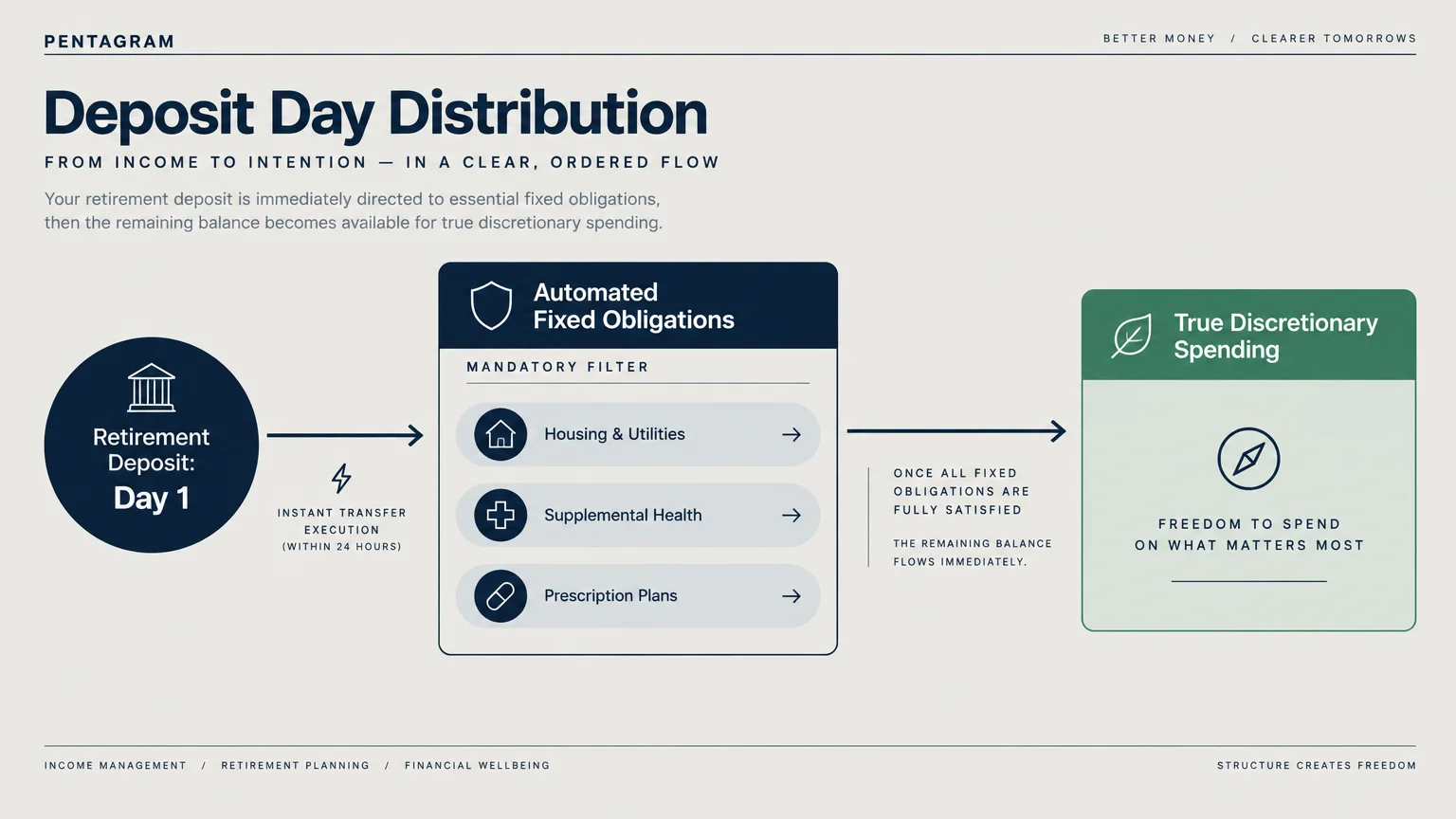
Top money managers eliminate this hazard by aligning bill due dates with their initial monthly deposit. Call your utility companies, credit card issuers, and lenders to adjust your payment cycles.
Shift all major due dates to the two or three days immediately following your primary deposit. Pay your mortgage, electricity, and supplemental health insurance the moment your funds arrive.
Once your non-negotiable living expenses clear, whatever cash remains is your true disposable income. You eliminate the mental gymnastics of calculating upcoming bills against your current debit balance.
This front-loading technique delivers complete psychological clarity for the rest of the month. You avoid running out of money monthly because your survival costs are already settled.
If money feels tight during the final week, you only need to trim non-essential spending. Your lights stay on, your home is secure, and your essential needs are fully covered.
Executing this structural shift removes financial anxiety and guarantees that mandatory bills never lapse. You run your household like a business, paying necessary overhead before spending a dime on discretionary desires.
A streamlined payment calendar removes guesswork and protects your credit rating permanently. It provides immediate clarity regarding your true spending power from day one.
Contact your service providers this week to request an adjusted billing date. Most customer service agents can shift your payment cycle in minutes.
Tip #5: Gamify Discretionary Spending with the Two-Account System
Commingling grocery money with utility funds in a single checking account invites accidental overspending. The human brain struggles to track multiple spending categories against a unified bank balance.
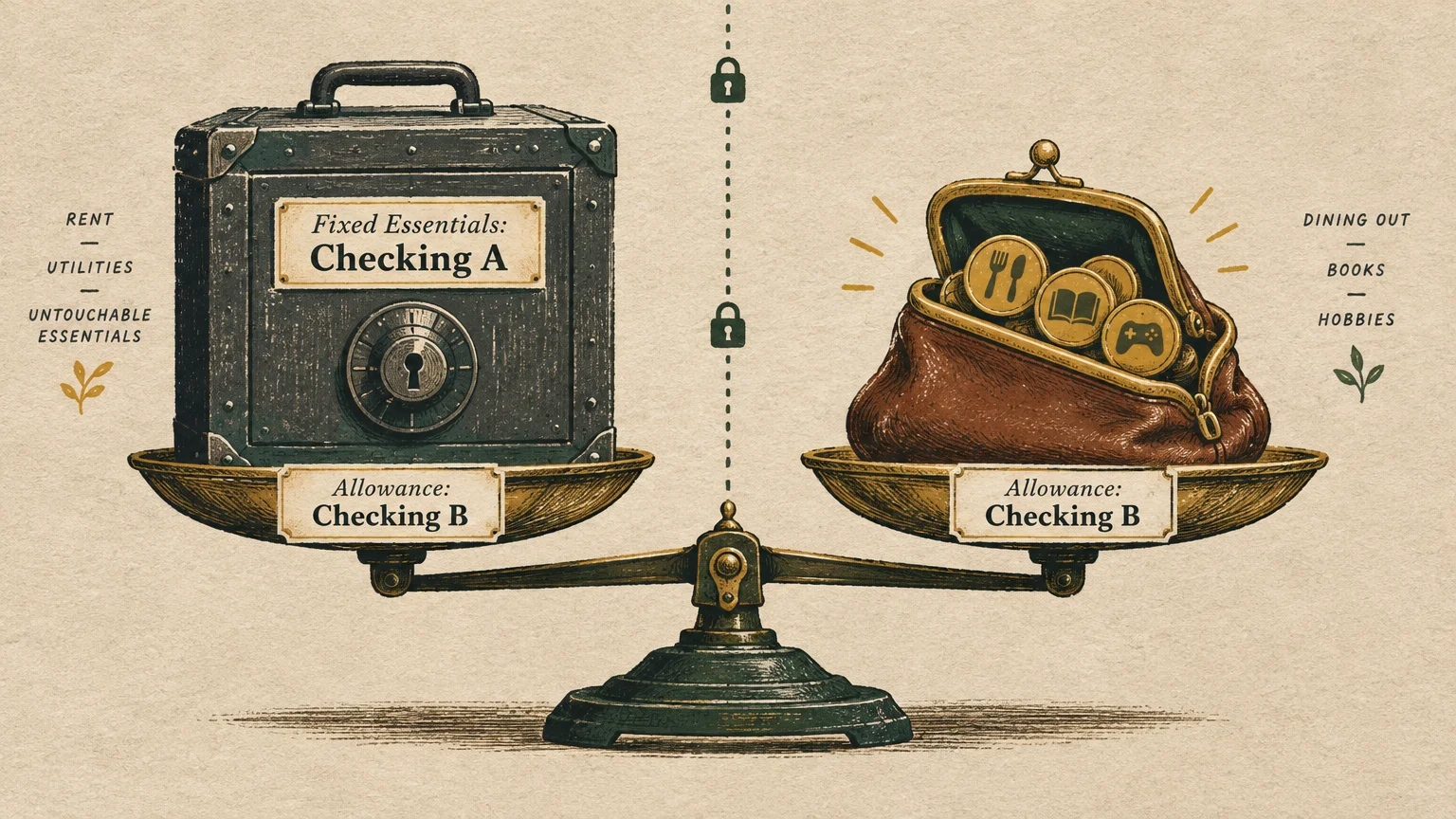
Disciplined retirees maintain two distinct checking accounts with separate debit cards to enforce spending boundaries. Account A covers fixed, recurring overhead like housing, utilities, and prescription insurance.
Account B receives a strict weekly allowance exclusively for variable expenses like groceries, fuel, and dining. Once Account B drops to zero, discretionary spending stops until the next scheduled transfer.
This physical separation creates friction that halts mindless impulsive purchases in their tracks. You never run the risk of eating into your utility money during an unexpected weekend shopping trip.
Some retirees prefer using cash envelopes for categories like restaurants and entertainment. Swapping plastic cards for physical dollar bills triggers psychological resistance to unnecessary spending.
Whether using digital sub-accounts or physical envelopes, the underlying mechanism remains identical. You establish a firm firewall between your essential living needs and your lifestyle desires.
Adopting this discipline ensures your monthly budget tips translate into tangible, long-lasting financial security. You gain complete freedom to spend your designated allowance without guilt or fear of overdrawing.
Removing ambiguous boundaries from your everyday spending creates effortless self-control. You will never again wonder why your essential bill money disappeared before month’s end.
Open that secondary checking account at your current bank or a no-fee online institution. Fund it on a set schedule and watch your spending discipline solidify instantly.

Tip #6: Eliminate Convenience Taxes and Claim Unadvertised Perks
Convenience stores, third-party delivery apps, and pre-cut produce extract a massive hidden toll on fixed incomes. Retailers mark up convenience items heavily, exploiting consumers who prioritize speed over preparation.
Thrifty retirees avoid these markups by buying whole foods and cooking simple meals in bulk. Preparing meals at home saves thousands of dollars annually compared to restaurant dining and prepared grocery trays.
Proactive retirees also never hesitate to ask for unadvertised senior discounts everywhere they shop. Local hardware stores, regional pharmacies, and municipal transit agencies frequently offer steep price cuts.
Many organizations do not publicize these discounts, requiring you to inquire at the register directly. A brief, polite conversation can effortlessly shave ten to fifteen percent off your retail purchases.
Pair these merchant discounts with municipal property tax relief programs available for older homeowners. Many counties cap assessments or provide substantial exemptions that slash annual housing costs.
Avoiding retail traps while seizing legitimate discounts stretches your monthly dollar significantly further. That extra margin keeps your finances resilient even during periods of stubborn consumer inflation.
Smart spending is not about deprivation; it is about refusing to pay unnecessary convenience markups. Eliminating commercial markups puts hundreds of dollars back under your direct control every quarter.
Challenge every recurring transaction and retail fee you encounter. When you stop bleeding cash on convenience, your monthly financial cushion expands dramatically.
Check your local county tax assessor website today to explore senior property tax freezes. Securing that single benefit can save you thousands over the next decade.
Tip #7: Maintain a Dynamic Cash Reserve to Shield Against Volatility
Selling depreciated equities during a market downturn devastates long-term retirement sustainability. When stock values plummet, liquidating shares to cover basic groceries locks in permanent capital losses.
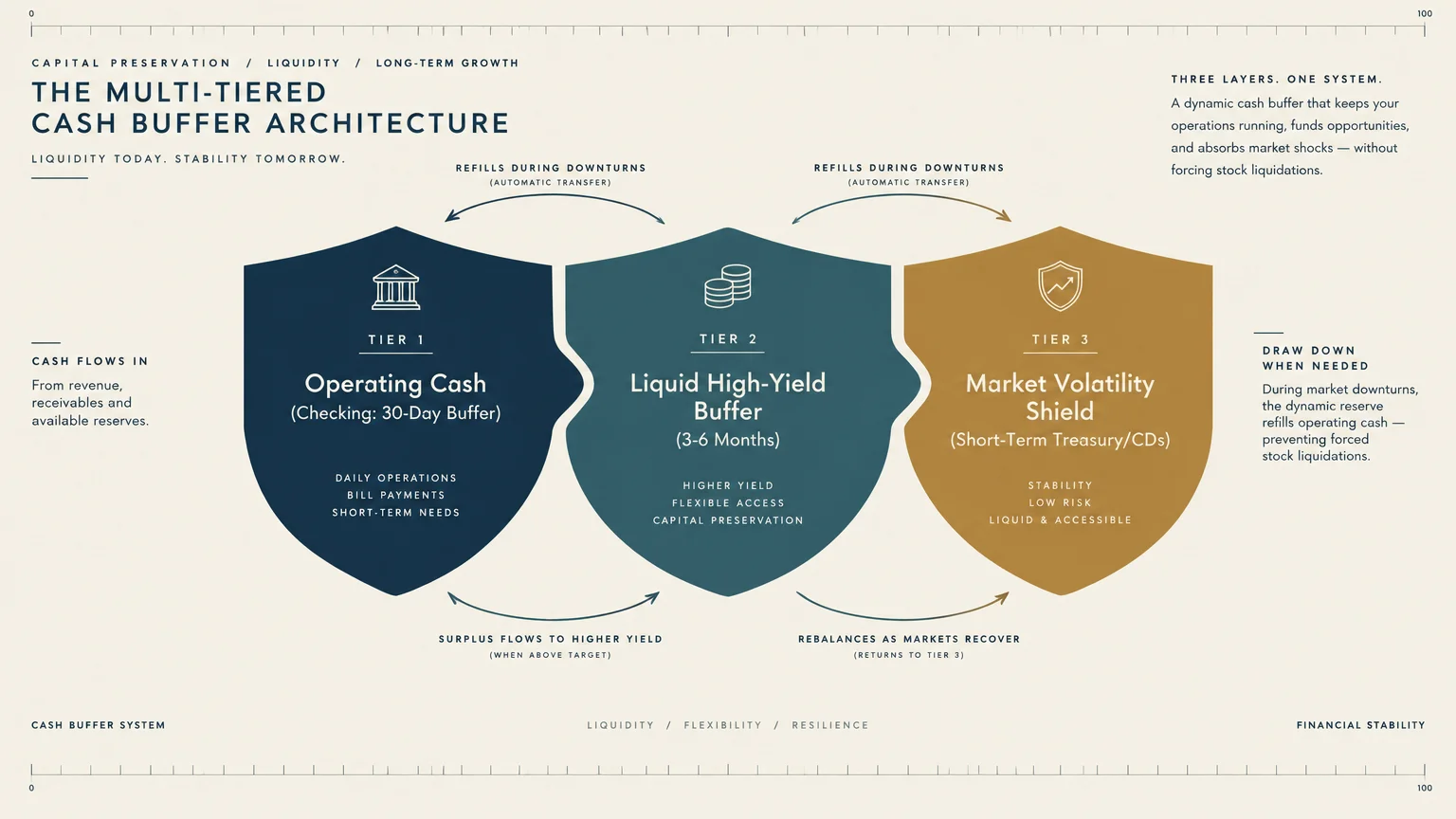
Experienced retirees insulate themselves from market chaos by holding twelve to twenty-four months of cash reserves. They park this liquid buffer in high-yield savings accounts or short-term Treasury bills.
When the market experiences a sharp correction, you pause investment withdrawals and spend from your cash bucket. This tactical pause gives your investment portfolio sufficient time to rebound and recover.
Replenish your cash reserve only during market rallies when equity prices trade near all-time highs. This counter-cyclical habit turns volatile market swings into your strategic financial advantage.
Maintaining a dedicated liquidity shield stabilizes your retirement cash flow regardless of economic headlines. You sleep soundly knowing your immediate living expenses do not depend on daily Wall Street performance.
This protective buffer transforms your financial psychology from reactive fear to deliberate control. You eliminate the panic that forces less prepared retirees into severe budgetary compromises.
Securing your baseline with accessible cash represents the ultimate foundation of enduring financial peace. You break free from market anxieties and maintain consistent spending power across all seasons.
A robust cash cushion eliminates forced sales and protects your wealth across multi-year downturns. It is the ultimate insurance policy for your everyday retirement lifestyle.
Calculate your baseline annual expenses and establish your cash bucket during your next portfolio review. That strategic buffer will safeguard your financial future through any economic climate.

The Bottom Line: What This Means for Your Wallet
Ending the monthly cash crunch does not require extreme austerity or unmanageable sacrifice. It demands deliberate operational systems that control when your money moves and where it lands.
By pacing your withdrawals, segregating irregular expenses, and front-loading critical bills, you eliminate cash flow uncertainty. You take control back from chaotic spending cycles and establish ironclad predictability.
Small structural tweaks compound rapidly into thousands of dollars in preserved capital each year. That retained capital shields your independence and protects your dignity throughout your retirement years.
Start by implementing just one of these seven habits during your next distribution cycle. As each new habit takes root, your financial confidence will grow alongside your bank balance.
True wealth in retirement is the peace of mind that your money easily outlasts the month. Take charge of your cash flow today and build a future free from financial dread.
Frequently Asked Questions
How much cash reserve should a retiree keep in checking?
Keep roughly one month of living expenses in your checking account alongside a small emergency cushion. Keeping excessive idle cash in non-interest accounts exposes your purchasing power to relentless inflationary erosion.
Move surplus funds into high-yield savings accounts or money market funds to earn competitive interest. That structure maximizes your interest earnings while ensuring liquidity remains instantly accessible.
What is the easiest way to prevent overspending on groceries?
Implement an online grocery ordering strategy to eliminate in-store impulse purchases and promotional endcap traps. Curbside pickup forces you to stick strictly to your planned shopping list while comparing prices.
You also see your exact running cart total before checkout, allowing you to remove non-essential items easily. That single routine change frequently trims fifteen to twenty percent from monthly food bills.
How do I handle unexpected medical emergencies without ruining my monthly budget?
Never pay large hospital bills immediately with high-interest credit cards or premature investment liquidations. Request an itemized statement to identify common billing errors and duplicate codes before paying anything.
Afterward, negotiate a zero-interest monthly payment plan directly with the healthcare provider’s billing department. Most medical systems readily grant interest-free terms to patients who ask proactively.
Can I adjust my Social Security payment dates to match my bills?
The Social Security Administration assigns deposit dates based on your birth date, meaning you cannot alter them. However, you can easily call utility companies, lenders, and insurers to shift your billing due dates instead.
Aligning your outgoing expenses to follow your assigned Social Security deposit creates a seamless, predictable cash flow. That alignment prevents bills from hitting your account when cash levels are at their lowest.
For consumer protection information, visit the Federal Trade Commission (FTC) and the Consumer Financial Protection Bureau (CFPB). For product safety and reviews, consult Consumer Reports.
Disclaimer: This article is for informational purposes only and does not constitute financial advice. The content reflects the author’s opinion and research at the time of writing. Always do your own research before making financial decisions.