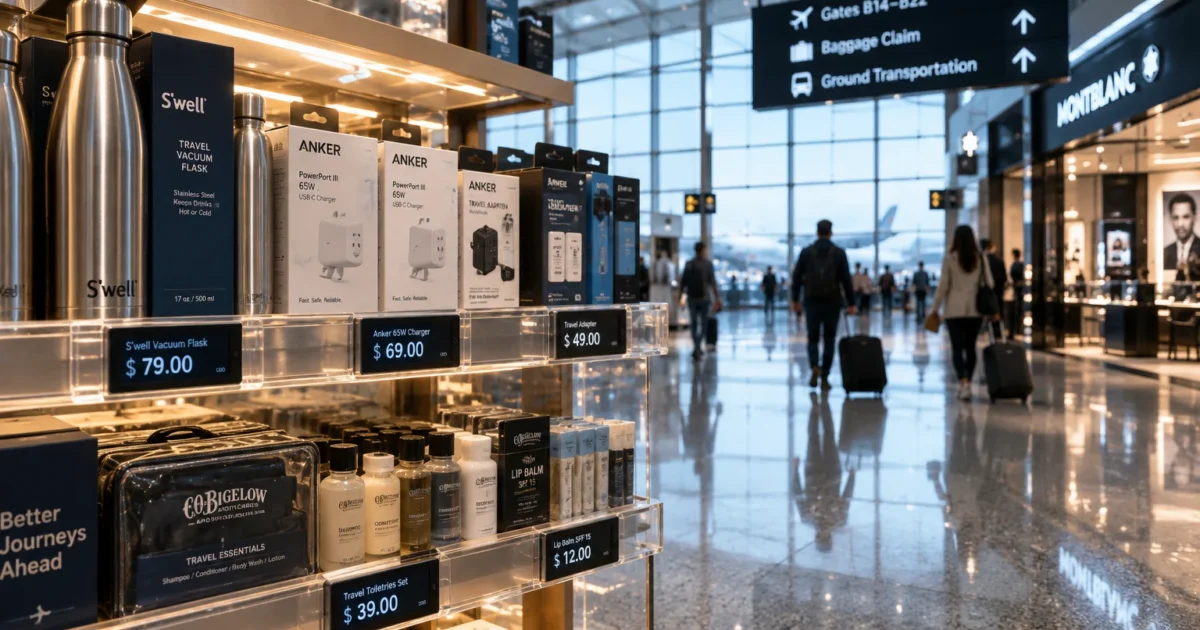
Airport retailers exploit your trapped position the moment you clear security screening. Knowing which overpriced items to avoid will save you hundreds of dollars every time you travel.
Terminal shops rely on your fatigue, thirst, and tight departure deadlines to extract sky-high margins. Because you cannot easily leave the terminal, vendors hike prices without facing normal market competition.
You can outsmart these terminal traps by spotting the most egregious retail markups in advance. A few deliberate packing habits will keep your hard-earned cash in your wallet where it belongs.
Tip #1: Bottled Water and Basic Beverages
Transportation Security Administration (TSA) regulations prohibit travelers from bringing liquid containers larger than 3.4 ounces through security checkpoints. This rule creates an artificial monopoly the second you step into the post-security terminal.
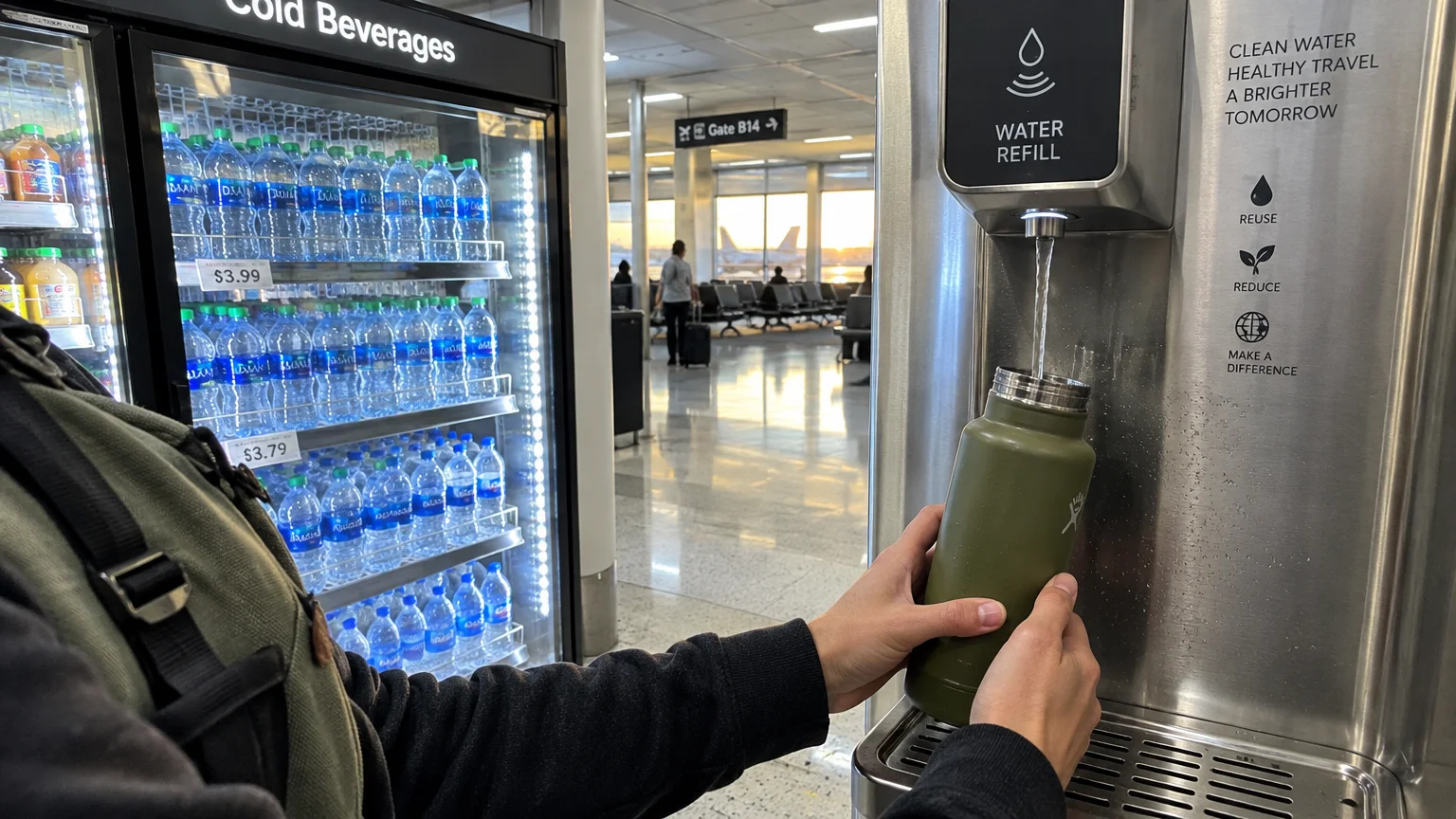
Airport convenience stores charge between $3.50 and $6.00 for a standard 20-ounce bottle of water. That amounts to a markup of 200% to 400% over standard grocery store prices.
Terminal vendors know you cannot bring outside drinks through the checkpoint. They exploit your natural thirst and the dry air inside airplane cabins to maximize beverage profits.
You can bypass this price gouging entirely by packing an empty, reusable water bottle in your carry-on luggage. Modern airports feature touchless hydration stations right past the checkpoint where you can fill your bottle for free.
Pack powdered electrolyte packets or water flavor drops in your personal bag. Adding these flavor enhancers to free terminal tap water gives you custom sports drinks without paying airport prices.
Some forward-thinking hubs protect your wallet better than others. Portland International Airport (PDX) enforces a strict 0% street pricing policy, requiring airport vendors to match off-airport retail prices.
Unless you fly through an airport with mandated street pricing, expect steep beverage markups. Fill your bottle before boarding and bypass the terminal drink coolers completely.
Tip #2: Phone Chargers and Tech Accessories
Forgetting a phone charger at home triggers instant travel anxiety. Terminal electronics retailers rely on that sudden panic to charge outrageous markups on basic cords and power bricks.
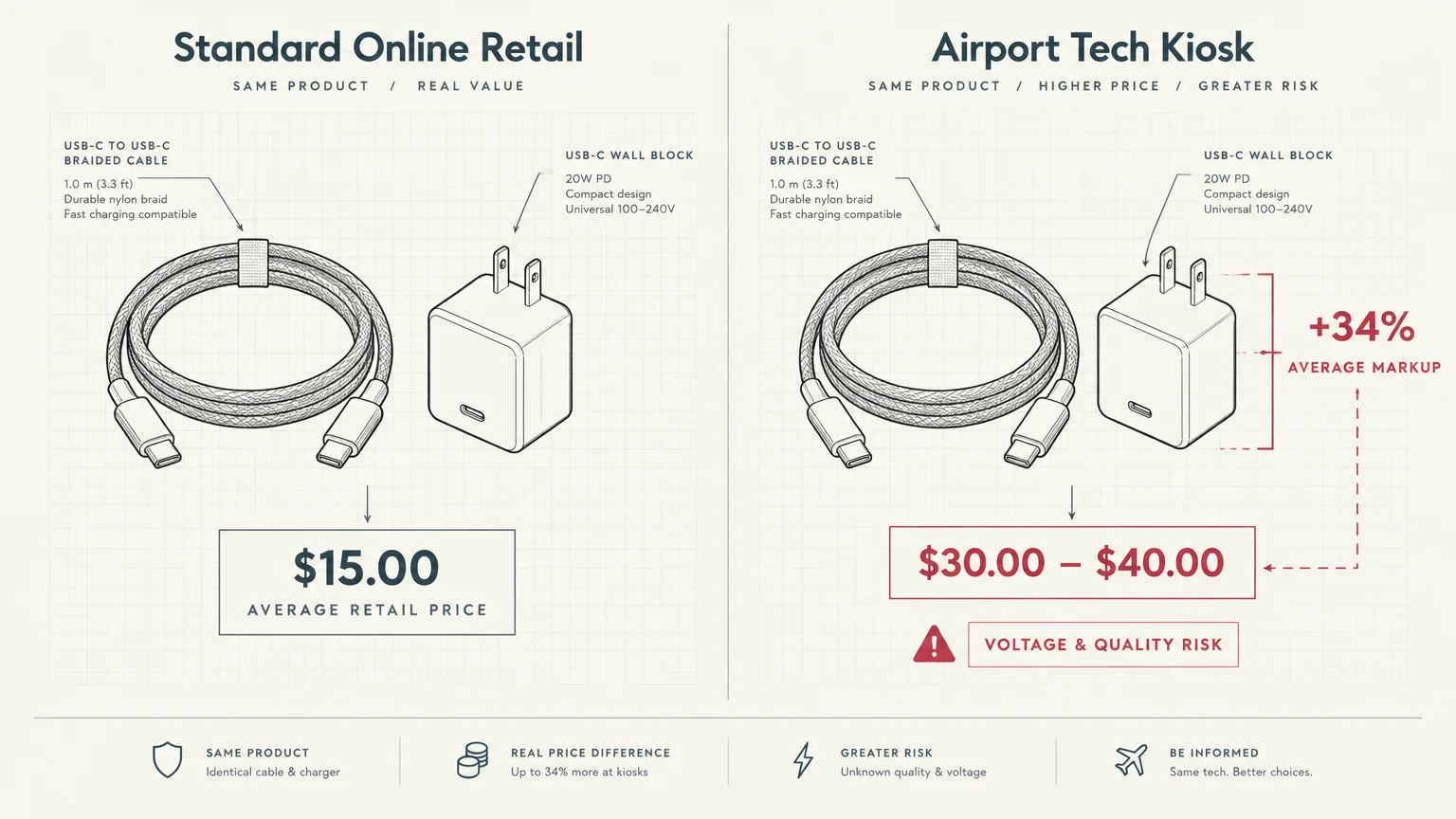
Retail pricing tracking from DealNews reveals that airport electronics cost an average of 34% more than standard retail outlets. Basic USB-C cables, Lightning cords, and wall adapters regularly carry markups between 50% and 100%.
A certified charging cable that retails for $15 online frequently sells for $30 to $40 at an airport tech kiosk. Cheap unbranded cables often sell for premium brand prices.
Low-quality airport charging cords can damage your device battery through improper voltage regulation. You pay double the retail price for an inferior product that might fail mid-trip.
Airport tech vending machines present another high-cost trap. Automated kiosks charge premium prices for brand-name earbuds and power banks, charging significantly more than manufacturer websites.
You can protect your budget by assembling a dedicated travel electronics kit. Keep duplicate charging cables, a certified high-wattage wall brick, and an external power bank permanently inside your carry-on bag.
Buy your backup charging gear in advance from reputable online retailers or discount department stores. Packing dedicated travel cords ensures you never pay emergency prices at an airport tech shop.
Tip #3: Over-the-Counter Medications
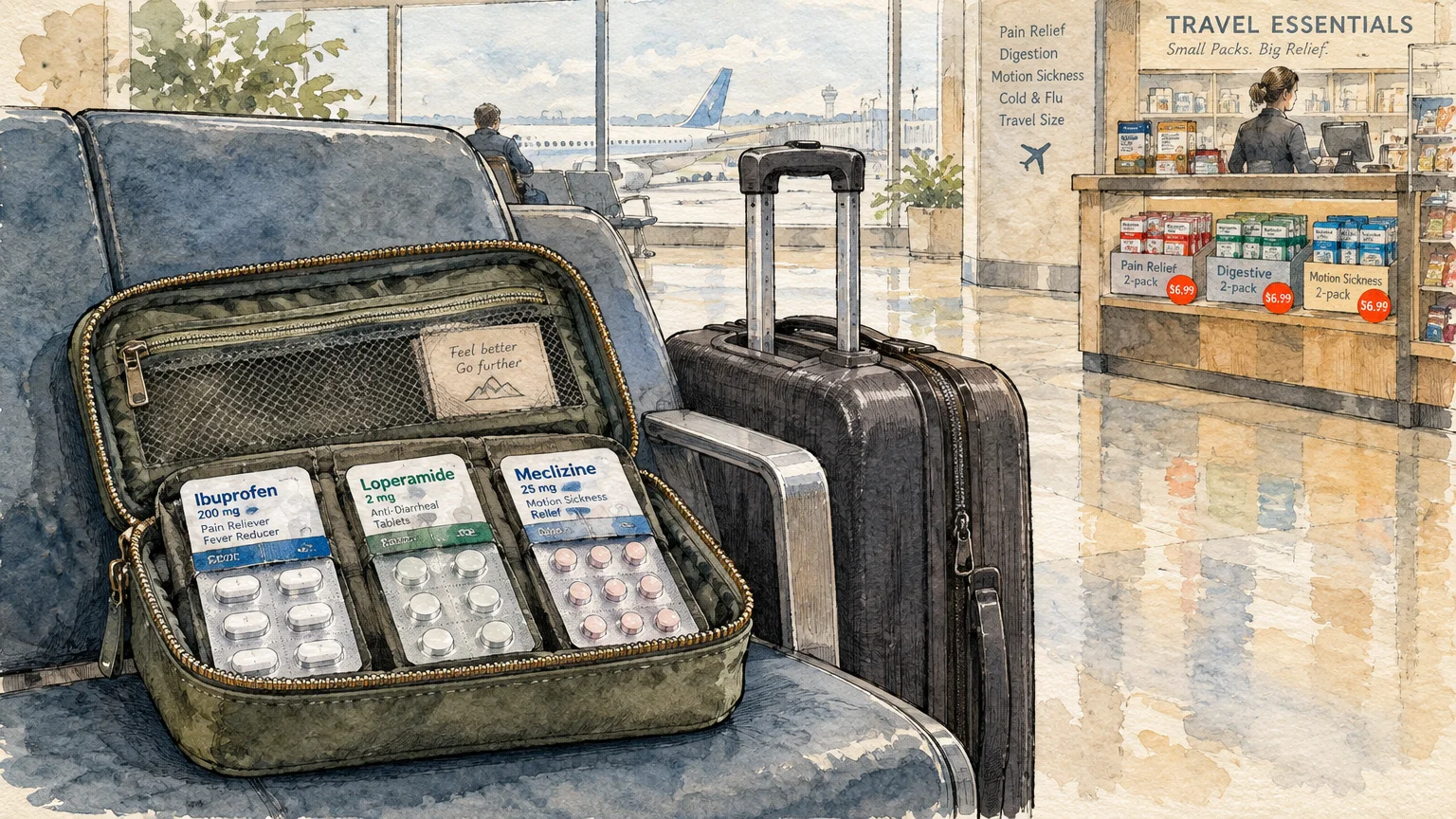
Sudden headaches, motion sickness, or indigestion often strike while navigating a crowded terminal. Airport convenience stores stock miniature travel medicine packets right at the checkout register to exploit your discomfort.
These pocket-sized packets of Advil, Tylenol, or Dramamine contain only two to four caplets and cost between $3.50 and $6.00. This pricing breaks down to an astonishing $1.00 to $2.00 per dose.
Standard 50-count or 100-count bottles at neighborhood pharmacies cost roughly $0.08 to $0.15 per dose. Airport stores mark up these essential medications by 600% to more than 1,000%.
Many travelers mistakenly believe that TSA liquid rules restrict solid medications. In reality, TSA regulations permit unlimited solid pill medications in your carry-on bags without restriction.
You do not need to transport original bulky pharmacy bottles through security checkpoints. Put a dozen pain relievers, antacids, and allergy pills into a compact travel pill container before leaving home.
Children’s medications face even harsher terminal price markups. A two-ounce bottle of infant liquid fever reducer often sells for $12 at the gate, compared to $4 at local grocery stores.
Stash your compact pill organizer in an accessible zippered pocket of your personal backpack. You will handle travel aches instantly without surrendering ten dollars for a handful of generic pain pills.
Tip #4: Foreign Currency at Airport Kiosks
Airport currency exchange booths look like a convenient way to prepare for international travel. In truth, these kiosks represent one of the most expensive financial traps in the entire terminal.
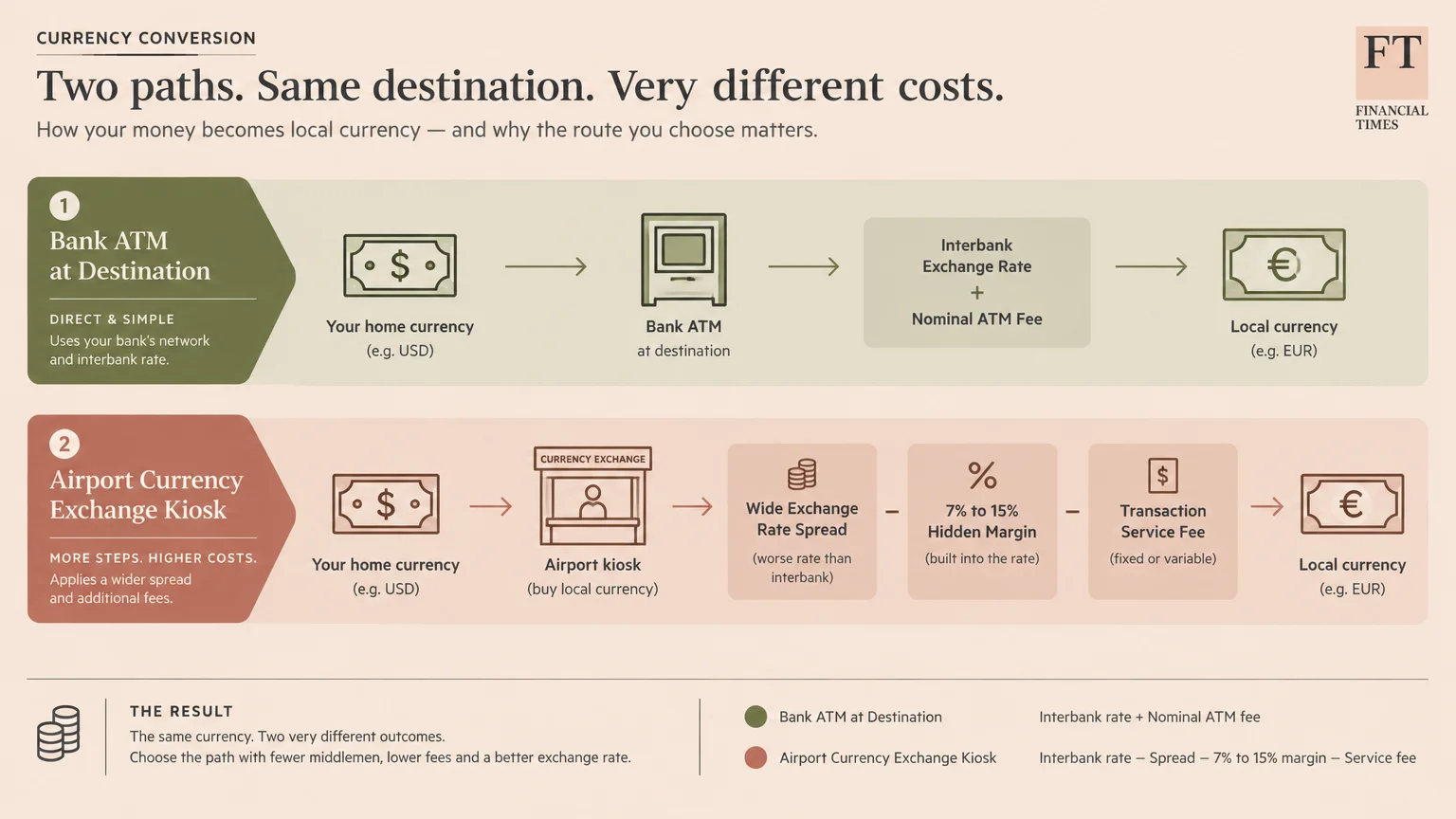
Currency exchange providers like Travelex routinely charge exchange markups between 8% and 15% above the true interbank mid-market rate. Many kiosks also tack on flat per-transaction service fees.
Kiosks frequently lure travelers with bold signs advertising zero commission fees. They simply hide their massive profit margins inside an unfavorable, heavily manipulated exchange rate.
Exchanging $500 at an airport kiosk can easily cost you $50 to $75 in lost conversion value. That is money stolen directly from your dining and sightseeing budget abroad.
Travelex and independent airport kiosks frequently charge flat transaction processing fees between $5 and $10 per exchange. These hidden fees further diminish the purchasing power of your exchanged cash.
Skip terminal exchange counters and withdraw local currency from a legitimate bank ATM once you land at your destination. A checking account with zero foreign transaction fees incurs total conversion costs of just 0% to 3%.
Always choose the local currency option when the foreign ATM asks whether to convert the transaction. Selecting local currency guarantees your home bank calculates the conversion at the fair interbank rate.
Tip #5: Neck Pillows and Sleep Masks
Red-eye flights and long delays prompt travelers to search for comfort gear at airport gift shops. Retailers capitalize on your exhaustion by pricing neck pillows at steep luxury rates.
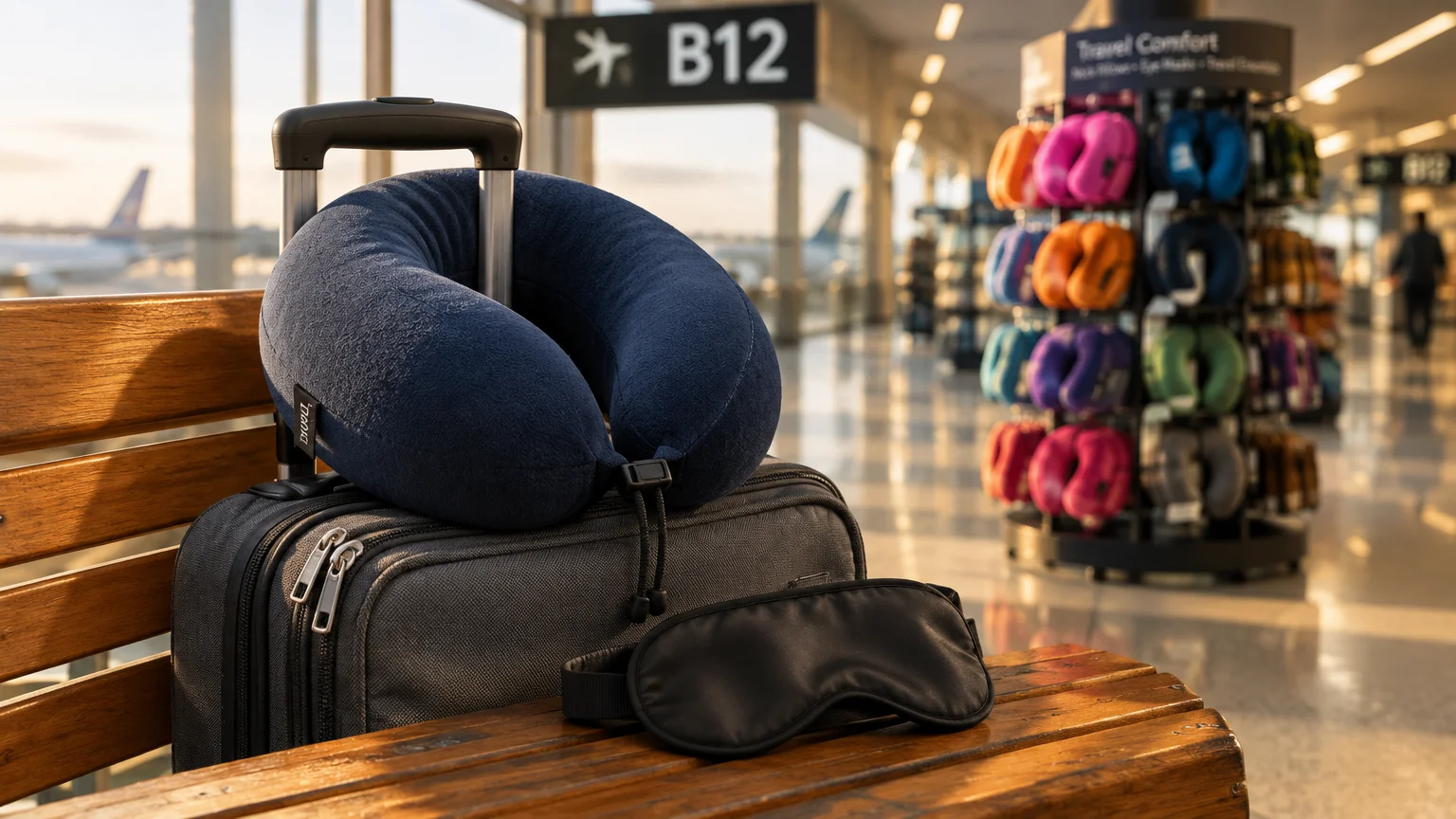
Basic memory foam travel pillows at airport newsstands retail between $25.00 and $45.00. You can buy identical ergonomic pillows on Amazon, Target, or Walmart for $10.00 to $18.00.
Airport vendors mark up comfort gear by 150% to 200% simply because tired travelers value immediate comfort. These impulse purchases quickly inflate your travel expenses before your flight takes off.
Hygiene presents another compelling reason to avoid airport neck pillows. Dozens of travelers touch, squeeze, and try on those exposed rack pillows every single day in dusty terminal corridors.
Inflatable travel pillows offer a practical, budget-friendly alternative to bulky airport memory foam pillows. High-quality inflatable pillows fold flat into your pocket and cost less than $12 online.
Buy a supportive, machine-washable travel pillow with a protective travel bag before your trip begins. Clip the pillow strap directly onto the handle of your carry-on luggage for hassle-free transport.
Pair your pillow with a contoured sleep mask purchased online for a fraction of terminal prices. You will sleep comfortably on board knowing you saved thirty dollars on comfort gear.

Tip #6: Duty-Free Fragrances and Cosmetics
Duty-free retail concourses market themselves as glamorous bargain centers for international passengers. The promise of tax-free luxury shopping lures millions of travelers into spending heavily before boarding.
Duty-free stores exempt merchandise from local sales taxes and import duties, but they rarely offer true discounts. Retailers artificially inflate base retail prices to offset astronomical airport concession leases.
Airport concession agreements often require retailers to surrender up to 40% of their gross revenue to airport authorities. High overhead costs force duty-free operators to wipe out your tax savings with inflated base margins.
Global Shopping Monitor data from the Duty Free World Council (DFWC) shows that 16% of travelers actively avoid duty-free shopping. Experienced shoppers recognize that cosmetics, fragrances, and chocolates often cost more than standard domestic retail.
Domestic beauty retailers and authorized online stores offer competitive seasonal sales, reward points, and bundled gifts. Duty-free prices rarely match the net savings of off-airport loyalty promotions.
Multi-pack duty-free cosmetic sets create the illusion of significant savings through oversized bundling. In many cases, these bundles contain unpopular shades or smaller product sizes that diminish real value.
Always cross-check prices on your smartphone before purchasing designer perfume or luxury skincare in the terminal. If the airport price does not beat your home retailer by at least 20%, leave the item on the shelf.
Tip #7: Packaged Snacks and Confectionery
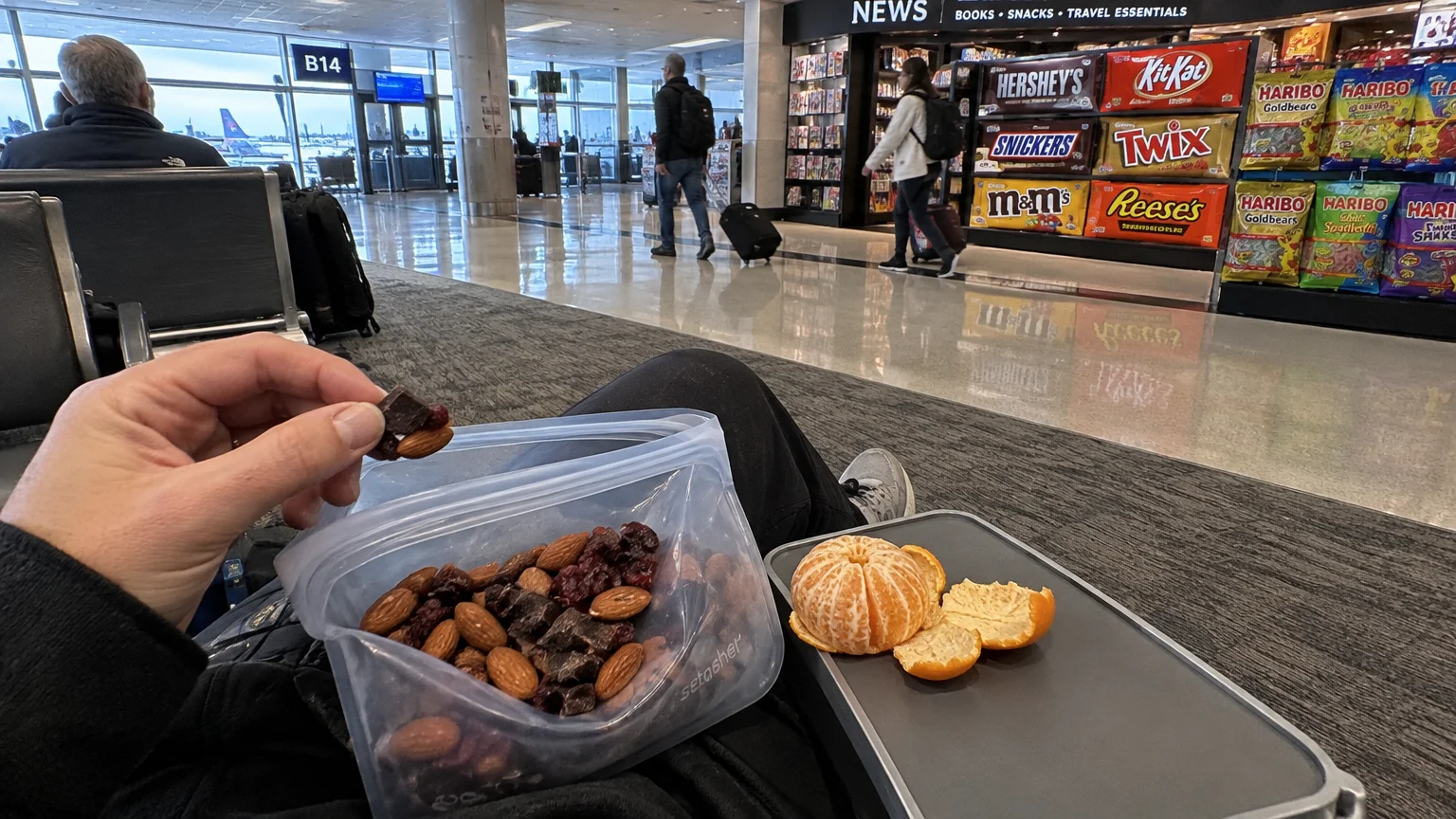
Boarding an airplane on an empty stomach makes airport snack aisles look incredibly tempting. Unfortunately, terminal snack displays carry some of the highest markups in the travel industry.
Convenience stands sell small bags of trail mix, jerky, or chips for $5.00 to $8.00. Standard grocery stores sell identical snack packages for $1.50 to $3.00.
Gourmet chocolate boxes and premium gummy candies feature markups exceeding 200%. Newsstands position these treats at eye level near registers to capture quick impulse dollars from bored travelers.
High food costs sparked massive passenger outrage after a vendor charged $27.85 for a single draft beer at LaGuardia Airport. That incident forced the Port Authority of New York and New Jersey (PANYNJ) to act.
The Port Authority implemented strict rules capping concession prices across LGA, JFK, and EWR at street price plus no more than 10% to 15%. Most airports across the country lack these protective regulations.
Fresh terminal grab-and-go deli sandwiches and salads carry markups comparable to packaged snacks. Pre-made turkey wraps frequently retail for $14 to $18, despite containing basic deli meat and wilted produce.
You can outsmart high snack markups by packing your own dry foods from home. TSA security permits solid foods like dried fruit, nuts, energy bars, and sandwiches through checkpoints without limitation.
Hit a neighborhood supermarket the evening before your flight to assemble your own high-protein snack packs. You will eat healthier food and save twenty dollars per person on every flight.
Tip #8: Destination Souvenirs and Gift Trinkets
Many travelers forget to buy souvenirs during their vacations until they arrive at the departure terminal. Airport gift shops capitalize on this departure guilt by charging astronomical prices for cheap keepsakes.
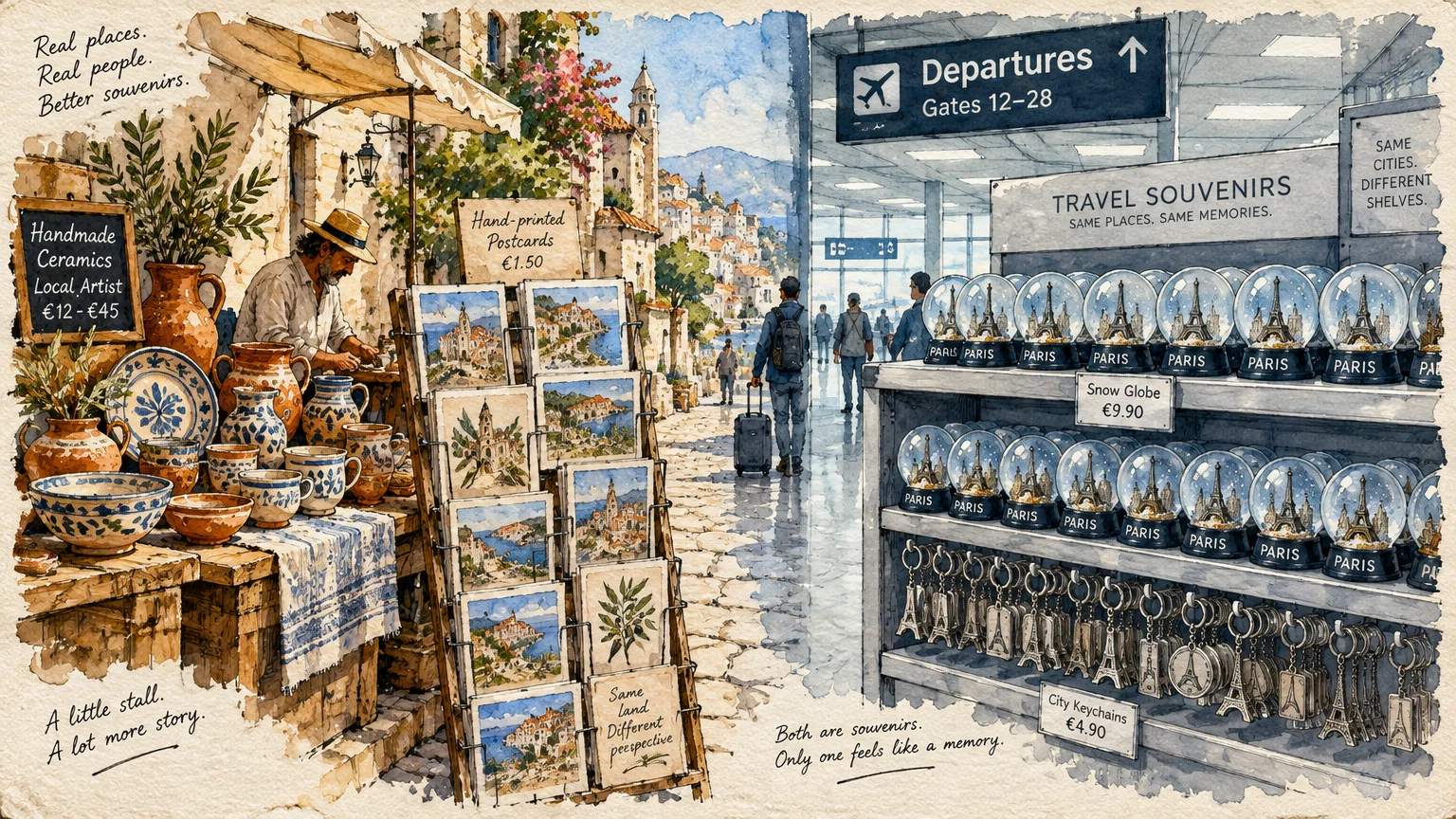
Airport gift emporiums mark up destination t-shirts, coffee mugs, magnets, and snowglobes by 100% to 250%. Vendors source these mass-produced items from identical overseas suppliers used by downtown souvenir stalls.
A generic city mug that costs $5 in a local market sells for $18 to $22 inside the airport concourse. Regional specialty foods like boxed cookies or maple syrup carry similar exorbitant surcharges.
Airport stores rely on your urgent desire to bring gifts home to friends, coworkers, or family members. Panic and convenience replace rational comparison shopping when boarding calls begin.
Local post offices, stationers, and museum gift shops downtown offer distinct regional postcards, locally roasted coffee beans, and artisanal sweets. These authentic items make far better travel keepsakes than overpriced terminal knickknacks.
Break the last-minute terminal gift habit by buying souvenirs during your actual vacation days. Local grocery stores, neighborhood farmers markets, and independent craft shops offer authentic regional goods at normal retail prices.
Buying gifts in town supports local small businesses while avoiding exploitative terminal markups. Pack regional treats safely in your carry-on luggage before departing for the airport.
The Bottom Line: What This Means for Your Wallet
Airport concession models rely on captive consumer behavior and time pressure to inflate retail prices. Recognizing these predatory markups lets you take total control of your travel budget.
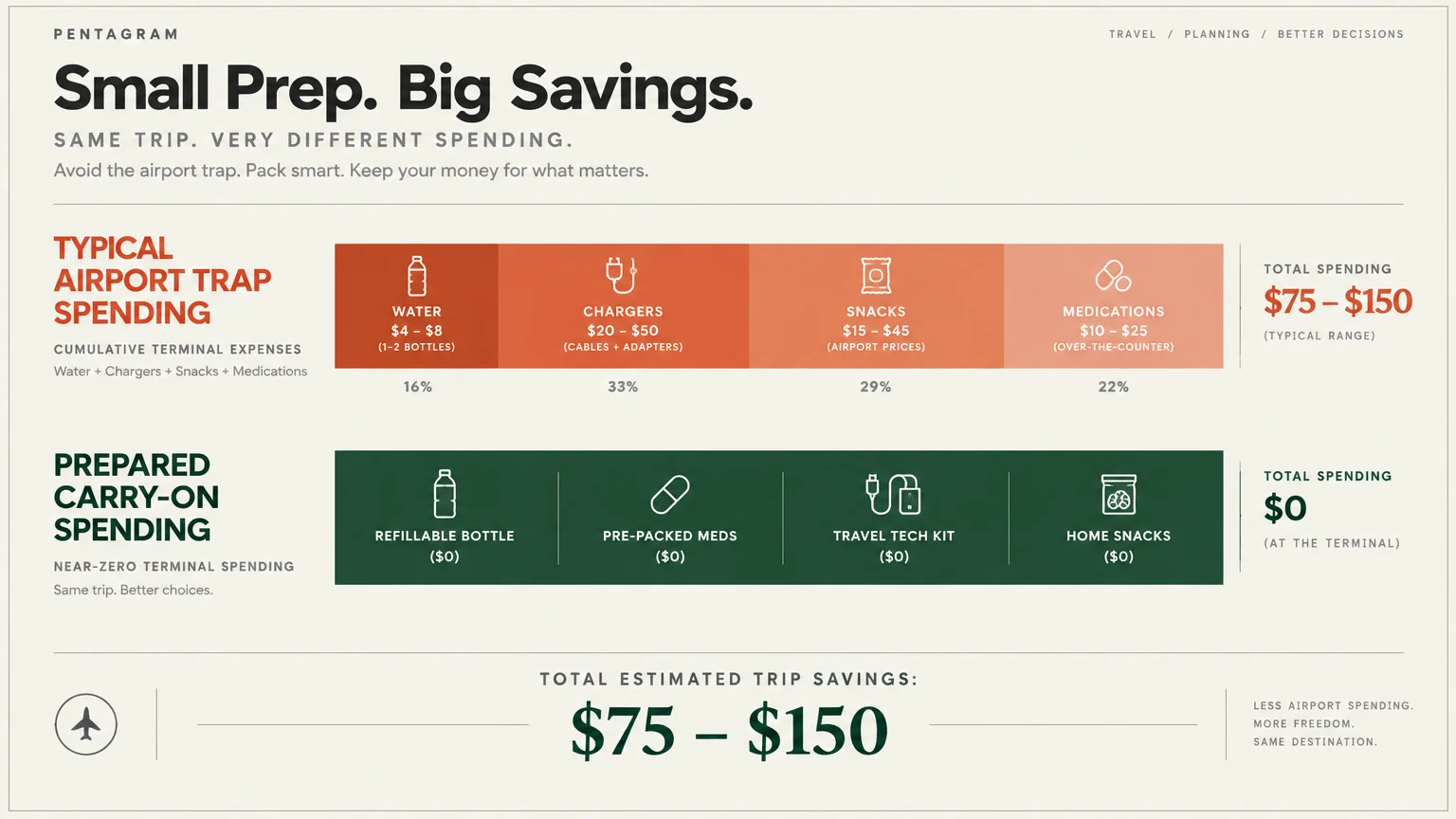
A family of four buying water, snacks, pain relievers, and a forgotten charger easily spends over $80 at the gate. That identical haul costs less than $25 when purchased ahead of time at regular retail stores.
Smart travel planning does not require sacrifice or uncomfortable austerity. It requires proactive packing habits and a refusal to reward inflated convenience pricing.
Carry an empty reusable water bottle, bring your own portable tech chargers, and pack solid snacks before leaving home. These three simple adjustments instantly eliminate the most expensive airport spending traps.
Every dollar you refuse to spend on overpriced airport goods remains available for your real travel priorities. Intentional planning transforms airport concourses from financial minefields into simple transit zones.
Save your discretionary vacation funds for memorable meals, cultural excursions, and authentic experiences at your destination. Refusing to subsidize airport concessionaires keeps hundreds of dollars in your pocket every single year.
For consumer protection information, visit the Federal Trade Commission (FTC) and the Consumer Financial Protection Bureau (CFPB). For product safety and reviews, consult Consumer Reports.
Frequently Asked Questions
Why are airport store markups consistently so high?
Airport retailers pay exorbitant concession fees and terminal lease rates to airport governing authorities. Retailers pass these elevated operational expenses directly to passengers through inflated shelf prices.
Vendors also take advantage of a captive audience post-security. Because travelers cannot easily leave the secure terminal zone to buy alternatives, merchants exploit emergency necessity purchasing.
Are duty-free airport shopping prices ever a good deal?
Duty-free stores occasionally offer modest savings on heavily taxed items like tobacco products or top-shelf spirits. However, luxury cosmetics, designer fragrances, and chocolates often cost more than domestic online retail.
Duty-free stores eliminate local sales tax but inflate base retail prices to recoup high airport rental fees. Always check prices on your phone before assuming duty-free means a genuine bargain.
What items can you bring through TSA security to avoid airport store prices?
TSA permits empty beverage containers, unlimited solid medications, and dry food items through screening checkpoints. You can easily pack sandwiches, dried fruits, energy bars, and prescription pills without issue.
Liquid foods and spreads must adhere to the 3-1-1 rule and remain under 3.4 fluid ounces. Solid snacks face no liquid volume restrictions at the security checkpoint.
Do any airports regulate concession prices to protect travelers?
Yes, some airport authorities enforce street pricing policies to shield travelers from price gouging. Portland International Airport (PDX) mandates a strict 0% street pricing policy across all retail shops and dining locations.
The Port Authority of New York and New Jersey limits airport concession prices to street price plus 10% to 15%. However, many major airports across the United States enforce no price limits at all.
Disclaimer: This article is for informational purposes only and does not constitute financial advice. The content reflects the author’s opinion and research at the time of writing. Always do your own research before making financial decisions.