
Great hosting is an illusion of effortless luxury built on smart psychological tricks, not endless spending. You can throw unforgettable gatherings without draining your savings account or slaving away over an oven.
Professional entertainers focus on sensory pacing, strategic beverage planning, and guest momentum rather than overpriced catering. These deliberate choices keep your guests engaged while protecting your personal budget.
Here are ten proven hosting secrets that will transform how you entertain guests all year long. Master these practical techniques to elevate your next gathering effortlessly.
Tip #1: Curate the Vibe Before Touching the Menu
Most amateur hosts spend days obsessing over complex recipes while ignoring how the space actually feels. The best entertainers know that lighting, room temperature, and background sound dictate the mood instantly.
If your living room feels sterile or overly bright, even the finest gourmet meal will fall flat. Setting the right atmosphere creates an immediate sense of warmth and relaxation for your guests.
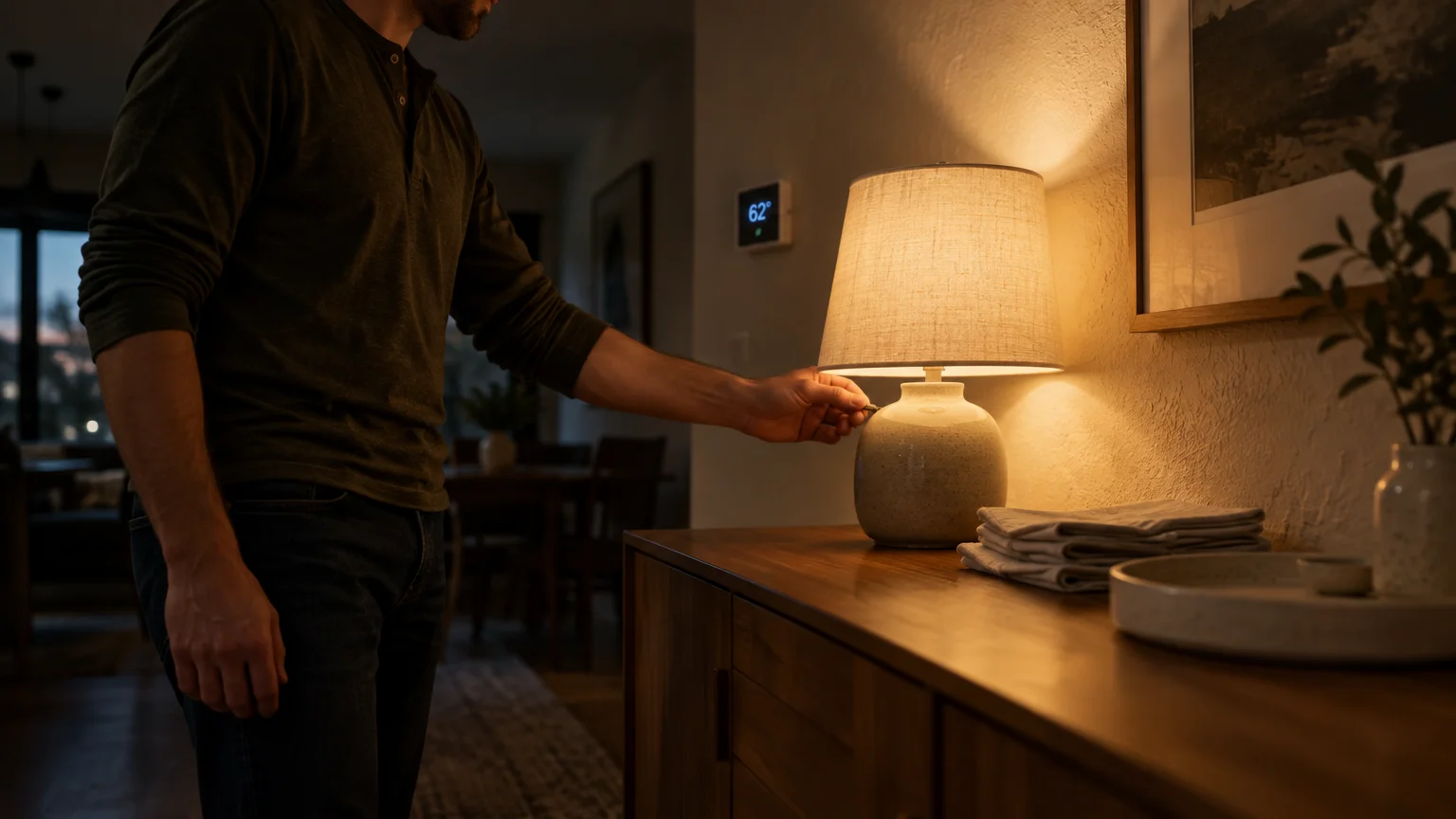
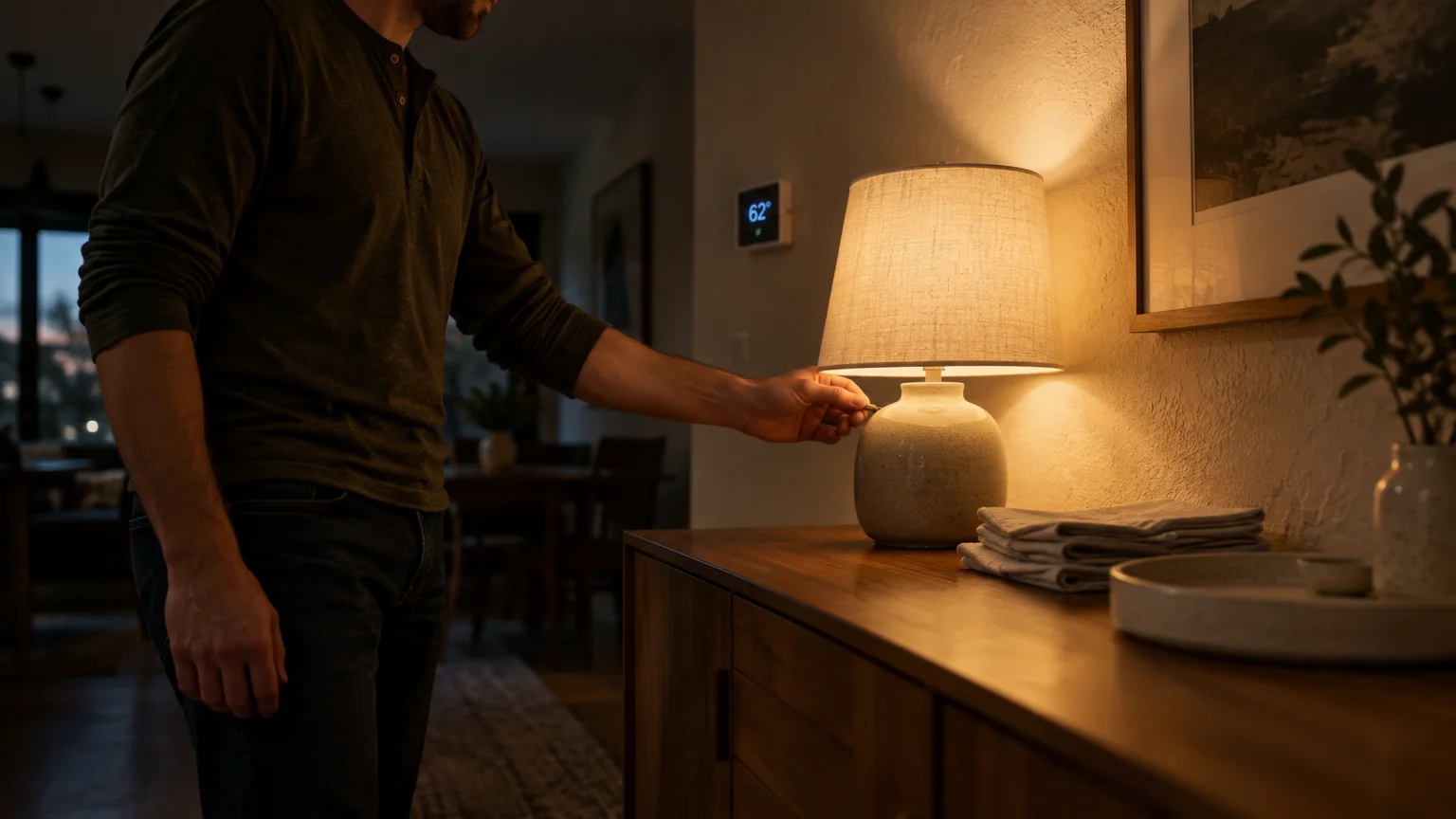
Start by lowering your overhead fixtures at least an hour before anyone arrives at your door. Harsh ceiling bulbs trigger unconscious tension and remind people of workplaces or doctor offices.
Instead, turn on accent lamps, floor lights, and warm sconces placed at varied heights throughout the room. This layered approach softens shadows and makes your home look instantly more inviting.
Adjust your thermostat downward by two or three degrees before people walk through the door. A room full of warm bodies heats up quickly, and a stuffy room drains guest energy fast.
Cool, fresh air keeps the room vibrant and encourages lively conversation well into the evening. You can always offer a light throw blanket if someone feels a slight chill.
These foundational entertaining tips cost nothing to implement but completely redefine the guest experience. Focus on comfort first, and your visitors will feel welcome the second they arrive.
You do not need expensive decor to make an impression. Mood management remains one of the ultimate hosting secrets of top industry professionals.
Tip #2: Deploy the Batch Signature Drink
Setting up a full commercial bar is one of the most expensive mistakes you can make. Buying half a dozen specialty spirits, liqueurs, and perishable mixers quickly blows up your entertainment budget.
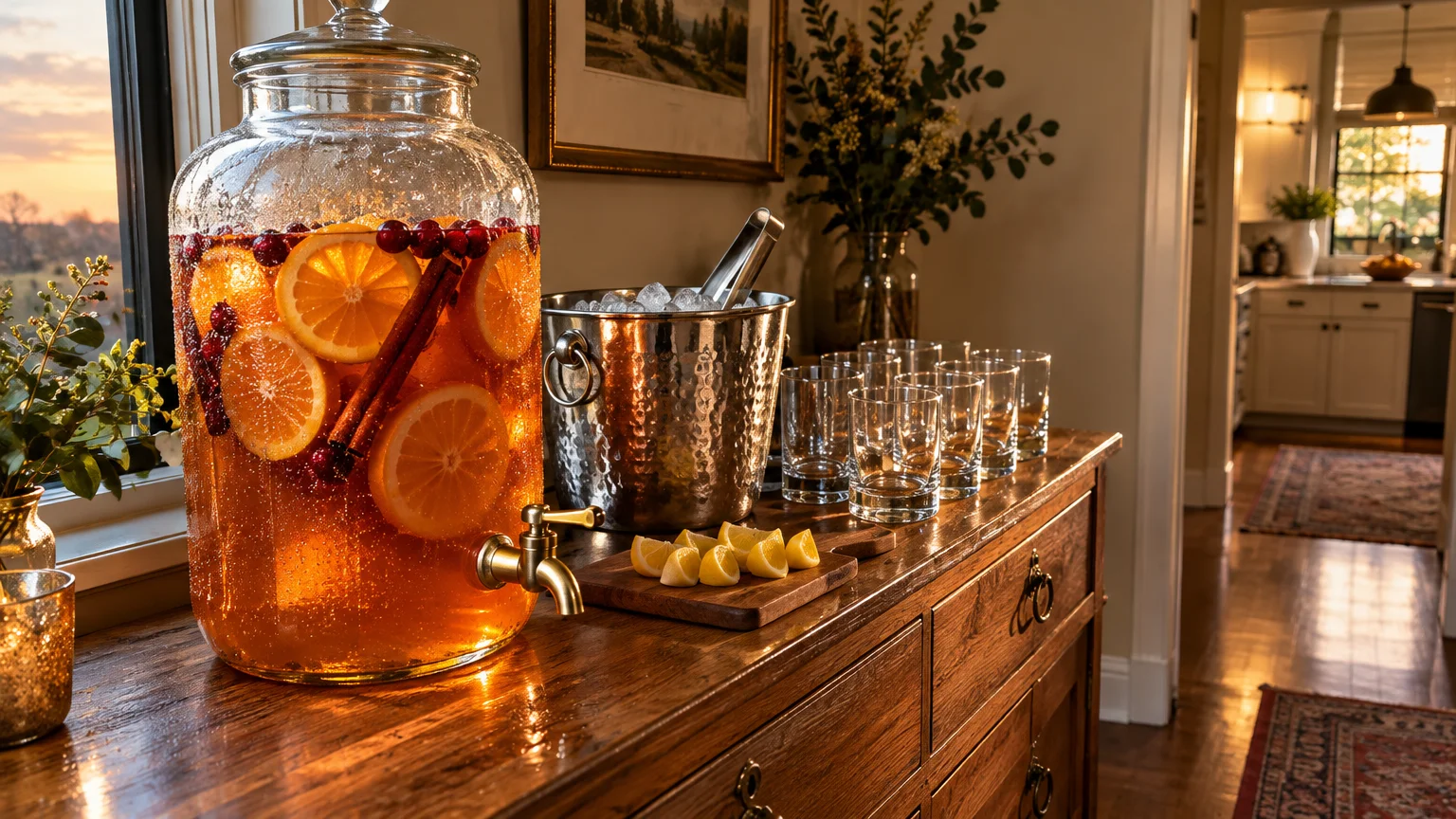
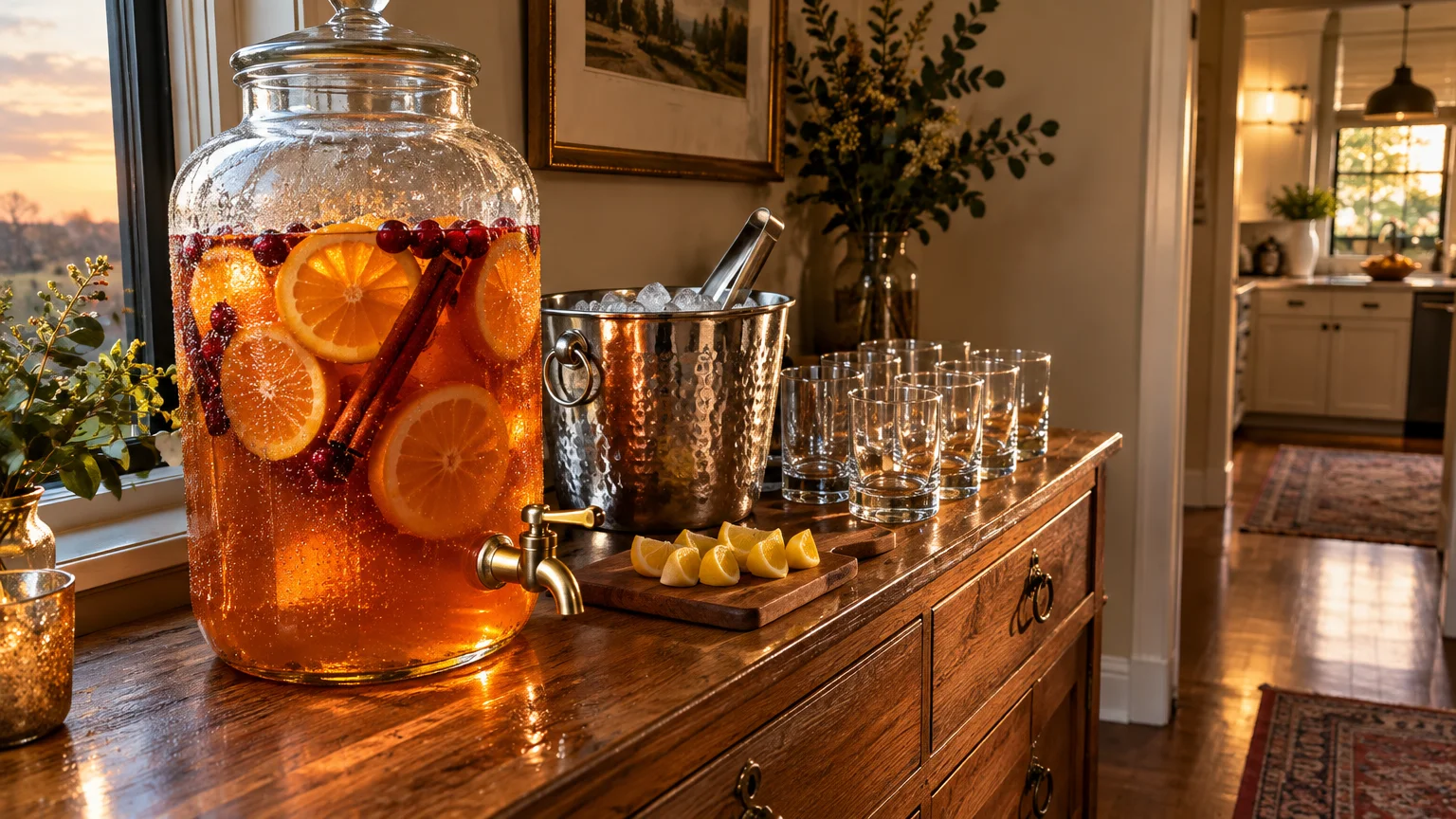
Seasoned entertainers never run an open bar that requires them to play bartender all night long. Instead, they feature a single, well-crafted batch cocktail served in a handsome pitcher or drink dispenser.
A signature punch or pitcher drink establishes a festive theme while capping your alcohol expenses efficiently. It lets you purchase one quality base spirit in bulk rather than multiple specialty bottles.
Complement your signature creation with a modest selection of standard red wine, white wine, and sparkling water. This gives guests sufficient variety without forcing you to stock obscure ingredients.
Place the beverage station slightly away from the kitchen to prevent traffic bottlenecks near your cooking zone. Stock it with plenty of fresh ice, glassware, and pre-cut citrus wheels for effortless self-service.
When guests can easily refill their own drinks, they immediately feel more comfortable and at home. Meanwhile, you stay out of the drink-making rotation and enjoy your own event.
This tactic also prevents half-empty liquor bottles from cluttering your cabinets for the next decade. Streamlining your bar menu is a masterclass in how to host a party smartly.
Your wallet stays intact, your prep remains simple, and your guests enjoy a distinctive house beverage.
Tip #3: Master the High-Low Food Formula
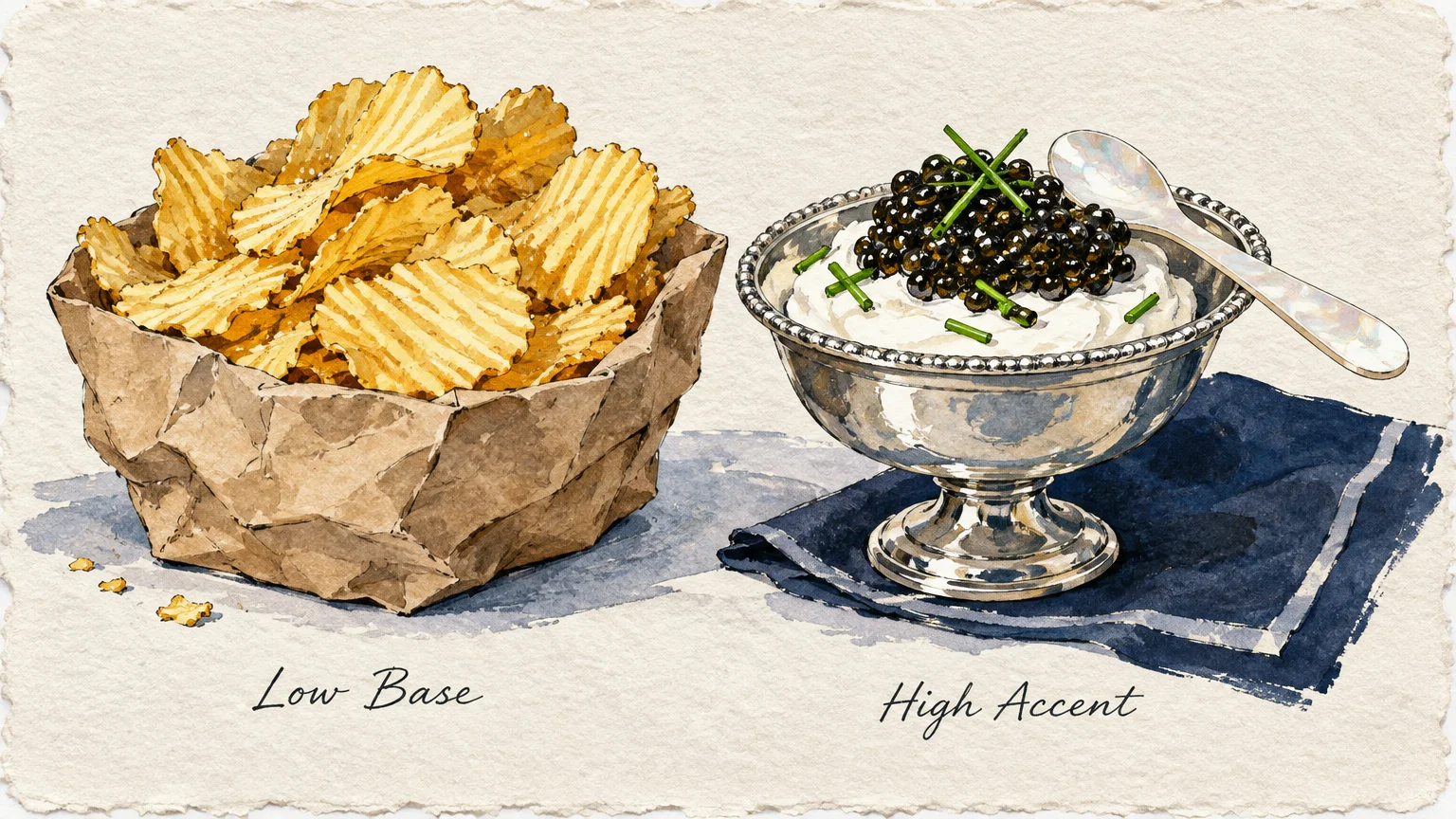
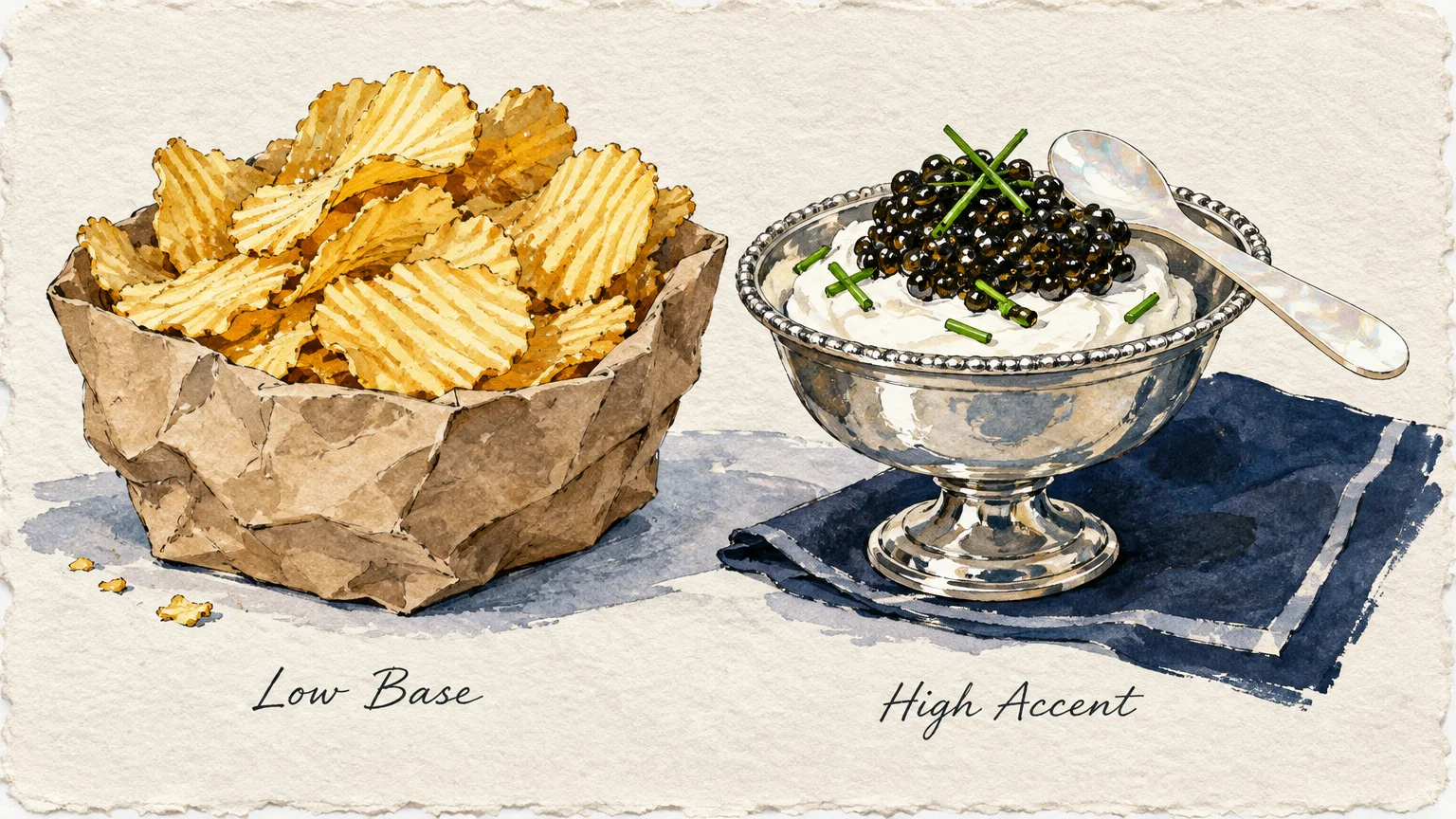
Commercial catering companies rely on a reliable trick to maximize perceived luxury: the high-low food strategy. They build meals around hearty, economical staples and elevate them with single premium ingredients.
You do not need to serve prime rib or whole tenderloin to impress a hungry crowd. In fact, expensive cuts of meat create enormous cooking stress and risk drying out.
Instead, focus on satisfying, cost-effective foundations like roasted pork shoulder, braised chicken thighs, or handmade pasta. These dishes handle holding temperatures gracefully and actually taste better when made ahead.
Elevate these affordable bases with deliberate touches of luxury right before serving. A drizzle of genuine white truffle oil or aged balsamic vinegar transforms humble roasted root vegetables instantly.
Shave authentic Parmigiano-Reggiano over a crisp green salad rather than using generic grated cheese. A pinch of flaky Maldon sea salt on hot dinner rolls makes standard butter taste extraordinary.
Guests remember these intense flavor peaks and perceive the entire meal as luxurious and sophisticated. They never calculate the wholesale cost of the potatoes or greens underneath.
This strategic approach cuts your grocery bills in half while boosting overall satisfaction. It proves that hosting like a pro requires culinary psychology rather than extravagant spending.
You get maximum flavor payoff with minimal financial strain, giving you total peace of mind.
Tip #4: Finish Kitchen Prep Before Guests Arrive
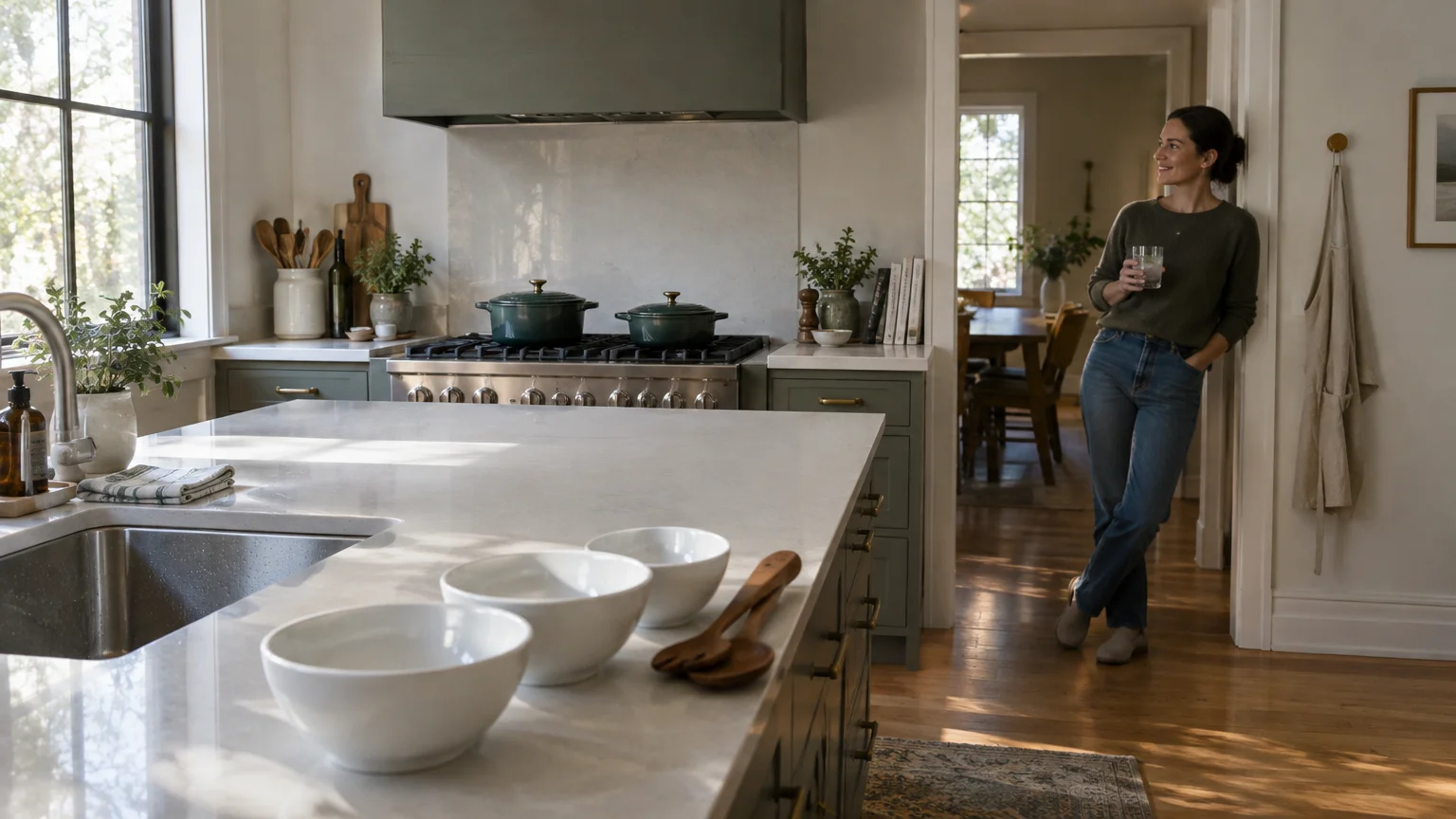
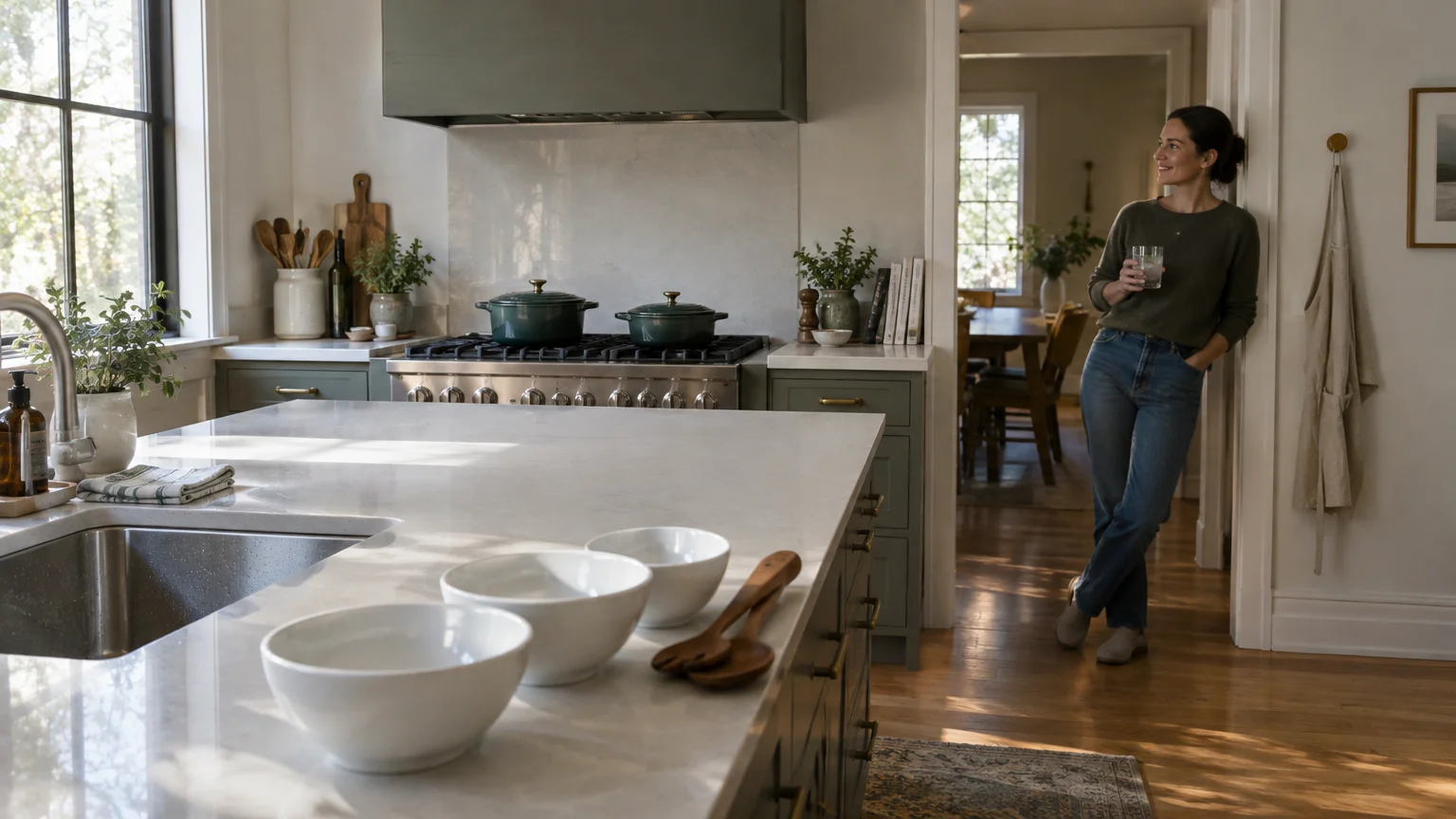
Nothing ruins a dinner party faster than a frantic host chained to a smoking stovetop. When you spend the evening sweating over frying pans, your guests feel awkward and neglected.
Professional entertainers follow a strict rule: ninety percent of all kitchen labor finishes before guests arrive. Your primary job during the gathering is to guide the social energy of the room.
Choose recipes that bake slowly in the oven or simmer quietly on low heat. Braises, baked gratins, and chilled salads allow you to clean the kitchen hours in advance.
Empty your dishwasher completely before your first visitor rings the front doorbell. This simple habit gives dirty cocktail glasses and appetizer plates an immediate home out of sight.
Clear all prep cutting boards, wipe down the countertops, and take out the kitchen trash. Walking into a clean, aromatic kitchen signals competence and puts everyone at ease immediately.
If you must perform final cooking tasks, restrict them to simple garnishing or carving. Keep these steps brief and conversational so you remain connected to the gathering.
Your guests want your company, not an amateur chef putting on a stressful live performance. When you relax, your friends relax, creating an easygoing rhythm for the entire evening.
Advanced preparation remains one of the simplest entertaining tips for stress-free hosting.
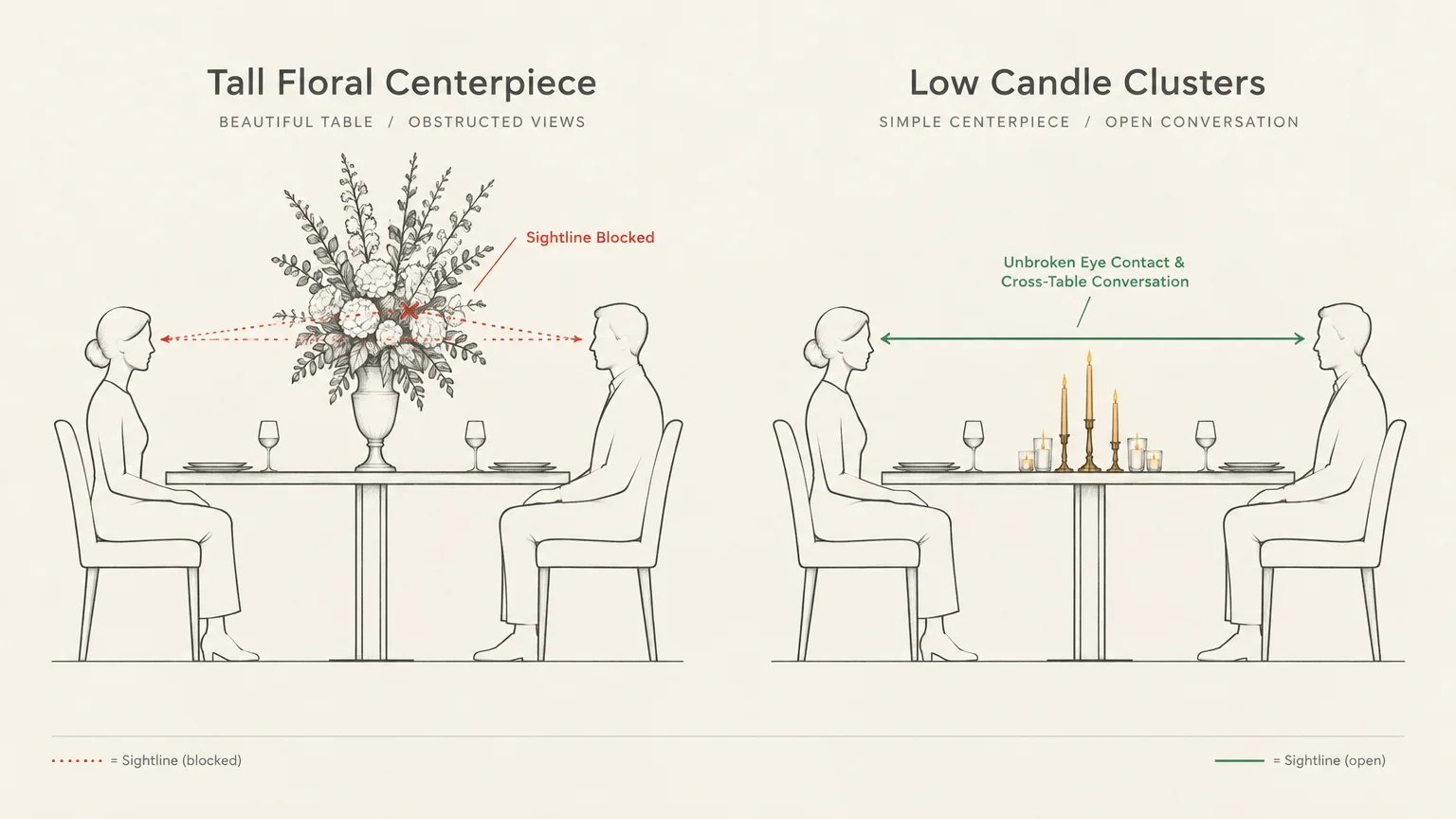
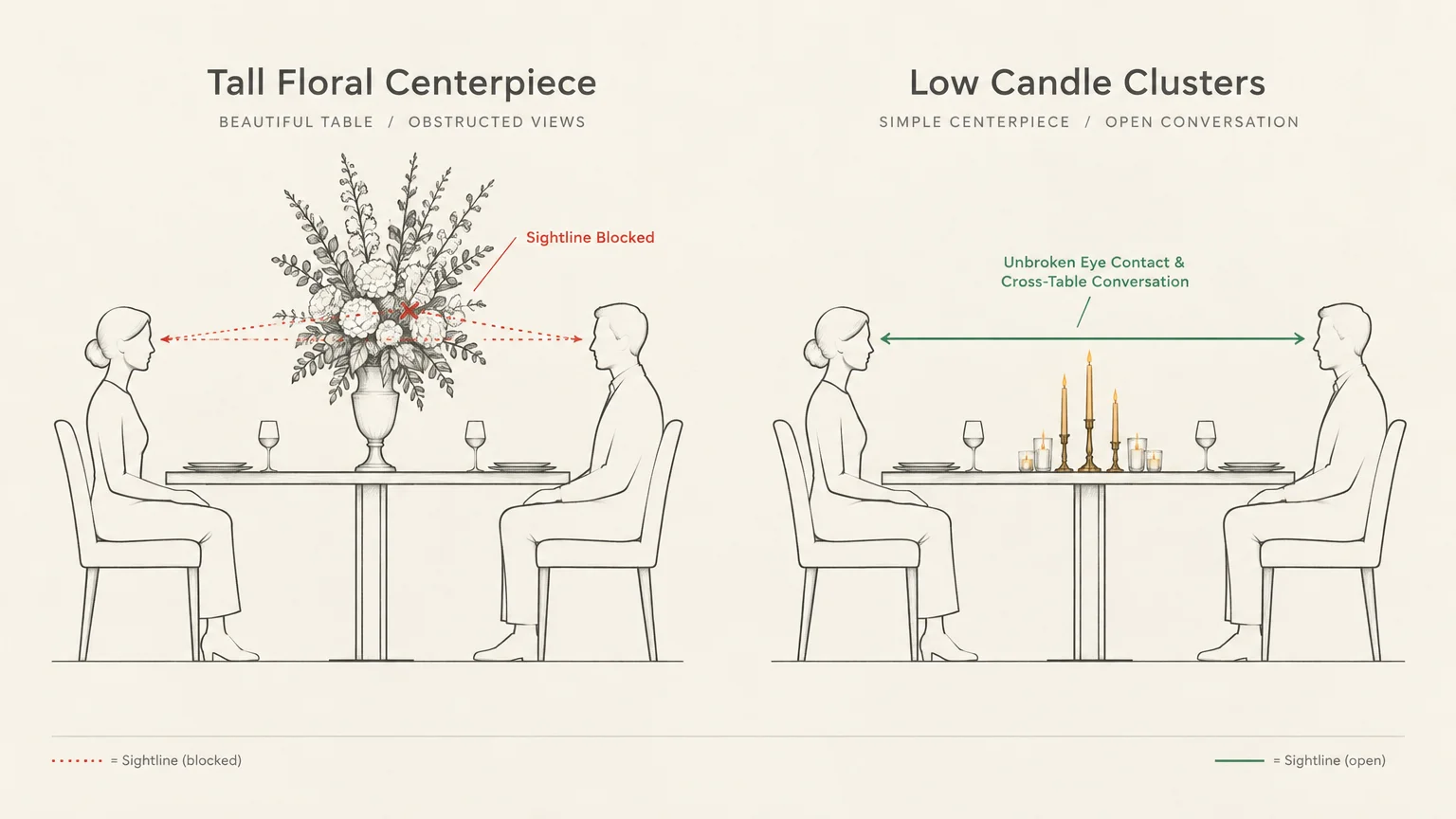
Tip #5: Replace Floral Centerpieces With Ambient Lighting
Elaborate floral centerpieces represent one of the biggest money pits in modern entertaining. Florists charge steep markups for arrangements that wilt within forty-eight hours and block sightlines across tables.
When guests cannot see across the dining table, natural dinner conversation fractures into isolated groups. Giant vases create visual walls that kill spontaneous storytelling and shared laughter.
Replace high-priced bouquets with clusters of unscented candles arranged at varied, low heights. Pillar candles, glass votives, and slender tapers cast a warm, flattering glow on everyone’s faces.
Scent-free candles are essential because heavy floral or vanilla perfumes clash terribly with food aromas. Unscented wax provides pure visual magic without assaulting your guests’ sense of smell.
Inexpensive clear glass holders reflect candlelight across the table surface, amplifying the brightness naturally. You can buy these holders in bulk online or at thrift shops for pennies.
For organic texture, scatter small sprigs of fresh rosemary or eucalyptus leaves around the candle bases. These natural touches cost very little and stay comfortably below eye level all night long.
This simple switch saves significant money and produces a far more intimate, cinematic dining experience. It transforms an ordinary dining room table into a glowing sanctuary for meaningful conversation.
Smart table design serves the guests, not the florist’s bottom line.
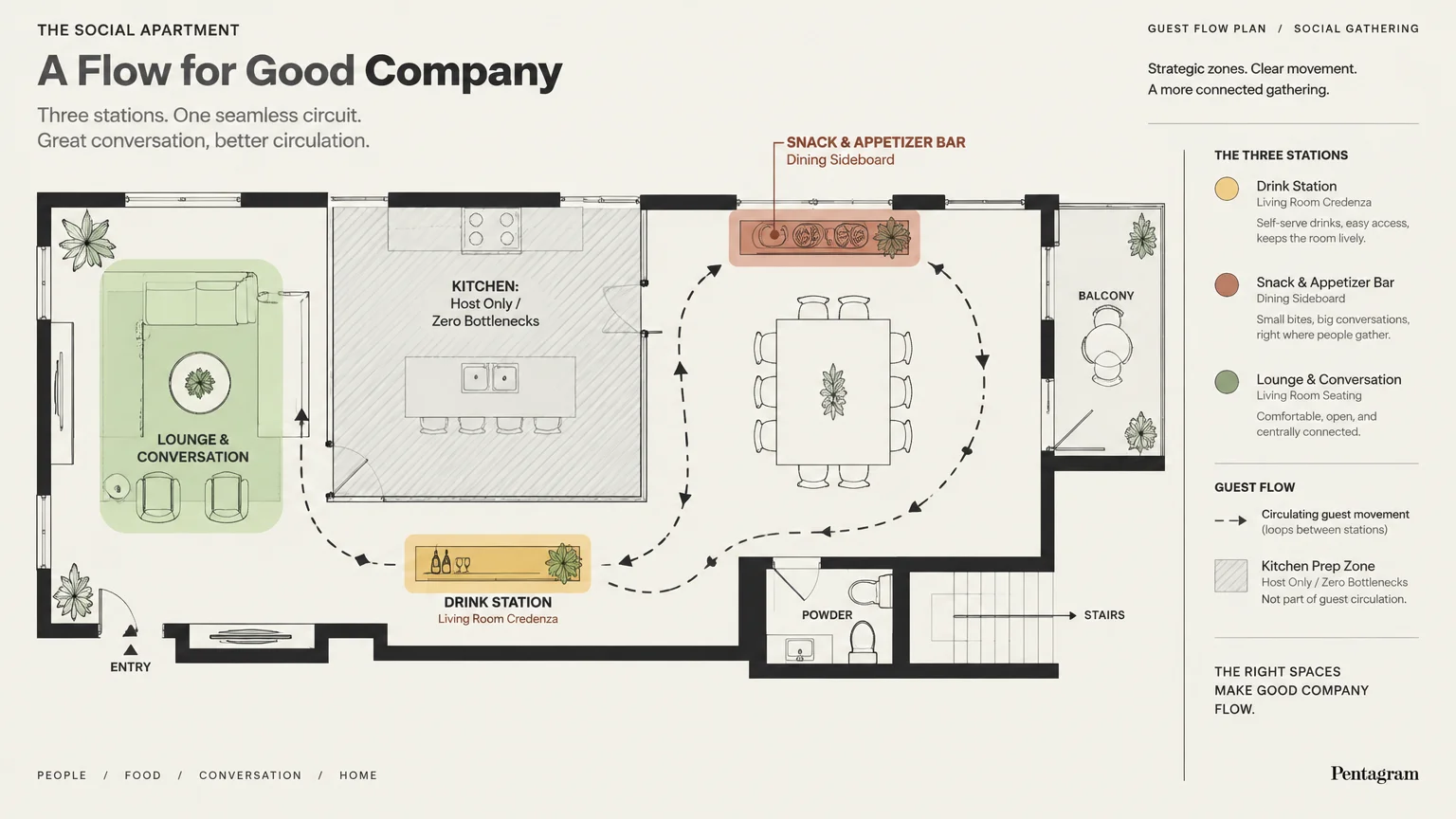
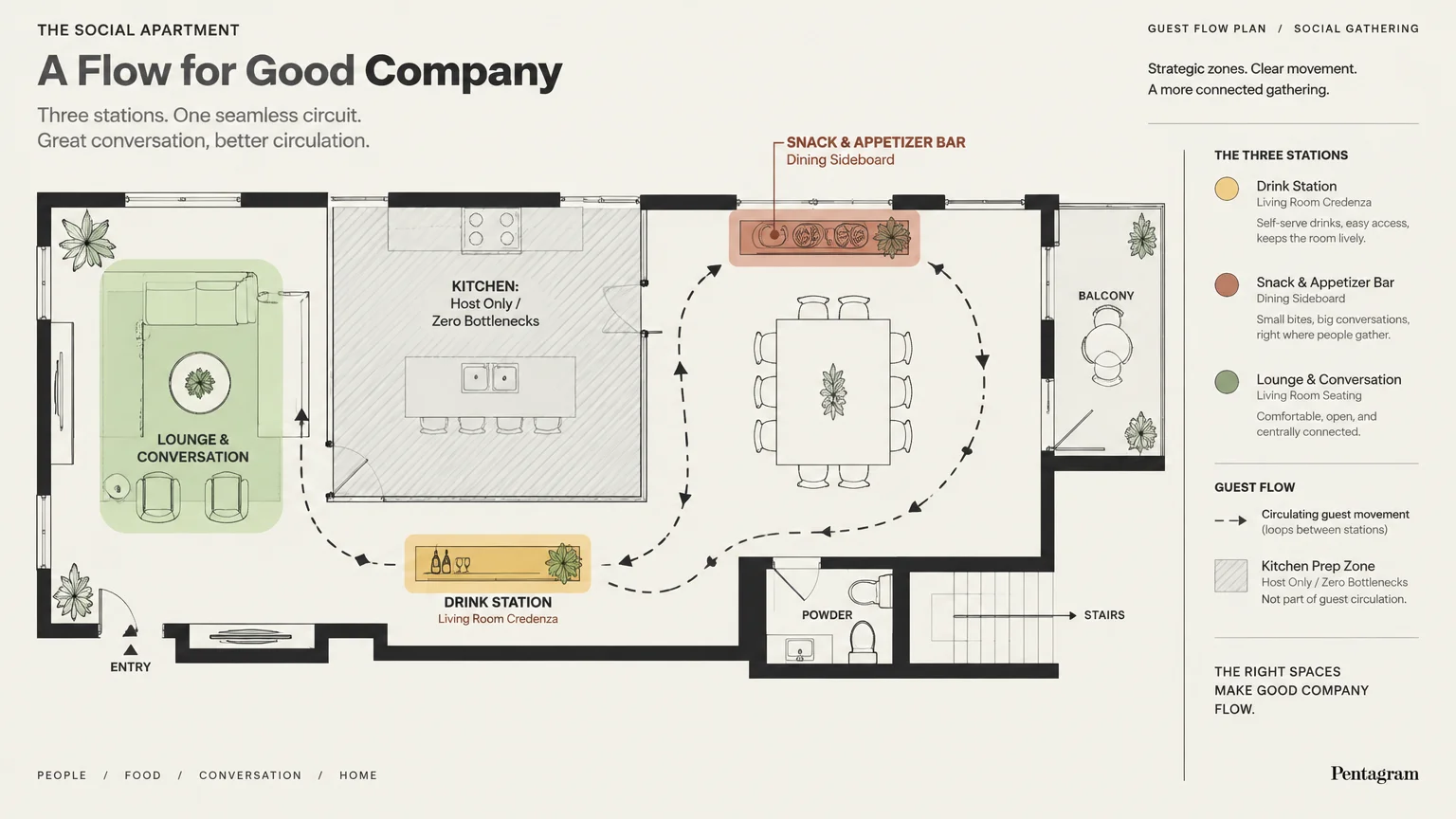
Tip #6: Scatter Stations to Eliminate Room Traffic Jams
Human beings naturally congregate around sources of food and alcohol, especially inside tight kitchens. If you put drinks, appetizers, and main dishes in one spot, gridlock paralyzes your party.
Master hosts engineer room flow by scattering destinations strategically throughout their living spaces. Separating functional stations encourages people to circulate and interact with different groups.
Set up the beverage station in a dining room or near a far living room corner. Place savory snacks on a coffee table or sideboard away from the primary kitchen island.
This deliberate layout forces guests to walk through the space, sparking spontaneous conversations along the way. It prevents awkward clusters from forming and taking over the cooking area entirely.
Ensure every station has small cocktail napkins and a discreet dish for discarded olive pits or toothpicks. Small conveniences keep your home tidy without requiring you to play maid all night.
Keep traffic pathways clear between seating zones and functional stations so movement feels effortless. Avoid placing bulky furniture where guests need to pass through narrow doorways or halls.
Spreading out your party infrastructure changes how your entire home functions during holiday entertaining. Even modest floor plans feel spacious when movement flows naturally through multiple rooms.
Thoughtful floor layouts maximize social connection while keeping kitchen operations completely clear.
Tip #7: Curate a Four-Stage Musical Arc
Background music works as the invisible heartbeat of your gathering, setting the subconscious pace. A stagnant, repetitive playlist or total silence can drain the vitality from an otherwise great evening.
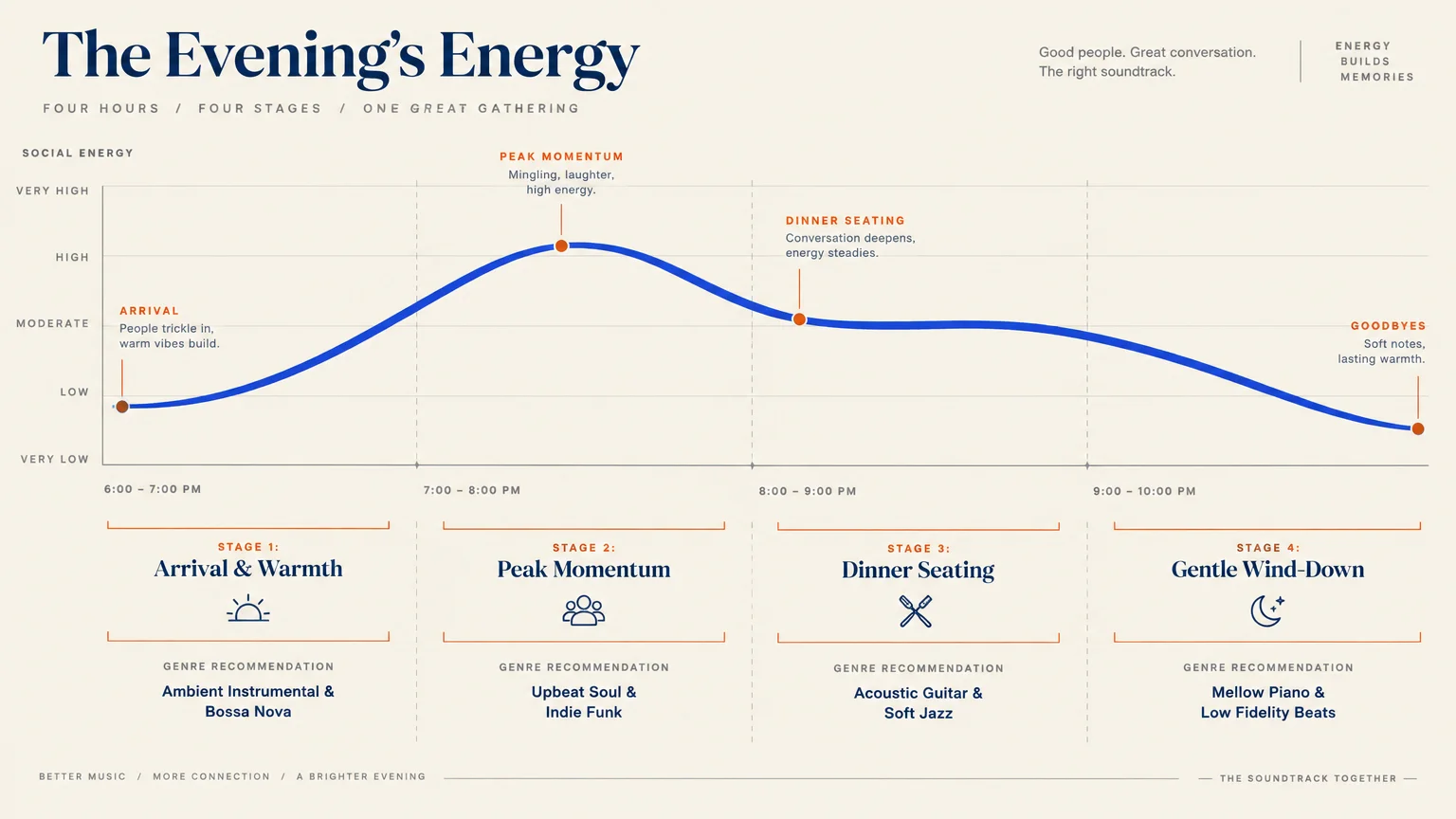
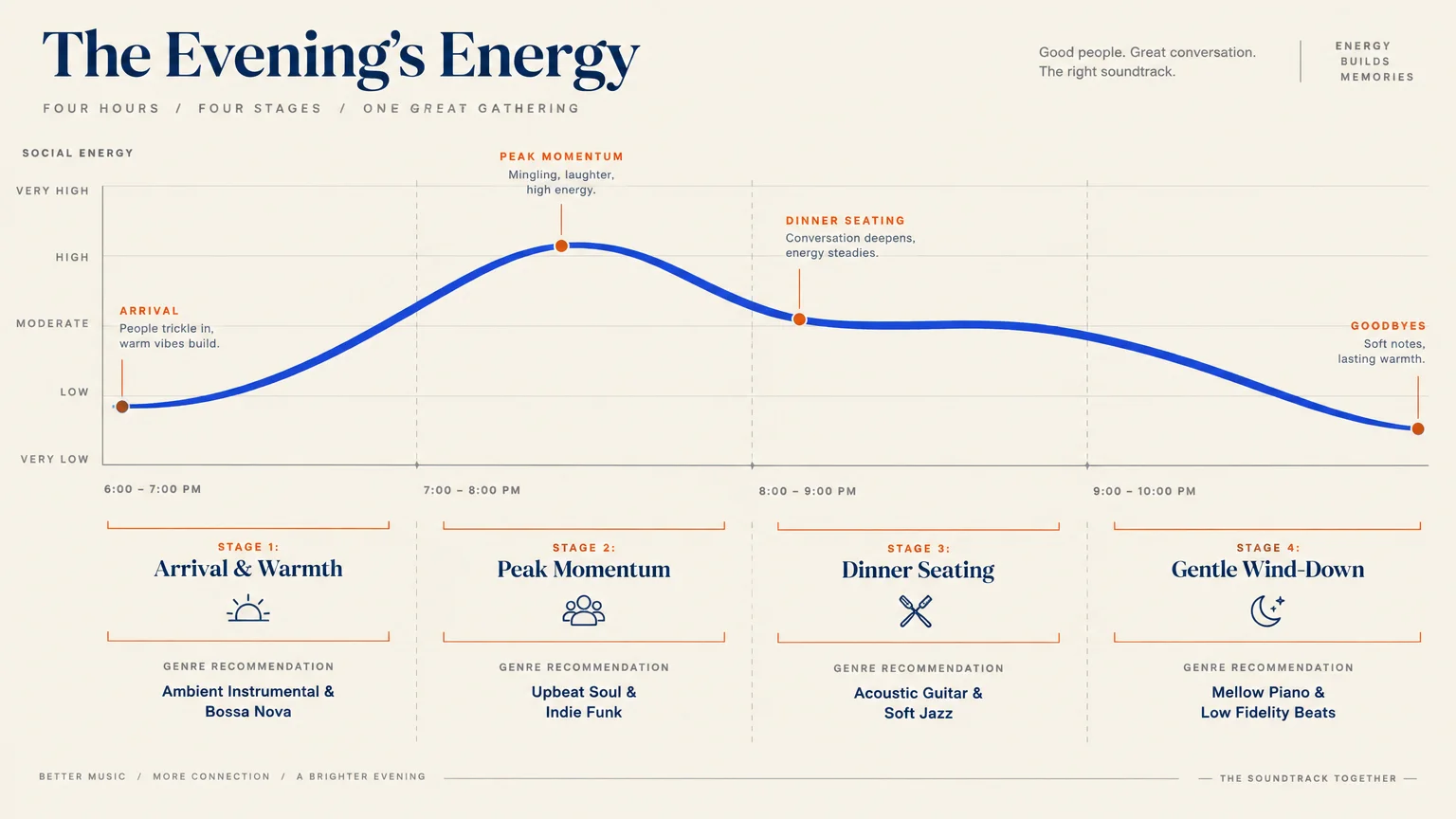
Experienced entertainers design their playlists in four distinct phases to guide energy levels smoothly. They tailor the tempo to match arrival, cocktail mingling, the main meal, and late-night unwinding.
Phase one starts with warm, mid-tempo instrumental tunes or classic jazz as guests arrive. This gentle sound cushions early arrivals and eliminates awkward lulls between opening conversations.
As the room fills, phase two transitions into upbeat, familiar tracks with slightly higher energy. This builds excitement during the cocktail hour and encourages animated chatter across the room.
Phase three lowers the volume significantly when everyone sits down for dinner. Dinner music should never compete with voices; keep acoustic melodies soft and unintrusive throughout the meal.
Phase four gradually shifts to mellow soul, vintage funk, or ambient grooves as dinner wraps up. This encourages guests to relax into comfortable seating for relaxed evening conversation.
Never rely on random radio algorithms that might blast aggressive advertisements or jarring tempo shifts. Taking thirty minutes to sequence your playlist beforehand guarantees effortless social harmony.
Sound management is one of the most powerful, free hosting secrets at your disposal.
Tip #8: Serve Hearty Dishes Family-Style
Plating individual courses in the kitchen is an absolute trap for home entertainers. It requires military timing, leaves half the food cold, and forces you away from your table.
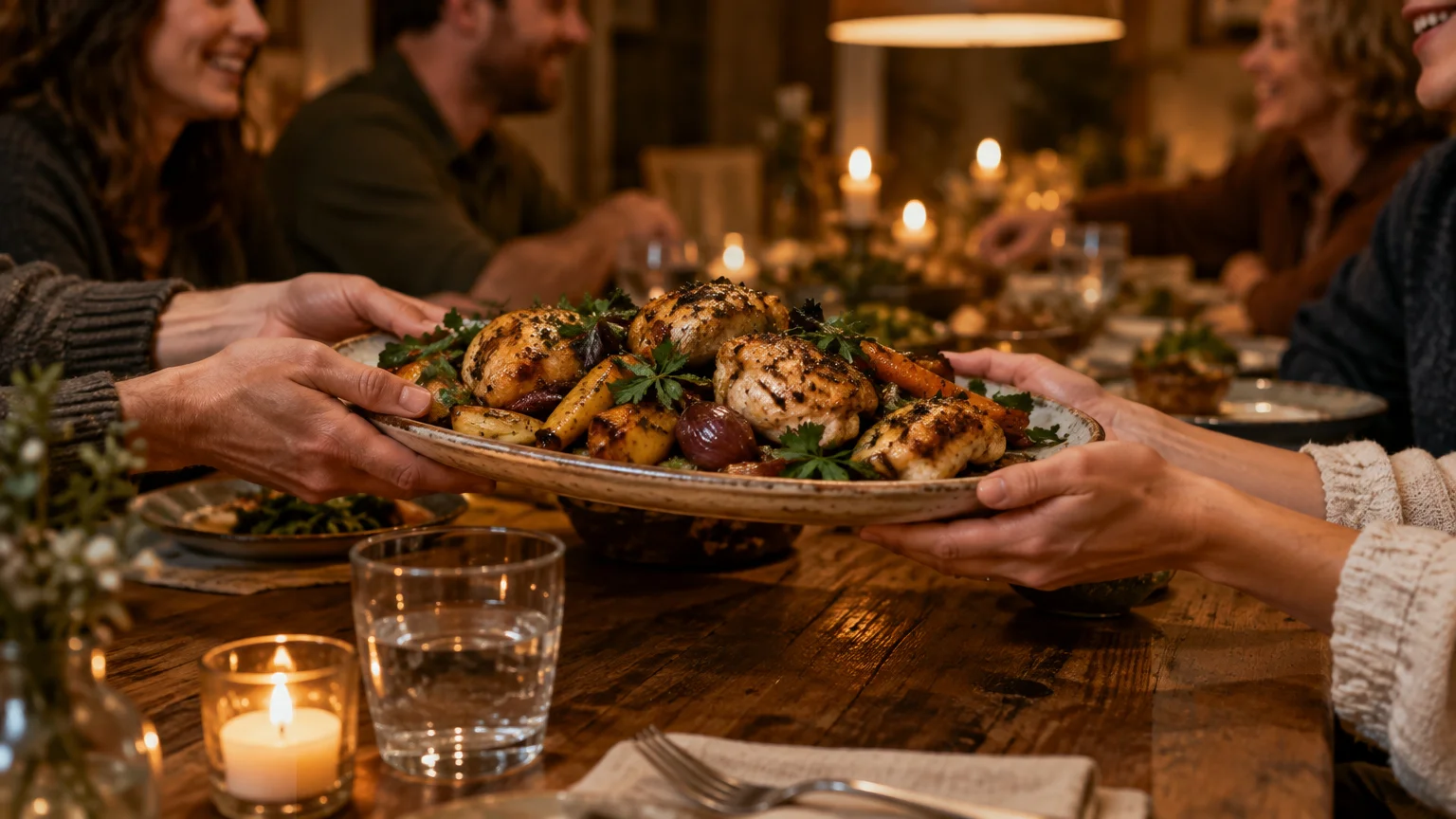
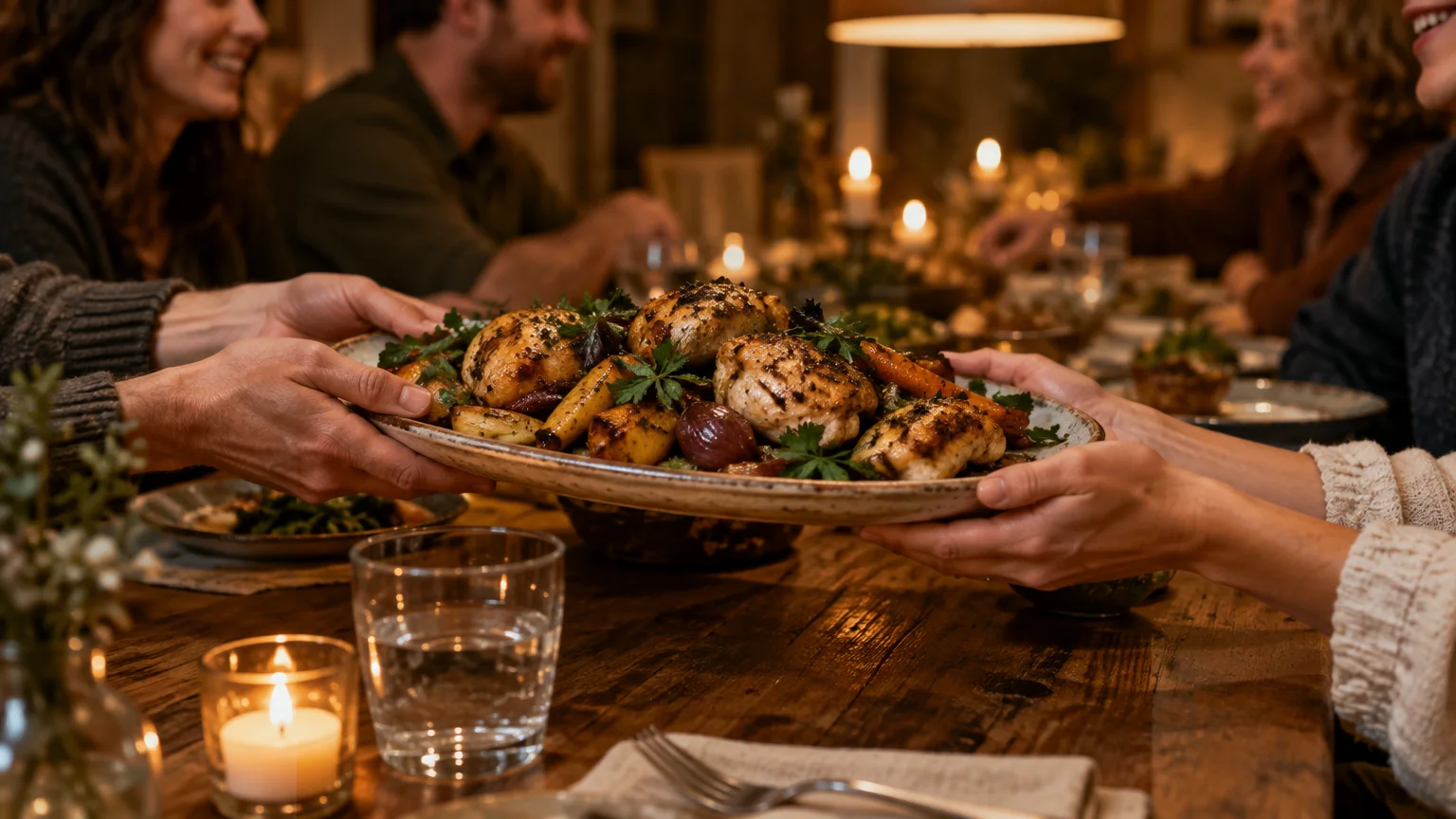
Serving food family-style on wide, shared platters solves every logistical problem at once. It creates an interactive, communal dynamic where guests naturally talk and share while passing dishes.
Large platters also mask uneven portion sizes and allow guests to serve themselves comfortably. Picky eaters and health-conscious friends can take exactly what they want without feeling singled out.
This method drastically reduces food waste, saving you money on overall grocery expenses. When you plate meals individually, unwanted portions simply end up scraped into the trash bin.
Choose wide, shallow bowls and platters rather than deep, narrow dishes for better presentation. Food looks more abundant and appealing when spread horizontally across a beautiful ceramic surface.
Pre-warm your serving platters in the oven on its lowest setting before loading them up. Warm ceramic holds heat efficiently, keeping your food hot while guests pass dishes around.
Family-style dining removes formal stiffness and builds authentic connection among your guests. It embodies the relaxed hospitality that defines learning how to host a party properly.
You spend dinner seated with your friends rather than sweating over multiple individual dinner plates.


Tip #9: Streamline Your Glassware Arsenal
Marketing departments love convincing consumers that every single drink requires a unique, dedicated glass. Buying separate sets for red wine, white wine, martinis, and highballs wastes money and cabinet space.
Industry insiders know that a single versatile glass style works beautifully for almost every beverage. Standard eight-ounce stemless wine glasses or classic Spanish bodega glasses handle wine, water, and cocktails effortlessly.
Stemless glassware is sturdier, far less prone to tipping, and fits easily into home dishwashers. Fewer broken stems mean fewer replacement costs and zero hazardous glass cleanups mid-party.
Standardizing your glassware also gives your table a cohesive, modern bistro aesthetic. A matched set of clean, simple tumblers looks intentional and chic without costing a small fortune.
Buy these durable everyday glasses in bulk from restaurant supply retailers rather than boutique department stores. Restaurant-grade glass withstands heavy washing, rough handling, and accidental drops much better than fragile crystal.
If you need cocktail markers, skip gimmicky charms that fall off onto the floor. Instead, provide a simple food-grade glass marker so guests can scribble their names directly on tumblers.
Streamlining your bar equipment simplifies table settings, speeds up dishwashing, and slashes storage requirements. It is a brilliant example of practical efficiency that elevates home entertaining.
Smart hosts cut clutter and focus their budget on what guests actually consume.
Tip #10: Signal the Night’s End With Subtle Cues
Every host eventually encounters the lingering guest who fails to realize the party is over. Asking people to leave directly feels uncomfortable and can sour an otherwise wonderful evening.
Professional entertainers avoid awkward confrontation by using established environmental cues to signal closing time. These subtle shifts prompt guests to depart naturally without feeling pushed out the door.
Begin by turning off your party playlist and transitioning to very quiet, slow background jazz. Music controls social momentum, and lowering the beat prompts people to wind down their conversations.
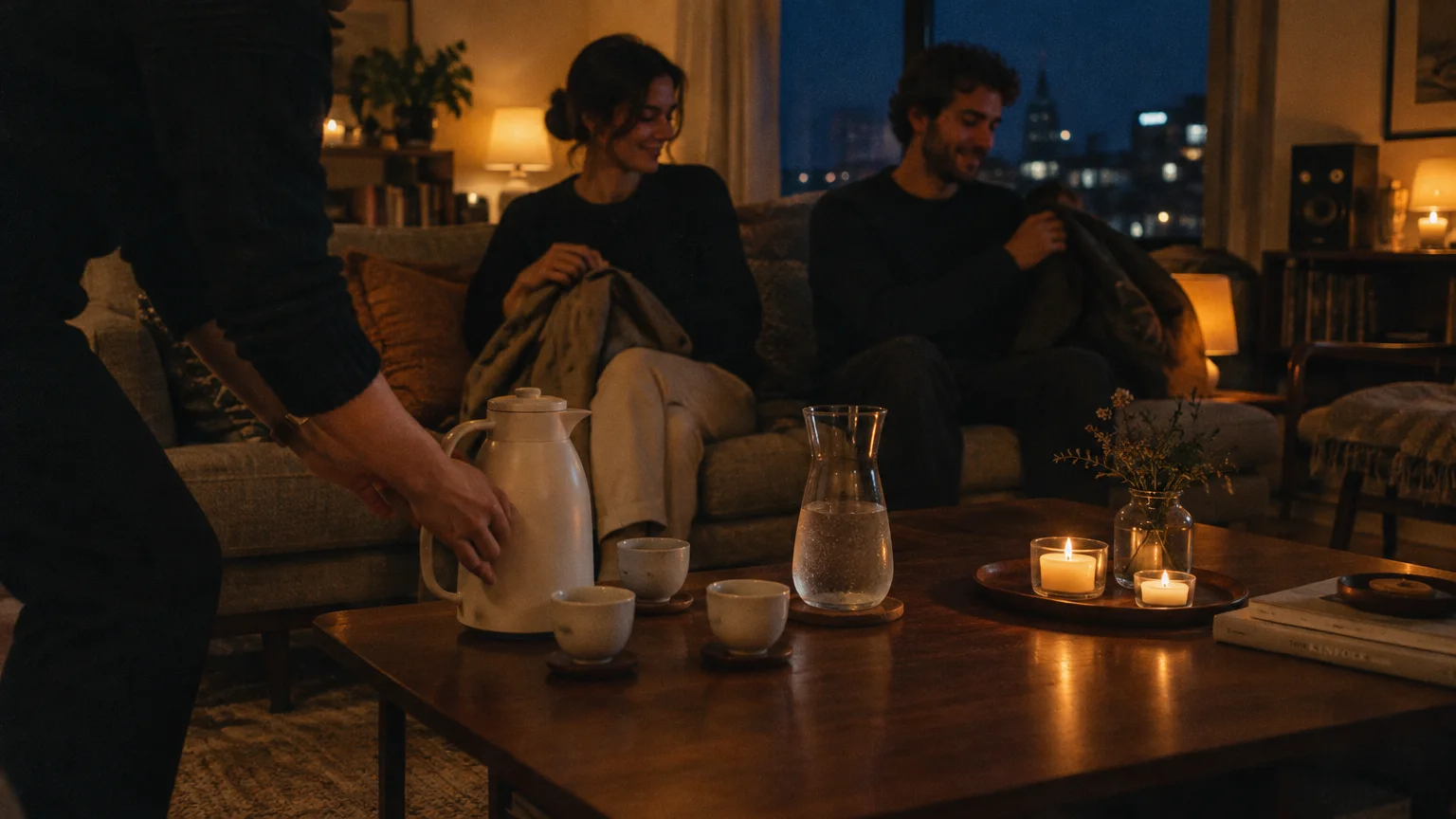
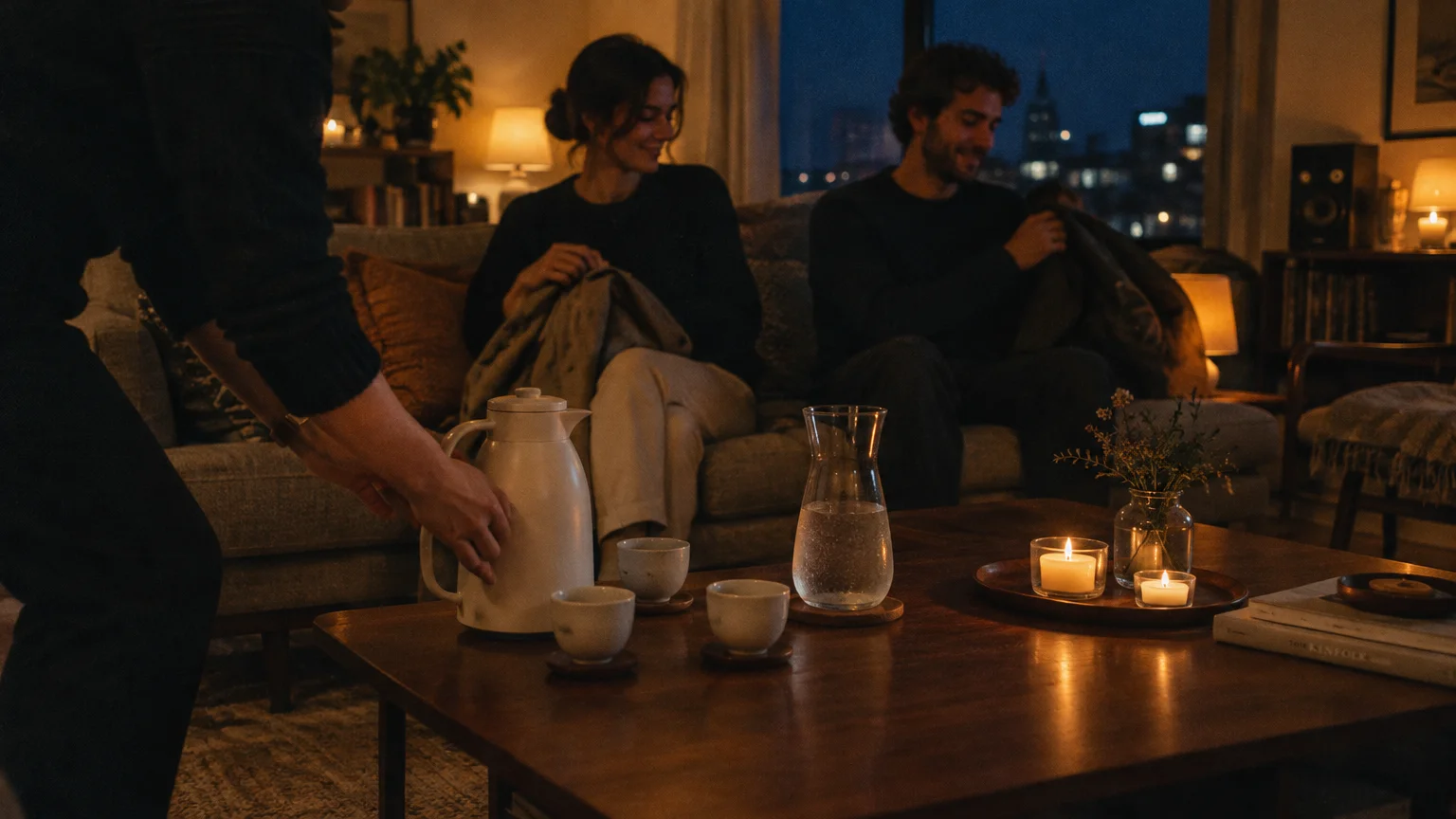
Raise your ambient lighting slightly to break the cozy mood of late-night drinking. This physical shift acts as an unconscious alarm clock, signaling that social hours have officially ended.
Close the bar by putting away wine bottles and liquor dispensers with calm deliberation. Offer a final round of hot herbal tea, decaf coffee, or sparkling water instead.
Start clearing empty glassware from side tables and packing leftovers into glass storage containers. Seeing the kitchen transition into closing mode provides an unmistakable social cue for remaining guests.
When you execute these steps smoothly, guests will naturally check their watches and reach for coats. You close the evening on a high note while protecting your personal sleep schedule.
Masterful host etiquette extends all the way through the final farewell at your front door.


The Bottom Line: What This Means for Your Wallet
Great entertaining has never been about flaunting wealth or competing with commercial restaurants. Real hospitality centers on human connection, genuine warmth, and making your guests feel deeply valued.
Overspending on rare ingredients, single-use decor, and endless liquor options creates unnecessary personal debt and anxiety. When you stress over money, that tension bleeds directly into the room atmosphere.
Implementing these practical hosting secrets allows you to entertain regularly without damaging your monthly finances. You can host memorable dinners frequently by focusing on atmospheric pacing and clever kitchen shortcuts.
The best entertainers understand that resourcefulness produces far better memories than uninspired extravagance. Your friends come to see you, not an expensive centerpiece that ends up in the garbage.
Apply these ten principles at your next gathering and watch your confidence as a host soar. You will spend far less money, work fewer hours, and enjoy every single minute.
For consumer protection information, visit the Federal Trade Commission (FTC) and the Consumer Financial Protection Bureau (CFPB). For product safety and reviews, consult Consumer Reports.
Disclaimer: This article is for informational purposes only and does not constitute financial advice. The content reflects the author’s opinion and research at the time of writing.
Always do your own research before making financial decisions.
Frequently Asked Questions
How much food should you prepare per guest to avoid overspending?
Plan on roughly one pound of total food per adult guest, including sides and appetizers. This balanced ratio ensures abundance on the table without leaving you with days of expensive wasted leftovers.
Bulk up the meal using inexpensive, filling staples like roasted potatoes, grains, and fresh artisan breads. These affordable foundation items satisfy hearty appetites without inflating your grocery bill.
Is it rude to ask guests to bring something to a dinner party?
Not at all, provided you ask for specific, non-essential accompaniments like ice, wine, or bakery bread. Guests genuinely enjoy contributing, and giving them clear direction prevents duplicate or unneeded dishes.
Never assign core main courses or complex sides that require your oven space. Keep their contributions simple so your cooking schedule remains completely uninterrupted.
What is the most cost-effective way to handle holiday entertaining?
Focus on a single, hearty centerpiece dish like a braised roast rather than multiple competing meats. Pair it with seasonal produce, which always costs significantly less than out-of-season imports.
Avoid buying holiday-specific disposable tableware that ends up in landfills after one evening. Reusable white ceramic plates and linen napkins look timeless and save money every single year.
How do you handle dietary restrictions without cooking separate meals?
Build your menu around naturally flexible formats like grain bowls, taco spreads, or customizable family-style platters. Keep allergen-heavy ingredients like dairy, nuts, and gluten in separate small serving dishes.
This allows guests with restrictions to build safe meals without forcing you to cook multiple entrees. It respects their dietary needs while keeping your kitchen workflow clean and manageable.