
Retailers design major holiday sales events to drain your budget through subtle psychological manipulation. You can protect your hard-earned cash by identifying deceptive retail traps before completing any holiday transaction.
Most shoppers mistakenly believe that every bright red discount banner guarantees an unprecedented bargain. In reality, stores frequently inflate baseline prices to disguise modest price cuts as once-a-year door-busters.
Sidestepping common retail traps keeps your personal finances secure throughout the competitive shopping season. Smart preparation ensures you capture genuine holiday discounts without falling victim to high-interest merchant debt.
Tip #1: Falling for Inflated Reference Prices and Fake Discounts
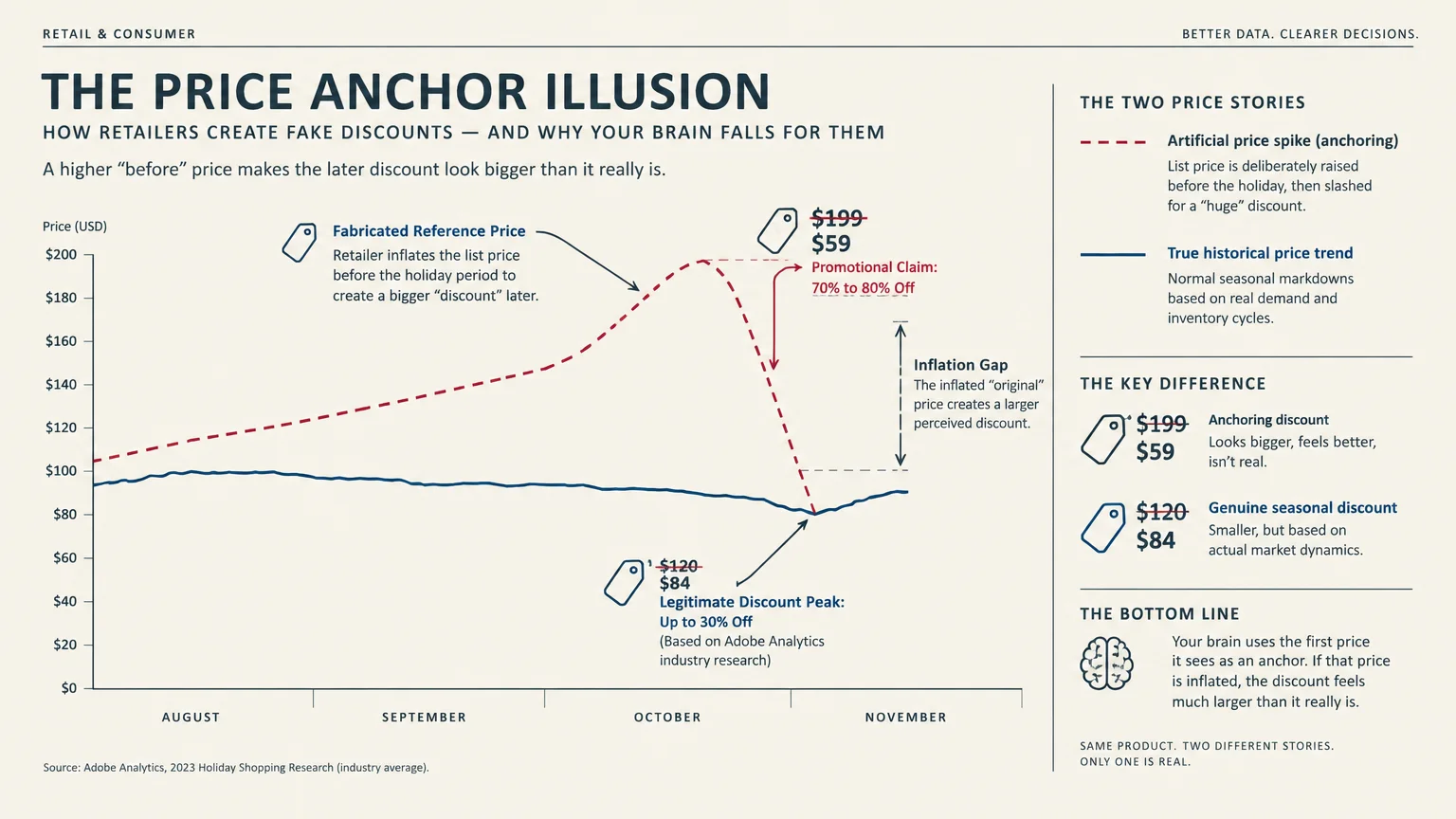
Retailers love the art of price anchoring. They artificially increase a product’s list price weeks before November to make the eventual markdown appear substantial.
This practice tricks your brain into seeing a dramatic discount where none exists. A jacket marked down from an inflated list price may still cost more than its standard summer rate.
Adobe Analytics forecasts that online holiday sales will hit $275.1 billion. The same data indicates that legitimate Cyber Week discounts peak at up to 30% off.
When you spot advertisements boasting 70% or 80% off, stay skeptical. Those steep cuts usually rely on fabricated manufacturer suggested retail prices that nobody ever paid.
Regulators monitor deceptive reference pricing, but enforcement remains difficult across millions of digital storefronts. Dishonest merchants exploit regulatory gaps by rotating stock and tweaking catalog numbers.
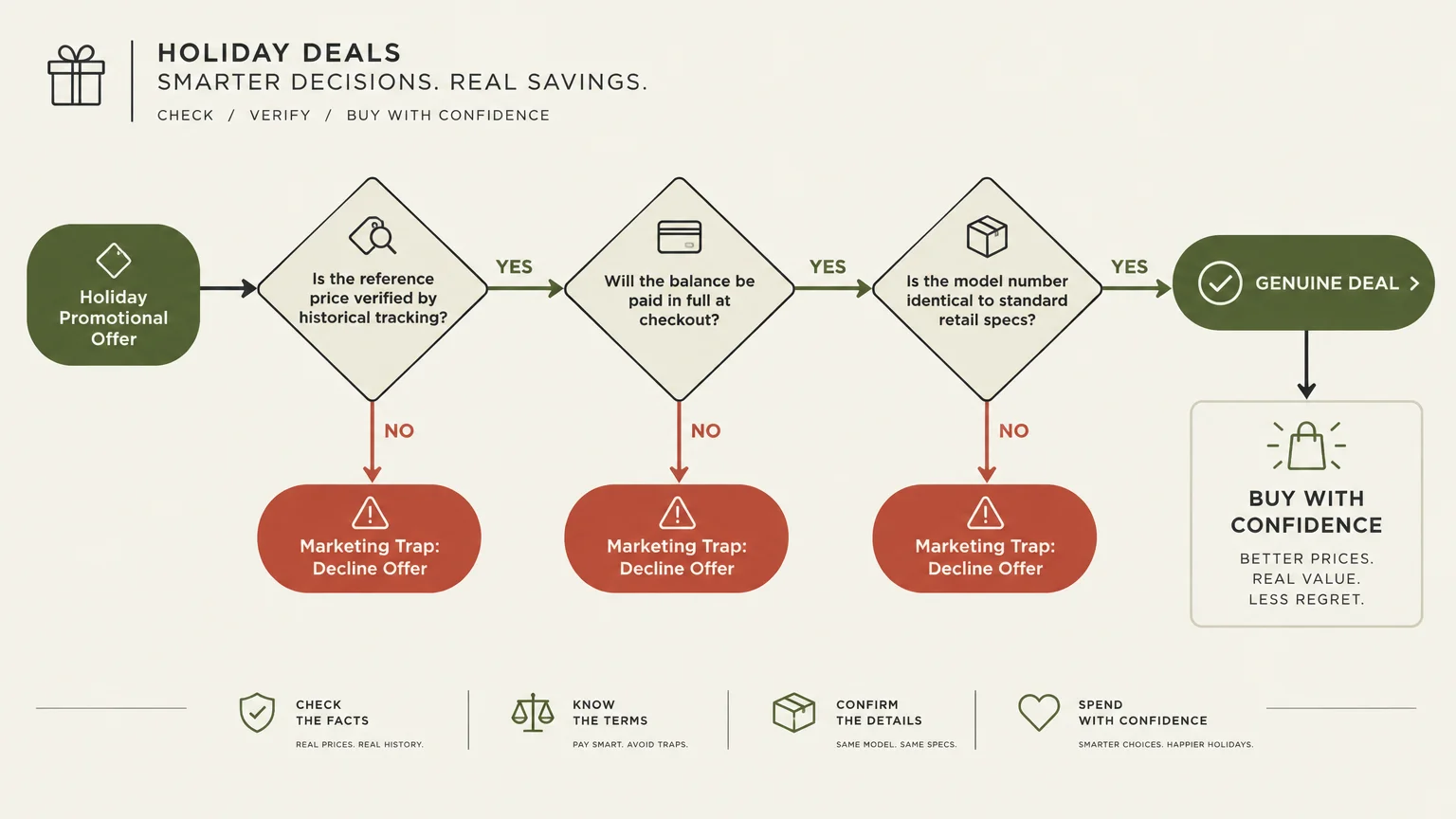
You can bypass fake Black Friday deals by examining price histories rather than trusting promotional tags. Tracking historical data exposes whether a sale is an authentic discount or an optical illusion.
Always verify the current selling price across multiple competing stores before buying. Never let a dramatic percentage off distract you from the final dollar amount leaving your account.
Focus on the actual cash price you must hand over at checkout. The original list price is merely a marketing suggestion designed to trigger your buying impulses.
Calculate your purchase value based solely on what the item delivers to your everyday life. A misleading markdown on an item you do not need is never a financial win.
Establish a firm pre-holiday budget based strictly on your personal cash flow rather than seductive markdown percentages. Sticking to your limits ensures marketing theatrics never compromise your financial stability.
Tip #2: Opening Retail Store Credit Cards for Checkout Discounts
Cashiers push store credit cards aggressively during the holiday rush. They tempt you with an instant discount on your entire cart if you apply at checkout.
That immediate savings looks enticing when your cart is full of gifts. Unfortunately, store credit cards carry some of the most punishing terms in the lending industry.
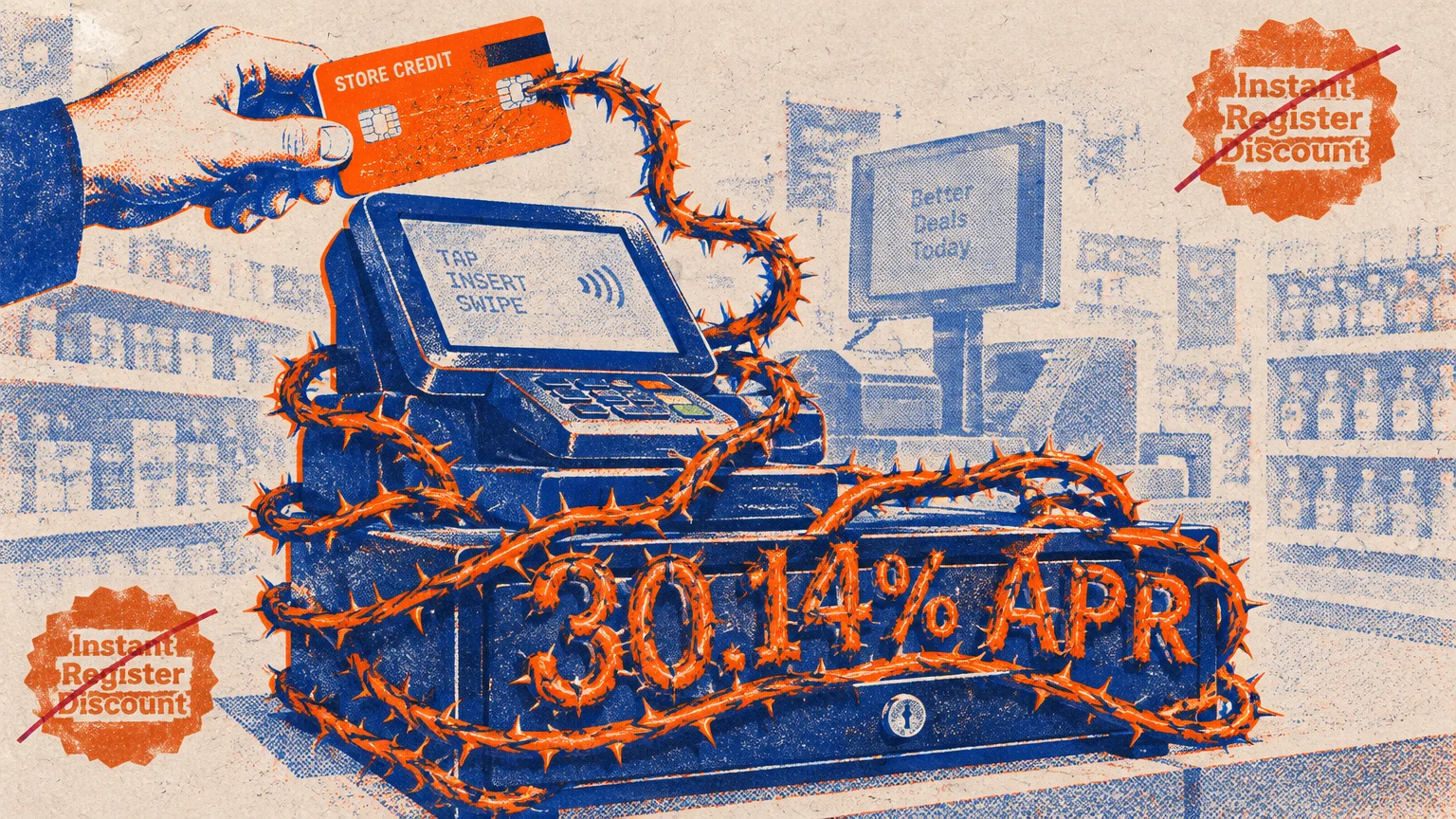
According to Bankrate’s retail credit card survey, the average APR on retail store credit cards has reached a record high of 30.14%.
A single month of unpaid debt wipes out any upfront discount you received at the register. At a 30.14% interest rate, financing charges accumulate at a staggering pace.
Many store credit cards also enforce deferred interest clauses. If you fail to clear your balance before a promotional window closes, retroactive interest hits your account.
Opening several new retail cards during one shopping trip also damages your credit score. Multiple hard inquiries reduce your rating and limit your borrowing flexibility for major future loans.
Closed-loop store cards restrict your reward redemption solely to that specific brand. You end up spending extra money just to burn off modest merchant loyalty points.
Decline checkout credit offers firmly and use your existing payment methods instead. Keep your credit profile clean and avoid taking on toxic, high-rate obligations during the holidays.
Protecting your credit rating delivers far greater long-term wealth than saving twenty dollars on a holiday retail purchase. Say no at the register every single time.
Set a strict rule before entering any store: politely say no to every single financing pitch at the cash register. Keeping your financial boundaries clear eliminates checkout hesitation.
Tip #3: Buying Stripped-Down Derivative Electronics and Door-Busters
Huge price drops on televisions and laptops often mask a dirty retail secret. Manufacturers frequently produce specialized derivative products specifically designed for Black Friday promotions.
These derivative models look almost identical to flagship products sitting on the same store display. However, factories build them with cheaper components to hit rock-bottom price targets.
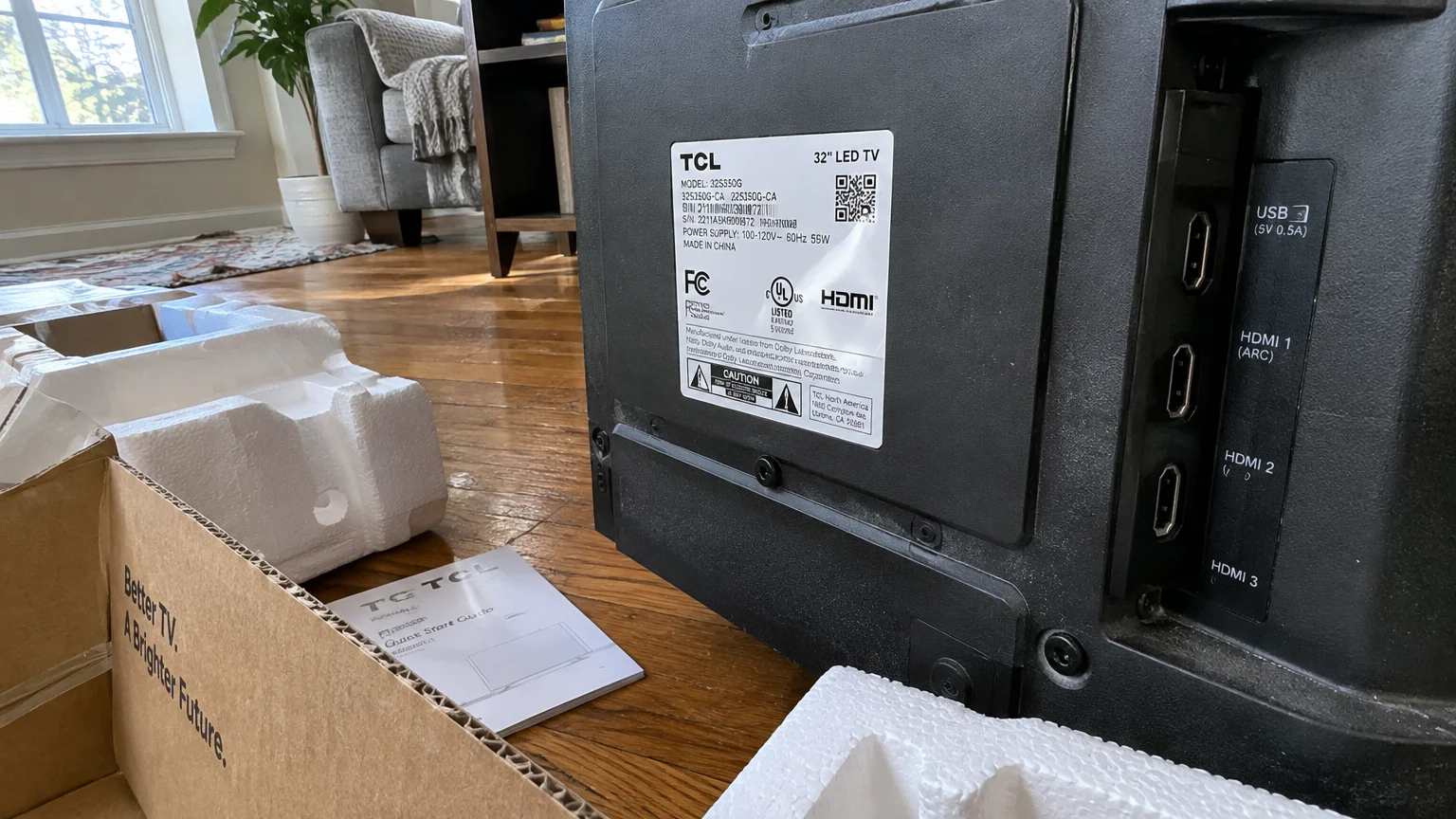
You might purchase a television that lacks critical input ports or uses inferior display panels. Internal processors on derivative electronics often run slower and fail far sooner than standard units.
Manufacturers conceal these downgrades by altering a single letter or number in the product code. A television model ending in an unusual suffix often exists solely for door-buster sales.
If you search for the exact model number and find results only at one retailer, proceed with extreme caution. That solitary listing usually indicates a cut-rate build made exclusively for holiday promotions.
Independent consumer testing organizations rarely publish lab reviews on these temporary seasonal models. You essentially act as an unpaid quality assurance tester for an unproven electronic device.
Check the specifications line by line against the manufacturer’s core model line. Sacrificing essential performance features and longevity is never worth saving a few upfront dollars.
Demand quality when buying high-ticket electronics for your home. Paying slightly more for a reliable, fully featured model saves you money over several years of use.
Verify the warranty terms and replacement part availability before purchasing any promotional electronic door-buster. Reliable brands support their primary hardware lines with accessible technical service and software updates.
Tip #4: Carrying a Revolving Balance on High-Interest Credit Cards
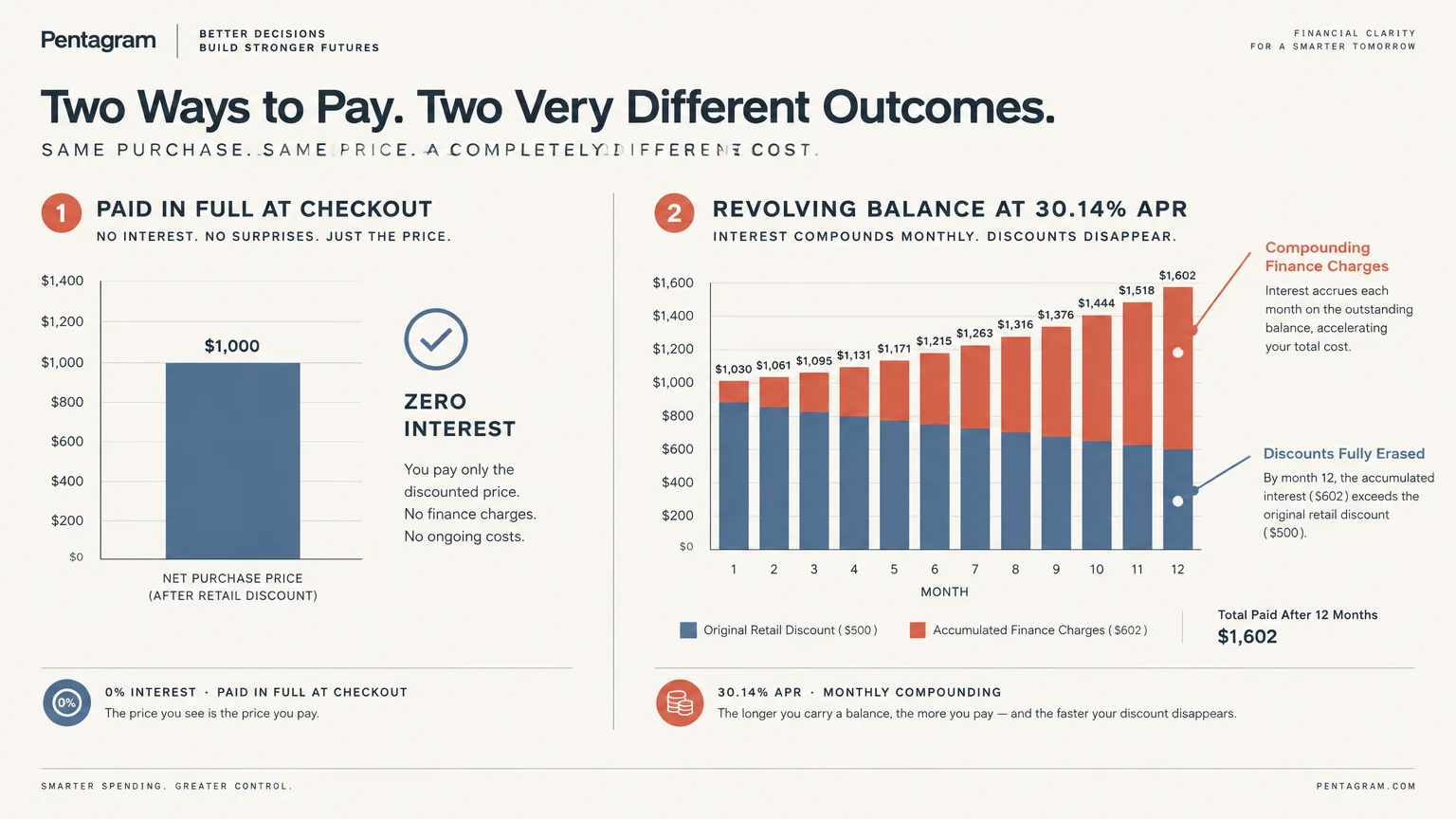
Financing your holiday shopping on credit cards turns great deals into massive financial liabilities. A discount loses all value when you carry revolving debt into the new year.
LendingTree reports that the average APR on new credit card offers is 23.96%. Furthermore, Federal Reserve data indicates that accounts actively assessed interest face an average rate of 22.36%.
Even general card accounts face heavy costs, with Bankrate reporting a national average credit card interest rate of 19.70%.
If you save 15% on a purchase but accrue interest at 22.36%, you lose money within months. The compounding interest quietly erases your initial savings and inflates your total purchase cost.
Rolling unpaid balances from November creates an insidious debt cycle that lingers for months. Many shoppers find themselves paying for holiday gifts well into the following summer.
Create a strict holiday spending budget funded entirely by cash or available checking account reserves. Treat your credit card as a secure payment conduit rather than an extension of your income.
Pay off your statement balance in full before the billing grace period expires. Disciplined payoff habits allow you to collect rewards points without handing your wealth over to card issuers.
If you cannot afford to clear the balance immediately, leave the item on the store shelf. No Black Friday markdown justifies carrying debt at interest rates above 20%.
Establish an automated transfer into a dedicated holiday savings account starting months before November. Paying for your purchases with pre-saved funds guarantees that you never face revolving interest charges.

Tip #5: Skipping Price Tracking Tools and Historical Data
Walking into holiday sales without pricing context leaves you vulnerable to artificial sales tags. Retail algorithms adjust online product prices multiple times each day based on consumer demand.
A product advertised as a limited-time deal might actually cost more than it did during September. Without price history tools, you have no way to verify merchant claims.
Free browser extensions and price-tracking platforms record historical fluctuations for millions of consumer goods. These tools display clear graphs showing whether current pricing represents a genuine low.
Set price alerts for items on your wishlist weeks before the holiday shopping rush begins. Automated notifications alert you the instant a target item drops to its true annual low.
Price trackers also prevent emotional impulse buys driven by frantic promotional countdowns. When data shows that an item regularly drops to that price, urgency quickly evaporates.
Third-party marketplace sellers often exploit holiday chaos by hiking prices on trending toys and tech. Price trackers highlight these predatory markups so you can avoid predatory third-party storefronts.
Cross-reference pricing across major online platforms before you click the checkout button. Taking two extra minutes to check price history can save you hundreds of dollars on major purchases.
Base your purchasing decisions on concrete historical data rather than flashy retail banners. Informed shoppers consistently outsmart algorithmic pricing strategies.
Check return policies alongside price histories to ensure you can claim a price adjustment if costs drop further. Some retailers honor price drops within their standard return windows without requiring a physical return.
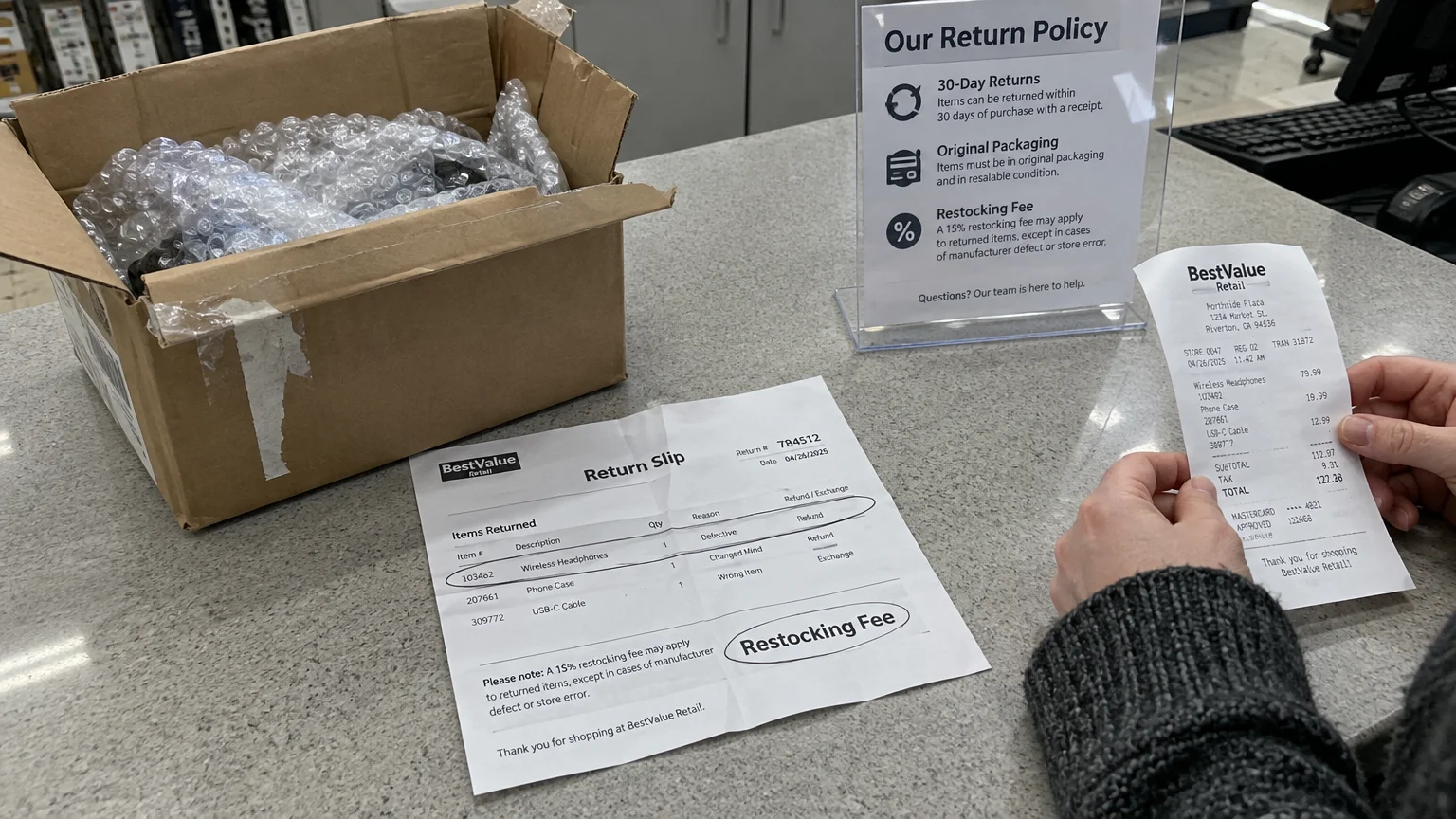
Tip #6: Overlooking Restrictive Holiday Return Policies and Hidden Fees
Retailers often quietly modify their standard return policies specifically for holiday promotional events. Door-buster items frequently carry strict limitations that catch unprepared shoppers completely off guard.
Some merchants label deep-discount items as final sale, eliminating your right to return or exchange. If an item arrives damaged or fails to fit, you absorb the full financial loss.
Other retailers slap hefty restocking fees on returned electronics and high-value appliances. A restocking penalty can swallow a significant percentage of your original refund.
Watch out for shortened return windows that expire before you even distribute holiday gifts. A 14-day return window ensures that unwanted presents cannot be exchanged after December celebrations.
Always locate and read the store’s specific holiday return policy before finalizing any transaction. Ask whether the merchant offers free return shipping or requires you to pay parcel charges.
Return shipping costs can easily exceed the original promotional discount on heavy items. A twenty-dollar saving disappears instantly when return freight costs thirty dollars.
Request gift receipts for every purchase and store them securely inside a digital folder. Clear documentation protects your gift recipients if they need to process an exchange later.
Factor return risks directly into your buying decisions. A cheap deal becomes remarkably expensive when you are stuck with an unusable product you cannot return.
Take photos of store return policies displayed near checkout registers with your smartphone. Having visual proof prevents disputes if a merchant tries to enforce unposted return restrictions later.

Tip #7: Falling Prey to Digital Scarcity and Countdown Clocks
E-commerce websites employ sophisticated dark patterns designed to hijack your rational decision-making process. Flashing banners warn that sales end in minutes, while tickers claim low inventory levels.
Retailers engineer these psychological pressure points to trigger fear of missing out. When panic sets in, you rush through checkout without evaluating whether you actually need the merchandise.
In many cases, those ticking inventory warnings are completely fabricated marketing scripts. Reloading the page or checking another browser often resets the supposedly urgent countdown timer.
High-pressure pop-ups and disappearing cart warnings create artificial stress to bypass your analytical thinking. Retail designers know that stressed shoppers spend significantly more money.
Combat artificial scarcity by enforcing a mandatory cooling-off period on all unplanned purchases. Step away from your computer screen for at least twenty minutes before purchasing an impulse item.
Ask yourself if you intended to buy that specific product before opening your browser window. If the item was not on your written shopping list, close the browser tab immediately.
Never allow artificial urgency to dictate your household spending decisions. True bargains appear consistently throughout the year, meaning you rarely miss a once-in-a-lifetime opportunity.
Control your shopping environment by disabling promotional push notifications on your smartphone. Silence the marketing noise so you can shop deliberately and rationally.
Remember that retail websites invest millions of dollars into behavioral psychology specifically to compel immediate action. Recognizing these digital manipulation tactics gives you the power to walk away unharmed.
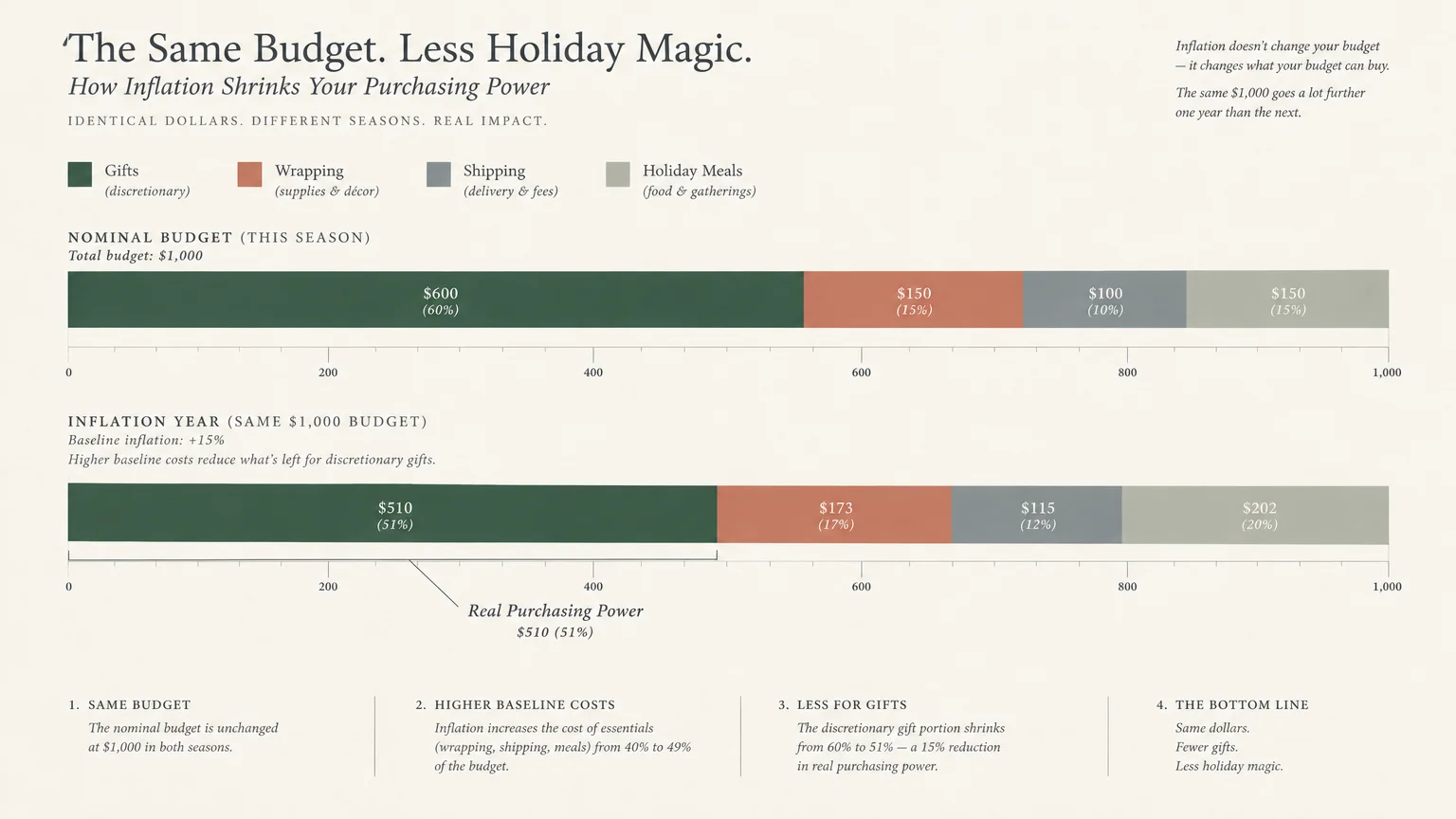
Tip #8: Failing to Account for Baseline Inflation in Your Budget
Blindly matching your spending targets from prior holiday seasons leads to immediate budget overruns. Shifting macroeconomic conditions directly affect how far your shopping dollars stretch.
The National Retail Federation projects U.S. holiday retail sales to grow 4.2% over last year, reaching a record $1.013 trillion.
Meanwhile, the U.S. Bureau of Labor Statistics reported that the Consumer Price Index rose 3.7% over the preceding 12 months.
This inflation metric reveals that spending growth is largely driven by higher baseline prices rather than shoppers purchasing more goods. You are paying more money to acquire the exact same inventory.
If you allocate the same total budget as previous years, you will purchase fewer items overall. Failing to recalculate unit costs causes shoppers to rack up unexpected credit card debt.
Manufacturers have also embraced shrinkflation across consumer packaged goods and holiday gift sets. You might pay the same price as last year for a gift package that contains noticeably less product.
Audit your gift list and trim non-essential purchases to offset higher underlying retail prices. Prioritize meaningful, high-value purchases over a high volume of generic stocking stuffers.
Acknowledge economic reality before establishing your seasonal spending ceiling. Adjusting your shopping plan for baseline inflation keeps your personal finances balanced and resilient.
Consider exchanging experiences or handmade gifts rather than buying inflated mass-market retail goods. Creative gifting strategies bypass high store markups completely while creating lasting personal memories.
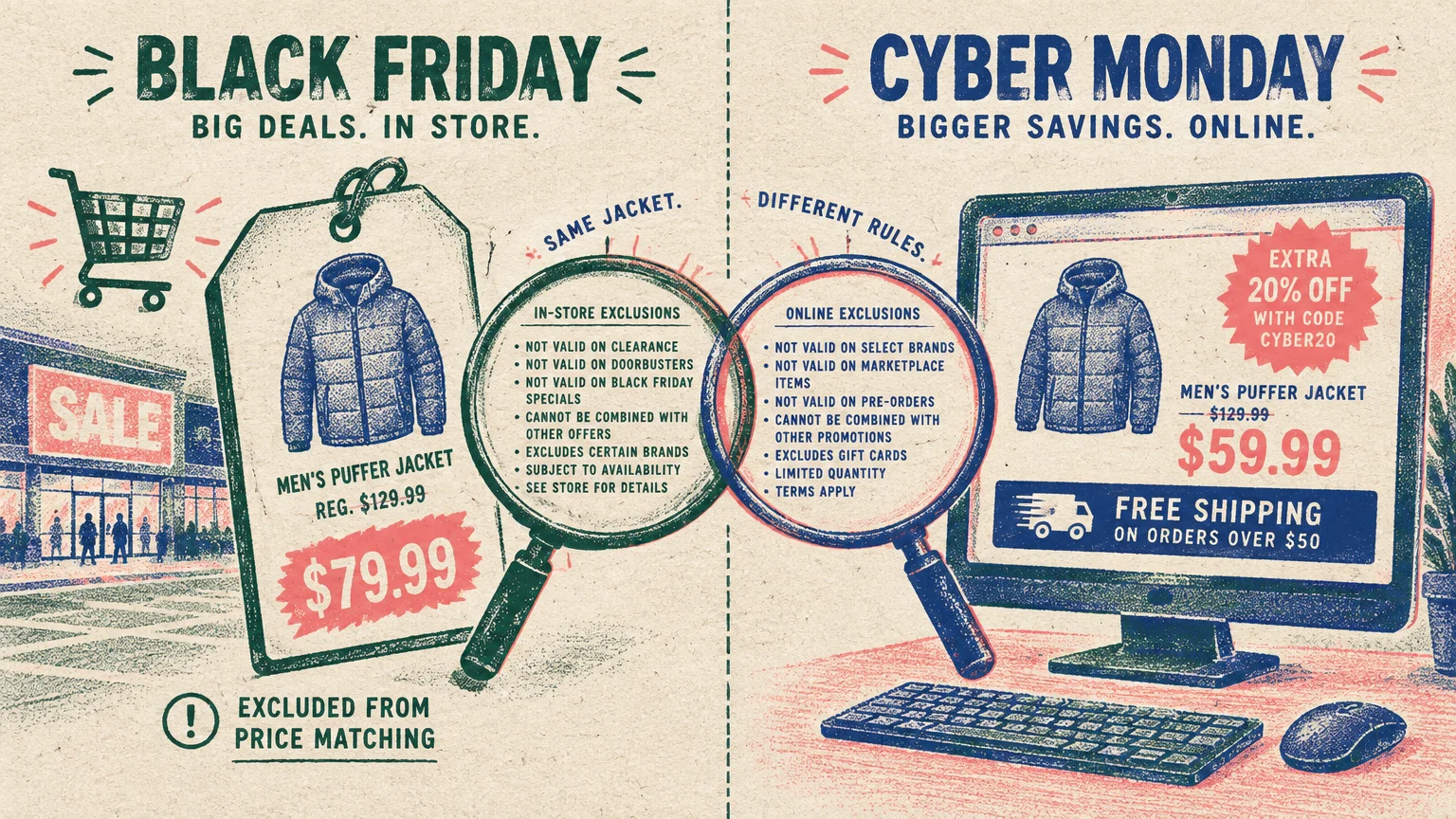
Tip #9: Ignoring Price Match Gaps Between Black Friday and Cyber Monday
Many shoppers rush to complete their entire gift checklist during the early morning hours of Black Friday. This rushed approach causes them to miss better promotional opportunities later in the weekend.
Official Black Friday falls on Friday, November 27, 2026, followed quickly by Cyber Monday on Monday, November 30, 2026.
International campaigns often diverge from the standard American calendar as well. For example, major Romanian retailers like eMAG hold their primary Black Friday event earlier, on Friday, November 6, 2026.
Retailers structure these events around distinctly different product categories. Door-busters on Black Friday emphasize televisions and large appliances, whereas Cyber Monday delivers superior discounts on apparel and software.
Be aware that major retailers frequently suspend standard price-matching guarantees during the long holiday weekend. A retailer will rarely match a competitor’s door-buster price between Friday and Monday.
You cannot assume that an early purchase will be refunded if the price drops three days later. Research category sales cycles carefully so you purchase items on their optimal discount days.
Hold off on soft goods, beauty products, and smart home gadgets until Cyber Monday arrives. Splitting your shopping across both events ensures you capture peak discounts across every product category.
Map out your shopping itinerary well in advance of November 27, 2026. Timing your purchases strategically prevents you from overpaying on the wrong promotional day.
Create a prioritized spreadsheet separating products by their optimal purchase days before Thanksgiving arrives. Having a structured purchasing schedule removes guesswork and keeps your spending methodical.
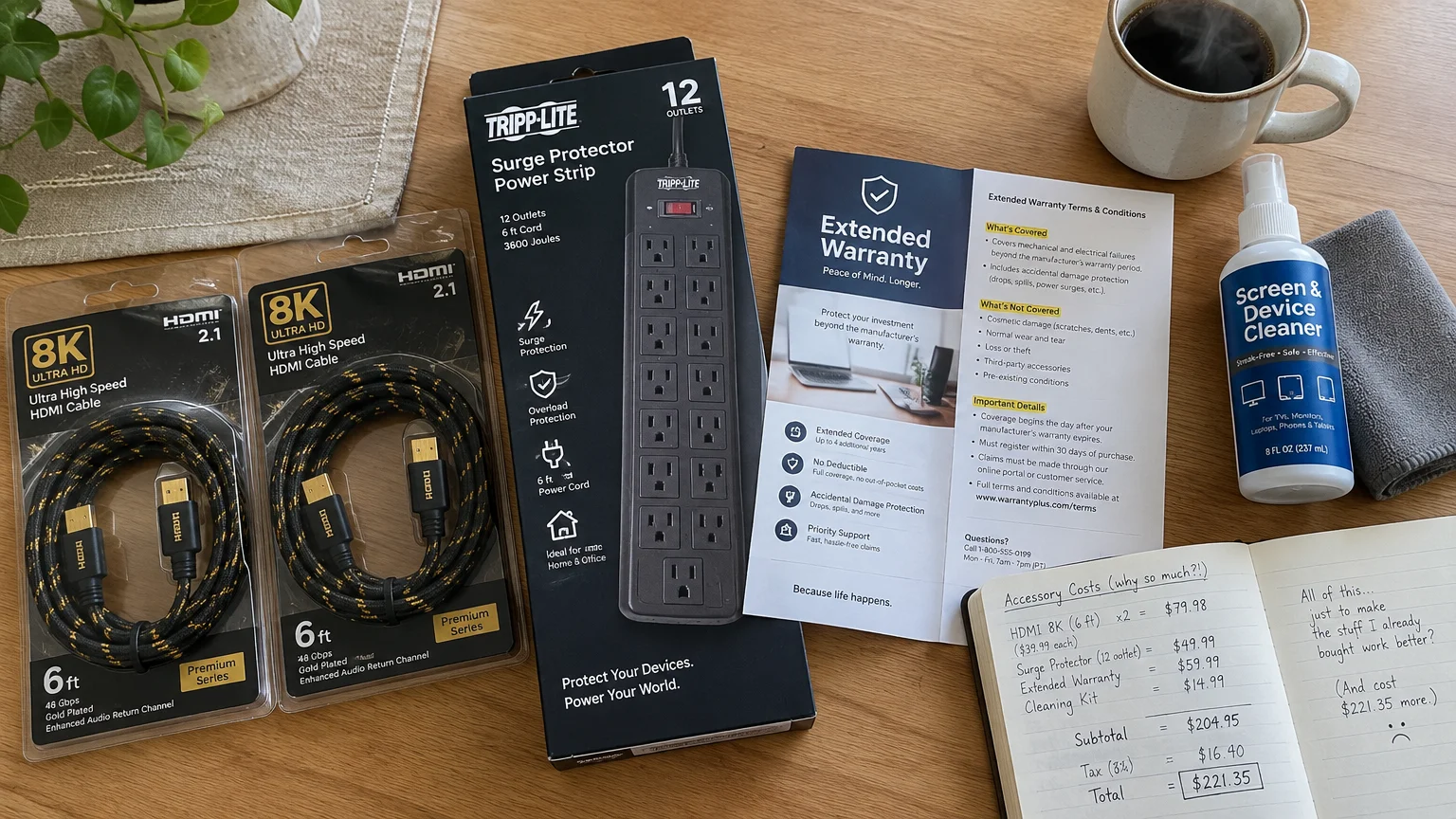
Tip #10: Purchasing Extended Warranties and Bloated Accessory Bundles
Retail cashiers and online carts aggressively pitch extended warranties, protection plans, and accessory bundles right before payment. These add-ons represent massive profit centers for retail stores while offering terrible consumer value.
Consumer electronics and appliances rarely malfunction during the narrow period covered by extended store warranties. Most consumer goods either arrive defective under factory coverage or fail long after the extended plan expires.
Furthermore, many premium credit cards automatically provide complimentary extended warranty protection when you charge the purchase to your card. Paying for duplicate retail protection wastes your money.
Beware of bundled packages that package an in-demand console or television with unwanted accessories. Retailers routinely bundle slow-selling cables, extra controllers, or low-tier games to inflate the total checkout price.
Buying high-speed connection cables or protective covers separately from specialized discount suppliers costs a fraction of retail prices. Stores mark up basic cables by massive margins at checkout counters.
Retailers know that once you commit to a major purchase, your spending resistance drops. They exploit this cognitive fatigue to sell you overpriced peripherals that you never budgeted for.
Decline extended service contracts and accessory add-ons without hesitation. Strip your cart down to the primary item you actually researched and intended to buy.
Pocket those warranty savings into an emergency repair fund instead. Self-insuring your purchases protects your wallet far more effectively than overpriced retail service plans.
Review the benefits guide for your primary credit cards to identify which cards automatically double manufacturer warranties. Utilizing existing card protections saves you money while delivering identical coverage.
The Bottom Line: What This Means for Your Wallet
Black Friday exists to generate record revenues for retail corporations, not to protect your personal wealth. Navigating the holiday shopping season requires a critical eye and disciplined spending habits.
When you recognize artificial reference pricing, derivative model downgrades, and toxic credit card interest, you retain control over your money. Real savings come from calculated buying decisions rather than emotional shopping frenzies.
Build your holiday shopping list early, track price histories systematically, and pay your credit cards in full. Sticking to a strict financial plan ensures you enjoy the holiday season without experiencing a New Year debt crisis.
True wealth building relies on intentional cash management rather than hunting down perceived promotional discounts. Protecting your capital today gives you financial peace of mind that outlasts any seasonal retail gadget.
For consumer protection information, visit the Federal Trade Commission (FTC) and the Consumer Financial Protection Bureau (CFPB). For product safety and reviews, consult Consumer Reports.
Disclaimer: This article is for informational purposes only and does not constitute financial advice. The content reflects the author’s opinion and research at the time of writing. Always do your own research before making financial decisions.
Frequently Asked Questions
Are Black Friday discounts always the lowest prices of the year?
Not necessarily. While certain door-busters hit annual lows, many product categories reach better prices during other seasonal clearance periods.
Apparel, travel packages, and specific home goods often see deeper markdowns during Cyber Monday or post-holiday clearance events in January.
Retailers balance their promotions across the entire calendar, meaning you can often find competitive deals during summer clearance sales.
How can I verify if an advertised discount is genuine?
Use dedicated online price-tracking tools and browser extensions to review historical price charts before you buy.
These tools reveal whether a retailer raised baseline prices ahead of the holidays to fabricate a dramatic markdown.
Comparing the current selling price across multiple independent retail websites also confirms whether the deal matches genuine market value.
Should I apply for a store credit card to save money at checkout?
Almost never. Retail store credit cards carry an average APR of 30.14%, which rapidly eclipses any upfront discount.
Unless you have the cash to clear the balance immediately, carrying holiday debt at that rate causes severe financial damage.
Relying on cash or a standard cash-back credit card paid in full protects your credit score and prevents expensive interest charges.
How does inflation alter holiday shopping strategies?
With the Consumer Price Index climbing 3.7%, baseline prices on everyday goods are higher across the retail sector.
Shoppers must trim gift lists and focus on core priorities rather than expecting their prior budget to buy the same quantity.
Auditing your seasonal expenses early ensures that higher baseline retail costs do not derail your overall household financial stability.