
You can slash your medication bills immediately without switching physicians or sacrificing your quality of care. Simple administrative maneuvers and retail workarounds unlock massive savings for your retirement budget.
Pharmacy benefit managers routinely conceal cheaper direct-cash pricing and federal discounts behind confusing insurance tiers. Fortunately, you do not need a new prescription or another doctor appointment to access these savings.
Taking charge of how you fill your medications shields your hard-earned retirement assets from predatory pricing. Savvy retirees use these ten practical methods to secure dramatic prescription drug savings today.
Tip #1: Opt Into the Medicare Prescription Payment Plan
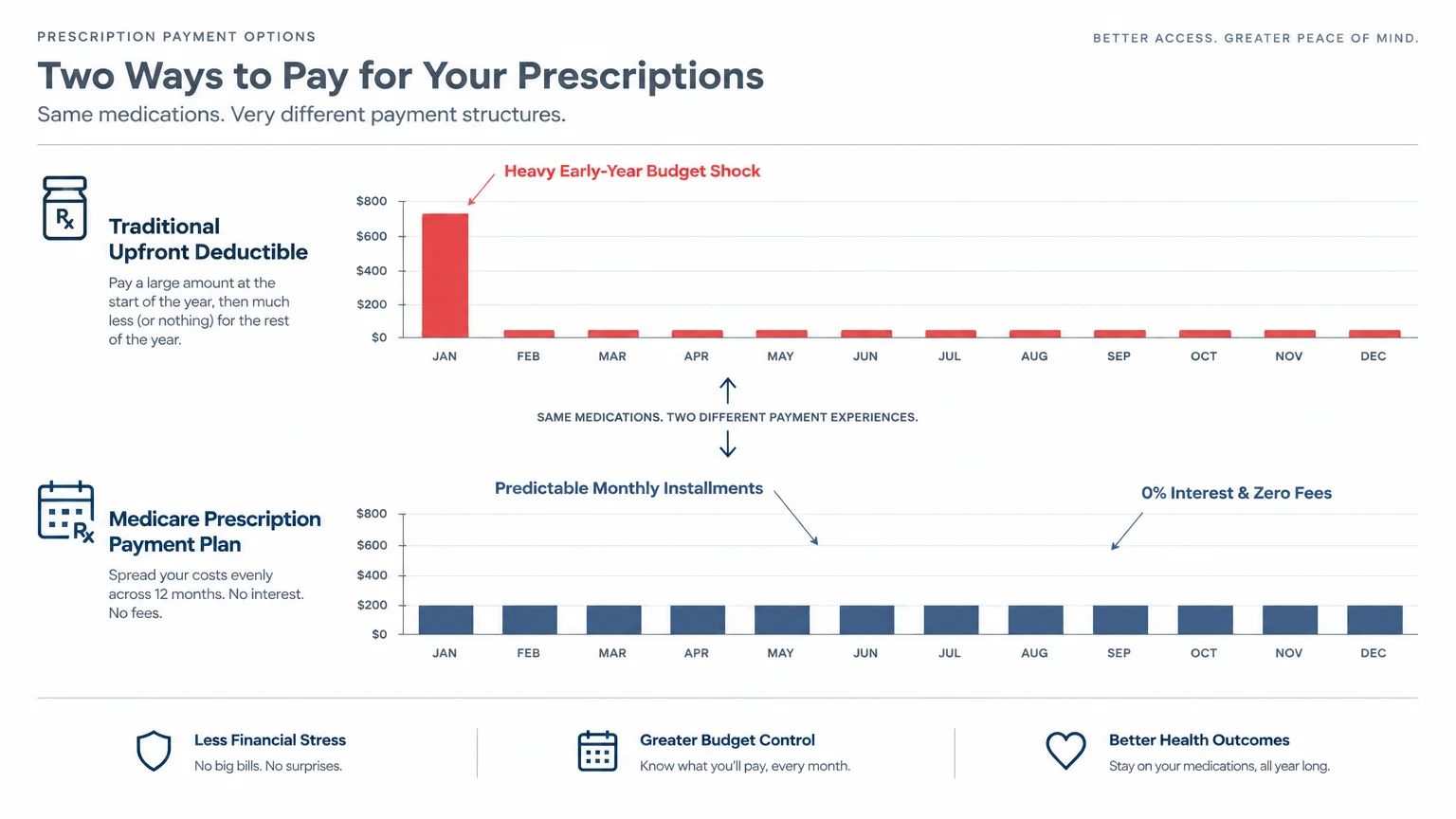
Medicare now offers an official payment smoothing mechanism designed to protect your monthly cash flow. This program lets you spread out-of-pocket prescription expenses evenly across the calendar year.
Without this option, meeting an early deductible at the pharmacy counter can wipe out your monthly budget in January. The smoothing mechanism eliminates that brutal financial shock entirely.
You pay zero interest or finance fees on the deferred balance. Your Part D plan or Medicare Advantage carrier simply divides your annual prescription obligations into predictable monthly bills.
If your medication costs suddenly surge mid-year, the system recalculates your remaining payments automatically. This transparent recalculation ensures your payments stay proportional and manageable until December.
Contact your Medicare Part D administrator directly to enroll at any point during the plan year. Your physician does not need to submit special paperwork or alter your drug regimen.
This single administrative adjustment keeps your essential cash reserves intact while ensuring you never leave necessary pills at the counter. You gain immediate peace of mind without touching your investment portfolio.
Tip #2: Exploit Negotiated Brand-Name Drug Discounts
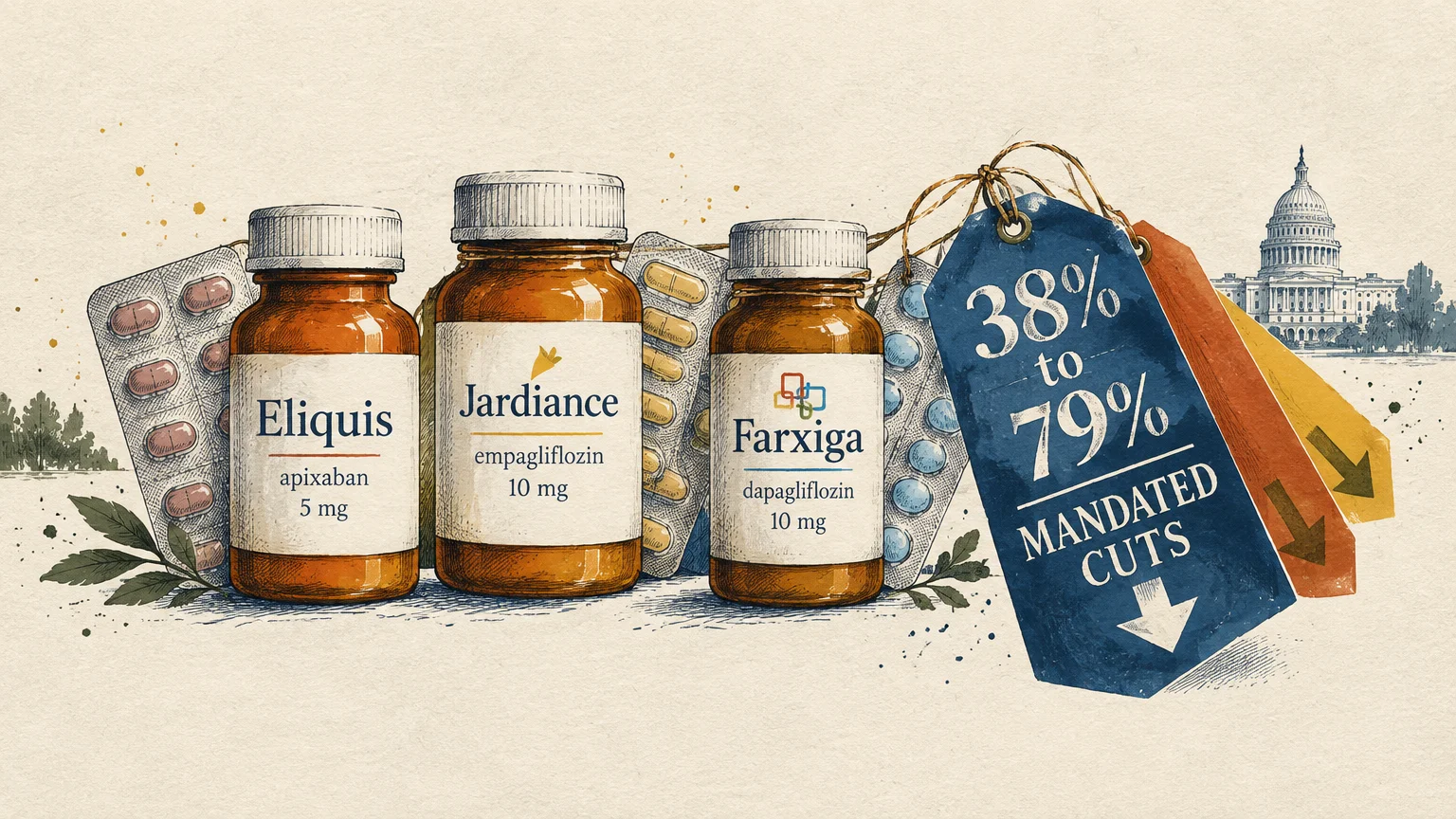
Historic federal price negotiations have dramatically lowered costs on ten high-expenditure brand-name maintenance medications. These mandated Maximum Fair Prices slash list prices by 38% to 79%.
If you take blockbuster therapies like Eliquis, Jardiance, Xarelto, or Januvia, your Medicare plan pays significantly less. These price cuts flow directly to your copays and coinsurance obligations.
Popular heart and kidney treatments like Farxiga and Entresto also carry massive price reductions. Highly specialized treatments such as Enbrel, Imbruvica, and Stelara now cost seniors substantially less out-of-pocket.
Medicare enrollees using NovoLog insulin also capture steep statutory price breaks. These discounts reflect real manufacturing costs rather than inflated pharmaceutical marketing markups.
You do not have to negotiate or reapply with your medical provider to benefit. Your insurer must automatically apply these negotiated rates whenever you fill these specific prescriptions.
Review your explanation of benefits closely to ensure your plan calculates your coinsurance against these lower prices. Never let an administrative billing error siphon away your hard-won retirement savings.
Tip #3: Bypass Insurance With Direct-to-Consumer Cash Pharmacies
Your Medicare drug plan does not always offer the lowest transaction price. Transparent cash-pay pharmacies often sell common maintenance pills for less than your insurance copay.
Federal law now bans pharmacy gag clauses that once stopped pharmacists from revealing lower cash rates. Now, your pharmacist can legally tell you if paying cash beats using your insurance card.
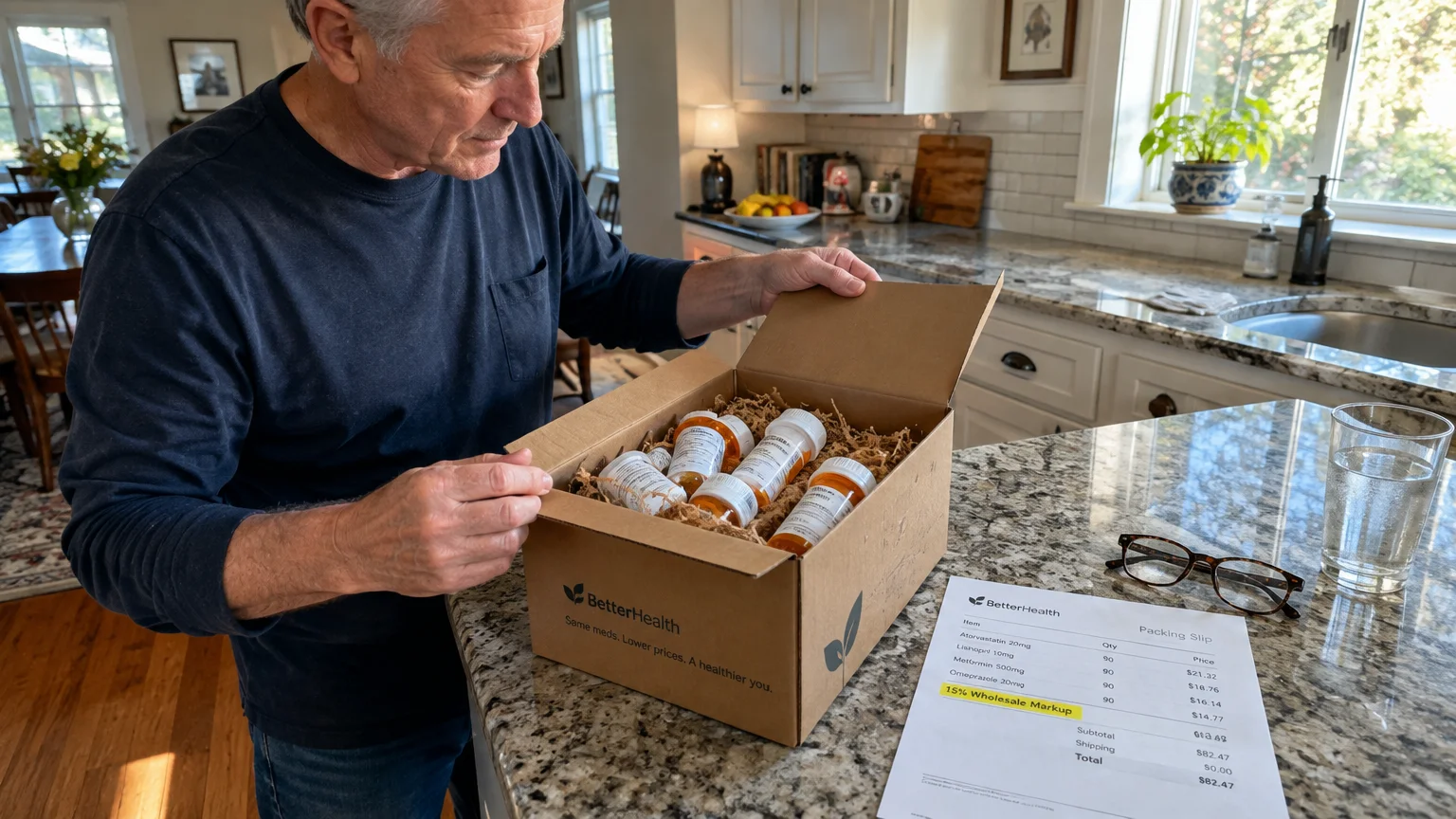
Platforms like Mark Cuban Cost Plus Drugs purchase wholesale generics and add a flat, transparent 15% markup. They bypass middlemen to offer blood pressure and cholesterol drugs for pennies a pill.
Digital discount programs also eliminate the complex prior authorizations required by commercial insurance plans. You receive your vital medication immediately without waiting days for administrative red tape.
Retail giants like Walmart continue to offer standard $4 thirty-day supplies and $10 ninety-day generic supplies. These cash generic drug discounts frequently undercut your insurance deductible without requiring doctor intervention.
Ask your pharmacist to compare the cash price against your Part D copayment on every single refill. Taking this extra ten seconds at the register keeps real money in your pocket.
Tip #4: Capitalize on the Medicare Part D Out-of-Pocket Cap
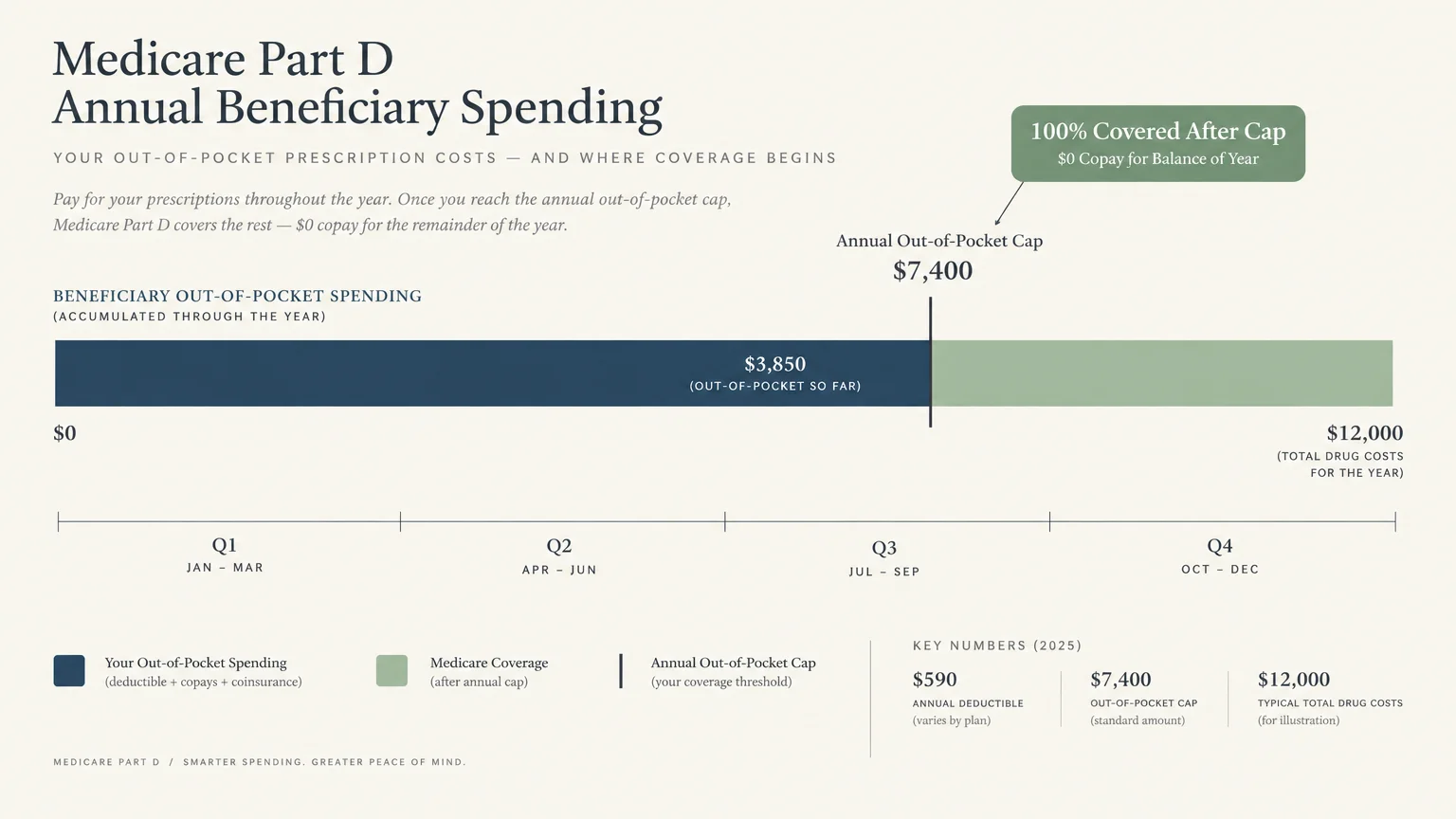
The Inflation Reduction Act established a strict federal limit on annual out-of-pocket spending for covered Part D medications. The spending cap sits at $2,000 for 2025 and indexes to $2,100 for 2026.
Once your cumulative payments reach this threshold, your plan pays 100% of your covered drug costs. You pay an absolute zero-dollar copay for the remainder of that calendar year.
This cap represents massive financial relief for retirees managing chronic health conditions or taking expensive specialty drugs. Previously, catastrophic coverage rules required endless 5% coinsurance payments with no ceiling.
The catastrophic phase now provides absolute financial shelter from runaway pharmacy invoices. Even patients taking cancer therapies or biologic treatments enjoy complete spending protection above the limit.
Track your year-to-date spending on your monthly Part D statements to anticipate when your costs drop to zero. You keep your current doctor and preserve your exact prescribed treatment course.
Understanding this threshold allows you to budget your healthcare costs with total mathematical certainty. You eliminate the fear of open-ended medication bills derailing your financial retirement plan.

Tip #5: Switch to 90-Day or 100-Day Mail-Order Refills
Buying maintenance medications in monthly increments is one of the most expensive ways to manage your health. Most Medicare Part D plans offer steep discounts when you order extended supplies.
Insurers partner with preferred mail-order pharmacies to distribute 90-day and 100-day refills at reduced copay tiers. You frequently pay only two monthly copays to receive three full months of pills.
This pricing structure yields instant 33% savings on your routine maintenance medications year after year. Additionally, home delivery eliminates fuel expenses and transportation hurdles for seniors on fixed budgets.
Extended refills also protect you against temporary pharmacy supply chain shortages and local drug stockouts. You build a safe cushion of necessary cardiovascular or metabolic pills at home.
You can instruct your current pharmacy or doctor to send a 90-day script to the preferred mail facility. Your physician writes the same exact prescription while you pocket substantial cash.
Log into your prescription drug portal to identify which mail-order networks qualify as preferred providers. Unlocking substantial Medicare Part D savings requires aligning your refills with your insurer’s preferred partners.
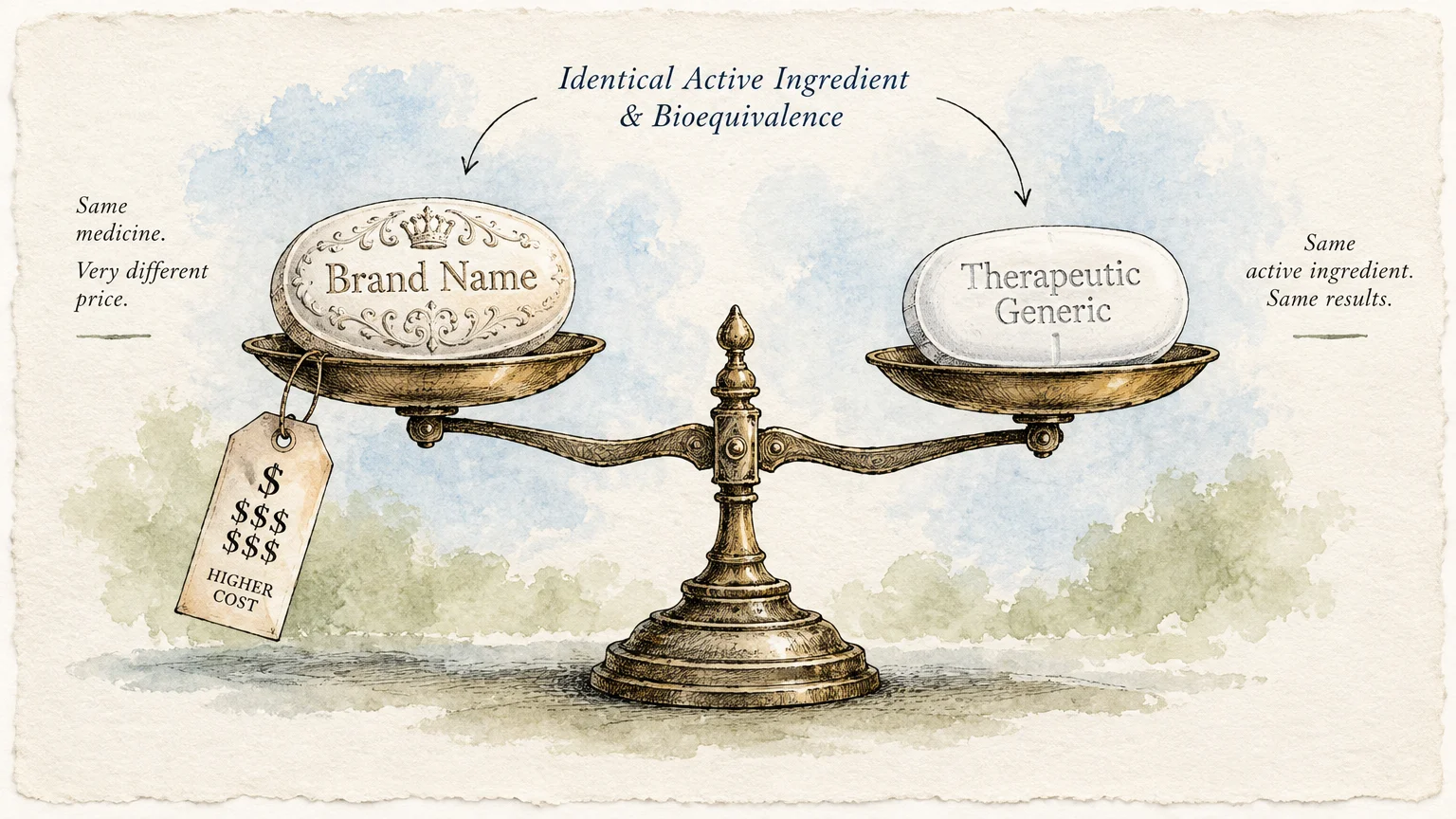
Tip #6: Demand Therapeutic Generic Substitutions at the Counter
Brand-name medications drain retirement savings rapidly while providing identical clinical performance to generic equivalents. The Food and Drug Administration requires approved generic medications to match brand versions bioequivalently.
According to federal healthcare benchmarks, generic medications cost 80% to 85% less than their brand-name counterparts. That price difference keeps thousands of dollars in your retirement account annually.
Generics feature the exact same active ingredients, dosage strengths, safety profiles, and administration methods as brand drugs. Only inactive binders, coloring agents, and trademarked packaging differ between the two.
Many seniors mistakenly assume older brand-name pills deliver superior therapeutic outcomes. Decades of clinical trials prove that generics match brand drugs in patient safety and effectiveness.
State laws universally authorize retail pharmacists to substitute generic equivalents without requiring authorization from your doctor. Simply tell your pharmacist to dispense the generic alternative whenever permitted by law.
This single question at the pharmacy counter instantly works to lower medication costs on routine prescriptions. Never pay inflated brand premiums when identical generic chemical compounds exist.

Tip #7: Apply for Expanded Extra Help Low-Income Subsidies
Millions of eligible retirees fail to claim Medicare Extra Help because they assume their income is too high. Federal legislation permanently expanded full Extra Help subsidies to beneficiaries earning up to 150% of poverty.
For 2026, single individuals earning up to $23,940 and married couples earning up to $32,460 qualify for full benefits. The resource asset caps sit at $18,090 for individuals and $36,100 for married couples.
If you qualify, your annual Medicare prescription deductible drops to zero dollars immediately. You also pay no more than $5.10 for generic drugs and $12.65 for covered brand-name drugs.
The program also eliminates Part D late-enrollment penalties that might otherwise inflate your monthly premiums permanently. You apply directly through the Social Security Administration without altering your physician relationships.
Even if your income hovered above past qualification thresholds, revised income formulas may grant you full status now. Checking your eligibility takes twenty minutes and costs nothing to explore.
Securing this federal subsidy provides immediate, compounding relief for any retiree on a modest income. It transforms unpredictable pharmacy bills into tiny, manageable copayments every single month.
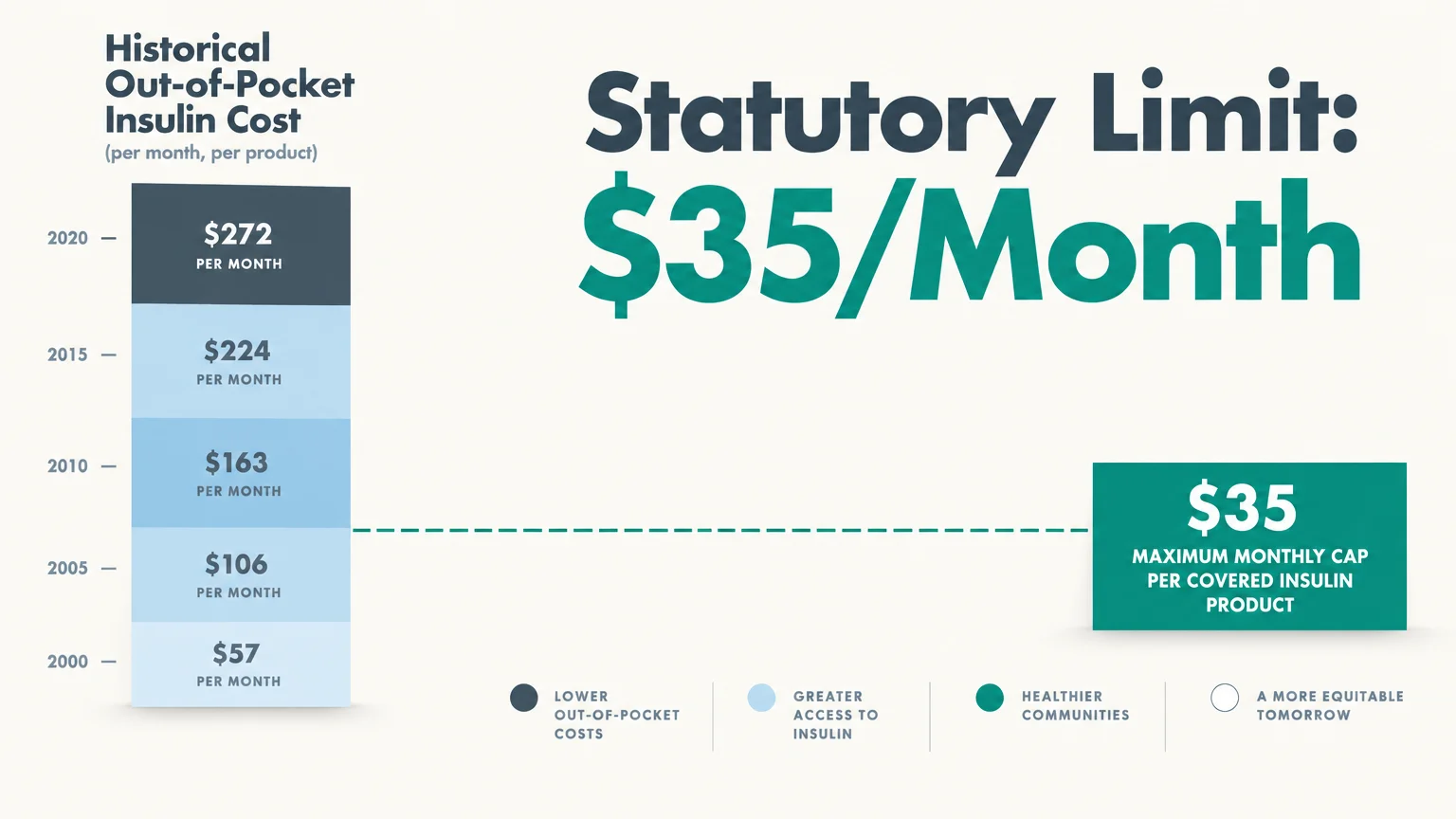
Tip #8: Lock In the $35 Monthly Insulin Price Cap
Retirees managing diabetes previously faced skyrocketing insulin prices that forced dangerous rationing and budget shortfalls. Federal law now strictly caps out-of-pocket insulin costs at $35 per month for seniors.
This $35 price ceiling applies to all covered insulin products under Medicare Part D and Part B plans. It covers both traditional injections and insulin administered via certified external insulin pumps.
Crucially, your standard prescription deductible does not apply to covered insulin products. You receive the statutory $35 rate starting on January 1, long before meeting your annual deductible.
Insurance carriers cannot restrict this price protection behind complex tiers or punitive formulary barriers. Every covered vial, pen, and cartridge must conform strictly to the statutory maximum price.
If you purchase a 90-day supply of insulin, your plan copayment cannot exceed $105 total. If your pharmacy charges more, request an immediate billing correction under federal Medicare guidelines.
Never pay more than $35 per month for your prescribed insulin therapy under any circumstance. Knowing your legal rights prevents retail pharmacy registers from overcharging your account.
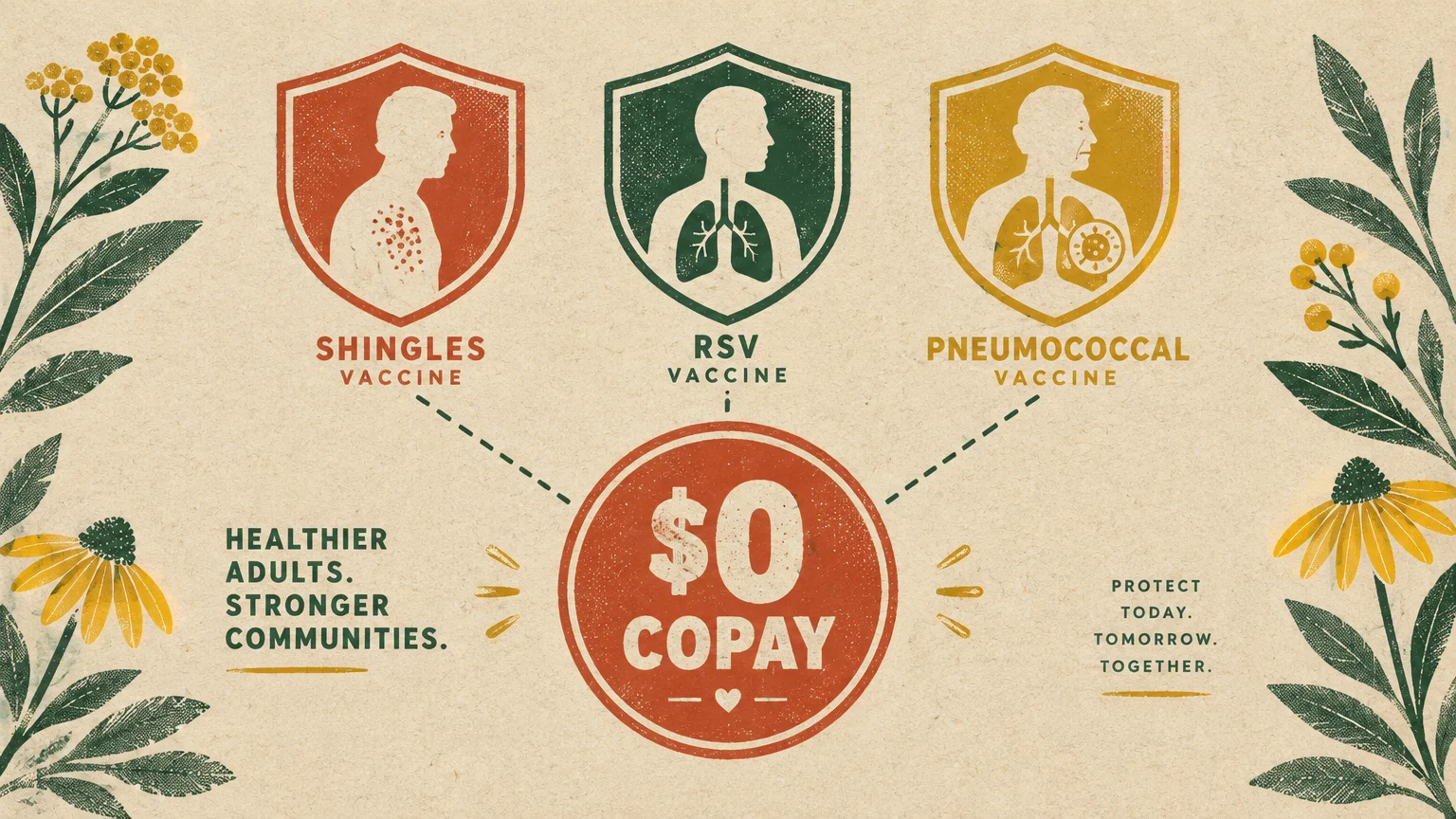
Tip #9: Claim Recommended Adult Vaccines for $0
Vaccinations represent a vital defense against preventable illness, yet out-of-pocket copays previously deterred many older Americans. Under current Medicare Part D rules, all ACIP-recommended adult vaccines are completely free.
This federal mandate requires zero-dollar copayments and zero coinsurance for essential immunizations. Your plan deductible does not apply, guaranteeing no out-of-pocket charges at the pharmacy counter.
The shingles vaccine, Shingrix, previously cost seniors hundreds of dollars for the required two-dose series. Today, you pay zero dollars for Shingrix, respiratory syncytial virus (RSV), Tdap, and Hepatitis vaccines.
Pneumococcal pneumonia and annual influenza shots remain fully covered at zero cost as well. You save hundreds of dollars simply by scheduling these routine immunizations through your drug plan.
To ensure free coverage, receive your vaccines at a network pharmacy rather than inside a medical clinic. Outpatient medical clinics often bill under Part B, triggering unexpected administrative injection fees.
Walk directly up to your preferred retail pharmacy counter to secure these preventative shots for free. Your primary doctor remains in charge of your care while your wallet stays protected.
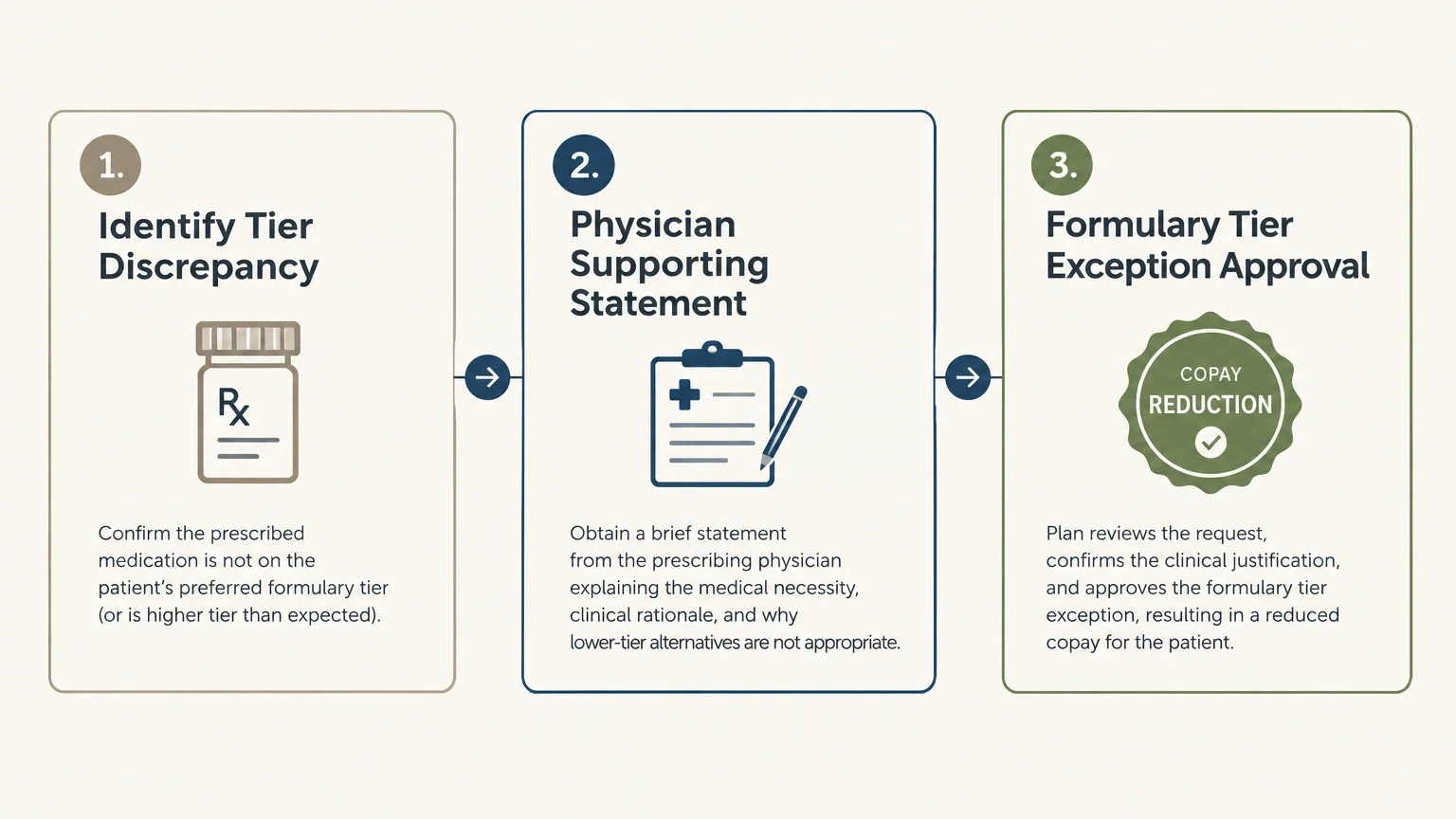
Tip #10: Request Formulary Tier Exceptions From Your Insurer
Every Medicare prescription plan categorizes medications into numbered tiers that dictate your out-of-pocket cost. Tier 1 covers low-cost generics, while Tier 4 and Tier 5 contain expensive specialty medications.
Insurers frequently assign drugs to higher tiers simply to maximize their profit margins. You have the legal right to request a formal tier exception to lower your copay.
When approved, your insurer must reclassify your non-preferred medication into a cheaper preferred tier. This administrative shift can easily slash your monthly copayment from hundreds of dollars to nominal coinsurance.
If a cheaper tier drug causes adverse side effects, your carrier must consider your exception request. They cannot arbitrarily force you onto suboptimal therapies when clinical necessity dictates otherwise.
Your doctor’s administrative staff only needs to submit a standard supporting statement explaining medical necessity. You never have to switch to an unfamiliar doctor or abandon your proven medical treatment.
To save on prescriptions retirees do not need to switch healthcare providers or compromise their wellness. Filing a tier exception forces your insurance company to provide affordable access to your necessary prescriptions.

The Bottom Line: What This Means for Your Wallet
Reducing your medication expenses does not require leaving the doctor who knows your medical history. The prescription market contains dozens of pricing anomalies that you can navigate on your own.
Pharmacy middlemen profit when consumers assume retail prices and insurance copays are set in stone. By using cash discounts, federal caps, and mail-order pricing, you regain financial control.
Take time to audit every single prescription bottle currently resting in your medicine cabinet. Compare your current out-of-pocket copays against retail cash programs and manufacturer assistance thresholds.
A single afternoon spent reviewing pharmacy options can protect your retirement cash flow for years. Treat your medication budget like an investment portfolio that requires smart, periodic management.
You worked hard to build your retirement nest egg. Refuse to let pharmaceutical markups drain your hard-earned assets when simpler, cheaper paths exist.
Frequently Asked Questions
Can I use prescription discount cards alongside Medicare Part D?
You cannot combine discount cards like GoodRx directly with your Medicare insurance on a single transaction. You must choose whether to run the purchase through your Medicare plan or pay cash.
If the cash discount price beats your Medicare copay, paying cash makes total financial sense. However, cash purchases outside insurance do not count toward your annual Medicare out-of-pocket cap.
Does the Medicare Prescription Payment Plan cost extra fees to join?
The Medicare Prescription Payment Plan charges zero enrollment fees, interest charges, or late finance penalties. It is a strictly consumer-friendly payment smoothing tool created by federal statute.
You simply pay your regular annual drug expenses spread into equalized monthly bills throughout the calendar year. It protects your personal checking account from sudden, overwhelming deductible spikes in winter.
Will switching to generic medications impact my health or treatment efficacy?
Generic medications undergo rigorous federal testing to ensure identical strength, purity, stability, and therapeutic bioavailability. The FDA enforces the same stringent production standards for generic manufacturers as brand developers.
Millions of patients switch to generic therapies each year without experiencing any difference in clinical results. You save significant money while receiving the exact same health outcomes.
What steps can I take if my insurer rejects my tier exception request?
If your Part D plan denies your initial tier exception, you have the legal right to appeal. You can file a redetermination request within sixty days of receiving the formal denial notice.
Ask your prescribing physician to provide detailed clinical notes documenting why alternative lower-tier medications failed or caused side effects. Independent administrative judges frequently overturn insurance denials when physicians provide clinical documentation.
For consumer protection information, visit the Federal Trade Commission (FTC) and the Consumer Financial Protection Bureau (CFPB). For product safety and reviews, consult Consumer Reports.
Disclaimer: This article is for informational purposes only and does not constitute financial advice. The content reflects the author’s opinion and research at the time of writing. Always do your own research before making financial decisions.