
You can slash your household telecom expenses by fifty percent without giving up reliable coverage or fast streaming speeds. Most older Americans overpay by hundreds of dollars every year simply because telecom providers quietly roll expired promotional deals into overpriced standard rates.
Trimming these bloated utility bills gives your fixed income instant breathing room. You do not need technical expertise or complex gadgetry to secure these substantial savings.
Smart consumers use little-known carrier rules, targeted discounts, and strategic equipment choices to slash their expenses. Here are nine proven strategies to immediately lower phone bill seniors pay each month.
Tip #1: Switch to Dedicated 55-Plus Wireless Plans
Major carriers rarely advertise their senior phone plans to existing subscribers. Companies prefer keeping long-time customers on legacy contracts that charge premium rates for features retirees never touch.
You can bypass standard pricing by demanding age-restricted rate tiers directly from national carriers. These plans provide identical network priority at a fraction of standard postpaid prices.
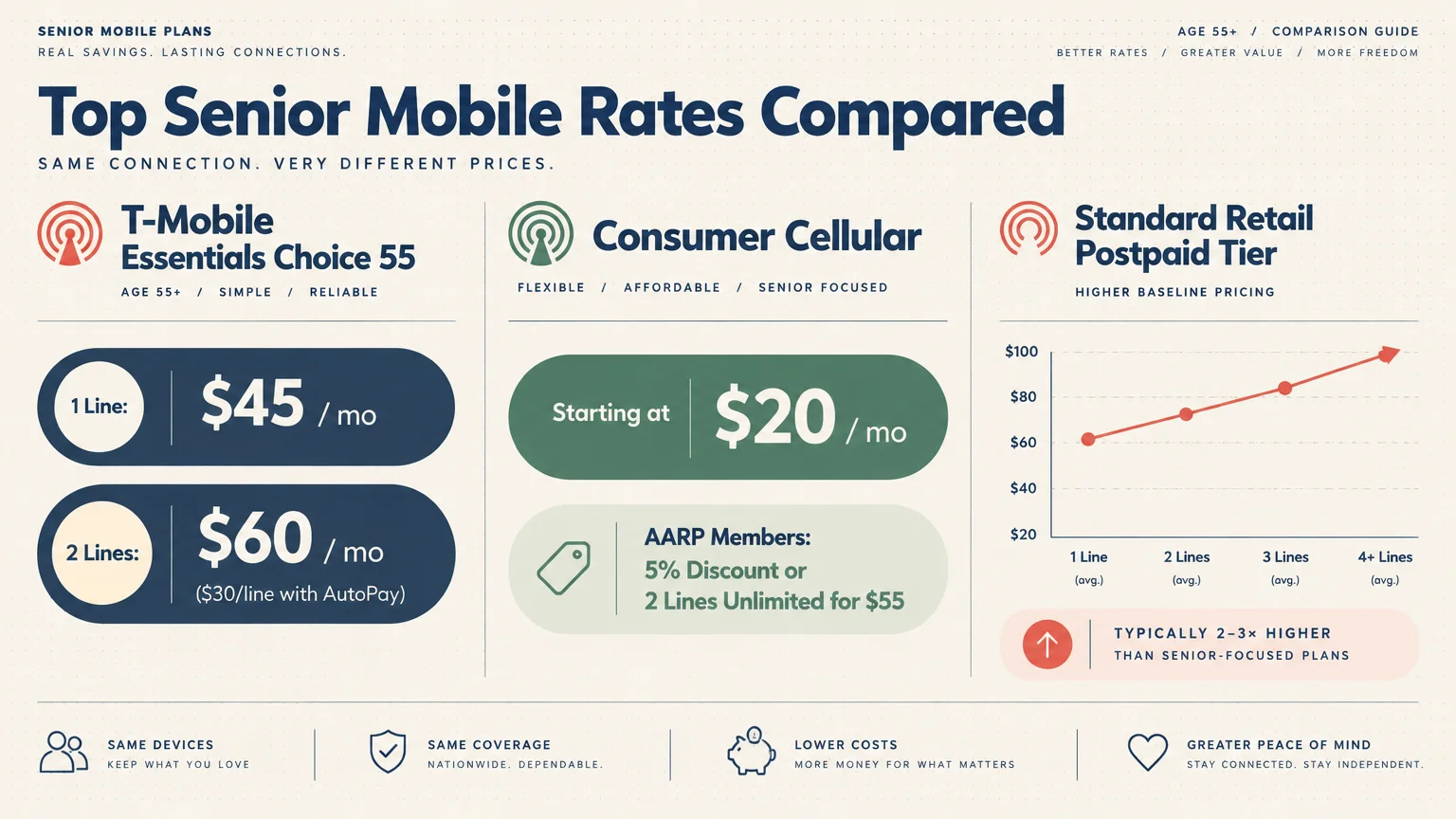
T-Mobile offers the Essentials Choice 55 plan for forty-five dollars per month for a single line. If you need two lines, the price drops to sixty dollars monthly with AutoPay, which equals thirty dollars per line.
Consumer Cellular provides another outstanding option with standalone plans starting at twenty dollars per month. AARP members receive an ongoing five percent discount on monthly service or an exclusive promotional rate of fifty-five dollars for two unlimited lines.
Switching requires nothing more than proof of age during signup. Your coverage remains identical to standard retail accounts because you use the exact same nationwide wireless towers.
Call your carrier today and ask specifically for their 55-plus tier. Taking ten minutes to update your account details will lock in permanent monthly savings.
Tip #2: Stop Paying Monthly Equipment Rental Fees
Look closely at your monthly broadband invoice. Most cable internet providers charge ten to fifteen dollars every month simply for renting their basic gateway or modem-router combo.
Over two years, that recurring charge steals up to three hundred and sixty dollars from your bank account. You are renting equipment that costs the provider less than seventy dollars to manufacture.
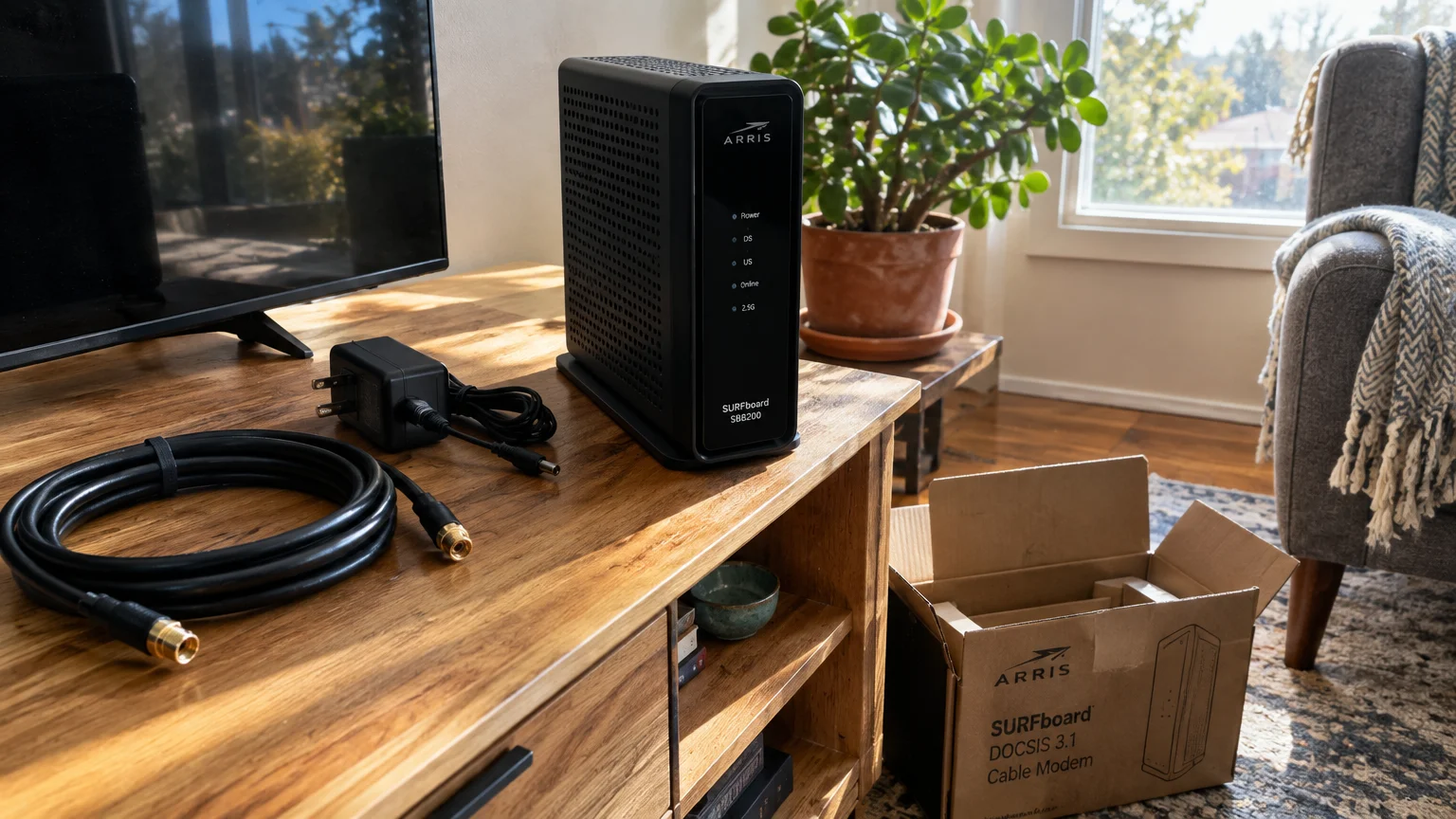
You can easily eliminate this charge forever by purchasing your own third-party DOCSIS 3.1 cable modem and Wi-Fi router. Compatible certified units are widely available online and in local electronics stores.
A standalone modem and router purchase typically pays for itself within eight to fourteen months. After that break-even window, you pocket pure savings every single billing cycle.
Installation requires plugging in a coaxial cable and power cord, followed by a quick automated activation call. Most cable providers allow you to activate user-owned hardware through their mobile app in minutes.
Once your new hardware runs smoothly, return the rented equipment to your provider immediately. Always demand a physical receipt confirming the return so customer service removes the monthly fee from your bill.
Tip #3: Apply for the Active FCC Lifeline Program
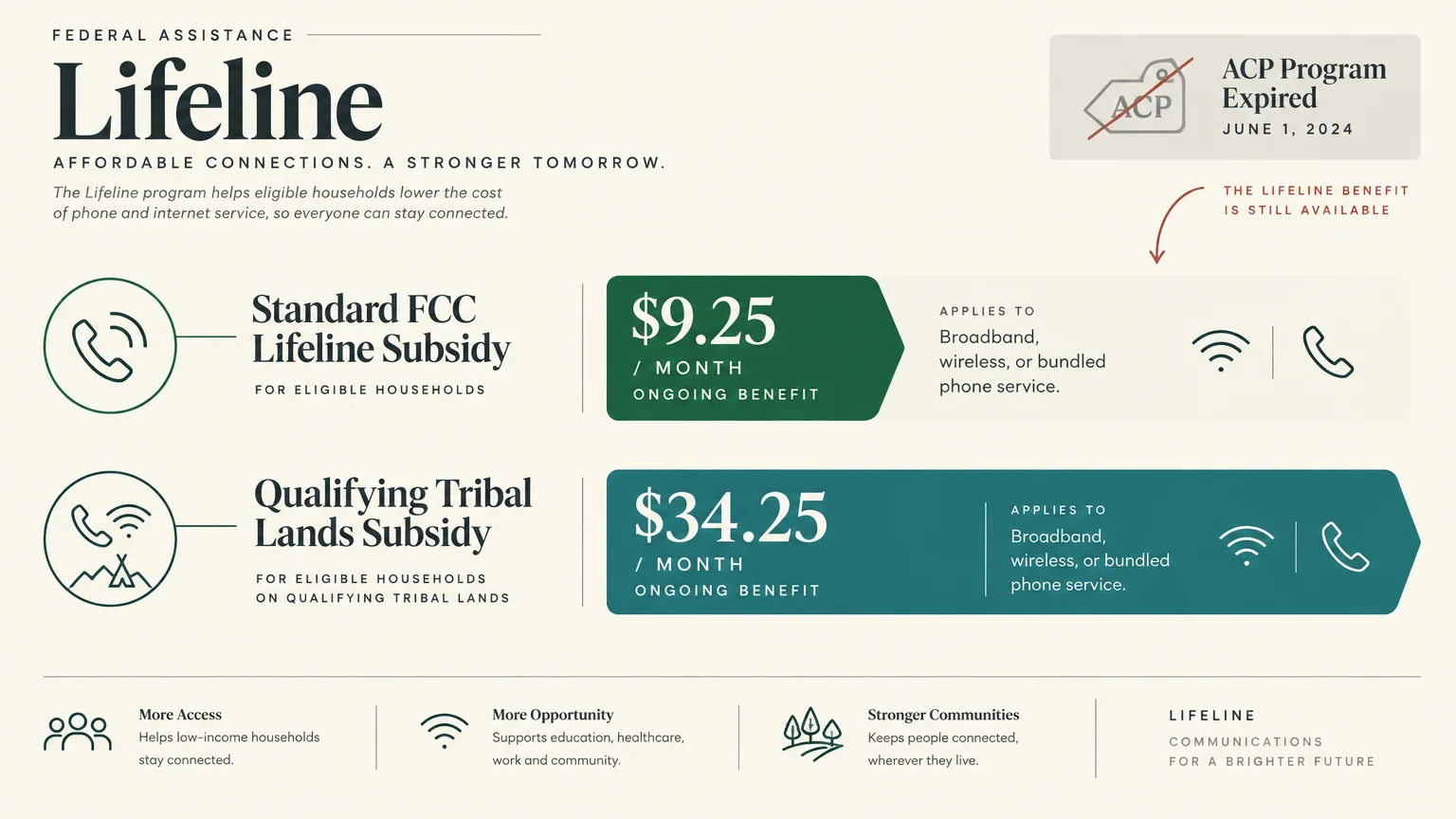
Many older Americans still search for the federal Affordable Connectivity Program to reduce their costs. The Affordable Connectivity Program expired and fully shut down on June 1, 2024, after congressional funding lapsed.
Do not waste time chasing expired programs or scam websites claiming to offer ACP benefits. Instead, focus your energy on the FCC Lifeline program, which remains fully funded and active.
Lifeline provides an ongoing subsidy of up to nine dollars and twenty-five cents per month toward phone, broadband, or bundled service. Households on qualifying Tribal lands can receive up to thirty-four dollars and twenty-five cents per month.
To qualify, your household income must sit at or below 135 percent of the Federal Poverty Guidelines. You also qualify automatically if you participate in Medicaid, Supplemental Nutrition Assistance Program (SNAP), or Supplemental Security Income (SSI).
Submit your application through the National Verifier portal online to confirm your eligibility. The portal cross-references federal databases to grant rapid electronic approvals for qualifying seniors.
Once approved, select a participating regional service provider to apply the recurring credit directly to your monthly statement. This federal program provides durable relief that protects your household budget year after year.

Tip #4: Tap Into ISP-Specific Low-Income Senior Tiers
Major cable and fiber companies quietly operate internal discount programs designed to provide cheap internet for seniors. Providers rarely market these low-cost options because they generate far less revenue than standard consumer plans.
Xfinity Internet Essentials delivers download speeds up to 75 Mbps for just fourteen dollars and ninety-five cents per month. This package includes free equipment rentals and offers participants the option to purchase a basic laptop for $149.99.
If you need slightly more speed, Xfinity offers Internet Essentials Plus at 100 Mbps for twenty-nine dollars and ninety-five cents monthly. Both tiers eliminate long-term contracts and surprise rate increases.
Access from AT&T provides speeds up to 100 Mbps for thirty dollars per month. The program includes free Wi-Fi equipment and requires household income at or below 200 percent of Federal Poverty Guidelines.
Spectrum Internet Assist offers 50 Mbps speeds for twenty-five dollars per month with no data caps. However, Spectrum enforces a very strict qualification requirement for older adults.
To qualify for Spectrum Internet Assist as a senior, an applicant must be age 65 or older and receive Supplemental Security Income (SSI). Standard Social Security retirement benefits do not qualify you for this specific tier.
Call these providers directly and ask to apply specifically for their low-income assistance tiers. These specialized rates slash your annual broadband expense to a fraction of standard retail pricing.

Tip #5: Bundle 5G Home Internet with Mobile Lines
Traditional cable companies have long maintained local monopolies that allow them to charge outrageous fees. Fixed wireless 5G home internet breaks those monopolies by delivering broadband through cellular networks.
Providers like T-Mobile and Verizon ship a compact gateway directly to your door without requiring technician visits or drilled walls. You simply plug the unit into a wall outlet near a window for instant high-speed Wi-Fi.
Standalone 5G home internet typically costs fifty to sixty dollars per month. However, pairing the service with an eligible postpaid mobile plan drops the price down to thirty-five to forty-five dollars monthly.
This approach allows you to save on phone and internet under one simplified account. Furthermore, 5G home internet plans generally include the gateway hardware without charging separate monthly equipment rental fees.
Fixed wireless speeds easily handle movie streaming, online banking, and casual web browsing across multiple household devices. Because the hardware operates without cables, you can move the gateway anywhere inside your home for optimal reception.
Test the service risk-free during the provider trial period before canceling your existing cable broadband. If cellular signal strength in your home is strong, you can permanently sever ties with overpriced cable providers.
Tip #6: Migrate to an Independent MVNO
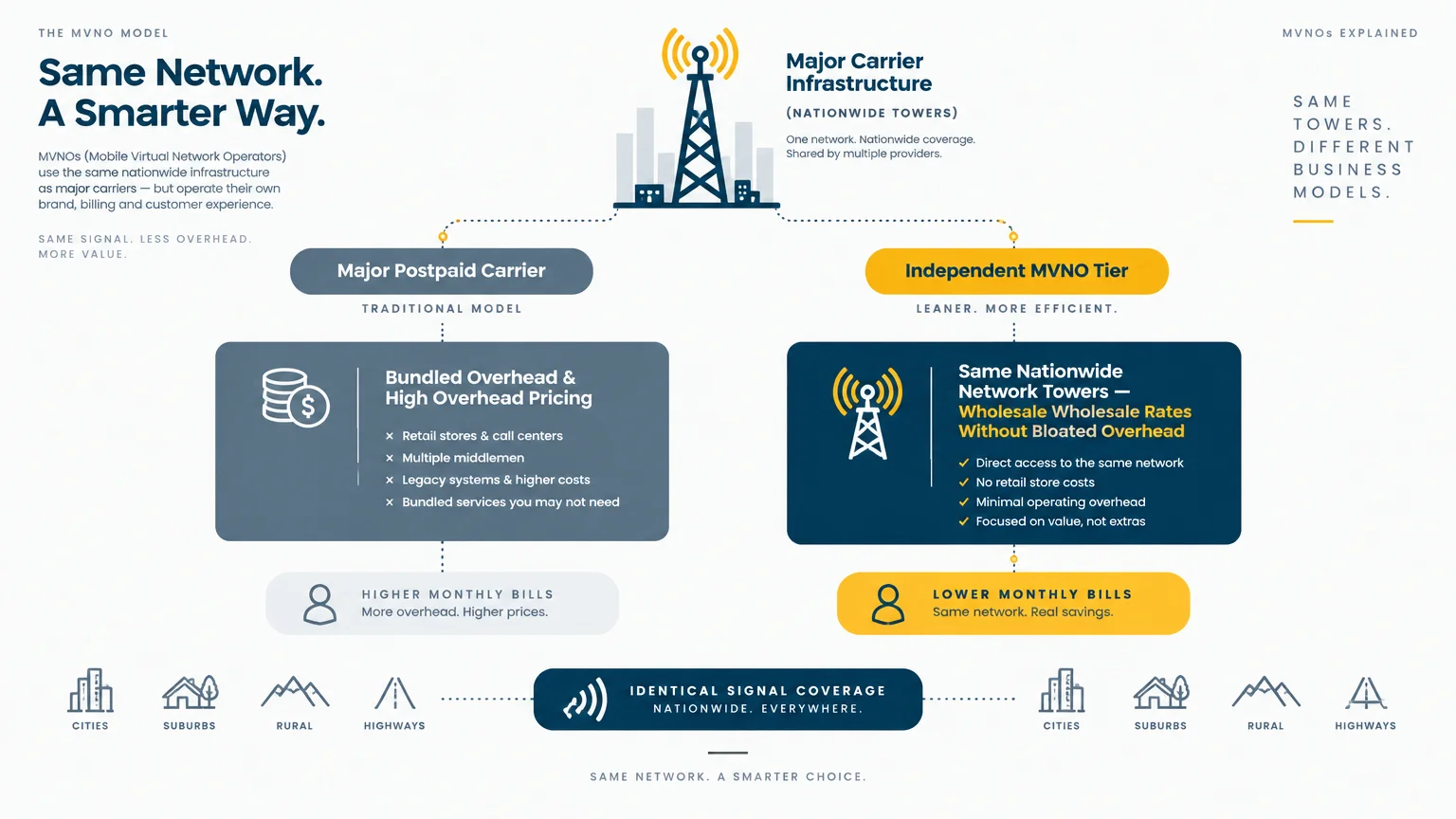
You do not need to pay eighty dollars a month to AT&T, Verizon, or T-Mobile to enjoy reliable nationwide coverage. Mobile Virtual Network Operators (MVNOs) lease network capacity from the big three carriers and resell it at massive discounts.
Discount carriers like Mint Mobile, Visible, and US Mobile operate on the exact same cellular infrastructure as the primary networks. You receive identical voice clarity and geographic coverage without paying for expensive corporate retail stores.
Switching to an MVNO is one of the quickest ways to cut monthly bills retirees face. Plans often range between fifteen and twenty-five dollars per month for generous talk, text, and data allowances.
Most retirees spend eighty percent of their time connected to secure home Wi-Fi networks. Paying for massive unlimited high-speed mobile data buckets simply subsidizes younger, heavy mobile gamers and commuters.
Bringing your unlocked smartphone to an MVNO requires only a fifteen-minute SIM card swap or digital eSIM activation. You keep your existing mobile number while slashing your annual phone expenses by hundreds of dollars.
Check carrier coverage maps online to choose the MVNO that utilizes your area’s strongest host network. You will instantly cut your monthly cellular bill in half without sacrificing call reliability.

Tip #7: Capitalize on Senior Organization Perks
Membership in retiree advocacy organizations offers powerful bargaining power that most members overlook. An annual AARP membership costs only sixteen dollars, yet the telecom savings can repay that investment ten times over.
AARP members receive up to ten dollars off per line each month on select AT&T Unlimited Premium plans. AT&T also waives activation and upgrade fees for members, saving you up to thirty-five dollars per line upfront.
Consumer Cellular offers AARP members a continuous five percent discount on monthly recurring talk and data charges. They also frequently run exclusive promotions that discount multi-line packages for verified members.
Always inspect membership benefits offered through former employers, labor unions, or military service organizations like the VFW. Many major carriers maintain unadvertised corporate discount agreements that apply directly to retiree billing accounts.
Contact your billing representative and ask them to audit your profile for eligible corporate or organizational affinity discounts. Adding a single verified membership code can lower your recurring monthly statement indefinitely.
Review your active club memberships annually to verify which service perks remain active on your telecom accounts. Combining organizational discounts with existing senior tiers maximizes your overall savings.
Tip #8: Audit Bandwidth and Drop Bloated Speed Tiers
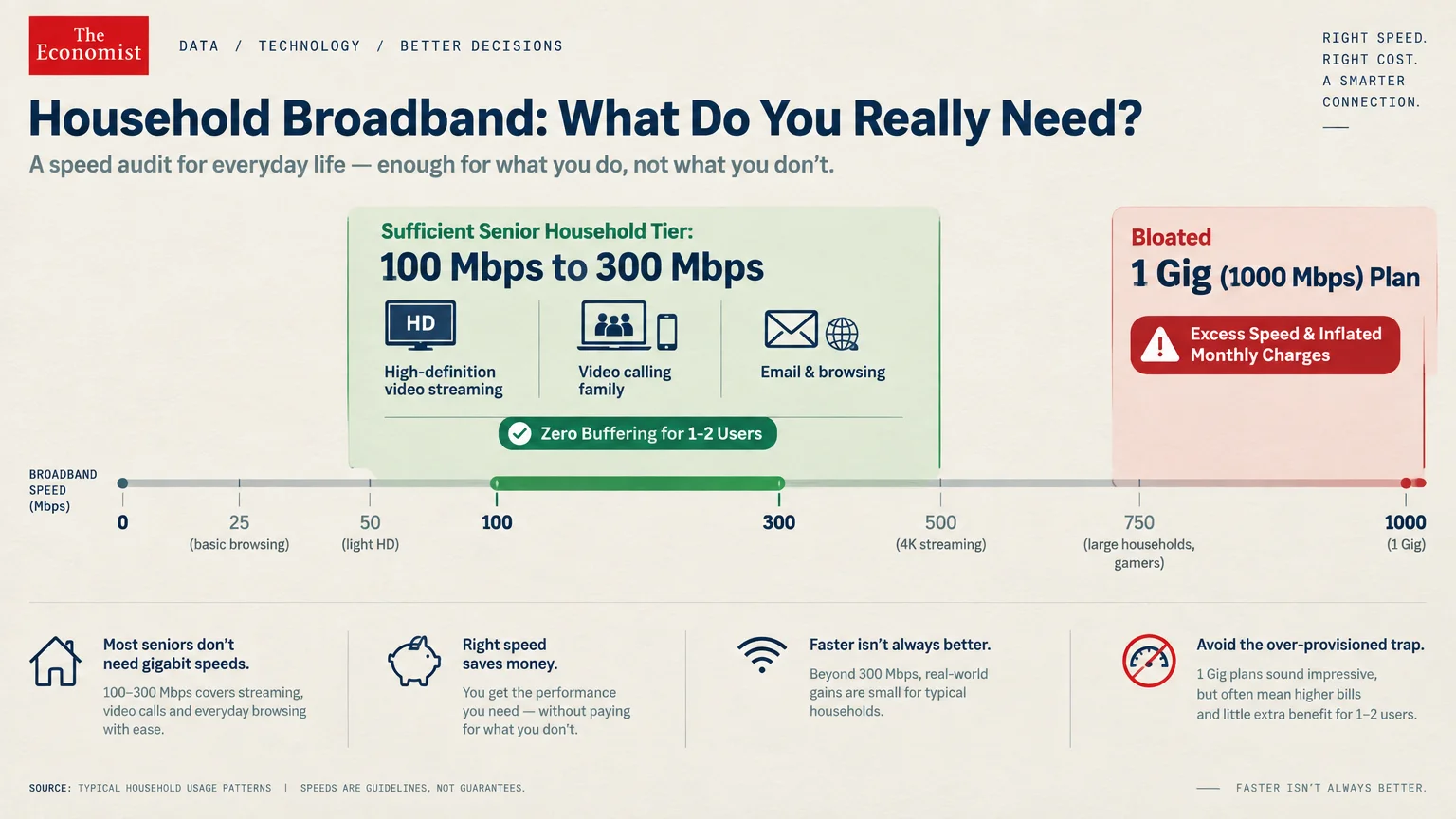
Internet service providers love selling gigabit broadband packages delivering 1,000 Mbps speeds to everyday residential customers. Sales representatives convince retirees that high speeds are essential for basic internet tasks, which is entirely false.
A retired household streaming high-definition television and browsing news websites rarely uses more than 50 to 100 Mbps at once. A pristine 4K video stream on Netflix consumes only fifteen to twenty-five Mbps of bandwidth.
Paying premium rates for 500 Mbps or 1,000 Mbps is like paying for a commercial airliner to drive down the street. You are purchasing massive unused data pipes that sit completely idle all day.
Log in to your provider portal and check your current speed tier. Downgrading from an ultra-fast plan to a basic 100 Mbps or 200 Mbps plan typically saves thirty to forty dollars monthly.
You will experience zero buffering on your smart television or tablet during daily use. Never pay extra for speed tiers your household hardware cannot realistically consume.
Run a simple speed test on your computer to monitor your actual bandwidth consumption during peak evening hours. Downgrading excess capacity instantly returns cash to your pocket without degrading your daily digital routine.
Tip #9: Negotiate Annual Promotional Rates with Retention
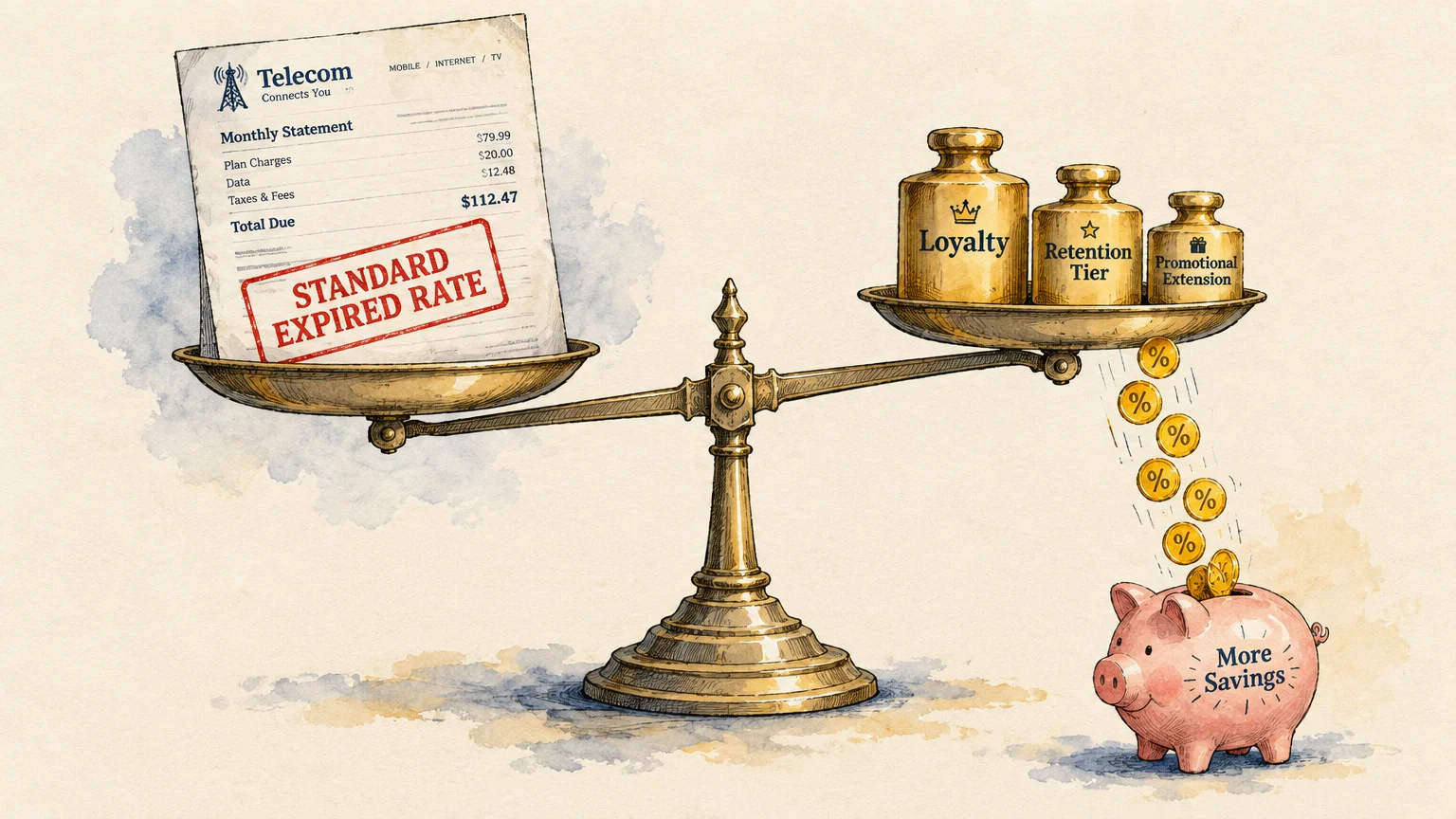
When introductory promo periods expire, telecom companies automatically hike your monthly rate without explicit warning. Many seniors accept these price increases as inevitable inflation, but rate hikes are entirely negotiable.
Telecom providers employ customer retention agents whose sole job is stopping customers from leaving for competitors. These representatives possess broad discretionary authority to apply deep promotional credits to your account.
Call customer service and state clearly to the voice prompt that you wish to cancel your service. The system will bypass frontline support and route your call directly to the retention department.
Politely inform the retention agent that recent rate increases exceed your retirement budget. Reference specific competitive pricing from local 5G home internet providers or low-cost wireless carriers.
Ask the agent directly what promotional discounts or loyalty credits they can apply to match market rates. If the first representative refuses, hang up and call back to speak with someone more accommodating.
Retention agents often possess monthly quotas for preserving accounts and can easily renew expiring promotional rates. Performing this simple fifteen-minute phone call once a year reliably protects your fixed income from insidious bill creep.
The Bottom Line: What This Means for Your Wallet
Telecom companies design their pricing models to exploit inertia and brand loyalty. Retirees who quietly accept rising monthly bills surrender thousands of dollars in unnecessary fees over their retirement years.
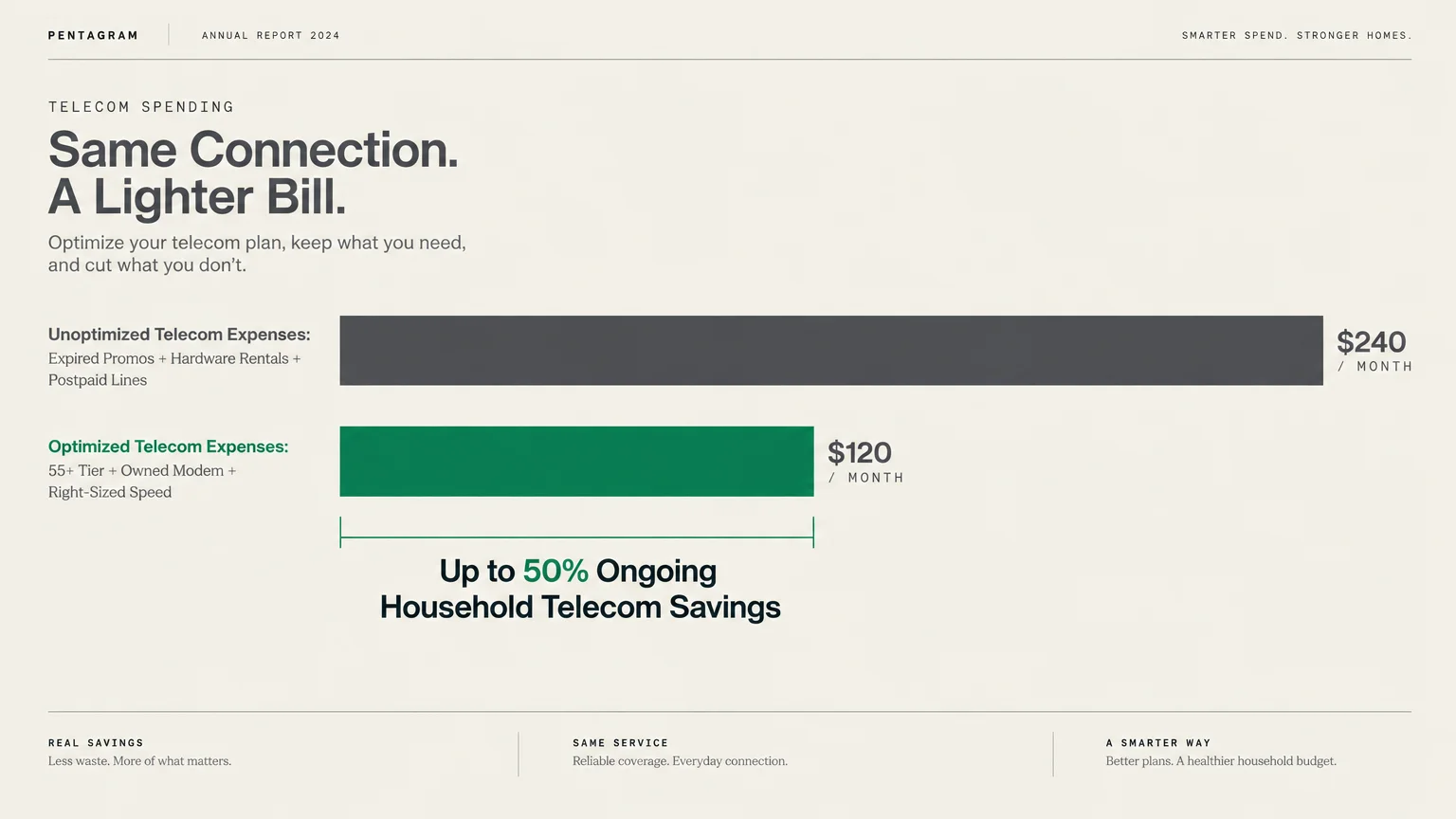
Taking control of your connectivity costs requires only a few deliberate strategic adjustments. Eliminating modem rentals, right-sizing speed tiers, and migrating to 55-plus or MVNO plans produces immediate monthly savings.
Combining just two or three of these methods easily frees up fifty to one hundred dollars every single month. That puts up to twelve hundred dollars back into your pocket each year for healthcare, travel, or savings.
Review your telecom statements today to identify hidden fees and expired promotional discounts. You earned your retirement savings, and telecommunication giants have no right to overcharge you for essential modern connectivity.
Frequently Asked Questions
Will downgrading my home internet speed cause buffering on video calls?
No, standard high-definition video calls on Zoom or FaceTime require less than five Mbps of upload and download bandwidth. A standard 100 Mbps connection handles multiple concurrent video calls and video streams without any performance degradation.
Buffering issues usually stem from outdated in-home Wi-Fi routers rather than your broadband speed tier. Upgrading your internal home router solves connectivity lag far better than purchasing overpriced gigabit plans from your provider.
Can I keep my current phone number if I switch to an MVNO?
Yes, federal regulations require telecommunication carriers to support phone number porting when you change service providers. You can transfer your existing mobile number to any new carrier without penalty or disruption.
To transfer your number smoothly, request a Number Transfer PIN and your account number from your current provider before canceling service. Never cancel your old account before your new carrier completes the porting process.
Why does Spectrum exclude regular Social Security retirement from Internet Assist?
Spectrum specifically targets its low-cost program to need-based safety net programs rather than age demographics alone. Supplemental Security Income (SSI) is an asset-tested program for individuals with severe financial need.
Standard Social Security retirement benefits reflect your lifetime work history rather than strictly low-income criteria. If you only receive standard Social Security retirement, look into regional 5G home internet or low-tier promotional plans instead.
Do discount wireless carriers slow down data during busy hours?
MVNOs share towers with parent networks, so data speeds may temporarily slow down in crowded venues like stadiums or airports. This deprioritization affects large file downloads and high-definition mobile streaming during peak congestion moments.
However, basic smartphone tasks such as sending text messages, browsing websites, and making voice calls remain entirely unaffected. Since most seniors use home Wi-Fi for heavy data use, deprioritization rarely causes real-world inconvenience.
For consumer protection information, visit the Federal Trade Commission (FTC) and the Consumer Financial Protection Bureau (CFPB). For product safety and reviews, consult Consumer Reports.
Disclaimer: This article is for informational purposes only and does not constitute financial advice. The content reflects the author’s opinion and research at the time of writing. Always do your own research before making financial decisions.