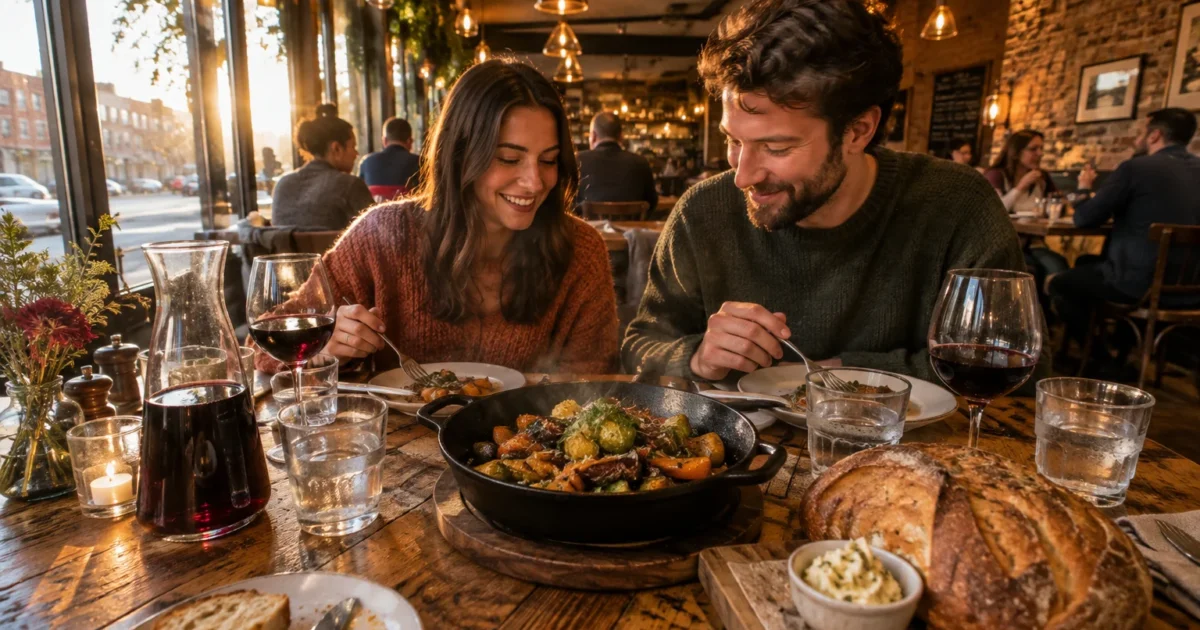
You can still enjoy great restaurant meals without torching your monthly budget. While national menu prices keep climbing, specific affordable dining out towns offer incredible culinary scenes at a fraction of major city rates.
Runaway restaurant inflation and sneaky service fees do not control every zip code in America. Smart diners can slash their food bills simply by targeting regions with lower overhead, reasonable local taxes, and independent kitchens.
We tracked price trends and menu benchmarks across the country to uncover where dinner checks remain truly reasonable. Here are the top cheap restaurant towns delivering exceptional flavor without punishing your wallet.
Tip #1: El Paso, Texas
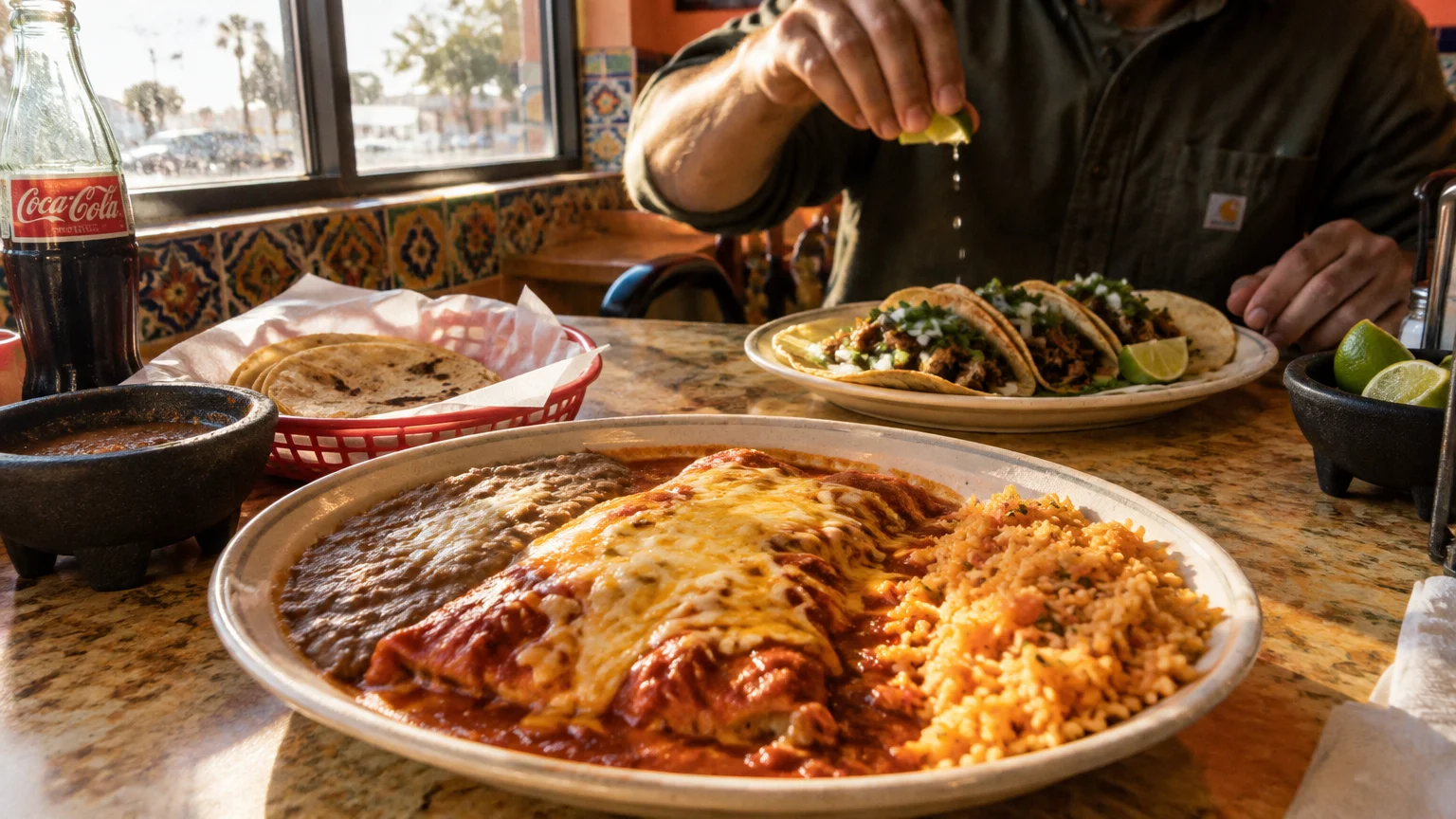
El Paso proves border communities master authentic cuisine without gouging your bank balance. A three-course dinner for two here averages roughly $62.00, easily undercutting the national $80.00 median.
You will find family-run Mexican spots serving stacked red chile enchiladas and slow-cooked brisket tacos for under $10.00. These independent kitchens keep ingredient supply chains local and refuse to pad bills with trendy fees.
Commercial rents in El Paso remain among the lowest for major Texas cities. Restaurant owners pass those overhead savings straight to your final receipt.
Under the federal Fair Labor Standards Act, Texas maintains standard tipped wage baselines. This policy keeps base menu prices steady compared to states without a tip credit.
You enjoy massive flavor, handmade corn tortillas, and vibrant hospitality at true budget prices. Make this border jewel a priority when scouting affordable food cities.
Hack the menu by ordering combination platters at lunch. You will secure two full meals for the price of a single fast-food combo.
Tip #2: Knoxville, Tennessee
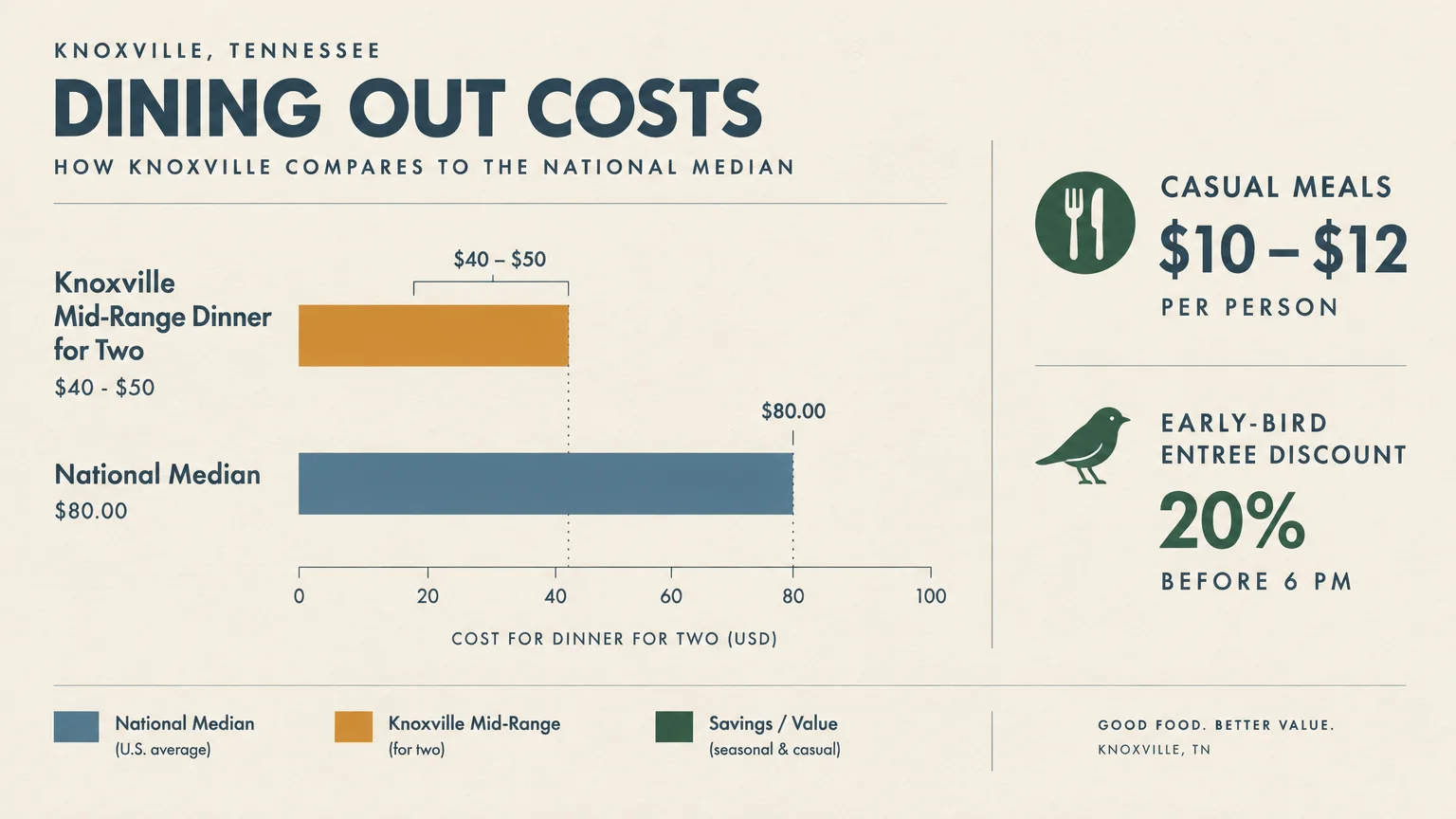
Knoxville blends Southern Appalachian cooking with remarkable wallet protection. Inexpensive casual meals in this energetic town average just $10.00 to $12.00 per person.
Mid-range dinners for two routinely cost between $40.00 and $50.00, even near historic Market Square downtown. You will discover smoked barbecue platters and scratch-made buttermilk biscuits at prices that defy national inflation.
Low local utility rates and manageable commercial leases allow neighborhood chefs to serve generous portions. Rather than downsizing plates, these kitchens rely on steady volume from loyal locals and college students.
Tennessee does not saddle diners with unexpected municipal meals taxes. What you see on the menu represents what you actually pay at the register.
You can indulge in regional craft beers and farm-raised trout without watching your dining budget crumble. Knoxville stands tall among the nation’s premier budget dining destinations.
Time your visits for weekday early-bird windows. Many downtown Knoxville kitchens discount their signature entrees by 20% before six in the evening.
Tip #3: Fort Worth, Texas
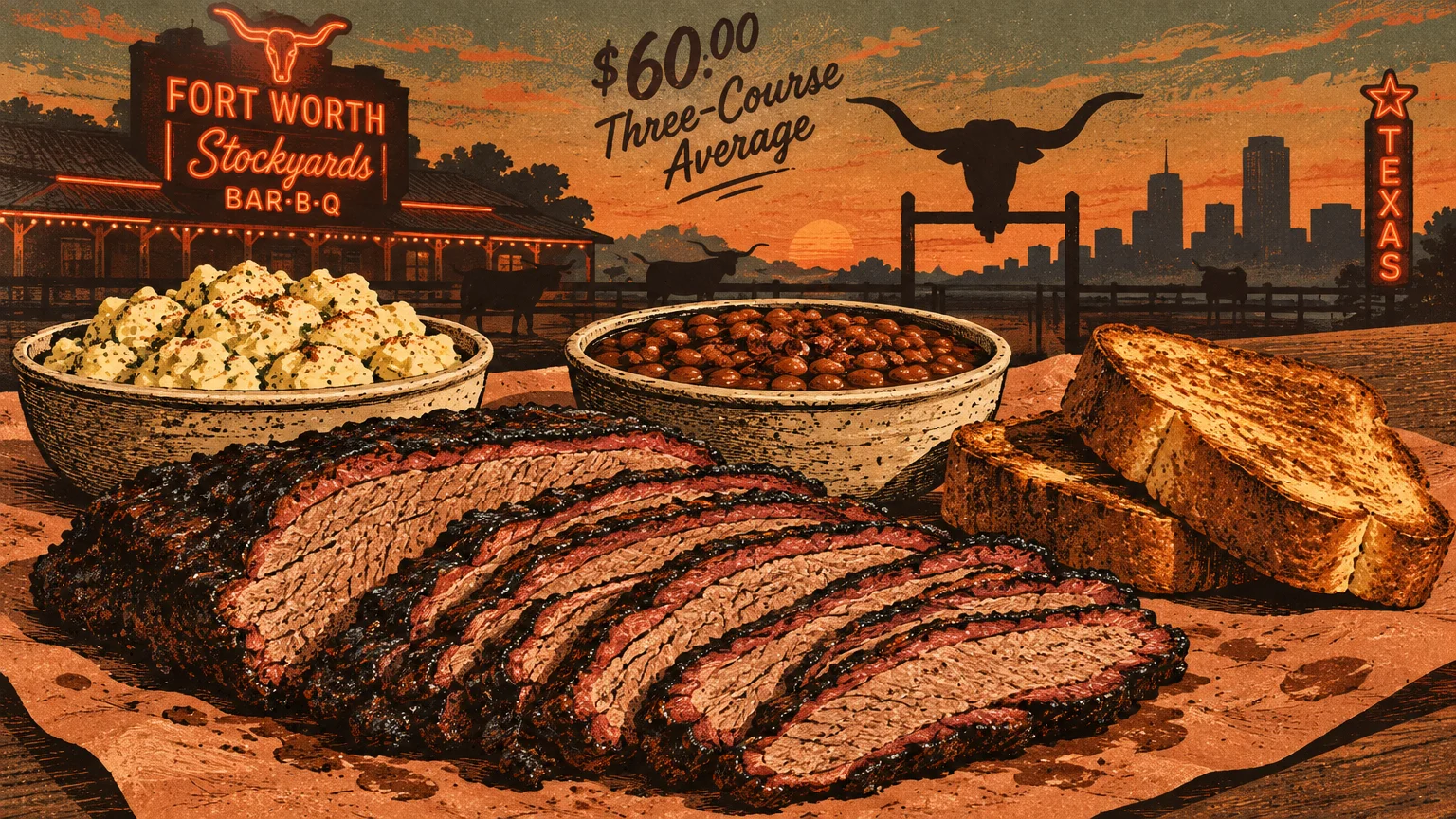
Fort Worth frequently beats out nearly every major U.S. metropolitan area for dining affordability. In fact, a full three-course dinner for two here averages only $60.00.
While neighboring Dallas charges steep premiums for upscale steakhouses, Fort Worth serves world-class Texas beef without the pretense. Legendary smokehouses dish out massive brisket platters with multiple homestyle sides for under $15.00.
The city benefits from abundant domestic meat suppliers and favorable commercial lease rates. Lower operating overhead shields restaurant owners from the steep price hikes hitting coastal cities.
Texas hospitality means large portions; one casual entree often provides enough food for two full meals. You stretch your food dollars further simply by packing home generous leftovers.
Skip the high-priced tourist traps in larger metros and head west for authentic, affordable dining out towns.
Order meat by the pound at local butcher-counter barbecue joints instead of getting plated dinners. This insider trick feeds an entire family for under thirty dollars.
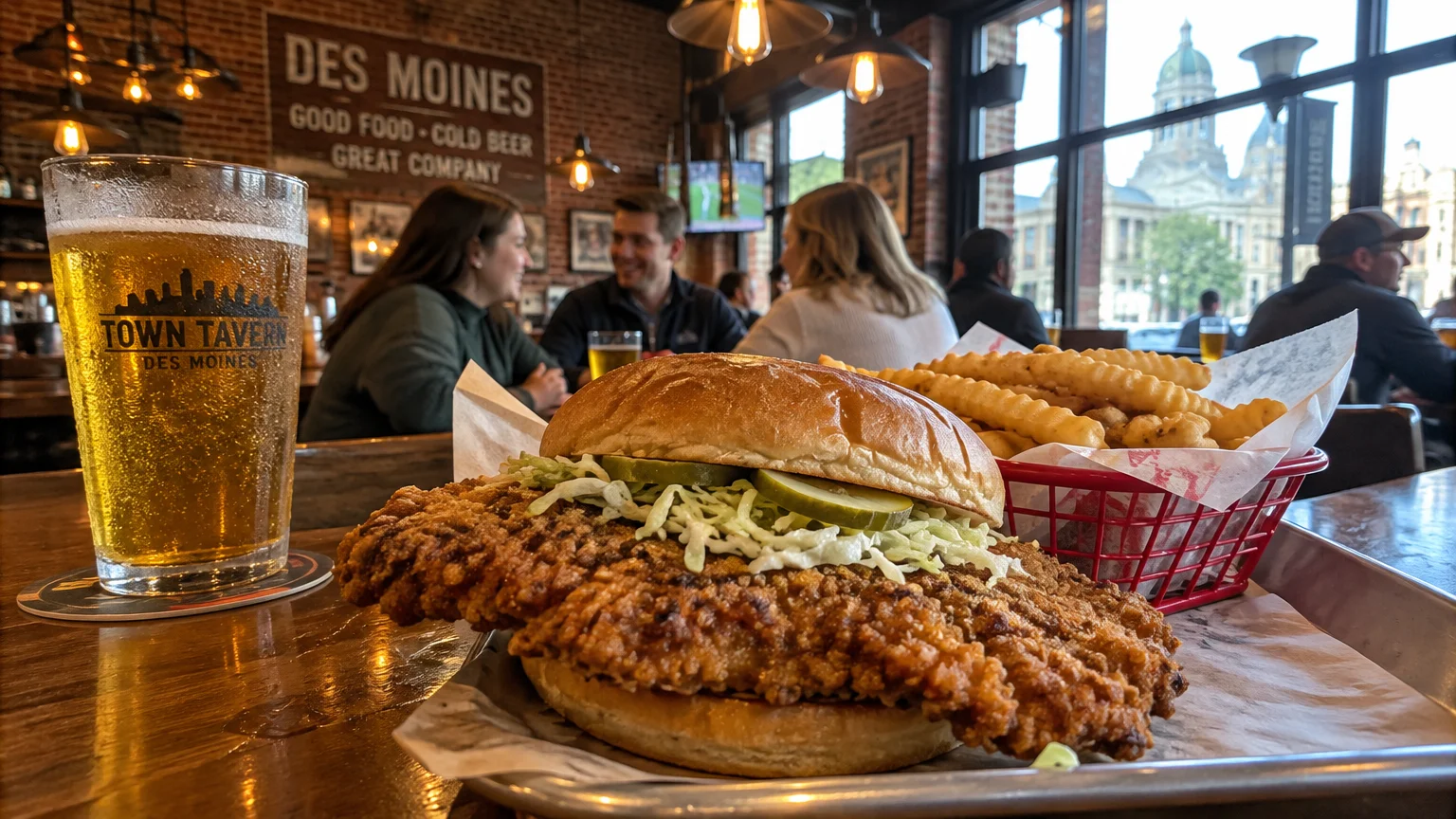
Tip #4: Des Moines, Iowa
Des Moines redefines Midwestern dining with farm-to-table freshness at blue-collar prices. An inexpensive meal out runs roughly $11.00, while a solid dinner for two hovers around $45.00.
Sitting in America’s agricultural heartland gives local kitchens direct access to cheap, high-grade produce, dairy, and pork. Restaurants avoid the heavy freight and cold-storage distribution fees that inflate dining tabs elsewhere.
You can explore historic taverns and contemporary downtown bistros without fearing hidden service fees. Local chefs focus on straightforward, scratch-cooked comfort food that delivers substantial value.
Iowa’s competitive cost of living keeps restaurant labor and lease expenses remarkably steady. You receive culinary innovation without paying coastal surcharges.
Savvy budget travelers routinely rank Des Moines among the smartest low cost of living towns for food lovers.
Skip the high-priced appetizers and order the daily blue-plate special. Des Moines diners pride themselves on loading these rotating specials with prime cuts and homemade sides.
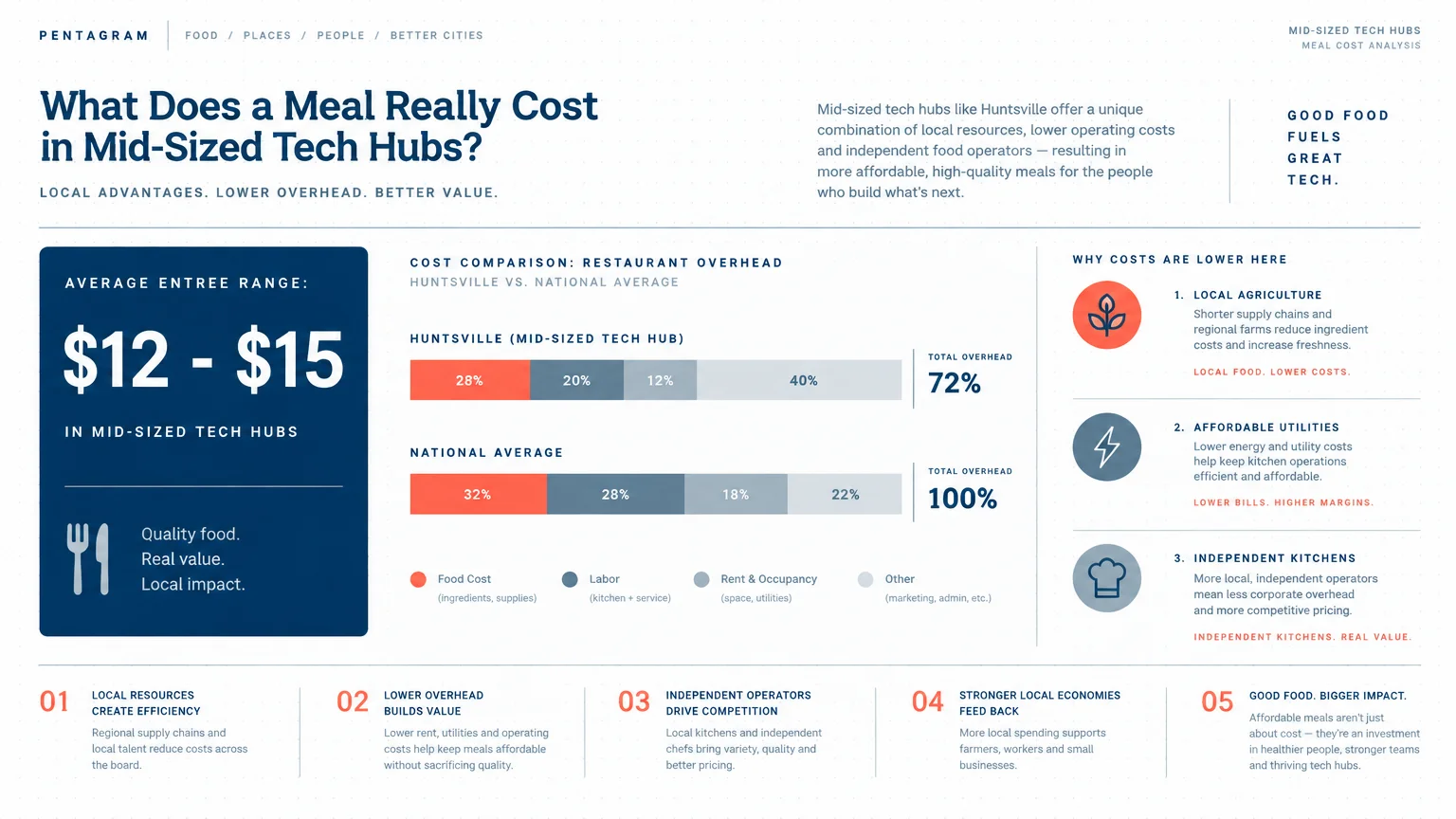
Tip #5: Huntsville, Alabama
Huntsville balances rapid tech growth with deep Southern dining affordability. Traditional meat-and-three diners across the city serve full lunch platters for just $9.00 to $11.00.
You can pile your plate with smoked barbecue chicken, collard greens, and cornbread without denting your wallet. Even modern craft brewpubs and artisan burger spots maintain fiercely competitive price points.
Moderate municipal hospitality taxes keep your final check refreshingly clean and predictable. Restaurant owners face reasonable rent overhead, which prevents the constant menu price creep seen in metropolitan hubs.
Independent operators dominate the local dining scene, choosing customer retention over short-term price gouging. You will rarely encounter mandatory wellness fees or unexpected credit card surcharges.
Huntsville delivers cutting-edge Southern cuisine paired with traditional prices that protect your hard-earned cash.
Visit cafeteria-style meat-and-threes between eleven and one for peak freshness and discounted pricing. You will leave completely satisfied without touching your emergency savings.
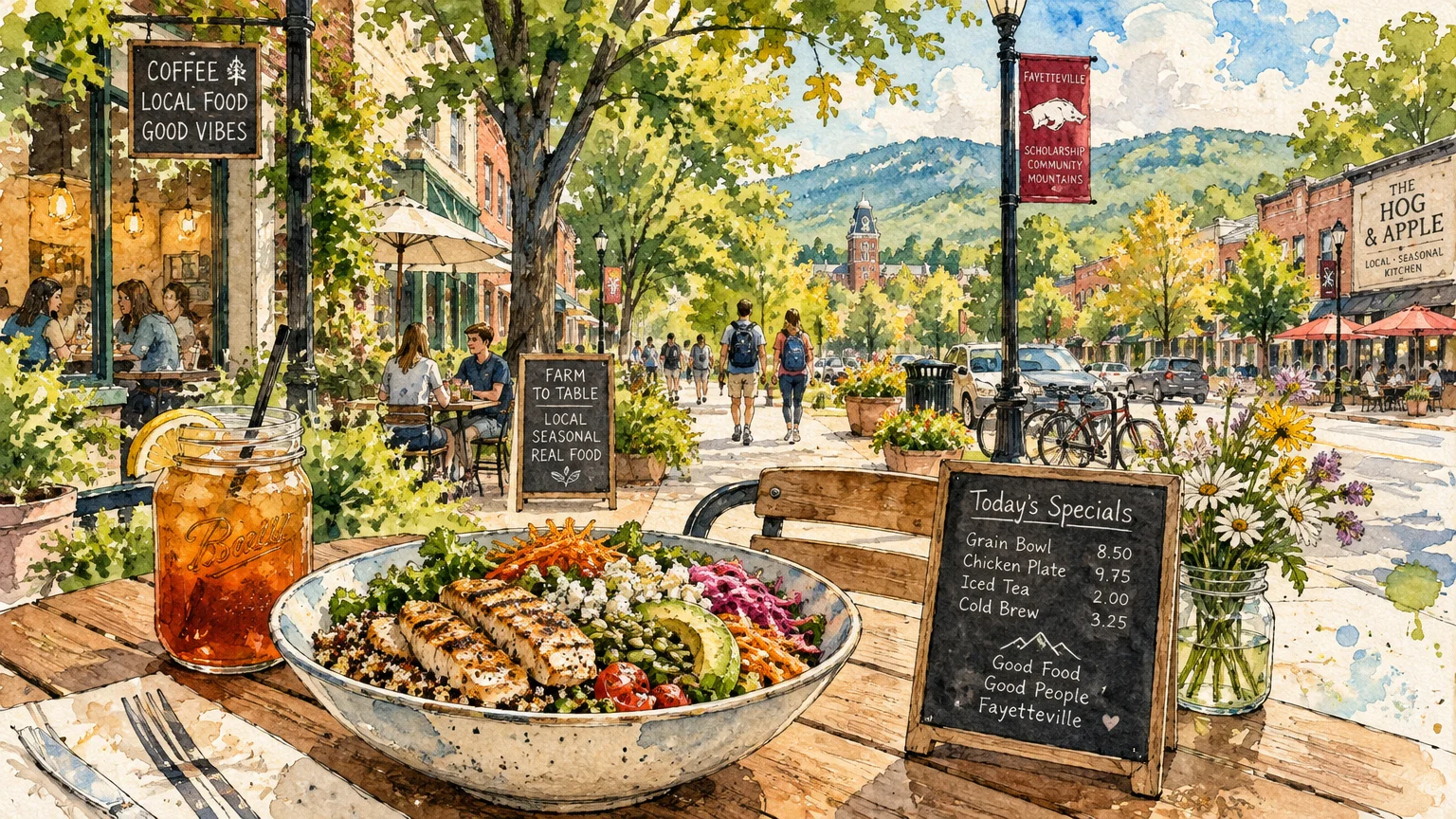
Tip #6: Fayetteville, Arkansas
Fayetteville rests in the scenic Ozarks, offering college-town energy alongside deeply discounted dining. Inexpensive meals average $11.00 to $13.00, while multi-course dinners for two rarely top $52.00.
Independent food trucks and eclectic downtown cafes flourish along the bustling Dickson Street entertainment district. You will find wood-fired artisan pizzas, massive burritos, and craft pints priced well below national benchmarks.
Fierce competition for student dollars forces restaurant owners to maintain aggressive promotions and generous portion sizes. Happy hour food discounts and daily specials make dining out an affordable everyday option.
Northwest Arkansas benefits from lower shipping costs thanks to regional logistics networks. Restaurant managers pass these operational savings directly to your dining ticket.
Fayetteville stands out as a genuine sanctuary for diners who demand real culinary craftsmanship on a lean budget.
Download local campus dining apps to access exclusive digital discounts. Many off-campus eateries distribute two-for-one coupons to attract student traffic on slow weeknights.
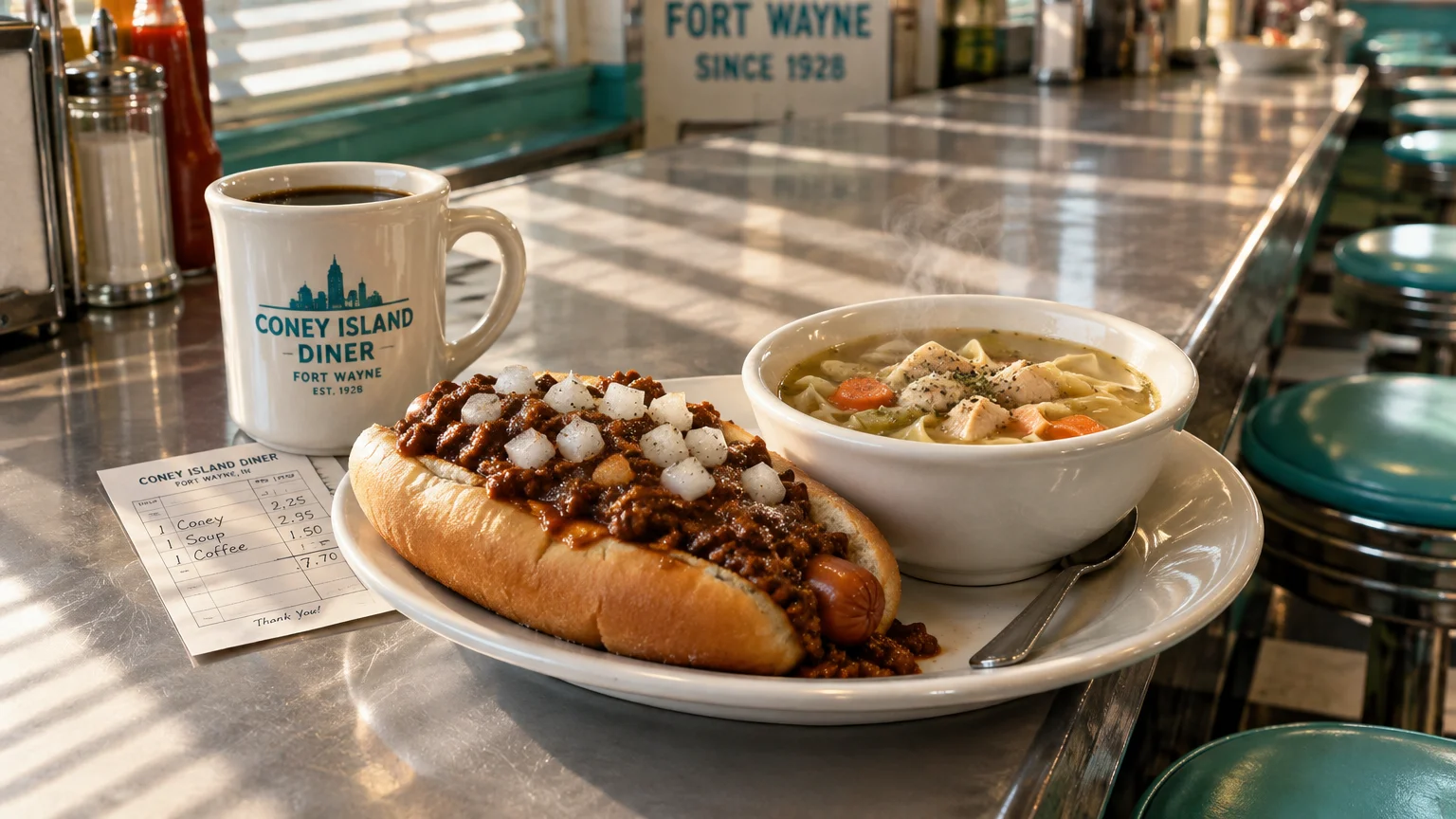
Tip #7: Fort Wayne, Indiana
Fort Wayne consistently claims top spots on national affordability rankings for low cost of living towns. You can still order classic Coney Island dogs and hand-cut fries for less than $3.00 each.
Sit-down dinners at beloved German brewpubs or family-owned steakhouses rarely cross $48.00 for two diners. The local restaurant culture prioritizes hearty comfort food, immense portions, and warm neighborhood hospitality.
Low commercial real estate costs protect local restaurant operators from intense financial stress. Because chefs face lower overhead expenses, they refuse to shrink menu portions or skimp on quality.
Indiana enforces transparent dining tax rules that protect consumers from unexpected check bloat. You know your exact bill before you pull out your credit card.
Dining out in Fort Wayne feels like a throwback to when restaurant meals represented honest, affordable value.
Look for cash-discount signs at legacy neighborhood taverns. Paying with paper currency often saves you an immediate 3% to 4% at the register.
Tip #8: Greenville, South Carolina
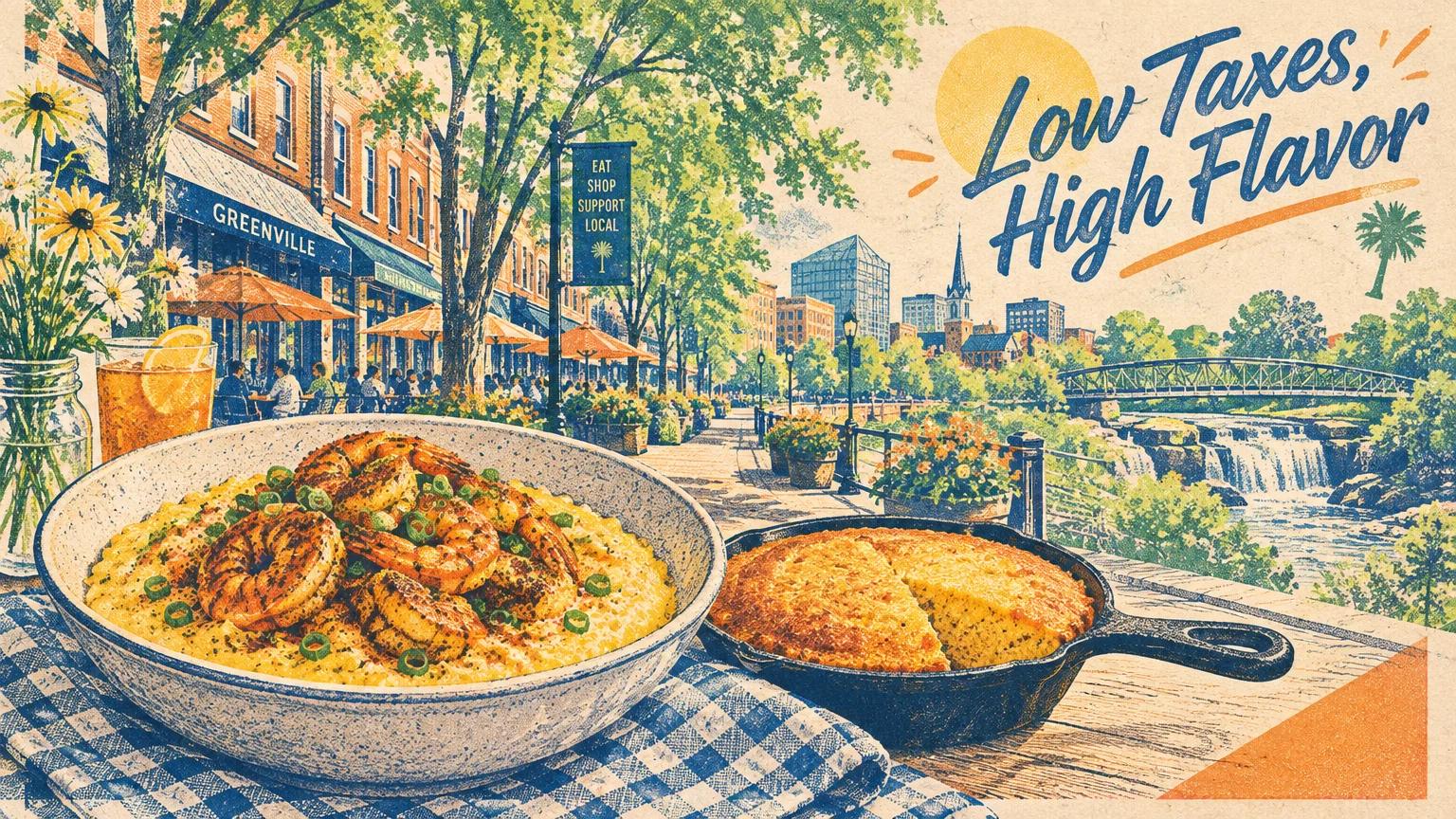
Greenville boasts a nationally celebrated downtown dining corridor without the inflated coastal resort pricing. While Charleston and Savannah command luxury rates, Greenville offers weekday lunch specials for $10.00 to $12.00.
You can share multi-course meals featuring smoked pulled pork, pimento cheese spreads, and fresh seafood for under $60.00. The city’s thriving culinary scene relies on repeat business from local families rather than seasonal tourists.
South Carolina’s modest utility costs and sensible commercial tax structures allow kitchens to hold menu pricing steady. Chefs build dishes around regional farm suppliers, keeping transportation markups to an absolute minimum.
You can stroll past tree-lined streets and urban waterfalls, then enjoy an artisan dinner that matches your budget. Greenville represents an exceptional model among affordable food cities across the Southeast.
Dine during weekday lunch windows to experience high-end Southern cooking at diner-level price points.
Take advantage of Greenville’s popular restaurant week promotions each winter and summer. Premier bistros roll out three-course prix-fixe menus for twenty-five to thirty-five dollars.
Tip #9: Omaha, Nebraska
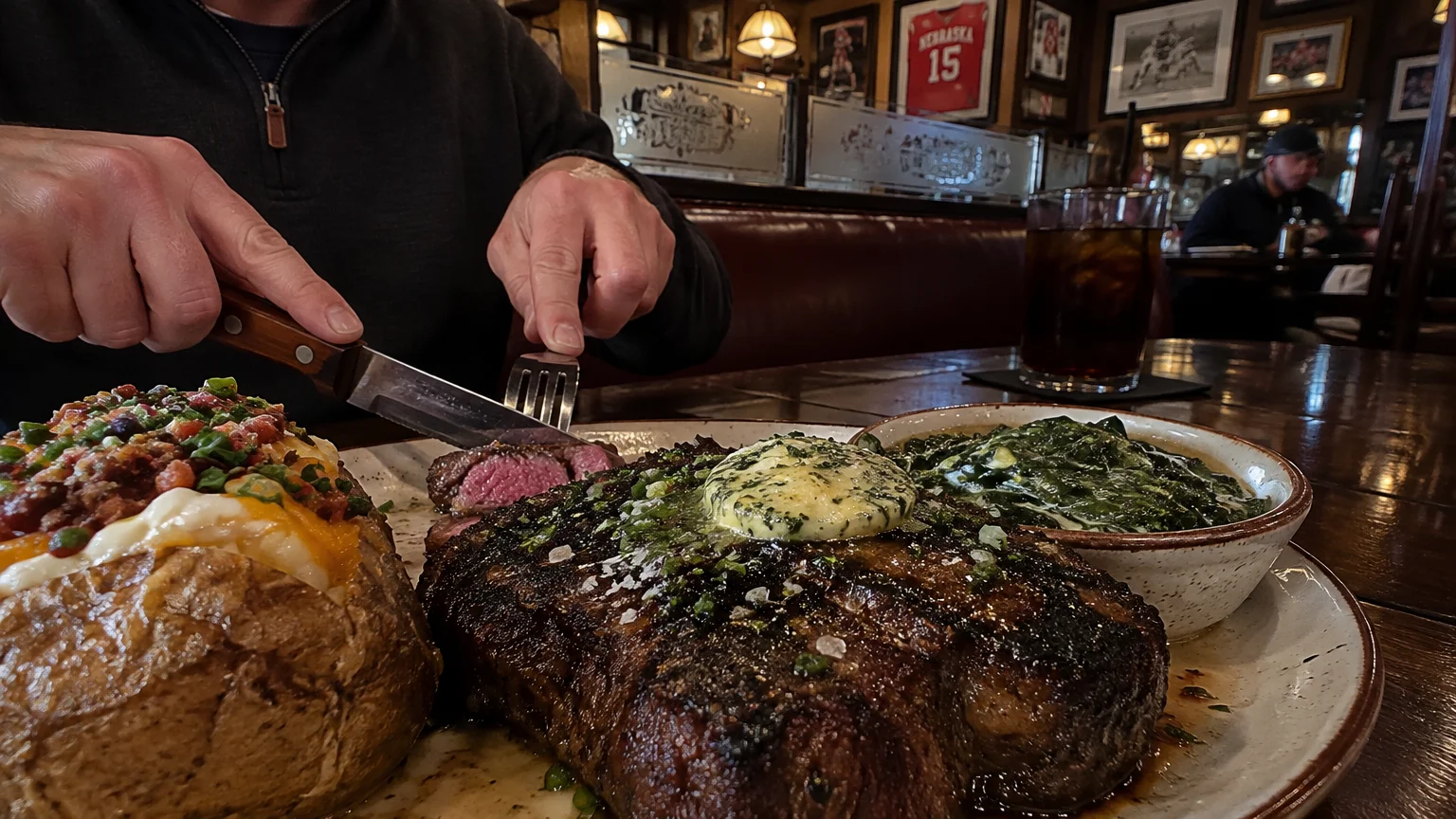
Omaha dishes out legendary Midwestern portions at prices that put coastal culinary capitals to shame. Classic steakhouse dinners here cost roughly 30% less than identical cuts served in Chicago or New York.
Everyday casual entrees cost between $11.00 and $13.00, while a generous three-course dinner for two averages $58.00. Because Omaha anchors the American cattle industry, top-tier beef moves directly from regional producers to local grills.
You bypass the costly logistics pipelines and middleman surcharges that coastal eateries pass to customers. Local bistros also avoid the automatic 3% to 5% service fees now common in California and Washington.
Omaha’s historic Old Market district features dozens of scratch-cooking pubs that reward budget-conscious diners. Large portion sizes ensure you routinely walk away with tomorrow’s lunch in a takeaway box.
This Midwestern powerhouse guarantees premium carnivore dining without leaving a dent in your household finances.
Head to tavern lounges during afternoon happy hours for cut-rate prime rib sliders. You get top-shelf steakhouse quality at standard tavern prices.
Tip #10: Wichita, Kansas
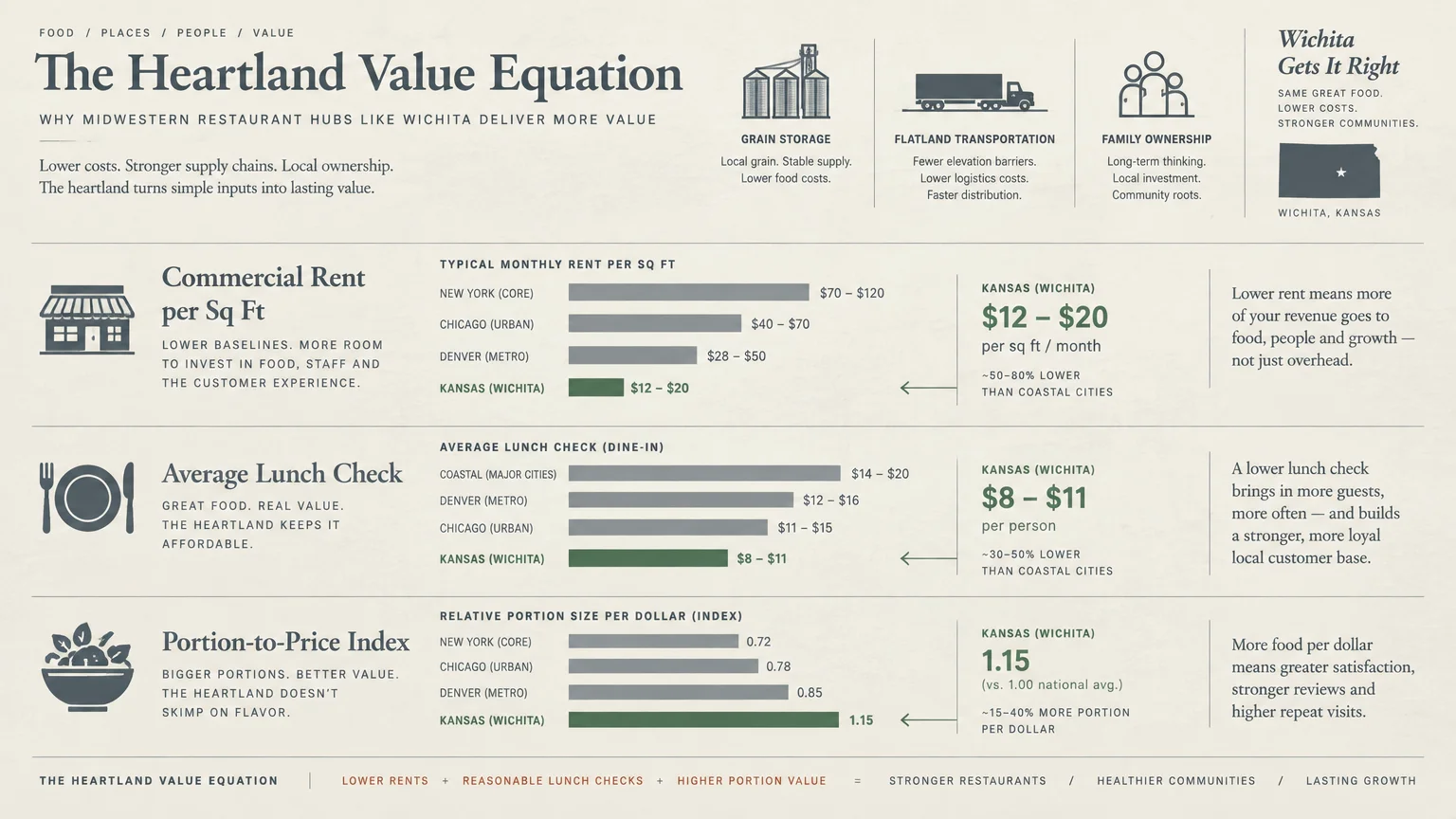
Wichita serves as a hidden culinary goldmine for diners who refuse to overpay. Inexpensive cafe meals routinely cost just $10.00, while three-course meals for two average $45.00 to $50.00.
The city supports an exceptionally diverse dining community, from authentic Vietnamese noodle houses to historic Lebanese bakeries. These immigrant-owned kitchens serve enormous scratch-cooked portions at rock-bottom prices.
Low commercial rents allow small business owners to operate with minimal debt and lower overhead. As a result, restaurant owners never resort to sneaky service fees or mandatory staff wellness surcharges.
Kansas agriculture keeps foundational ingredients like grains, beef, and dairy cheap and plentiful. You reap the financial benefits every single time you settle your check.
Wichita delivers rich global flavor while maintaining some of the lowest menu prices in the central United States.
Opt for family-style combo platters at international restaurants along Central Avenue. Sharing oversized portions drastically lowers the per-person dining expense.
Tip #11: Roanoke, Virginia
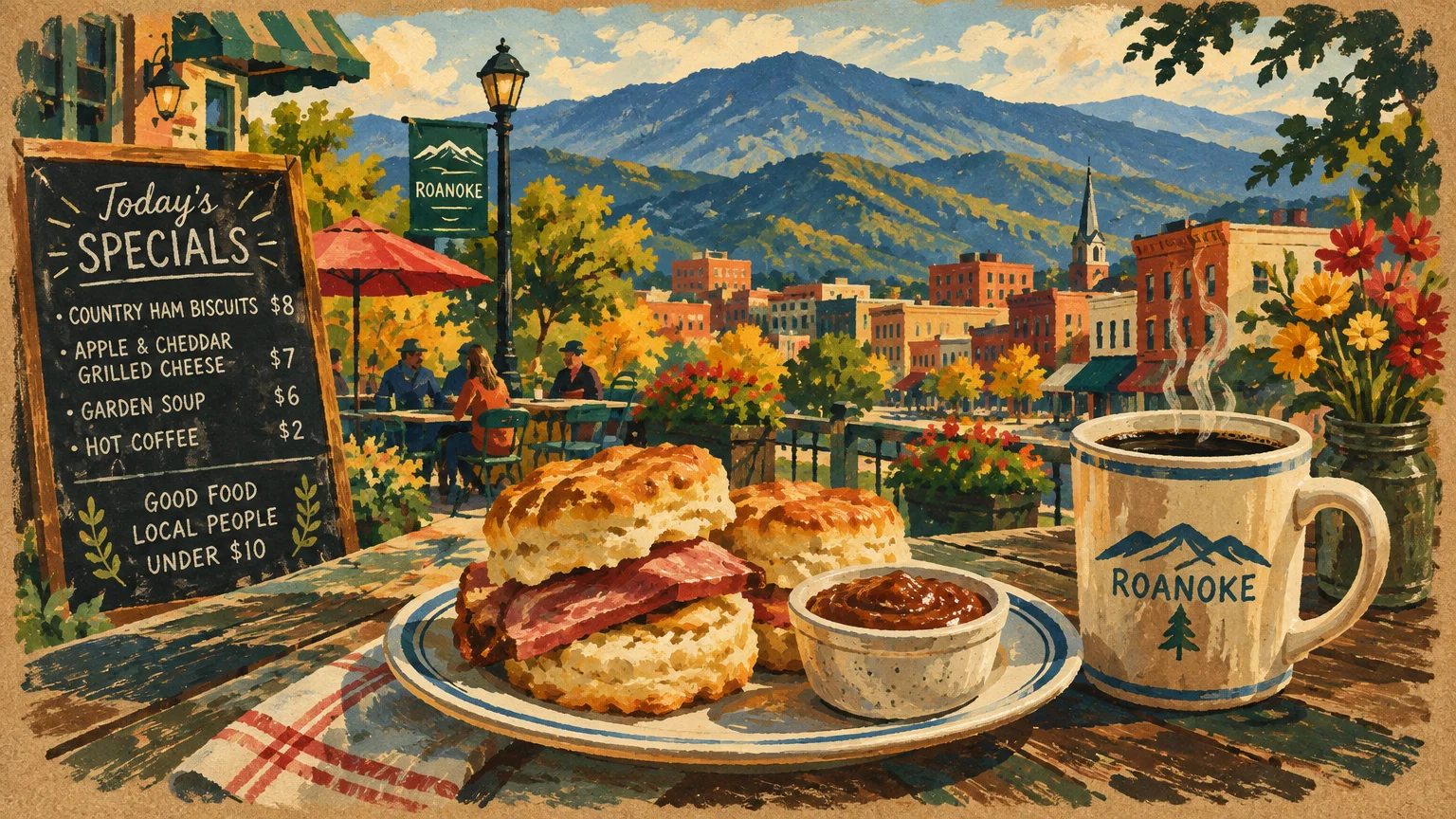
Roanoke pairs stunning Blue Ridge Mountain views with an exceptionally affordable restaurant market. Casual lunches in this historic valley town run between $10.00 and $12.00.
You can visit historic downtown market stalls and classic diners for country ham platters and scratch pot pies. A multi-course dinner for two at an upscale downtown bistro rarely exceeds $52.00.
Local chefs partner directly with nearby Shenandoah Valley farms, eliminating corporate markups and transport delays. Those direct farm relationships keep menu prices low while maximizing freshness and flavor.
Unlike Northern Virginia metros that levy punishing local meals taxes, Roanoke keeps dining taxation reasonable and transparent. You avoid the 10% to 11.5% tax bites common in other metropolitan dining corridors.
Roanoke proves that vibrant mountain living and budget dining destinations go hand in hand.
Explore the historic Roanoke City Market during lunchtime for freshly prepared foods sold straight from local farm stalls. You receive artisan-grade lunch quality for grocery store prices.
Tip #12: Mobile, Alabama
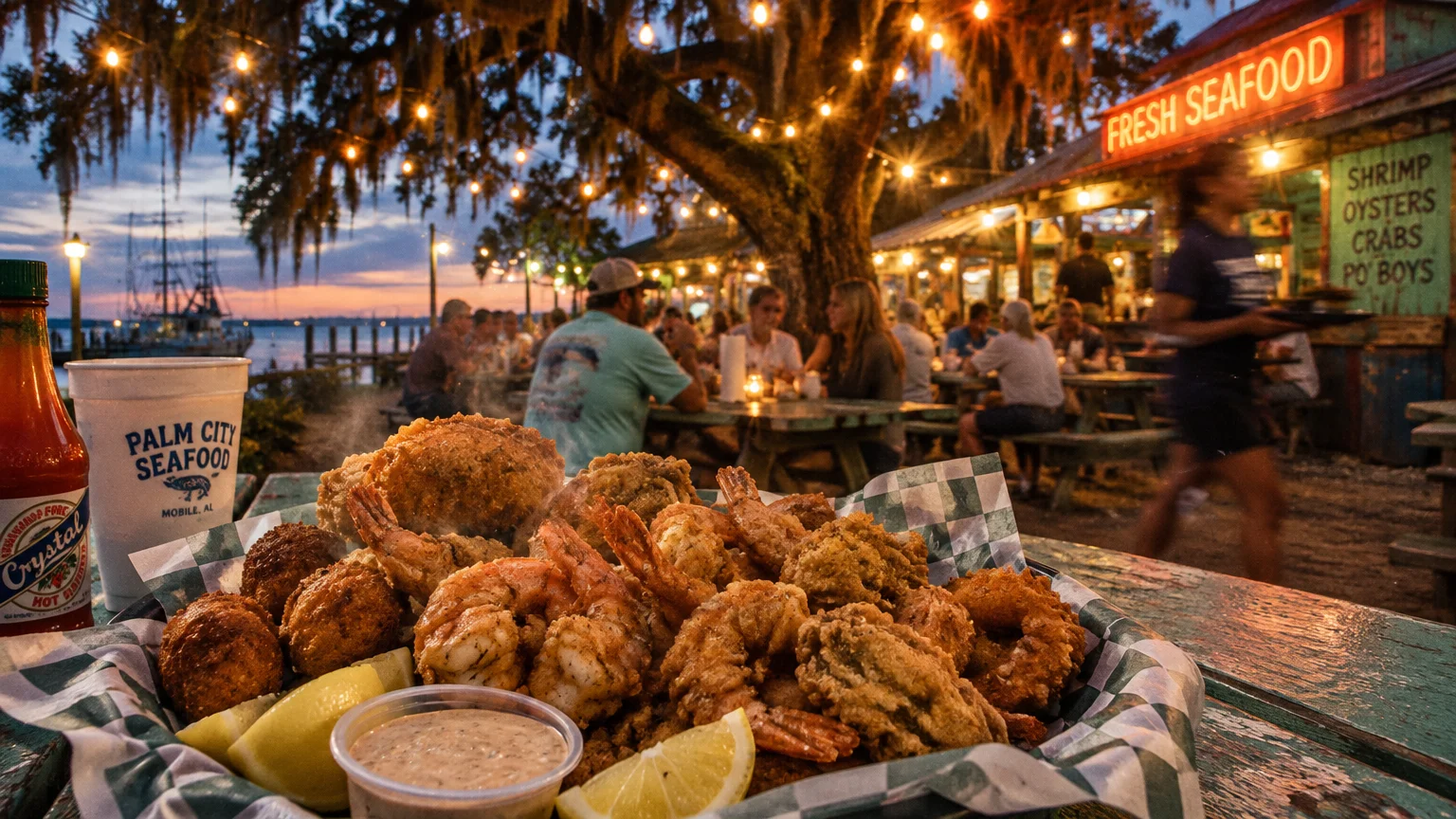
Mobile delivers authentic Gulf Coast seafood without the bloated pricing of Florida resort towns. Fresh shrimp po’boys, seafood gumbo, and blackened catfish platters routinely cost between $10.00 and $12.00.
Two diners can enjoy a feast of fresh crab claws and grilled catch-of-the-day for roughly $50.00 total. Local docks deliver fresh catches directly to neighborhood kitchens, completely bypassing distributor markups.
Mobile’s restaurant community focuses on serving loyal local regulars rather than gouging seasonal travelers. You receive genuine Southern hospitality, generous portion sizes, and completely honest menu pricing.
Alabama’s modest operating costs and lower commercial property rates help chefs keep their doors open without raising prices. You enjoy coastal culinary treasures without paying luxury resort premiums.
Mobile easily earns its reputation as one of the best cheap restaurant towns along the Gulf of Mexico.
Purchase fresh seafood boils by the pound from roadside seafood markets instead of seated dining rooms. You get double the shrimp for half the sit-down price.
The Bottom Line: What This Means for Your Wallet
Dining out does not have to drain your financial resources. While the Bureau of Labor Statistics reports restaurant prices climbed 3.4% year-over-year—outpacing groceries at 2.2%—geography dictates your true costs.
A recent LendingTree survey revealed that 78% of Americans now view dining out as a luxury expense. However, choosing the right market transforms restaurant meals back into an affordable everyday pleasure.
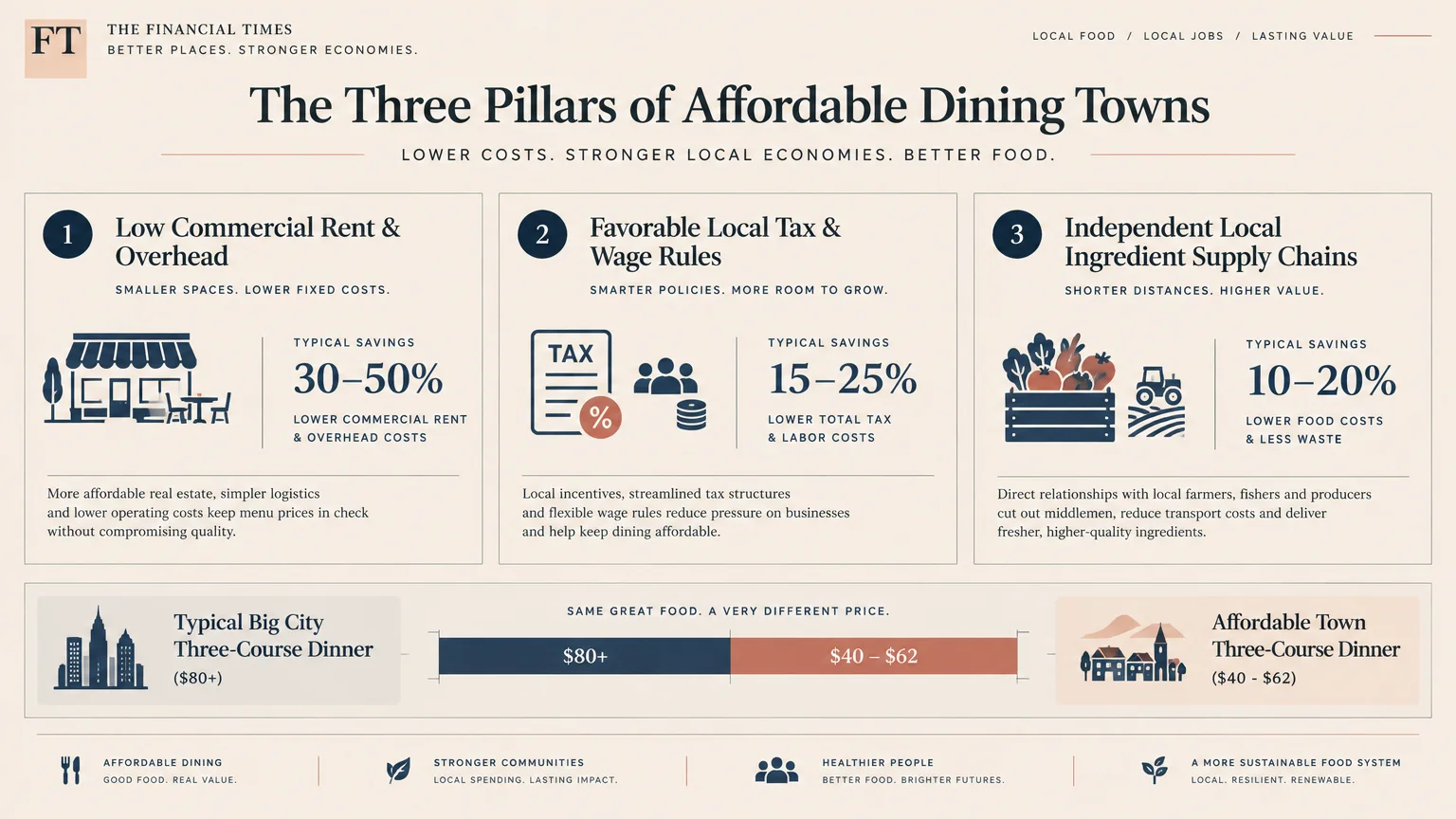
The national median price for a casual meal sits at $20.00, with dinners for two reaching $85.00. Towns like Fort Worth, El Paso, and Knoxville slash those figures by nearly 30% to 50%.
Labor regulations play a massive role in what appears on your final check. States without tip credits mandate base wages over $16.00, prompting restaurants to add 3% to 5% service fees.
Conversely, regions utilizing standard federal tip baselines maintain lower upfront menu prices without sneaky add-on fees. You also avoid local hospitality meals taxes that can spike dining bills by 8% to 11.5%.
Five states boast a 0% statewide sales tax, while others pile on local prepared food fees. Picking low-tax jurisdictions preserves your discretionary cash flow.
To maximize your savings, target towns with low commercial rents and direct agricultural supply chains. You will enjoy world-class meals while keeping your monthly budget completely under control.
Frequently Asked Questions
Why are restaurant meals so much cheaper in these specific towns?
These towns benefit from significantly lower commercial rent, affordable utility rates, and direct access to regional agricultural hubs. Lower overhead allows independent restaurateurs to maintain profitability without raising menu prices.
They also avoid the aggressive municipal meals taxes and mandatory service surcharges common in dense coastal cities.
How do local taxes and labor laws impact restaurant prices?
States with high minimum wage mandates and no tip credits often see menu prices jump, alongside added 3% to 5% surcharges. Cities with dedicated meals taxes can push dining tax rates above 11%.
In contrast, towns with modest hospitality taxes and standard wage baselines keep base prices transparent and affordable.
Does eating out in affordable towns mean sacrificing food quality?
Not at all. In fact, many affordable food cities sit closer to agricultural producers, providing fresher ingredients than coastal metropolitan restaurants.
Chefs in these towns focus on scratch cooking and culinary heritage rather than expensive marketing campaigns or trendy interior decor.
What is the easiest way to save money when dining out anywhere?
Dine out during weekday lunch hours when restaurants offer discounted lunch specials for the exact same dinner portions. You can also skip sugary beverages and alcoholic drinks to slash your total bill instantly.
Always inspect your itemized check to identify surprise credit card processing fees or automatic service charges before you tip.
For consumer protection information, visit the Federal Trade Commission (FTC) and the Consumer Financial Protection Bureau (CFPB). For product safety and reviews, consult Consumer Reports.
Disclaimer: This article is for informational purposes only and does not constitute financial advice. The content reflects the author’s opinion and research at the time of writing. Always do your own research before making financial decisions.