Stretching your household grocery budget while meeting your family’s nutritional goals does not mean eliminating premium protein like wild-caught salmon or fresh cod from your weekly meal plan. You can easily satisfy the recommended intake of eight ounces of seafood per week without overspending if you know where to shop and how grocery chains price their fish. Retailers use vastly different supply chains, markup structures, and promotional schedules that directly impact what you pay at the register. By comparing national supermarkets, specialized regional chains, and discount warehouse clubs, you can secure restaurant-quality fresh fish at prices that align with your monthly financial targets.
The Hidden Economics of Supermarket Seafood Counters
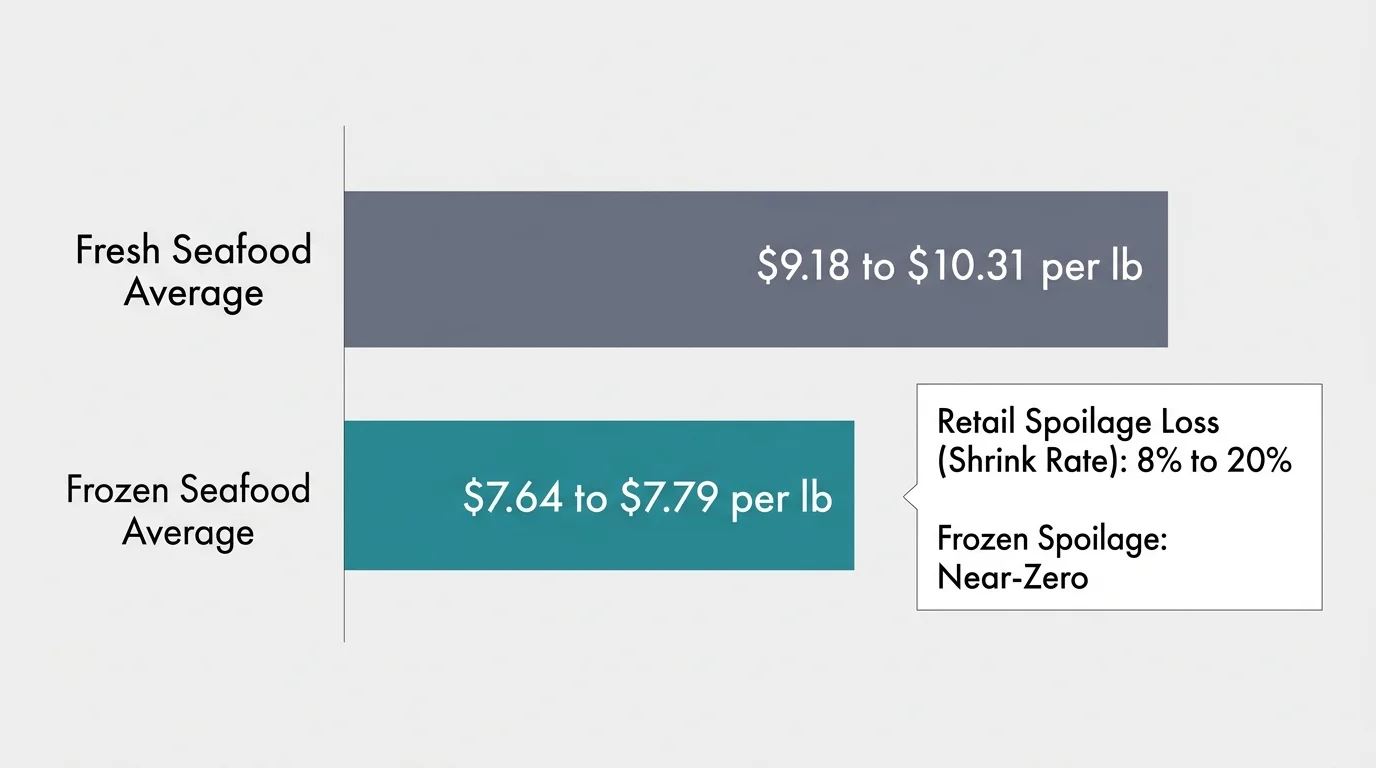
When you walk past the seafood counter, price tags often look daunting compared to poultry or pork. Understanding how grocers price seafood helps you stretch every dollar. According to the USDA Dietary Guidelines, adults should consume at least eight ounces of seafood per week to secure vital health benefits like cardiovascular and neurological support. However, fresh display cases carry substantial overhead. Retail market data from Circana shows that fresh seafood averaged between $9.18 and $10.31 per pound, whereas frozen seafood averaged between $7.64 and $7.79 per pound. That price gap stems directly from supermarket operational waste.
Fresh seafood experiences a retail spoilage loss, known as a shrink rate, between 8% and 20% before a customer buys it. Grocery stores offset these spoilage losses by inflating markup prices on fresh cuts. In contrast, flash-frozen seafood maintains a near-zero shrink rate, allowing stores to pass savings directly to you. Knowing which grocery chains manage their supply chains efficiently allows you to shop the fresh counter strategically without taking a loss on marked-up inventory.
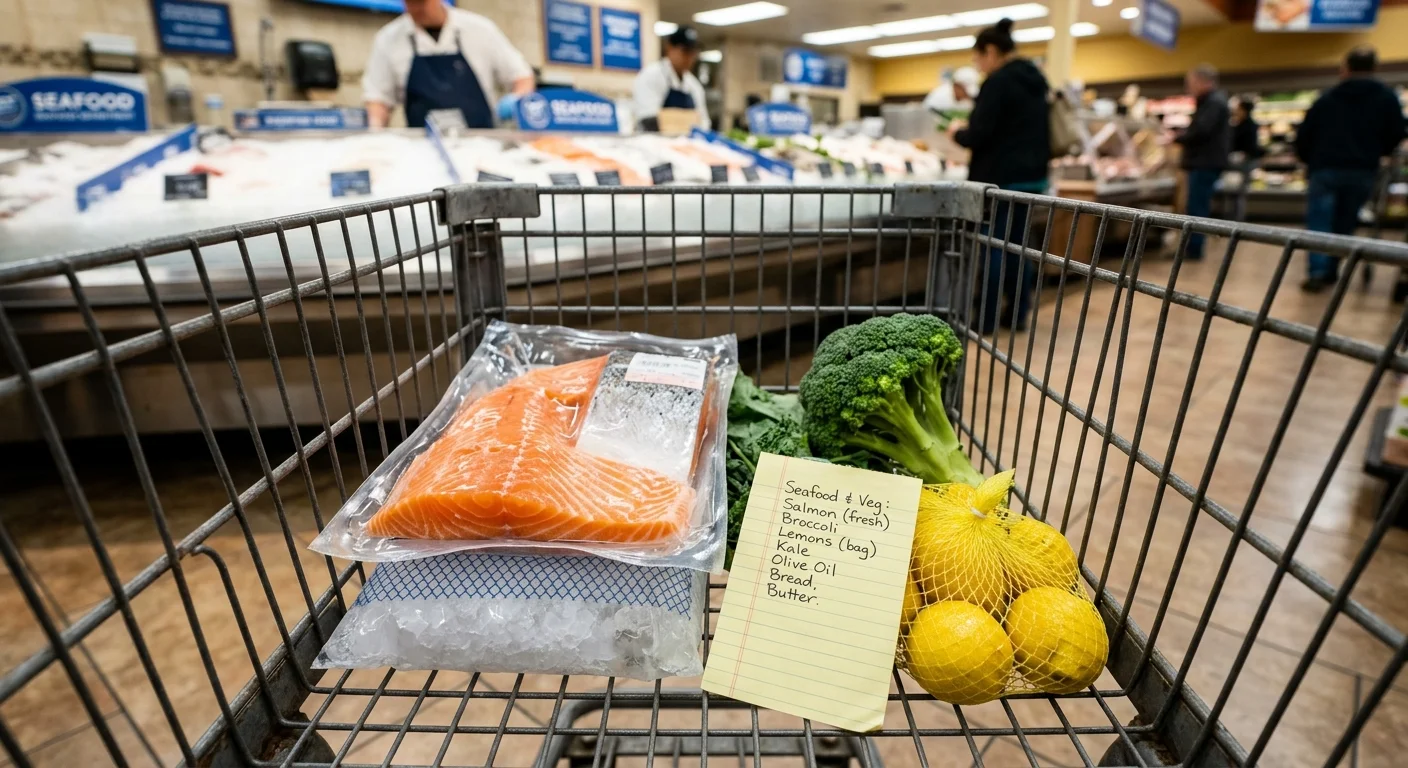
The 12 Best Grocery Store Chains for Seafood
1. Whole Foods Market
Whole Foods stands out for rigorous quality and sustainability standards. In 1999, Whole Foods became the first U.S. grocery retailer to partner with the Marine Stewardship Council to establish third-party certified sustainable wild-caught seafood standards. Prime members can leverage weekly sales on wild salmon and sea scallops to secure prices that rival standard supermarkets.
2. Trader Joe’s
Trader Joe’s eliminates expensive service counters, relying on high-turnover vacuum-sealed fresh and frozen packaging. Because they minimize in-store shrink, per-pound pricing on fresh Atlantic salmon, cod, and seasonal catches remains remarkably competitive. You gain extended shelf life without paying the markup associated with traditional display cases.
3. Costco Wholesale
Costco leverages massive purchasing power to deliver incredible unit value on high-grade fresh and frozen seafood. Rapidly moving inventory ensures maximum freshness for salmon, cod, and seasonal catches. Buying in bulk lowers your per-ounce cost significantly, provided you have freezer space to store extra portions.
4. H Mart
As the premier Asian supermarket chain in North America, H Mart offers unmatched variety and competitive pricing on whole fish and shellfish. Live tanks and high-turnover displays feature red snapper, pompano, and mackerel. Their fishmongers clean, scale, and gut whole fish at no extra charge.
5. Wegmans
Wegmans combines restaurant-grade quality with direct dock-to-store logistics. Seafood departments provide exceptional transparency regarding harvest methods. Wegmans offers consistent value through family-pack pricing on staple items like fresh salmon fillets and sea bass, backed by knowledgeable counter staff.
6. Sprouts Farmers Market
Sprouts emphasizes eco-friendly sourcing and consumer accessibility. The chain provides clear labeling on wild-caught versus farm-raised options. Notably, Sprouts offers a nationwide weekly price promotion featuring select freshly prepared grab-and-go sushi rolls for $5 every Wednesday, giving budget-conscious shoppers a low-cost, high-protein meal.
7. ALDI
ALDI operates with extreme operational efficiency, passing savings onto shoppers through private-label seafood selections. While their fresh display is intentionally small, their flash-frozen seafood lineup—certified by independent sustainability groups—is exceptional. You can routinely find frozen wild-caught salmon and cod fillets at low prices.
8. HEB
Texas-based HEB leverages direct regional relationships with Gulf Coast fisheries to deliver fresh shrimp, wild snapper, and flounder. Their direct supply chain cuts out middleman distributions, resulting in lower retail prices. HEB also features value-added seasoned cuts that make weeknight seafood preparation simple and affordable.
9. Publix
Publix maintains a stellar reputation across the Southeast for customer service and quality control at the seafood counter. The chain frequently features buy-one-get-one-free promotions on frozen shrimp, crab legs, and fish fillets. Pairing sales cycles with store coupons allows smart shoppers to stock up on quality protein affordably.
10. Seafood City
Seafood City caters specifically to Filipino and Asian-American cuisine, making it ideal for shoppers seeking fresh whole fish at wholesale prices. Rapid turnover on tilapia, milkfish, and squid keeps inventory fresh. The store offers complimentary custom cleaning, filleting, and in-store deep frying for added convenience.
11. Sam’s Club
Sam’s Club provides strong competition in the warehouse space with high-quality, large-format seafood offerings. Fresh offerings focus on popular choices like Atlantic salmon, tilapia, and wild-caught mahi-mahi. Fast inventory movement ensures freshness while offering low per-pound costs that fit structured household budgets.
12. The Fresh Market
Although known as a boutique grocer, The Fresh Market offers high-end quality alongside strategic weekly deals. Weekly promotional events often include steep discounts on fresh salmon, wild-caught shrimp, and crab cakes. Shopping specific sale days lets you enjoy a luxury dining experience at home without overspending.
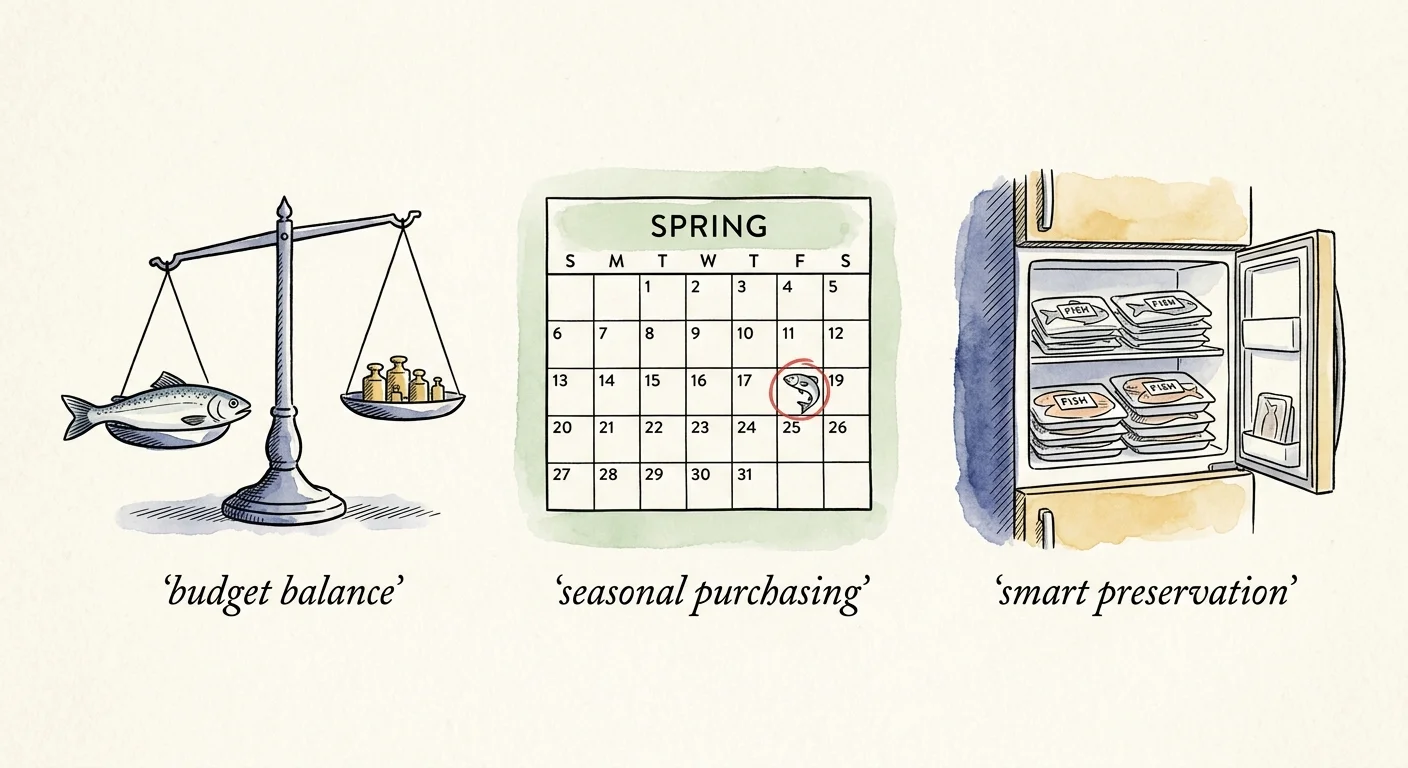
Three Strategic Pillars for Maximum Seafood Savings
Understanding the financial mechanics of retail seafood changes how you shop. Because fresh counter displays incur spoilage losses between 8% and 20%, you pay for that waste in higher retail prices. Flash-frozen fish is frozen within hours of harvest at sea, locking in peak freshness and nutrition while eliminating retail waste. By opting for frozen fillets for daily cooking, you capture an immediate 15% to 25% cost reduction. Save fresh counter purchases for special occasions or when specific catches are on peak local sale.
Seafood prices fluctuate dramatically based on wild harvest cycles and migration patterns. For example, fresh Pacific salmon prices drop significantly during summer harvest months, while Gulf shrimp costs fall in late spring and autumn. Shopping out of season means paying premium transportation costs for imported fresh fish. Monitor weekly circulars to align your dinner plan with what is currently in season.
Pre-trimmed, skinless fillets carry heavy labor markups. Buying whole fish—or larger whole sides—slashes the per-pound cost. Ethnic markets like H Mart and Seafood City, as well as conventional grocers like Wegmans, employ skilled fishmongers who scale, gut, and cut whole fish into fillets or steaks for free. You pay the lower whole-fish price while receiving custom-cut portions ready for cooking.

Expert Insights on Balancing Quality and Household Budgets
Balancing food costs with nutritional quality requires intentional planning. According to consumer financial guidelines from the Consumer Financial Protection Bureau, establishing structured spending categories helps households absorb price fluctuations without taking on debt. Financial planners emphasize evaluating seafood by its net yield and unit price rather than absolute cost per package.
When you purchase whole fish or bulk frozen packs, calculating the actual cost per serving prevents budget overruns. Certified financial planners suggest allocating a specific portion of your monthly grocery target to higher-cost proteins, then balancing those purchases with budget-friendly grain and vegetable sides. Furthermore, behavioral economists point out that keeping versatile frozen seafood on hand reduces impulse takeaway orders on busy weeknights, saving average households substantial dining-out expenses.
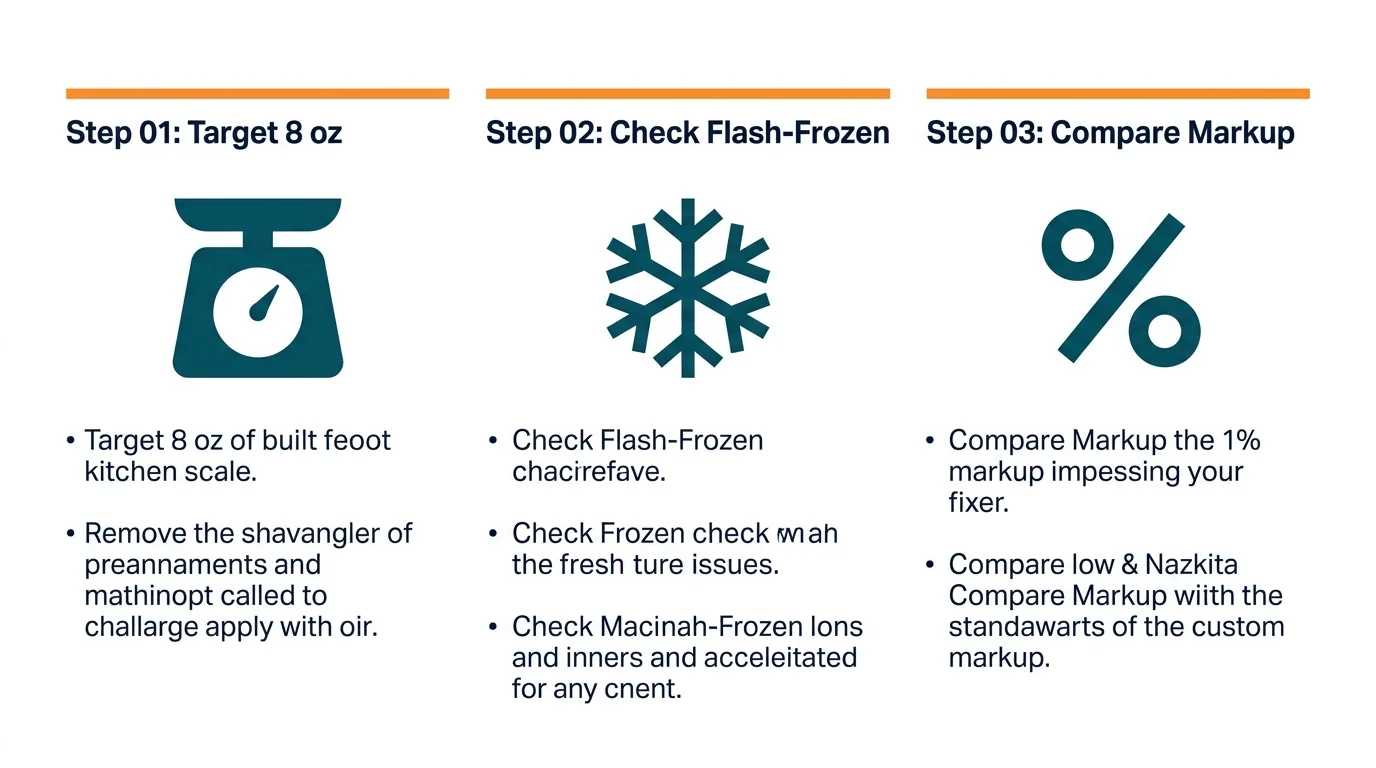
Seafood Action Lab: Transforming Your Weekly Receipts
Let us walk through a concrete example of how small purchasing tweaks unlock major savings over a single year. Suppose your household consumes two pounds of fresh salmon fillets per week to meet health guidelines. At a standard fresh display counter, Atlantic salmon averages $10.00 per pound, resulting in a weekly expense of $20.00, or $1,040 annually.
By adjusting your strategy, you purchase flash-frozen salmon bags at $7.70 per pound and take advantage of Sprouts $5 Sushi Wednesday twice a month for convenient meals. This simple shift drops your weekly salmon spend to $15.40. Over 52 weeks, your total expense falls from $1,040 to $800.80. You save $239.20 per year on a single protein staple without reducing your consumption by a single ounce.
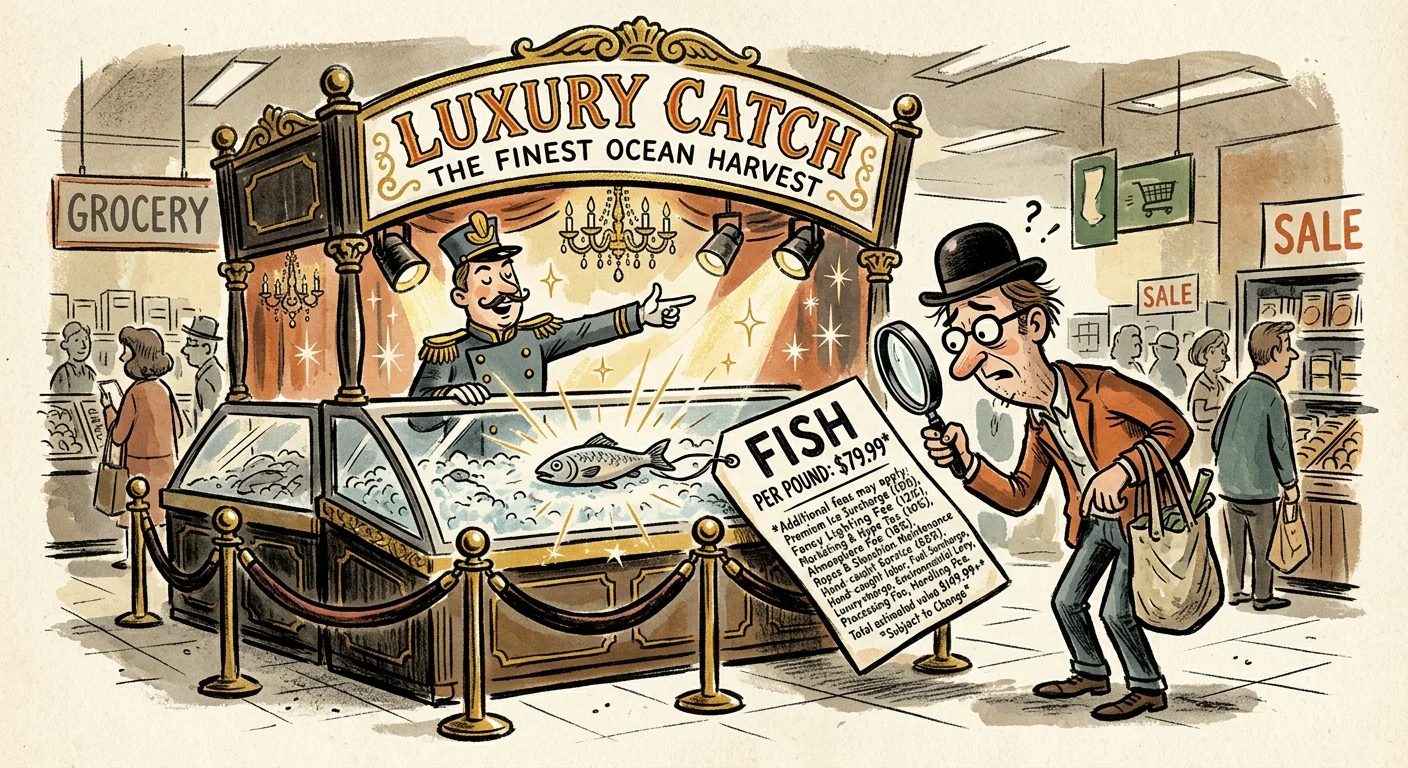
Common Pitfalls to Avoid at the Seafood Counter
Avoid buying thawed fish displayed on ice if it was previously frozen. Supermarkets frequently thaw frozen fish fillets and place them in the fresh counter case, charging fresh-cut prices for thawed inventory. Look closely at the counter tag for the phrase “previously frozen.” If you see it, buy the bagged frozen version in the freezer aisle instead to save money and maintain better texture.
Another common pitfall is ignoring third-party eco-certifications. Evaluating seafood departments based on established standards, such as those found in the Greenpeace Seafood Scorecard, ensures you support retailers that prioritize transparent sourcing policies and avoid overfished species. Avoid unlabelled seafood that lacks clear origins or harvest methods.
Frequently Asked Questions
Is frozen seafood as nutritious as fresh seafood?
Yes. Flash-frozen seafood is frozen at extremely low temperatures shortly after harvest, locking in essential nutrients, omega-3 fatty acids, and vitamins at peak freshness.
How can I tell if fresh counter fish is actually fresh?
Look for clear, bulging eyes on whole fish, firm flesh that springs back when touched, and a clean, salty ocean smell rather than a strong fishy odor.
What is the most cost-effective seafood to buy overall?
Frozen wild salmon, frozen tilapia, canned tuna, and whole fish from Asian markets like H Mart consistently offer the highest protein value per dollar.
Why does fresh seafood cost so much more than frozen options?
Fresh seafood carries high transportation costs and an 8% to 20% retail spoilage rate. Grocers increase prices on fresh fish to cover the waste from unsold inventory.
Take Charge of Your Seafood Budget Today
Upgrading your diet with high-quality seafood does not require sacrificing your financial goals. By identifying which grocery chains excel in pricing, sustainability, and quality, you gain complete control over your food spending. Challenge yourself this week to try one new strategy: visit a local warehouse club or specialized market, swap one fresh purchase for flash-frozen fillets, or take advantage of mid-week promotions. Small, intentional choices at the grocery store quickly build momentum toward long-term financial freedom.