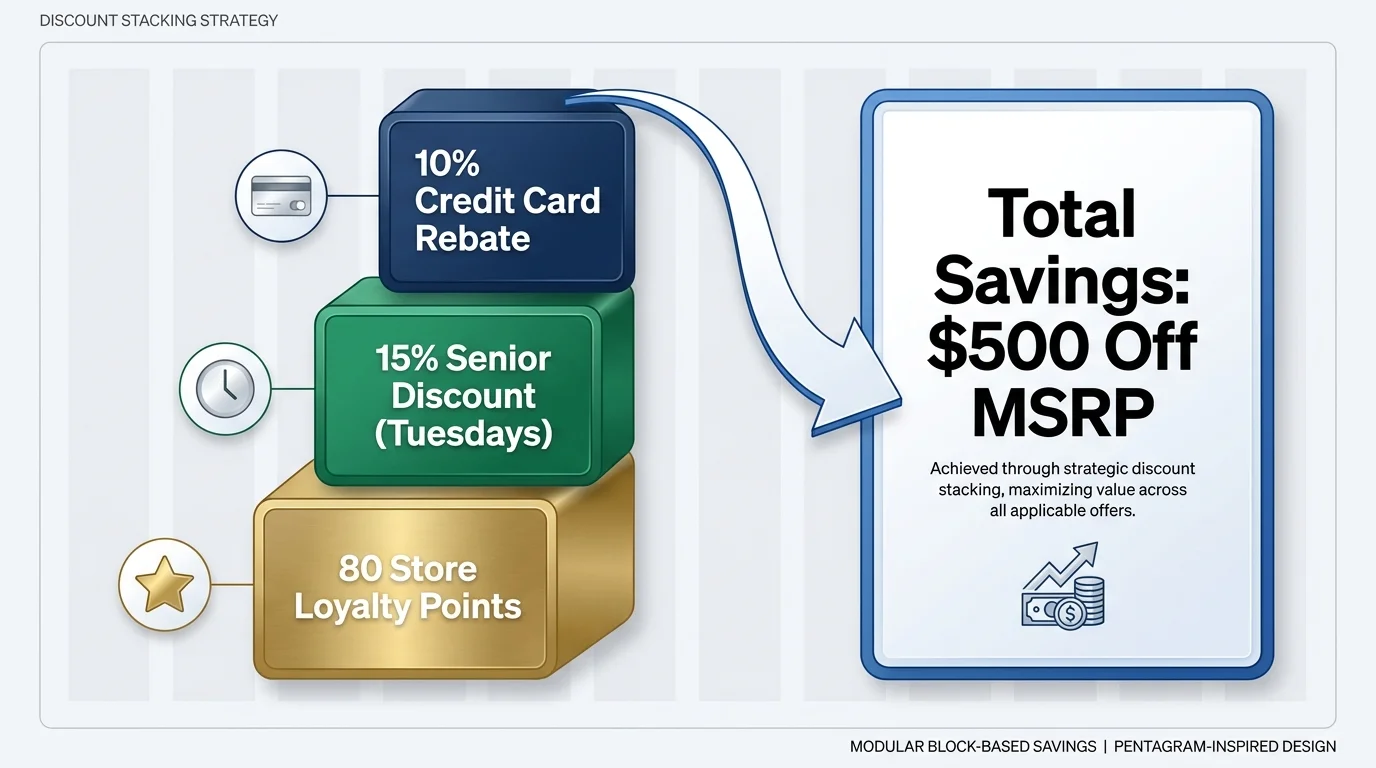
Meet Robert. He is a sixty-eight-year-old retired architect living on a fixed income, yet he routinely outmaneuvers complex retail pricing algorithms. Last autumn, Robert decided to upgrade his kitchen with a premium espresso machine carrying an intimidating suggested retail price of twelve hundred dollars. Instead of handing over his credit card on impulse, he orchestrated a masterpiece of modern deal-hunting. He waited patiently for the manufacturer’s November promotional window; he activated a fifteen-percent senior discount exclusive to Tuesday mornings; he paid with a credit card offering a ten-percent cash-back rebate on home goods, and he cashed in eighty dollars of accumulated store loyalty points. When the receipt printed, his total out-of-pocket expenditure had plummeted to roughly seven hundred dollars. Robert did not cut corners or settle for a subpar brand—he simply leveraged the rules of the retail game.
In 2026, the retail landscape is heavily saturated with artificial intelligence, dynamic pricing models, and personalized marketing designed to extract the maximum amount of money from your wallet. Retailers use sophisticated data tracking to anticipate your desires, often inflating prices artificially just before offering a heavily advertised sale. To thrive in this environment, you must adopt an aggressive, proactive stance. Bargain hunting is no longer about clipping physical coupons from the Sunday paper; it requires deploying intelligent tactics that preserve your retirement nest egg. The following strategies will transform you from a passive consumer into a formidable buyer, ensuring you extract maximum value from every single transaction.
Price Intelligence: Uncovering the True Value of Your Purchases
Trick 1: Master MSRP and Historical Pricing Data
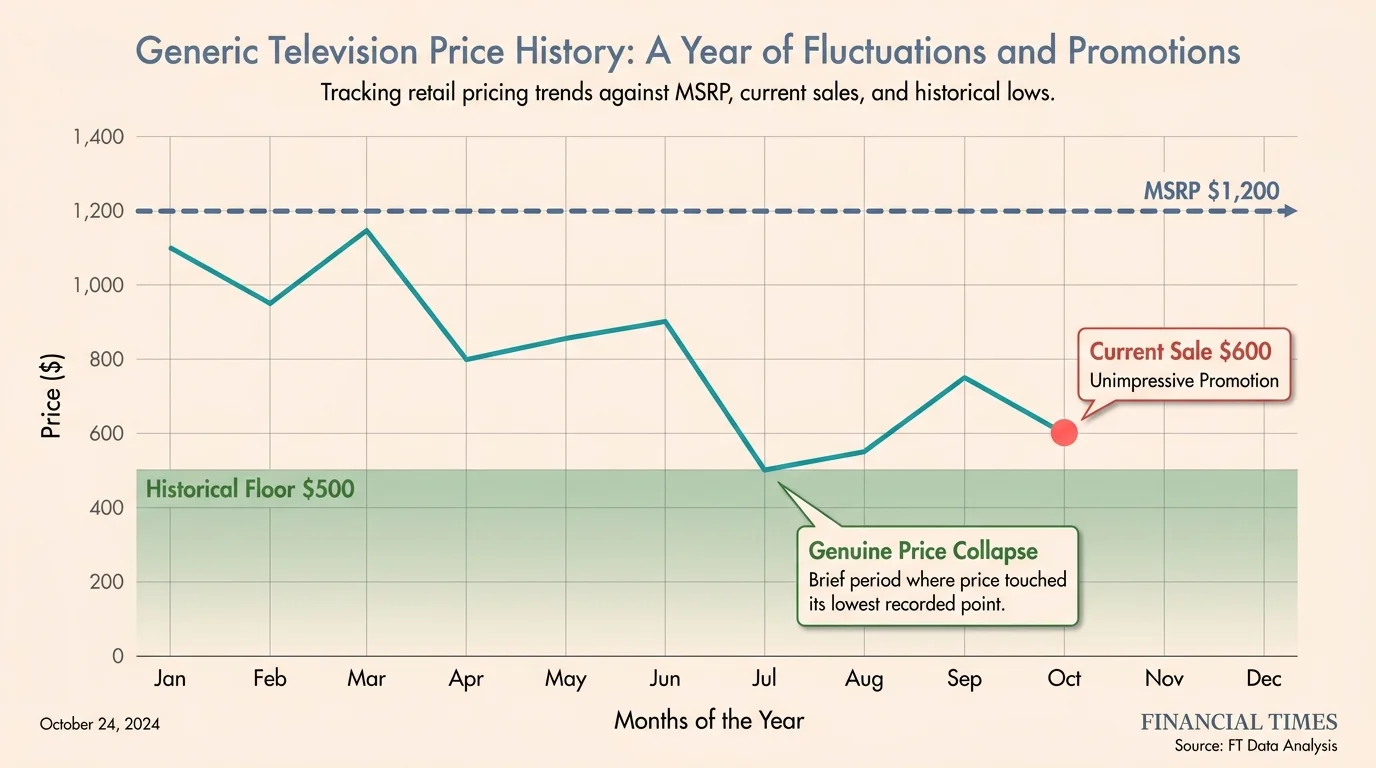
Retailers rely heavily on anchor pricing to manipulate your perception of value. They prominently display a Manufacturer’s Suggested Retail Price right next to a deeply slashed sale price, tricking your brain into believing you are securing an incredibly rare bargain. You must learn to ignore these artificial anchors and uncover the actual baseline value of the goods you wish to acquire. Often, a product advertised at fifty percent off has actually been selling at that supposedly discounted rate for the majority of the calendar year.
To strip away this marketing fluff, you should consult historical pricing databases before making any significant investment. By utilizing a free Amazon price tracker, you can view comprehensive graphs that map out a product’s cost fluctuations over the past several years. If the data reveals that a television frequently drops to five hundred dollars, you will instantly know that the current holiday price of six hundred dollars is entirely unimpressive. Armed with this empirical data, you can confidently walk away from mediocre promotions and reserve your capital for genuine price collapses.
Trick 2: Time the Seasonal Cycles for Deep Discounts
Patience pays massive dividends when you align your purchasing habits with predictable retail inventory cycles. Stores operate on strict quarterly schedules, meaning they must aggressively liquidate older merchandise to make physical room for new product lines. If you understand these cyclical rhythms, you can reduce grocery bills and secure premium household items at a fraction of their original cost. You simply need to shift your habits to buy out of season.
Consider the automotive and appliance industries; late summer and early autumn are notorious for deep markdowns on current-year models as manufacturers prepare for next year’s releases. Winter apparel reaches its absolute lowest price points in late February, while patio furniture and outdoor grills are practically given away in late October. Even everyday grocery items follow distinct patterns—baking supplies plummet in price during the weeks leading up to Thanksgiving, while frozen foods see heavy promotions in March. By anticipating these cycles rather than reacting to immediate needs, you insulate yourself from paying full retail premiums.
Stackable Savings: Multiplying Your Discounts
Trick 3: Layer Senior Discounts with Cash-Back Portals
Accepting a single discount is a rookie mistake; mastering the art of the stack requires you to apply multiple promotional levers to a single transaction. Many grocery chains, pharmacies, and department stores offer dedicated senior discount days—often a Tuesday or Wednesday—where anyone over the age of fifty-five receives an automatic ten percent reduction at the register. You can check the AARP member benefits directory to locate participating merchants in your area. However, your savings strategy should never stop at the cash wrap.
You can multiply that initial discount by funding your purchase with a rewards credit card optimized for your specific spending category. If your credit card generates six percent cash back at supermarkets, you instantly elevate your total savings to sixteen percent. Furthermore, taking a few seconds to scan your receipt into a mobile rebate application when you return home can yield additional points that convert into free gift cards. This multi-tiered approach transforms routine errands into highly profitable ventures, compounding your savings exponentially over the course of a year.
Trick 4: Capitalize on Loyalty Rewards and Store Credits
Corporations spend billions of dollars trying to secure your ongoing loyalty, and you should gladly accept their financial incentives. Free reward programs track your spending and award digital points for every dollar you invest in their retail ecosystem. While these fractions of a cent may seem negligible in isolation, they represent a powerful currency when aggregated correctly.
The secret lies in hoarding these digital points and deploying them exclusively during major promotional events. For instance, if a retailer runs a promotion where you earn double points on household necessities, you generate future buying power rapidly. You can then apply those accumulated rewards to offset the remaining balance of an item that is already heavily discounted during a Cyber Monday clearance event. For advanced strategies on maximizing these point systems, reading through a reputable credit card education blog can provide you with the exact mathematical formulas needed to squeeze every ounce of value out of your daily spending.

Channel Strategy: Choosing the Right Battlefield
Trick 5: Play the Warehouse Club Game Correctly
Walking into a massive warehouse club can overwhelm your senses; these retailers offer everything from gigantic flat-screen televisions to five-pound tubs of mayonnaise. They design their cavernous aisles to trigger a treasure-hunt mentality, encouraging you to toss unplanned bulk items into your oversized cart. Blind loyalty to these establishments can quietly drain your budget if you fail to calculate the actual per-unit cost of your purchases.
You must rigorously evaluate whether buying sixty rolls of paper towels truly represents a bargain compared to the localized promotions at your neighborhood supermarket. Often, a traditional grocer running an aggressive buy-one-get-one-free campaign will easily beat the warehouse club on price. Conversely, warehouse memberships are exceptionally lucrative when you utilize their ancillary services. Optical centers, pharmacy counters, hearing aid dispensaries, and fuel stations at these clubs consistently offer deeply subsidized rates that single-handedly justify the annual membership fee. You must cherry-pick the strongest deals and leave the mediocre bulk items on the pallet.
Trick 6: Exploit Online Price Variations and Abandoned Carts
The digital marketplace is an ever-shifting ecosystem where algorithms adjust pricing dynamically based on demand, inventory levels, and your personal browsing behavior. Retailers closely monitor your digital footprint; if you repeatedly view a specific airline flight or hotel room, you might suddenly notice the price ticking upward. To circumvent this digital surveillance, you should routinely clear your browser cookies or conduct your high-ticket research in a private incognito window.
Another highly effective maneuver is strategic cart abandonment. When shopping for clothing, electronics, or home goods online, log into your account, add the desired items to your digital shopping cart, and abruptly close the browser window. Retailers absolutely despise incomplete transactions. Within twenty-four to forty-eight hours, their automated marketing systems will frequently deploy an email to your inbox containing a unique coupon code—often offering ten to twenty percent off—designed to entice you back to the checkout page. It is a simple game of digital chicken, and the patient shopper almost always wins.
Trick 7: Embrace the Premium Resale and Refurbished Market
The stigma surrounding second-hand merchandise has completely evaporated, replaced by a sophisticated secondary market that caters to intelligent, budget-conscious buyers. You no longer need to pay the absolute premium for a factory-sealed box when certified refurbished goods offer identical performance for a fraction of the cost. Major technology manufacturers and high-end tool brands operate dedicated outlet portals where they sell items that were returned unused or strictly tested to meet their original quality standards.
Purchasing a refurbished tablet directly from the manufacturer guarantees that the battery is brand new, the exterior is flawless, and the internal components carry a standard, ironclad warranty. By exploring this avenue, you can secure flagship technology while keeping hundreds of dollars firmly in your bank account. To ensure you are buying high-quality merchandise rather than someone else’s broken problem, always consult comprehensive reviews such as the Consumer Reports guide to refurbished electronics before finalizing your purchase.

Risk and Ethics: Protecting Your Wallet and Your World
Trick 8: Defend Against Scams and Counterfeit Goods
The thrill of uncovering an impossibly low price can occasionally blind even the most cynical shopper to lurking dangers. In an era heavily dominated by targeted social media advertisements, predatory drop-shipping operations and counterfeit rings run rampant. If you encounter a luxury handbag or a top-tier kitchen appliance advertised at an eighty-percent markdown on a website you have never heard of, you are likely looking at a sophisticated scam designed to harvest your credit card information.
You must diligently verify the credentials of unfamiliar digital storefronts. Look for physical contact addresses, scrutinize the return policy, and utilize independent review platforms to gauge the experiences of previous buyers. When shopping on massive online marketplaces, you must differentiate between products sold directly by the platform and those fulfilled by third-party vendors. Sticking to authorized dealers and maintaining a healthy dose of skepticism ensures that your hard-earned money purchases authentic goods and that your sensitive financial data remains completely secure.
Trick 9: Practice Sustainable and Intentional Purchasing
Securing a deep discount is entirely irrelevant if you purchase something you do not actually need. Acquiring unnecessary items purely because they are on sale is the most insidious form of financial waste. True smart shopping demands a philosophical shift toward intentionality; you must rigorously evaluate whether a prospective purchase serves a functional purpose or significantly enhances your daily life.
Prioritizing high-quality, durable goods over cheap, disposable alternatives dramatically reduces your long-term replacement costs and minimizes your personal contribution to overflowing landfills. When you buy a superior pair of winter boots that lasts a decade, you save far more money than buying a cheap pair that requires annual replacement. Furthermore, ethical shopping involves respecting retail return policies. Buying garments with the intention of wearing them once before returning them drives up operational costs, which retailers inevitably pass on to honest consumers. The National Retail Federation consistently notes that return abuse strains the retail economy; operating with integrity ensures that favorable return windows remain open for everyone.
Frequently Asked Questions About Deal Hunting
When is the absolute best time of year to buy major appliances?
Data shows that November and December consistently offer the most aggressive, manufacturer-backed markdowns on refrigerators, ovens, and washing machines. Retailers use Black Friday, Cyber Monday, and aggressive end-of-year clearance events to purge older models from their warehouses before the new year’s inventory arrives. However, life does not always cooperate with seasonal sales. If your primary appliance suffers a catastrophic failure in the spring, try to delay the purchase until Memorial Day or Fourth of July weekend, as major big-box hardware stores reliably run short-term promotional pricing during these specific patriotic holidays.
Are extended warranties actually worth the extra upfront cost?
In the vast majority of scenarios, extended retail warranties serve as high-margin profit generators for the store rather than providing actual value to the consumer. Modern electronics and appliances typically fail either immediately due to factory defects—which the standard manufacturer warranty covers—or much later in their lifespan after the expensive extended warranty has already expired. You are usually far better off declining this supplemental coverage and placing the equivalent cash into a dedicated emergency repair fund. Additionally, many premium rewards credit cards automatically extend the manufacturer’s warranty by an additional full year at no extra charge, rendering store-bought protection plans entirely redundant.
How can I successfully request a price match from a local retailer?
Securing a price match requires rigorous preparation and a clear understanding of corporate policy. You must locate the perfectly identical item—matching the precise brand name, internal model number, color, and weight—currently available and in stock at an approved, competing retailer. Before you approach the customer service desk, have a clearly printed copy of the competitor’s current advertisement ready, or have the direct product page loaded on your smartphone screen. Store managers are usually authorized to match prices immediately, as keeping your immediate business and maintaining your long-term loyalty is far more valuable to them than losing the sale to a rival store down the street.
How do I combat deal fatigue during major shopping holidays?
The relentless, overwhelming barrage of promotional emails, text messages, and flashing digital banners can easily induce decision fatigue, leading you to make poor impulse purchases. You can neutralize this psychological assault by drafting a strict, non-negotiable shopping list weeks before the major sales events even begin. Set a firm maximum budget for each item on your list. Ruthlessly unsubscribe from daily marketing newsletters that exist solely to tempt you with artificial urgency; instead, focus your energy entirely on tracking the specific items you researched in advance. When you remove emotional manipulation from the equation, you maintain absolute control over your wallet.
The Long-Term Value of Strategic Spending
Every dollar you save at the checkout counter is a dollar that remains securely invested in your retirement accounts, available to fund your travel plans, support your family, or provide peace of mind against unexpected medical expenses. Mastering these modern shopping techniques is not about embracing extreme frugality or depriving yourself of the things you enjoy; it is about refusing to overpay for the exact same lifestyle.
When you deploy historical price tracking, stack your senior discounts with lucrative cash-back portals, and approach the digital marketplace with a tactical mindset, you take absolute ownership of your financial trajectory. Intentional shopping protects your budget, honors the value of your time, and ensures you secure the very best life has to offer without ever paying full price.