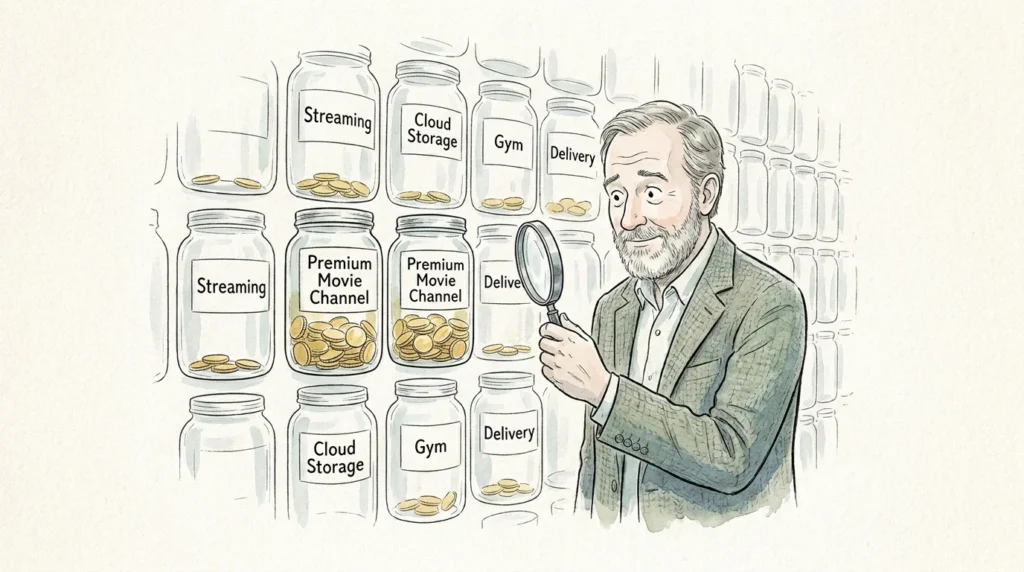
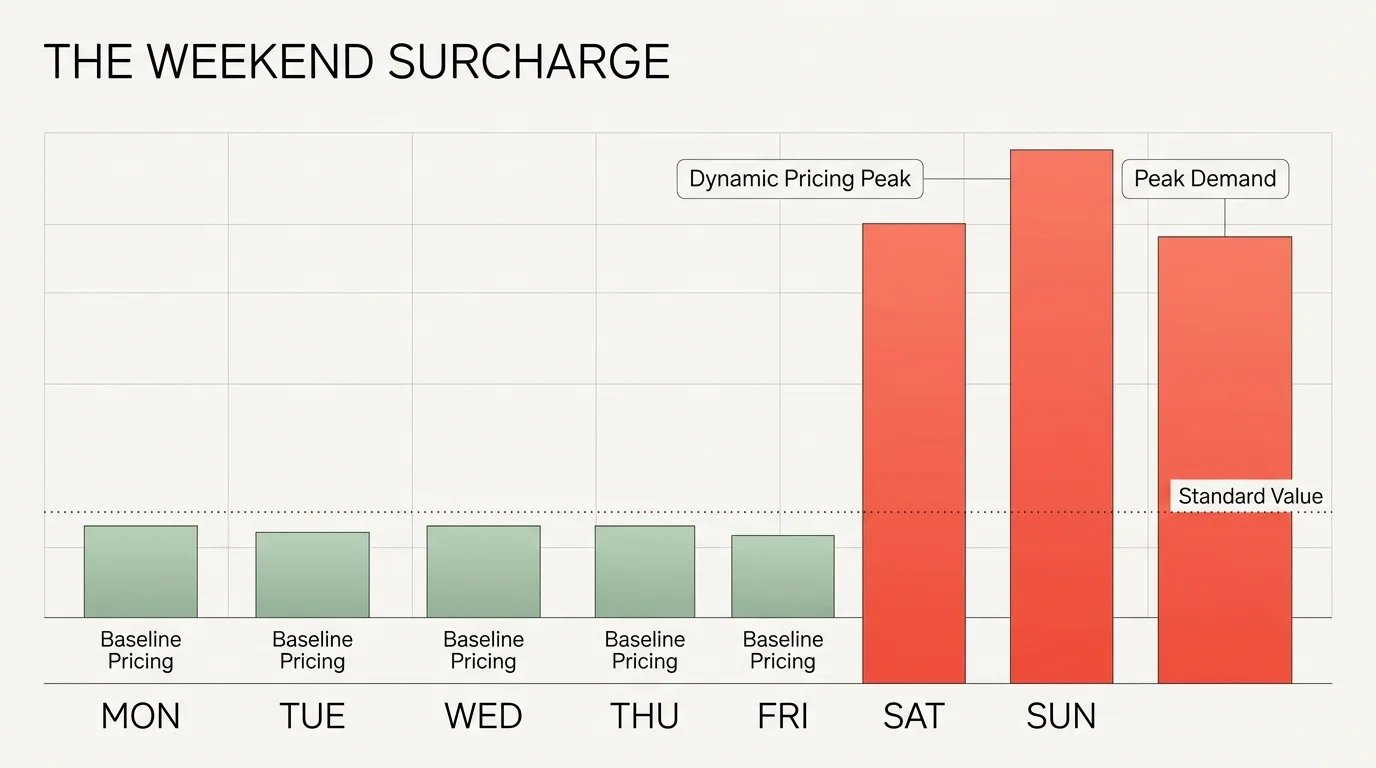
Shifting your shopping habits away from the weekend can instantly return hundreds of dollars to your monthly budget. Retailers, airlines, and service providers aggressively rely on dynamic pricing algorithms that hike costs when consumer demand peaks on Saturdays and Sundays. When you treat the workweek as your primary window for buying everything from groceries to major appliances, you stop paying this invisible convenience tax. Between managing stagnant wages and enduring persistent inflation, protecting your hard-earned paycheck requires strategic timing rather than merely clipping coupons. By auditing when you buy instead of just what you buy, you unlock a powerful cash-flow strategy that preserves your quality of life while permanently lowering your household expenses.
The State of the Wallet: Why Weekend Premiums Drain Your Budget
Modern households face unprecedented financial pressure from rising costs across virtually every consumer spending category. You likely feel the squeeze every time you review your monthly bank statements. Retailers leverage sophisticated dynamic pricing algorithms to extract the maximum amount of money from consumers precisely when they are most likely to shop. Because the vast majority of the population works a traditional Monday through Friday schedule, Saturday and Sunday serve as the default days for running errands, booking vacations, and hiring service professionals.
According to federal data on household expenditures, families dedicate increasingly larger portions of their hard-earned income to basic necessities, leaving little room for financial error. When you blindly participate in this weekend spending frenzy, you unwittingly pay a massive convenience premium. Reclaiming control over your household finances requires understanding this dynamic pricing landscape and deliberately stepping out of the weekend rush. Doing so immediately protects your purchasing power and provides necessary breathing room.

Strategy Pillar One: Cash-Flow Audits and Timing Your Errands
Managing your cash flow effectively means paying close attention to the clock as much as the price tag. By conducting a thorough audit of your monthly expenditures, you will quickly identify how much convenience costs you on Saturdays. Timing your regular errands during the workweek protects your budget from algorithmic price surges designed to capitalize on weekend foot traffic.

1. Routine Grocery Hauls
Supermarkets meticulously plan their pricing cycles, and they rarely favor the weekend shopper. Most major grocery chains launch their new weekly sales promotions on Wednesdays. Shopping on this specific day allows you to take advantage of freshly restocked shelves and newly discounted items before the massive weekend crowds wipe them out. Furthermore, store managers aggressively mark down meat, bakery items, and dairy products mid-week to quickly clear aging inventory. You can trim a substantial percentage off your food budget simply by shifting your standard Sunday morning supermarket run to a Wednesday evening.
2. Gasoline and Fuel
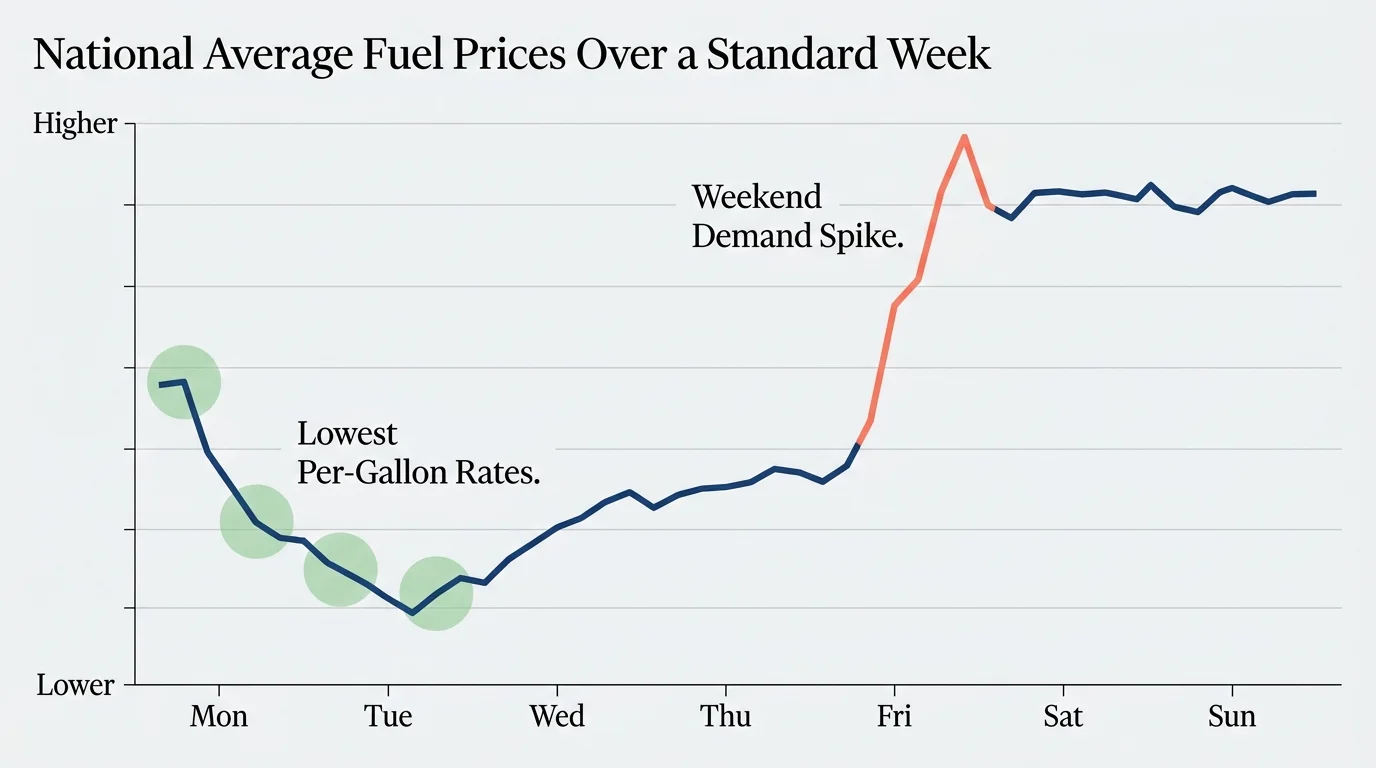
Filling up your vehicle on a Friday afternoon practically guarantees you will pay top dollar at the pump. Gas station operators understand that weekend travelers and daily commuters preparing for the upcoming workweek drive consumer demand sky-high. Analyzing national automotive fuel price trends reveals that Mondays and Tuesdays consistently offer the lowest per-gallon rates. By establishing a firm routine where you refuel your car early in the workweek, you capture these lower prices and keep significantly more cash in your checking account over the entire year.

3. Entertainment and Cinema Tickets
Movie theaters face notoriously empty auditoriums from Monday through Wednesday. To combat this drastic drop in attendance, major cinema chains implement aggressive discount programs specifically on Tuesdays. You can secure theater admission for roughly half the standard weekend price; many locations also slash the cost of popcorn and beverages. Treating your family to a weekday movie night instead of a packed Saturday matinee delivers the exact same entertainment experience while completely eliminating the premium weekend markup.

Strategy Pillar Two: Smarter Saving Automations for Major Purchases
Timing your large-scale purchases requires strategy rather than guesswork. Implementing expert guidance on automating your budget allows you to track these specific midweek price drops without spending hours manually monitoring retail websites. When you combine automated price alerts with deliberate weekday shopping, you maximize your savings on major ticket items.

4. Commercial Airline Flights
Commercial airlines rely heavily on algorithmic software that continuously adjusts ticket prices based on internet search volume. Because most vacationers wait until the weekend to sit down and plan their trips, demand—and prices—surge on Saturdays and Sundays. Booking your flight on a Tuesday or Wednesday often yields significantly cheaper fares. Additionally, choosing to actually fly on those same midweek days lowers your costs even further. You dodge the premium rates charged to Friday evening vacationers and Sunday afternoon return travelers, keeping hundreds of dollars in your pocket.
5. Large Household Appliances
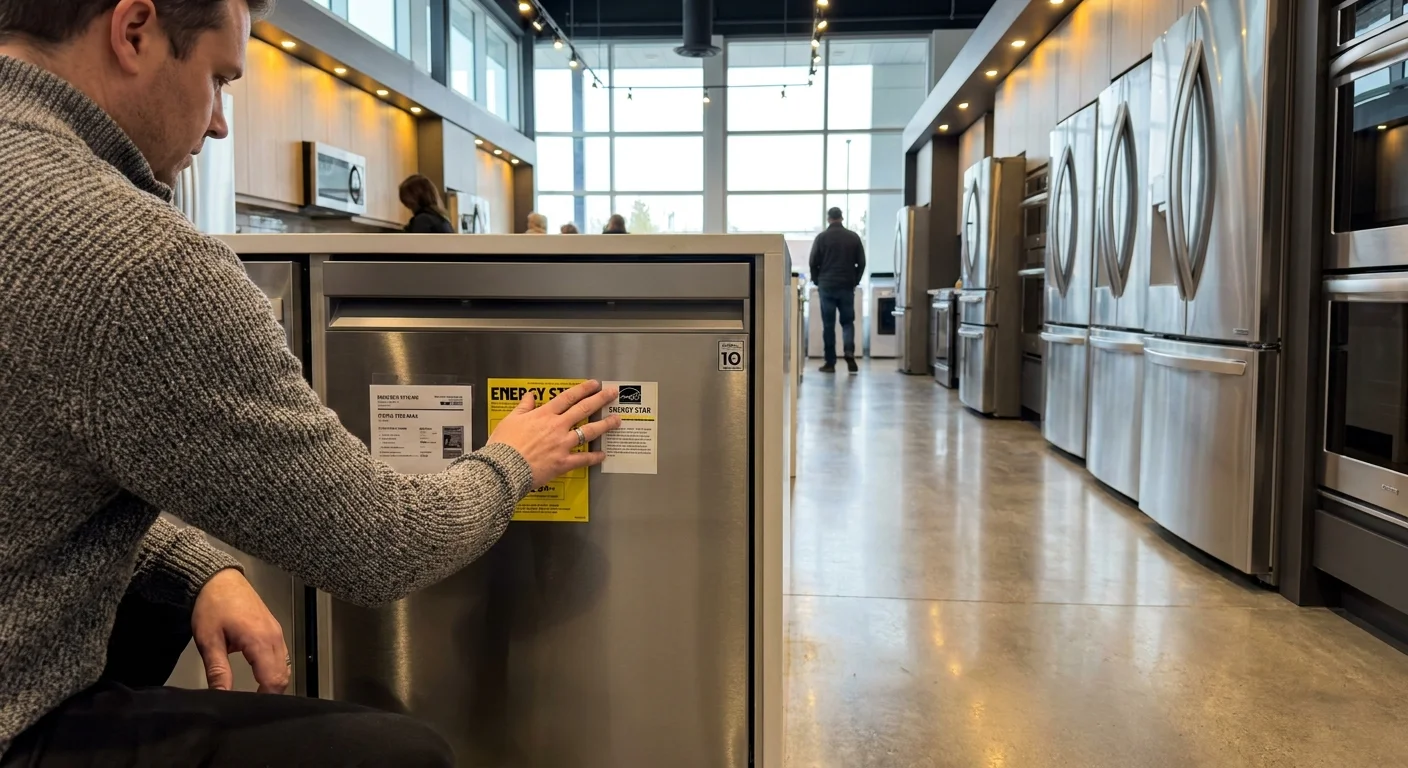
Upgrading a refrigerator or washing machine represents a major financial commitment, making timing absolutely crucial. Retailers generally roll out their new promotional pricing and rebate offers on Thursdays. By visiting the appliance showroom on a Thursday afternoon, you secure first access to limited-stock clearance items before the weekend foot traffic descends. Independent evaluations of household appliances confirm that buying right when sales launch prevents you from missing out on pristine floor models or deeply discounted open-box units that savvy weekday shoppers quickly snap up.

6. Automobiles and Dealership Purchases
Dealerships transform into chaotic environments on weekends, giving salespeople immense leverage over rushed buyers. Visiting a car lot on a Monday or Tuesday completely shifts this power dynamic back into your hands. Sales professionals experience far less foot traffic early in the week, making them significantly more motivated to negotiate on price, trade-in values, and financing terms to secure a deal. You gain the time necessary to thoroughly review contracts and secure competitive loan rates without feeling the intense, manufactured pressure of a crowded Saturday showroom.

Strategy Pillar Three: Mindful Spending on Leisure and Travel
Intentional spending allows you to enjoy life’s luxuries without derailing your financial progress. The hospitality and service industries penalize impulsive weekend buyers while heavily rewarding those who plan ahead. Shifting your leisure activities to the workweek unlocks premium experiences at a fraction of the cost.

7. Hotel Accommodations and Short Getaways
The hospitality industry operates on predictable occupancy cycles that penalize weekend travelers. Business travel has fundamentally changed, leaving many downtown and resort hotels desperate to fill empty rooms between Sunday night and Thursday morning. By booking your short getaways during this midweek window, you instantly slash your nightly room rate. Furthermore, hotel managers gladly offer complimentary room upgrades, free parking, or breakfast vouchers to weekday guests—perks that remain completely unavailable when the property reaches maximum capacity on a Friday night.

8. Dining Out and Restaurant Experiences
Restaurants struggle to fill dining rooms on Tuesdays and Wednesdays, prompting owners to deploy aggressive loss-leader promotions. You will frequently find high-end eateries offering half-priced bottles of wine, discounted appetizer platters, or fixed-price tasting menus exclusively during these sluggish midweek shifts. Choosing to celebrate a milestone or enjoy a date night on a Wednesday allows you to experience premium culinary service for a fraction of the weekend cost. You also enjoy a quieter atmosphere and far more attentive service from the waitstaff.

9. Professional Home Services and Repairs
Homeowners consistently make the expensive mistake of scheduling plumbers, electricians, and HVAC technicians on the weekend. Service professionals rightfully charge premium hourly rates—or even steep emergency dispatch fees—for any work completed outside of standard Monday through Friday business hours. If you need routine maintenance or non-emergency repairs, you must schedule these appointments during the workweek. Using personal time off to stay home for a Tuesday morning service call often saves you significantly more money than you would sacrifice in hourly wages.
Real-World Voices: Behavioral Economics and the Weekend Surge
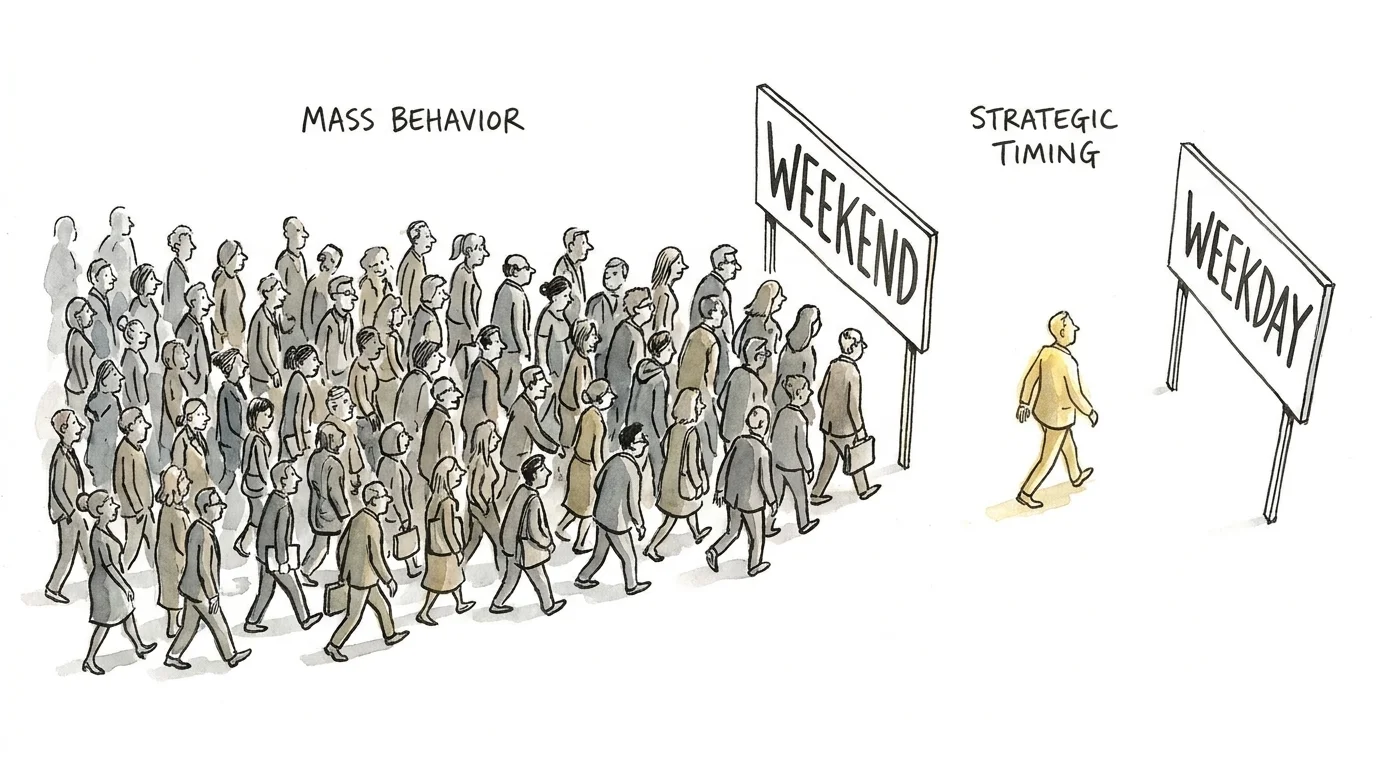
Behavioral economists closely study the psychological factors that drive consumer spending habits, and their findings reveal a harsh truth about weekend shopping. After enduring a stressful workweek, you naturally experience decision fatigue by Friday evening. Extensive research on consumer financial health demonstrates that fatigue plays a major role in poor spending decisions.
You become far less likely to compare prices, hunt for discounts, or negotiate terms when you feel exhausted and simply want to cross chores off your to-do list. Retailers capitalize on this collective exhaustion by maintaining firm, premium pricing throughout the weekend. By shifting your critical purchases to a Tuesday or Wednesday—when your mind remains engaged in its analytical, workweek mode—you naturally make more rational, cost-effective financial decisions.
Action Lab: Calculating Your Weekday Savings Tweak
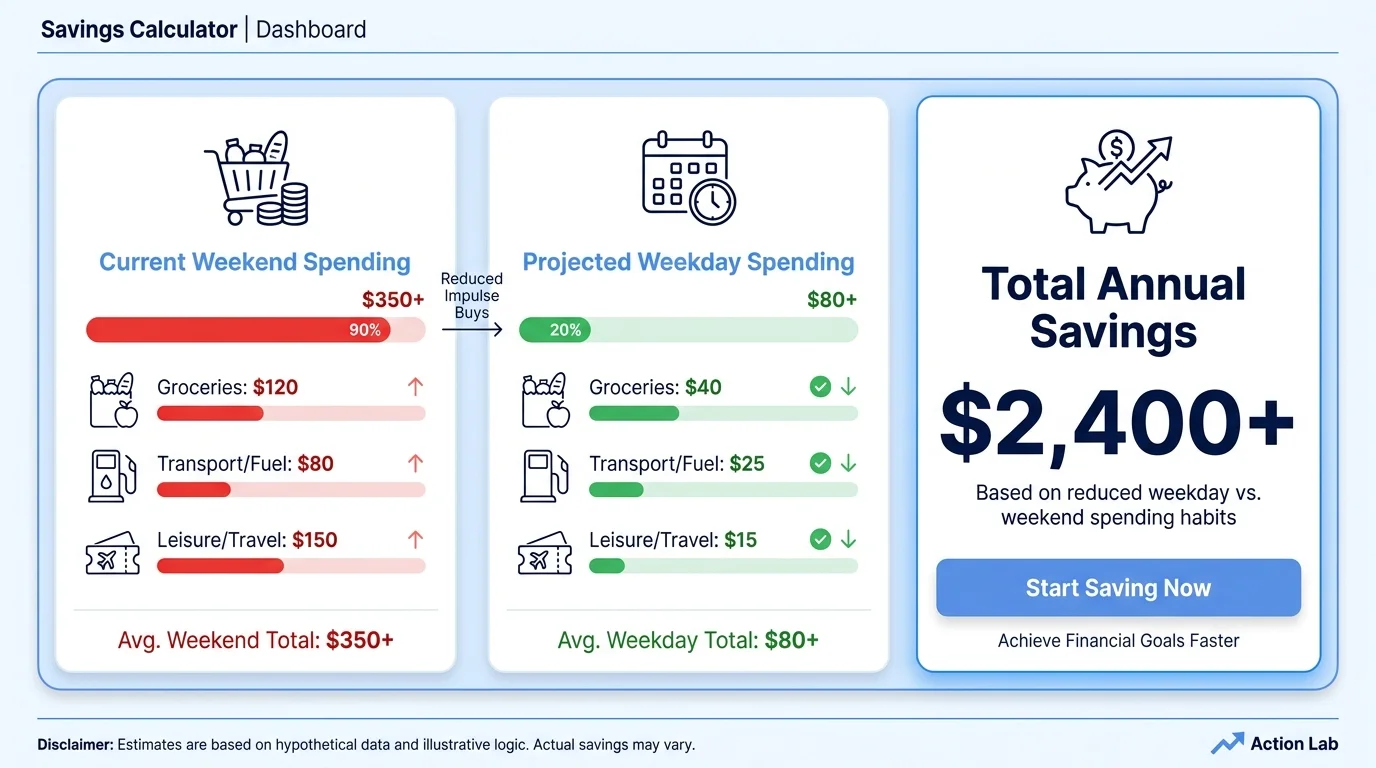
Implementing this strategy requires a deliberate, methodical approach to your household schedule rather than a vague intention to spend less. Start by calculating your potential weekday savings tweak. Assume you currently spend two hundred dollars every Saturday on groceries; moving that exact same purchase to Wednesday could easily yield fifteen percent in savings via midweek markdowns, keeping thirty dollars securely in your pocket.
Next, consider your automotive fuel. Shifting a fifty-dollar weekend fill-up to a Monday morning can save you roughly three dollars per tank. If your family attends one movie per month, switching from Saturday to Tuesday saves you another twenty dollars. Without sacrificing a single item or life experience, this simple calendar adjustment permanently redirects over fifty dollars back into your savings account every single month. These mathematical realities compound rapidly over the course of a fiscal year, creating substantial wealth from minor scheduling adjustments.
Guardrails and Pitfalls: Navigating the Weekday Shift Safely
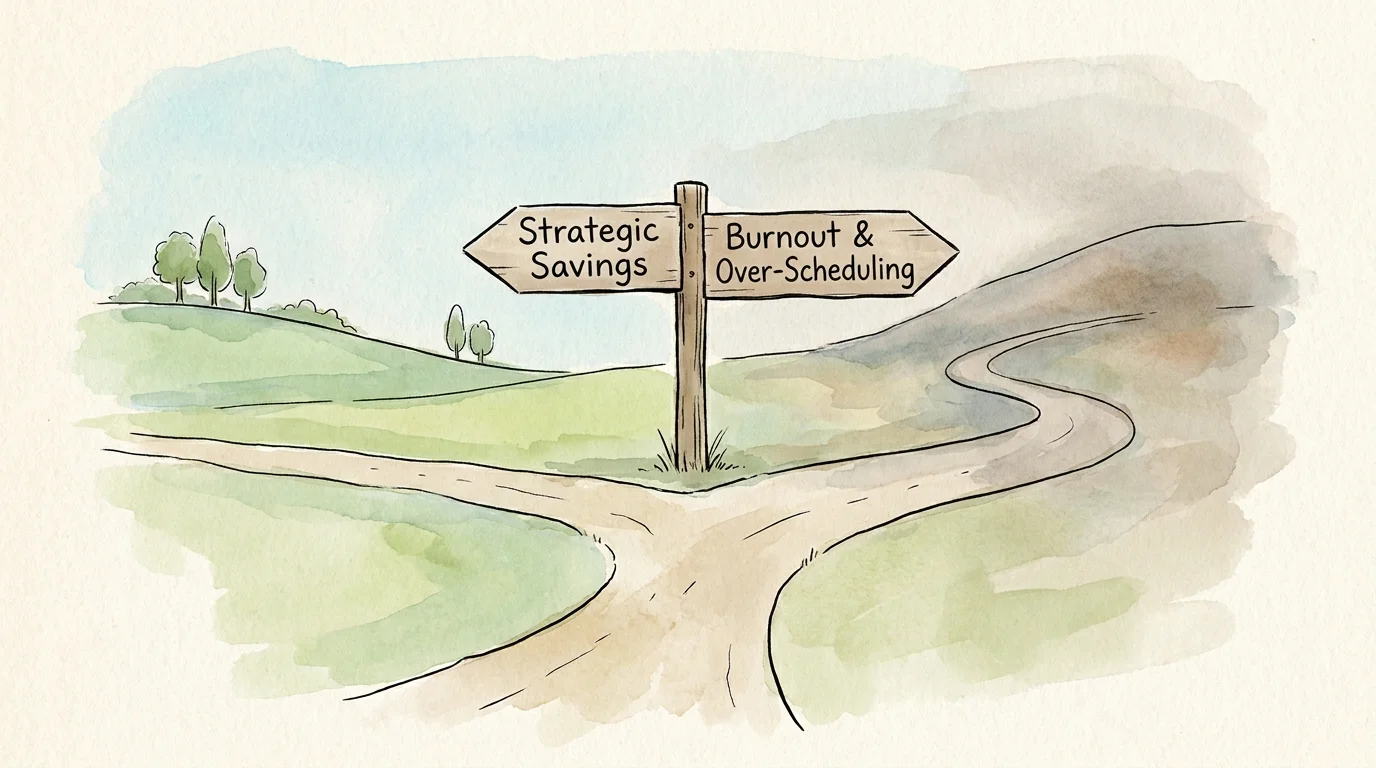
While the financial benefits of midweek purchasing remain substantial, you must navigate a few common pitfalls to ensure your savings do not evaporate. Never sacrifice your actual earning power simply to chase a minor discount. Taking an unpaid day off from work to save forty dollars on a plumber entirely defeats the mathematical purpose of this cash-flow strategy.
Beware of phantom weekday sales. Retailers sometimes advertise Tuesday specials that barely beat their standard weekend prices to drive artificial urgency. Always track the historical pricing of expensive items to verify that the weekday discount represents a genuine, mathematically sound bargain.
Frequently Asked Questions
Does shifting my shopping schedule actually impact my credit card rewards?
Your credit card rewards structure remains completely unaffected by the day of the week you process your transaction. You will still earn the exact same percentage of cash back or travel points whether you buy your groceries on a Wednesday or a Sunday. In fact, combining weekday discounts with a high-yield rewards card mathematically amplifies your total financial savings.
Are online purchases subject to the same weekend markups as physical stores?
Yes; e-commerce platforms utilize aggressive dynamic pricing algorithms that constantly monitor digital web traffic. Because online shopping volume spikes heavily on Sunday evenings as people prepare for the week, digital retailers frequently inflate prices during this specific window. You will consistently find better digital deals by finalizing your online shopping carts on Tuesdays or Wednesdays.
How do I manage weekday shopping with a traditional full-time job?
You must leverage modern convenience options like curbside pickup or localized delivery apps. Many grocery stores allow you to digitally compile your order during your lunch break and retrieve it on your evening commute. This method secures the midweek pricing while entirely eliminating the time-consuming process of walking the physical aisles.
Should I completely avoid spending money on Saturdays and Sundays?
You do not need to implement a total spending freeze on the weekends. Instead, focus strictly on shifting your major, predictable expenses—like groceries, fuel, and planned entertainment—to the workweek. Allow your weekend budget to cover spontaneous social interactions without feeling guilt over minor price variances.
Your Next Step Toward Financial Breathing Room
Escaping the invisible trap of weekend surge pricing puts tangible distance between your paycheck and your expenses. You possess the ability to lower your monthly overhead simply by changing when your debit card leaves your wallet. Start small this week. Choose just one category—like filling your gas tank on Monday morning—and execute the shift. As your checking account balance remains steadier, you will find the motivation to tackle larger purchases. Take control of your calendar today, and force retailers to play by your rules.