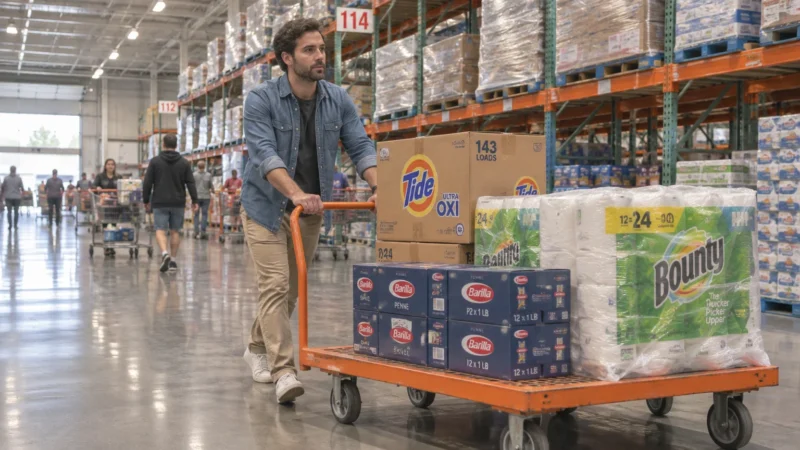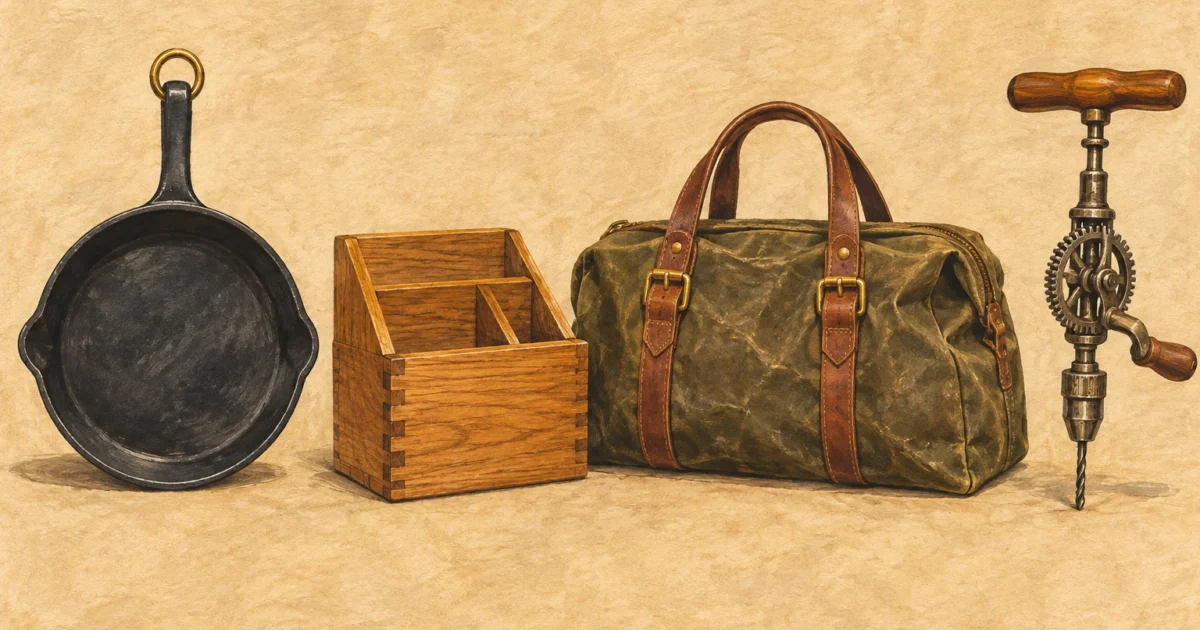
Retailers spend billions convincing you that brand-new products equal better quality and peace of mind. Smart retirees know that full-price markups quietly drain fixed incomes when housing and food costs keep climbing.
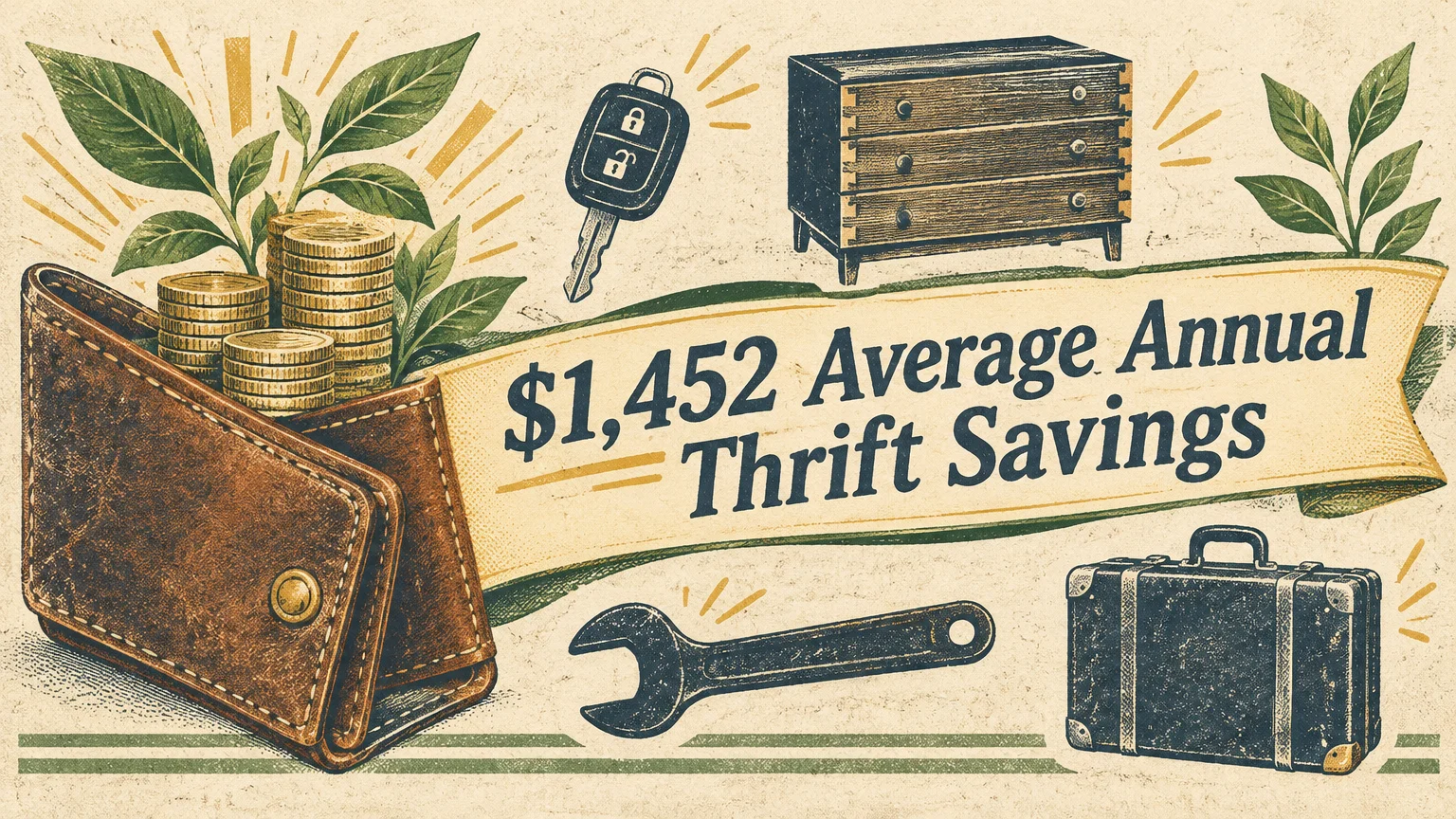
Buying the right secondhand items slashes your household bills while upgrading what you actually own. U.S. thrift shoppers save an average of $1,452 per year, and the smartest buyers target durable goods that outlast cheap modern retail.
These ten proven secondhand purchases protect your retirement budget without forcing you to settle for worn-out junk.
Tip #1: Gently Used Cars Paid in Cash or Low-APR Financing
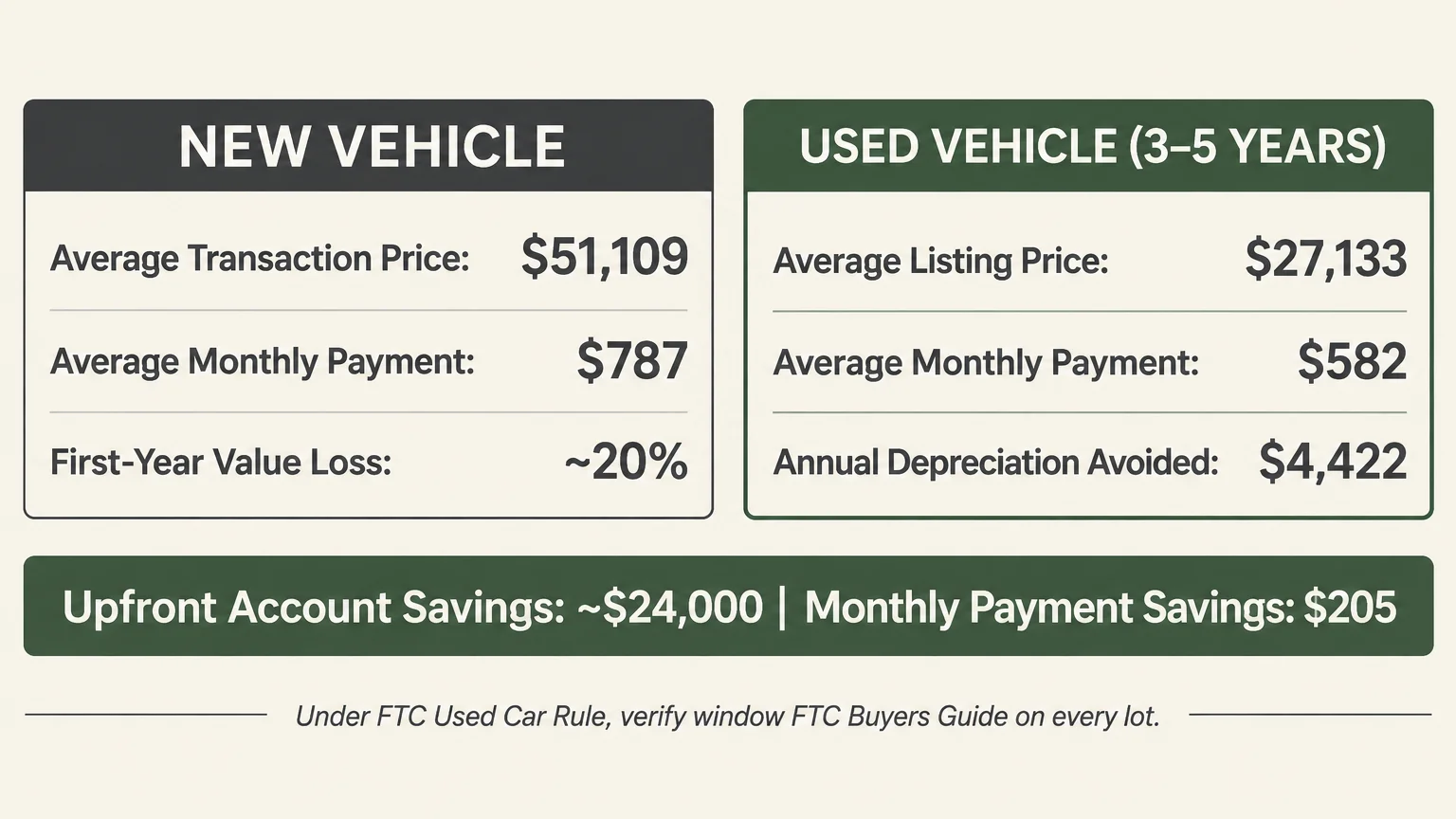
Driving a brand-new vehicle off the lot triggers the single worst financial hit in everyday shopping. Depreciation drains an average of $4,422 per year, with a typical new vehicle losing roughly 20% of its value during its first year alone.
In October 2026, the average new-vehicle transaction price hit a record $51,109, while the average used-vehicle listing sat at $27,133. Choosing a reliable three-to-five-year-old model leaves roughly $24,000 in your retirement accounts instead of a dealership’s ledger.
Monthly payments tell the same story for retirees who finance. Average payments hit $582 for used vehicles compared with $787 for new ones in the third quarter of 2026.
Protect Yourself at the Dealership
Financing a used car carries higher interest rates, averaging 10.6% to 11.19% compared with roughly 6.35% on new loans in mid-2026. Super-prime borrowers with credit scores of 781 or higher secured rates near 6.29%, while deep subprime buyers faced up to 21.62%.
Paying cash completely dodges those double-digit interest charges. If you do finance, secure a pre-approved quote from your credit union before stepping onto a lot.
Under the Federal Trade Commission Used Car Rule, dealers selling more than five used vehicles a year in most states must post an FTC Buyers Guide on every window. Dealers face penalties up to $53,088 per violation if they skip this disclosure.
Read whether the vehicle comes with a dealer warranty or sells As Is with no warranty, and check the listed status of major systems like airbags and catalytic converters. Always run the vehicle identification number at SaferCar.gov for open recalls and pay an independent mechanic to inspect the vehicle before signing.
Tip #2: Solid Wood Furniture
Big-box furniture showrooms charge inflated prices for glued particleboard wrapped in thin paper veneers. That disposable construction sags, chips, and swells the moment moisture hits a joint.
Secondhand purchases from decades past give you kiln-dried oak, maple, walnut, and cherry for pennies on the dollar. You get heirloom joinery at a fraction of disposable retail pricing, drastically lowering your long-term cost per use.
Habitat for Humanity ReStores specialize in donated furniture and typically mark pieces 30% to 75% below retail prices. Many affiliate locations offer even steeper rotating color-tag markdowns of 15% to 50% off, plus weekly senior discount days for shoppers 60 and older.
How to Spot Real Craftsmanship
Pull out every drawer and check the corners before checking the price tag. Look for interlocking dovetail joints rather than cheap staples or plastic brackets.
Inspect the underside of tables and chairs for solid wood grain rather than compressed sawdust. Check SaferProducts.gov to ensure older dressers or tall storage chests do not face tip-over recalls, since federal law prohibits reselling any recalled furniture.
Tip #3: Certified Refurbished Electronics
Tech companies rely on annual launch hype to keep shoppers paying full sticker price. Most retirees need dependable speed for email, banking, video calls, and streaming—not bleeding-edge chips priced at a premium.
Apple Certified Refurbished units save up to 15% off original retail prices while delivering full functional testing and a one-year limited warranty. A September 2026 tracking analysis found median savings of 15.0% on Macs, 14.1% on iPads, and 15.4% on Apple Watches.
Know the fine print before you check out. Apple replaces the battery and outer shell on refurbished iPhones and iPads, yet refurbished Macs receive testing and cleaning without a guaranteed new battery.
Comparing Third-Party Refurbishers
If you want deeper cuts on prior-generation hardware, third-party platforms regularly clear 50% off original launch prices. October 2026 tracking showed an unlocked iPhone 15 at $375 and an M2 MacBook Air at $552—cuts of 53% and 54% below launch.
Never buy refurbished tech without reading the battery and warranty policy. Amazon Renewed generally provides a 90-day warranty without guaranteeing a fresh battery, whereas Walmart Restored Premium guarantees at least 90% battery capacity alongside a full one-year warranty.

Tip #4: Heavy-Duty Power Tools and Yard Equipment
Retirees tackling home maintenance or woodworking projects rarely wear out commercial-grade tools. Most homeowners use a miter saw, pressure washer, or leaf blower for a few hours each season before letting it sit in the garage.
Estate sales, pawn shops, and Habitat for Humanity ReStores overflow with lightly used tools from households downsizing into condos. Paying 30% to 75% below hardware store prices preserves your maintenance budget when housing costs eat up 34% to 39% of retiree spending.
Older corded tools outlast modern plastic cordless models because they carry no lithium batteries that degrade sitting on a shelf. If you buy cordless gear secondhand, bring a fully charged battery pack or test the tool on a live charger before paying.
Avoid Recalled Workshop Hazards
Federal law under the Consumer Product Safety Improvement Act of 2008 makes it illegal for any thrift store, reseller, or garage sale host to sell a recalled product. Roughly 250 to 300 consumer products face federal recalls every year.
Search the model number on CPSC.gov right from your phone while standing in the aisle. Checking guards on circular saws and looking for frayed power cords protects both your fingers and your wallet.
Tip #5: Cast-Iron Cookware and Classic Kitchen Appliances
Nonstick cookware looks convenient on retail shelves, yet synthetic coatings scratch and peel within a couple of years. Replacing cheap skillets repeatedly turns a budget pan into an expensive recurring bill.
Vintage cast-iron skillets and enameled Dutch ovens last for generations and improve with age. Finding a heavy skillet among thrift store finds costs a fraction of boutique cookware while giving you superior heat retention.
Time your kitchenware hunts around senior discount days to multiply those savings. Goodwill locations commonly cut prices 10% to 30% for shoppers 55 or 60 and older, while participating Salvation Army stores knock off 10% to 50% on designated senior days.
Smart Kitchen Inspection Habits
Set any cast-iron pan on a flat counter to test for warping, because a wobbling bottom heats unevenly on glass-top stoves. Ignore surface rust, which scrubs off easily with coarse salt and oil, yet walk away from hairline cracks or deep pitting.
For small appliances like stand mixers or food processors, plug them into the store testing outlet and run every speed setting. Check that bowls, blades, and lids remain intact, since buying missing OEM parts online often costs more than the appliance.
Tip #6: Hardcover Books, Audiobooks, and Hobby Gear
Retirement unlocks serious free time for personal passions, and retail bookstores happily charge thirty dollars for a single hardcover release. Adults 65 and older average 7.11 hours per day on leisure and sports, including 0.53 hours daily reading for personal interest.
That reading habit runs roughly two and a half times higher than adults ages 55 to 64. Buying new books or craft kits at full retail turns a peaceful hobby into a surprisingly steep annual bill.
Charity thrift shops, Savers Tuesday senior sales for shoppers 55 and up, and library book sales price hardcovers for a couple of dollars apiece. You get crisp, readable editions without subsidizing publisher markups.
Track Down Specialized Equipment
Hobby gear loses value faster than almost any other consumer category once newcomers lose interest. Golf clubs, sewing machines, knitting supplies, binoculars, and musical instruments routinely show up in mint condition on secondhand racks.
Check local consignment shops and estate sales during the final afternoon hours, when sellers slash remaining prices to clear out rooms. Always verify that fabric cases hold no musty mildew odors and that optical lenses show zero scratches or haze.
Tip #7: Everyday Clothing, Outerwear, and Formalwear
Apparel inflation pushes retirees to rethink department store loyalty, and resale data proves the shift is mainstream. In 2025, 59% of U.S. consumers bought secondhand apparel, while 72% reported that rising prices directly hit their clothing spending.
The secondhand apparel market grew 13% in 2025—nearly four times faster than traditional retail clothing. Shoppers hunting value on curated resale platforms save roughly 80% off estimated retail sticker prices on eligible items.
A late-2026 consumer poll showed 61% of adults consider thrift shops for clothing, led by everyday tops at 57%, coats and jackets at 55%, and pants or jeans at 52%. Special-occasion formalwear and vintage designer garments also drew 32% interest each.
Quality Beats Fast Fashion
Nearly a third of Baby Boomers—31%—prefer a one-of-a-kind or vintage secondhand garment in excellent condition over a brand-new mass-produced item. Older natural fibers like wool, cashmere, linen, and heavy cotton hold their shape far better than modern polyester blends.
Skip trendy mall brands on thrift racks and inspect fabric tags first. Stack your thrift store’s weekly color-tag discounts with senior discount days to walk out with tailored coats and wedding attire for pocket change.
Tip #8: Quality Luggage and Travel Gear
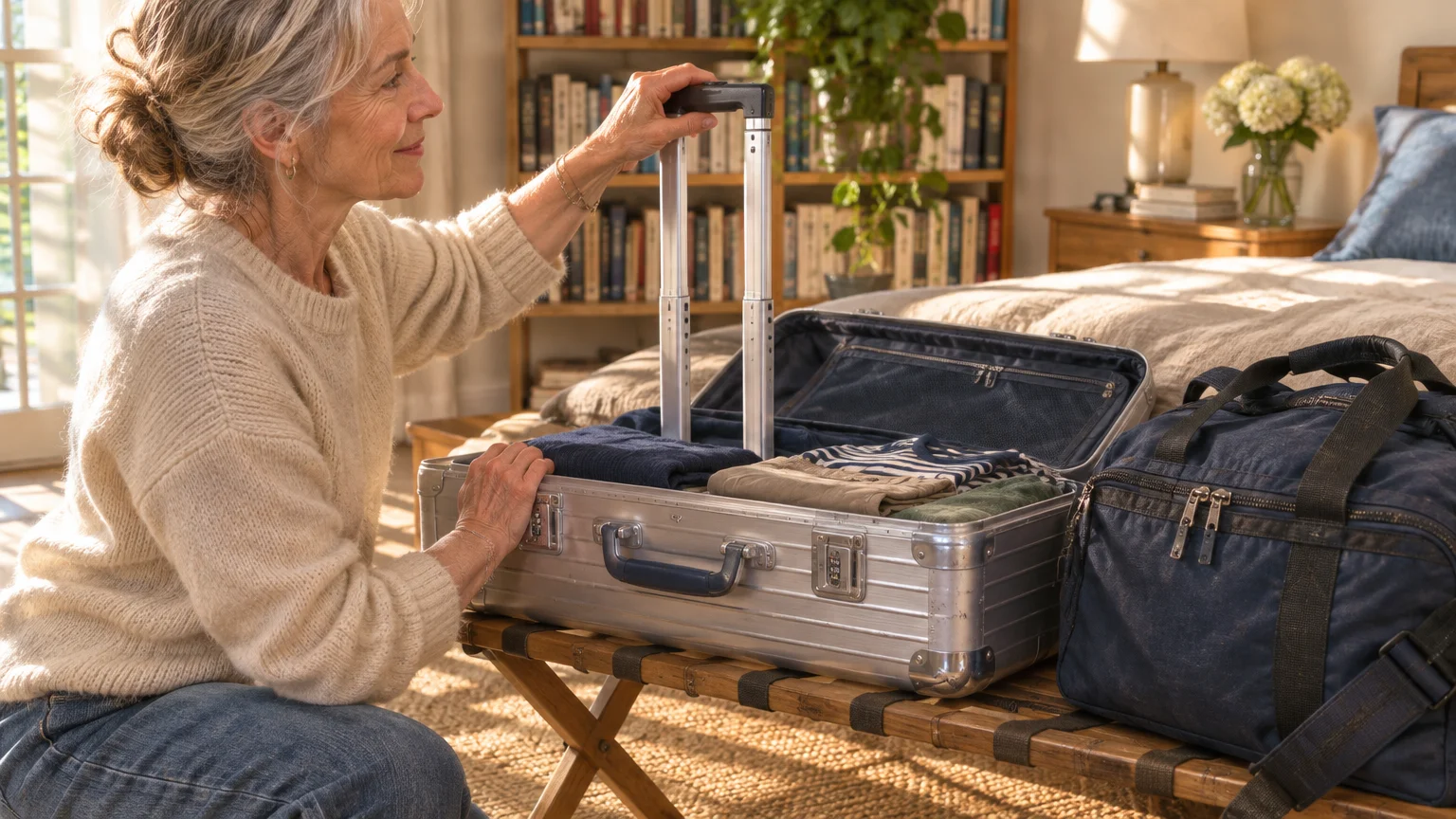
Traveling during retirement puts luggage through brutal airport handling, and budget suitcases sold at discount department stores rarely survive two flights. Cracked plastic shells and snapped zippers force travelers into expensive emergency replacements mid-trip.
Premium polycarbonate hardshell spinners and heavy ballistic nylon bags appear constantly at upscale thrift stores and consignment boutiques. Many previous owners upgraded sets after one cruise or received new luggage as holiday gifts.
You can buy used items from top travel brands far below department store prices. That strategy gives you reinforced handles and sealed bearings for less than the cost of a flimsy store-brand carry-on.
Run a Sixty-Second Airport Test
Extend and lock the telescoping handle five times in a row while pressing down slightly to ensure the internal tracks do not jam. Roll the empty suitcase across a tiled store aisle to listen for flat spots or wobbly bearings on any spinner wheel.
Run every main zipper and expansion gusset from end to end, then sniff inside the lining to rule out lingering perfume, smoke, or dampness. Checking these details guarantees trouble-free boarding before you pack a single shirt.
Tip #9: Home Improvement Supplies and Light Fixtures
Housing absorbs 34% of total spending for households ages 65 to 74 and rises to 39% for retirees 75 and older. With housing costs jumping another 5.8% between 2024 and 2025, full-price hardware store renovations wreck retirement budgets fast.
Habitat for Humanity ReStores receive truckloads of unused contractor overages, discontinued tile boxes, solid brass cabinet pulls, and brand-new ceiling fans. Standard pricing sits 30% to 75% under retail, and some local affiliates push markdowns even deeper.
One trip to a building-material reuse center can shave hundreds off bathroom refreshes, porch repairs, or closet upgrades. You pay pennies per unit for solid metal and ceramic materials instead of settling for hollow plastic hardware.
Measure Twice and Buy Overages
Carry room measurements, paint swatches, and cabinet screw-spacing dimensions on a card in your wallet before browsing reuse aisles. Calculate your exact square footage plus a 10% waste buffer, because you cannot easily reorder discontinued tile batches later.
Inspect light fixtures for intact porcelain sockets and undamaged braided wiring, and make sure ceiling fans include their mounting brackets and blades. Avoid buying half-used cans of exterior paint unless you need an exact match for a shed or fence.
Tip #10: Classic Board Games, Puzzles, and Grandkid Gear
Hosting grandchildren brings joy without requiring a toy store shopping spree every month. Classic wooden blocks, board games, picture books, and sturdy ride-on toys sell for a couple of dollars at thrift stores and garage sales.
Children outgrow toys in months, leaving secondhand shelves packed with barely touched games. Counting puzzle pieces or checking game boards for missing dice takes two minutes and keeps your guest closet stocked for rainy afternoons.
Still, smart frugal shopping tips demand strict boundaries when child safety enters the picture. Federal safety laws and medical guidelines draw bright red lines around two specific items you should never gamble on used.
Never Compromise on Cribs and Car Seats
Under federal crib standards effective June 28, 2011, traditional drop-side rail cribs are banned from sale, resale, and donation nationwide. Adding aftermarket immobilizer kits does not make a drop-side crib legal or safe for grandchildren.
Any secondhand crib must display a manufacture label dated after June 28, 2011, hold every original bolt securely, and pass a recall check on CPSC.gov. Pediatric safety guidelines also advise against buying used car seats unless you can verify zero crash history and possess the original instructions and registration details.
The Bottom Line: What This Means for Your Wallet
Overall U.S. household expenses climbed 4.3% between 2024 and 2025, driven by rising housing and food costs alongside $7,799 in average annual healthcare bills for households 65 and older. Waiting passively for retail coupons cannot offset that steady squeeze on a fixed income.
Households ages 65 to 74 spend an average of $65,354 per year, dropping to $55,834 for those 75 and older. Redirecting major categories toward smart secondhand purchases frees up thousands of dollars annually without shrinking your lifestyle.
The secret is ignoring cheap, short-lived bargains and targeting high-durability goods where someone else already absorbed the steep initial markup. When you pair senior discount days with careful quality inspections and federal recall checks, you buy better products for less.
Start with one upcoming need—whether a replacement coat, a patio fixture, or your next vehicle—and check local reuse stores and certified refurbishers before stepping into a retail showroom. Once you see the cash stay in your bank account, full-price retail stops making sense.
Frequently Asked Questions
How much money do people actually save buying secondhand?
Regular U.S. thrift shoppers save an average of $1,452 every year across household purchases. Bigger-ticket swaps save far more, such as cutting roughly $24,000 off the average vehicle purchase price or shaving around 80% off retail apparel markups.
Are thrift store electronics and appliances safe to bring home?
Most tested appliances work fine, provided you check federal recall databases before paying. Federal law bars anyone from reselling recalled products, so verifying model numbers on CPSC.gov or SaferProducts.gov protects your home from fire and shock hazards.
When is the best day for retirees to shop at thrift stores?
Target Tuesday through Thursday mornings, when stores restock weekend donations and run senior discount promotions. Savers hosts senior discounts on Tuesdays for ages 55 and up, while Goodwill, Salvation Army, and Habitat ReStores run regional weekly senior markdowns.
When should retirees skip secondhand items and buy brand new?
Always buy new when safety standards expire or hidden damage threatens injury, especially with car seats, bicycle helmets, and older cribs. You should also buy mattresses, daily-wear athletic shoes, and non-refurbished lithium batteries new for hygiene and longevity.
For consumer protection information, visit the Federal Trade Commission (FTC) and the Consumer Financial Protection Bureau (CFPB). For product safety and reviews, consult Consumer Reports.
Disclaimer: This article is for informational purposes only and does not constitute financial advice. The content reflects the author’s opinion and research at the time of writing. Always do your own research before making financial decisions.