
Rising grocery and healthcare bills squeeze fixed retirement budgets harder every year. Fortunately, knowing which stores deliver genuine unit-price savings—rather than flashy coupon illusions—protects your nest egg from quiet retail markups.
The secret isn’t clipping hundreds of paper coupons or buying cheap, disposable junk that breaks after two uses. Real savings come from targeting retailers built around low overhead, transparent bulk math, and senior perks.
Put these six proven stores into your weekly rotation to slash household bills without sacrificing quality. Your wallet will feel the difference on your very next receipt.
Tip #1: Aldi — Slash Your Grocery Bill Without Clipping Coupons
Food eats up a massive share of retirement cash flow when prices climb faster than Social Security adjustments. According to the U.S. Bureau of Labor Statistics (BLS), average annual U.S. household spending hit $81,905 in 2025, up 4.3% from 2024.
Household food costs jumped 4.6% to $10,633 that same year, pushed upward by an 11.7% surge in meats, poultry, fish, and eggs. Together, housing and food swallowed 46.9% of average budgets, while necessities consumed 83.7%.
Retirees feel that squeeze directly at the checkout lane. BLS data shows households aged 65 and older averaged $61,432 in total spending and $5,251 on groceries in 2024, while those 75 and older averaged $4,696—about $391 monthly.
That explains why roughly one in three U.S. households shopped at Aldi in 2025. Backed by a $9 billion expansion, Aldi crossed 2,600 stores across 40 states in 2026 and aims for nearly 2,800 locations by year-end.
How Aldi Keeps Everyday Prices Below Traditional Supermarkets
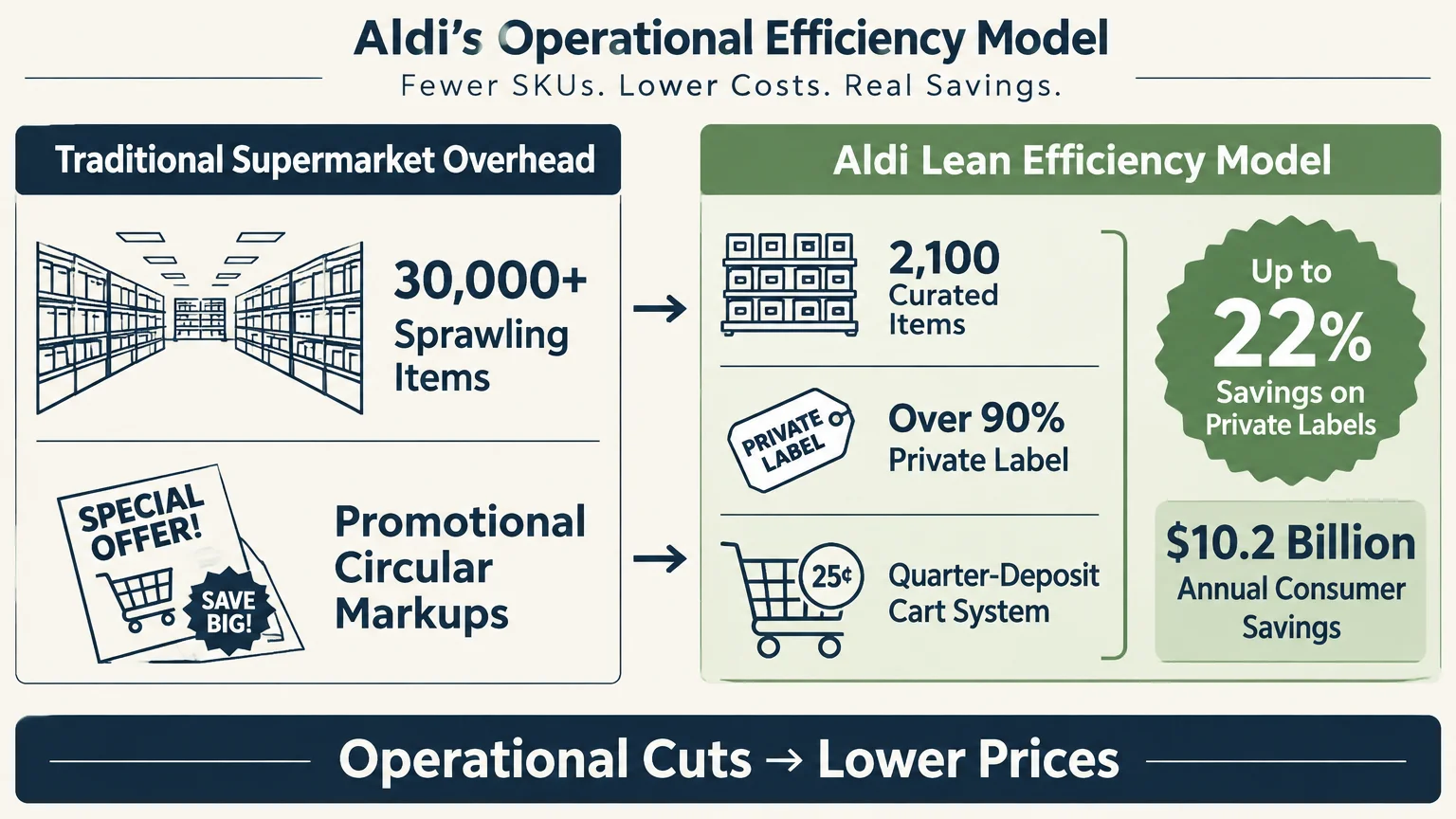
Traditional supermarkets run huge buildings with sprawling assortments, heavy staffing, and promotional circulars built to fund loyalty discounts. Aldi strips out that overhead by carrying roughly 2,100 curated items, with over 90% sold under exclusive private labels.
Quarter-deposit shopping carts eliminate stray-cart retrieval labor, while multi-barcode packaging lets cashiers scan items in seconds. Those operational cuts show up straight on the shelf tags rather than hiding behind digital coupon apps.
According to Aldi’s 2026 Price Leadership Report conducted with Ernst & Young, shoppers save up to 22% choosing Aldi private-label products over competitor store brands. Nationwide, that gap generates $10.2 billion in annual consumer savings.
Aldi also rolled out $86 million in fall 2026 price cuts, putting nearly one-third of its everyday lineup below 2025 prices. For budget shopping retirees, that consistent baseline beats chasing weekly loss-leaders across three different supermarkets.
Smart Unit-Price Habits for the Aldi Aisles
Never assume every package is automatically cheaper without checking the price per ounce. Keep your phone calculator open when comparing Aldi’s smaller dairy tubs, canned goods, and pantry staples against warehouse club sizes.
Approach the middle seasonal aisle—often called the Aldi Finds section—with strict discipline. Cheap plastic kitchen gadgets that warp in six months cost more per use than a sturdy stainless-steel pan bought once.
Inspect produce and meat sell-by dates carefully before loading your cart. Pairing Aldi’s low base prices on staple proteins with discounted markdown stickers on near-date meats can trim your weekly food bill dramatically.
Tip #2: Costco Wholesale — Turn Bulk Buying and Health Perks Into Real Savings
Many retirees skip warehouse clubs because they assume bulk packages only serve big families. That misconception overlooks Costco’s strongest financial weapon for older households—deeply discounted healthcare, optical, and pharmacy services alongside predictable staple prices.
Costco charges $65 per year plus tax for a Gold Star membership and $130 per year plus tax for an Executive membership across 924 global warehouses. Every plan includes two household cards and a 100% satisfaction guarantee on both merchandise and membership fees.
Nonmembers can buy select items online, though Costco tacks on a 5% surcharge. Before paying any annual fee, run the exact break-even math against your household’s monthly spending.
Doing the Executive Upgrade Math
Executive members earn a 2% annual reward capped at $1,250. According to Costco’s reward schedule, spending $3,252 per year—about $271 monthly—earns $65 back, completely covering the upgrade from Gold Star.
Hitting $6,504 annually, or $542 monthly, earns $130 back and pays for the entire membership. Executive members also unlock exclusive early shopping hours starting at 9 a.m. daily and a $10 monthly credit on $150-plus same-day delivery orders.
If your two-person household only spends $150 a month at the warehouse, stick with the $65 Gold Star tier. Upgrading just to chase a reward you never earn back violates one of the core retiree spending tips.
Healthcare, Hearing, and Optical Discounts That Pay the Fee
Healthcare becomes your fastest-growing expense as retirement progresses. BLS data shows healthcare jumps from 11.8% of spending at ages 65 to 74—averaging $649 monthly in 2025—to 14.2% at age 75 and older.
Fidelity Investments projects lifetime retirement healthcare costs at $172,500 per person. Costco helps soften that blow at the pharmacy counter, optical desk, and hearing center.
Every Costco register accepts Medicare Advantage OTC benefit cards, FSA cards, and HSA cards, while members can book $29 virtual doctor visits through Sesame without insurance. Inside Hearing Aid Centers, you get free hearing tests, complimentary cleanings, no-deductible loss-and-damage coverage, and a 180-day trial.
Independent optometrists next to most warehouses perform eye exams without requiring a membership, with independent exam fees often starting around $99. Members buying eyewear receive anti-reflective lens coatings included plus $50 off each extra prescription pair.
Avoiding the Bulk Spoilage Trap
Bulk pricing disappears the second food goes into the trash can. A five-pound bag of spinach costs less per ounce than a small clamshell, yet tossing half of it doubles your real cost per serving.
Limit bulk food purchases to freezer-friendly meats, coffee, olive oil, paper goods, and over-the-counter medications with long shelf lives. Better yet, split giant produce packs or bakery boxes down the middle with a neighbor or adult child.

Tip #3: Walmart and Sam’s Club — Stack the 2026 Bundle, Prescription Deals, and Assistance Discounts
Buying two separate retail memberships rarely makes sense on a fixed income. Fortunately, Walmart’s late-2026 pricing shakeup turned two competing retail giants into a single high-value combo for budget shopping retirees.
On May 1, 2026, Sam’s Club raised annual fees by $10—its first increase in four years—moving standard Club to $60 and Club Plus to $120. Shortly afterward, on October 20, 2026, Walmart launched a unified bundle combining Walmart+ and Sam’s Club Plus.
Normally, buying Walmart+ at $98 per year and Sam’s Club Plus at $120 per year costs $218 total. The new bundle delivers both memberships for $120 per year, saving you $98 right out of the gate.
What the $120 Bundle Actually Unlocks
Bundled members earn 2% Sam’s Cash up to $750 annually and save $0.10 per gallon at over 17,000 participating gas stations. You also receive free scheduled Walmart delivery on $35-plus orders and free Sam’s Club delivery or shipping on $50-plus orders.
Watch that $50 Sam’s Club shipping threshold closely, because orders below it carry an $8 delivery fee. Never pad your cart with $18 of impulse snacks just to dodge an $8 fee; wait until genuine household staples reach $50.
The bundle also includes your choice of Paramount+ Essential or Peacock Premium, and you can switch streaming services every 90 days. Dropping one paid standalone streaming subscription immediately covers a massive chunk of the annual membership cost.
Half-Price Memberships and $4 Generics
Before paying $120, check whether you qualify for targeted assistance pricing. Retirees receiving SNAP, Medicaid, WIC, or SSI qualify for Walmart+ Assist at $6.47 monthly or $49 per year—half off the regular $98 rate.
By comparison, Amazon offers Prime Access for $6.99 monthly versus standard Prime at $14.99 monthly or $139 annually. Combining discount stores with income-qualified delivery plans helps homebound seniors save money shopping without paying steep courier markups.
Do not overlook Walmart’s cash-price generic drug program either, which requires no insurance, age threshold, or income check. Most covered 30-day generics still cost $4—with a few at $9—while 90-day supplies run around $10, occasionally up to $24.
Using Unit Prices Between Sam’s Club and Walmart
Having both memberships lets you pit bulk sizes directly against Walmart’s Great Value store brand on the same afternoon. Sometimes a 24-pack of canned beans at Sam’s Club matches or barely beats single-can pricing on Walmart’s lower shelf.
Always calculate cost per ounce or cost per sheet before hauling heavy cases to your trunk. Let the warehouse handle paper products, detergents, and gasoline while Walmart fills in smaller weekly produce and pantry needs.
Tip #4: Dollar Tree — Cherry-Pick Multi-Price Aisles Without Falling for Shrunk Packages
Dollar stores earned fierce loyalty among frugal shoppers, yet walking into Dollar Tree on autopilot today will burn your budget. The chain no longer runs on a single flat price across every shelf.
By the second quarter of 2026, Dollar Tree operated roughly 6,600 multi-price locations out of around 9,382 stores across North America. While many staples remain $1.25, select goods moved to $1.50 and $1.75 between 2025 and 2026.
Multi-price aisles now feature merchandise ranging from $3 to $7, with select items reaching $9.99. That expansion forced Dollar Tree to install in-store price scanners so shoppers can verify real totals before reaching checkout.
Where Dollar Tree Wins—and Where It Loses
Small sticker prices fool shoppers who ignore net weights. A March 2026 MoneyLion $50-budget comparison proved Aldi beat Dollar Tree on grocery unit prices across peanut butter, bread, cereal, produce, and meat.
However, Dollar Tree beat Aldi per ounce on specific personal care and household basics. A 2.6-ounce Dove bar soap cost $1.25 at Dollar Tree versus $3.29 for a two-pack of Lacura soap at Aldi.
Similarly, a 32-ounce hand soap refill cost $1.25 at Dollar Tree compared with $2.99 for 50 ounces at Aldi. Those targeted wins make Dollar Tree one of the best discount stores when you shop strictly by unit math.
Dodging Shrinkflation and Disposable Junk
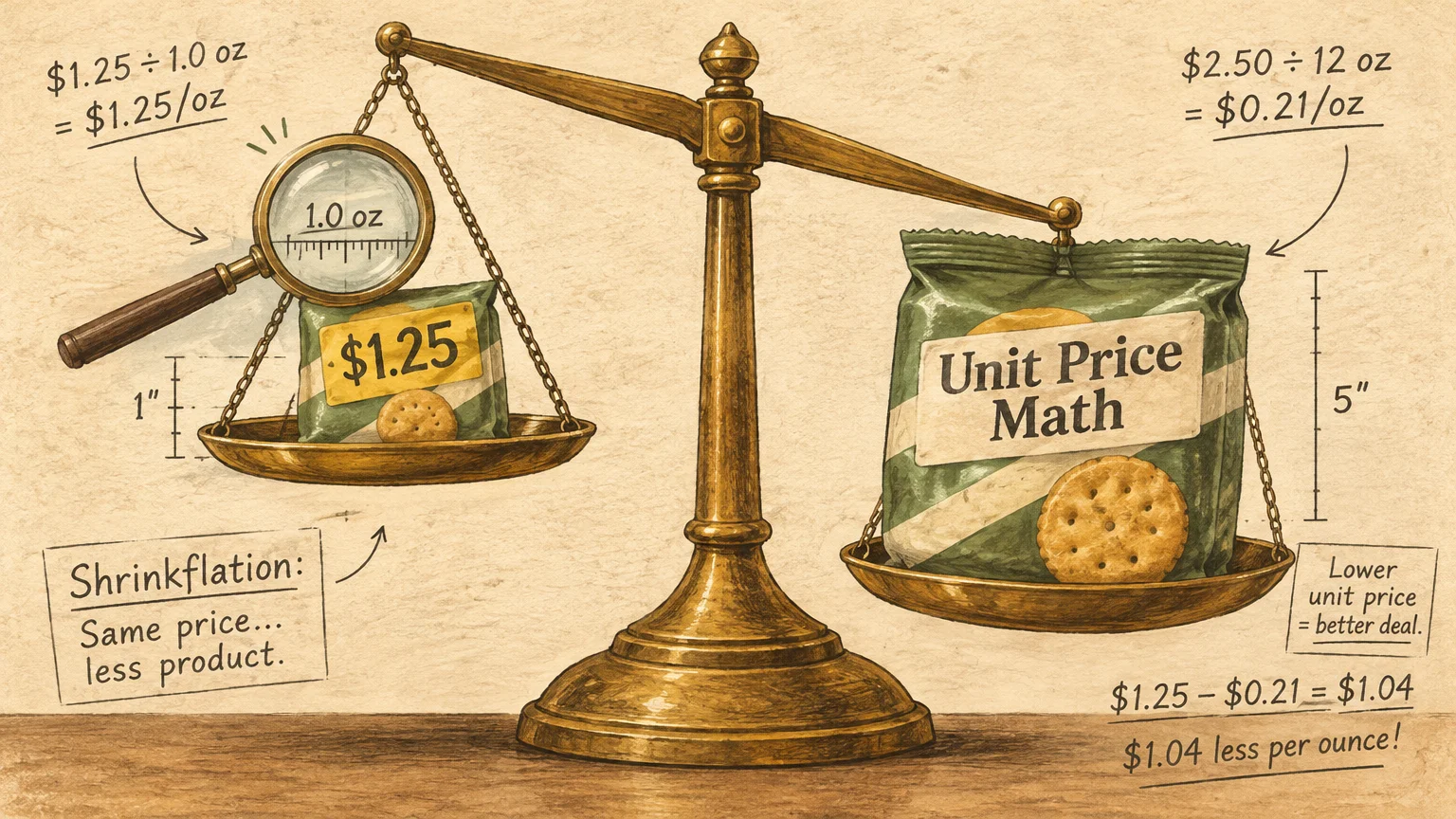
Manufacturers frequently shrink package counts specifically for dollar store shelves. A $1.25 bottle of dish soap with only 10 ounces inside costs $0.125 per ounce, easily losing to a larger grocery bottle on sale.
Treat the in-store price scanner as your best friend before placing any $3 to $9.99 item in your basket. Compare that scanned price against Walmart’s app right in the aisle.
Skip flimsy kitchen utensils, thin aluminum bakeware, and cheap seasonal electronics that fail after minimal use. Stick to high-margin winners like greeting cards, gift bags, glassware, reading glasses, and verified per-ounce toiletries.
Tip #5: Senior-Discount Powerhouses (Goodwill, Kohl’s, Ross, and Walgreens) — Time Your Weekly Errands
Most retailers quietly bury their senior discounts in fine print rather than plastering them on front-door banners. Scheduling your errands around specific calendar days instantly unlocks 10% to 30% off clothing, home goods, and everyday pharmacy items.
Four national chains stand out for reliable, repeatable age-based markdowns. Always carry a state-issued photo ID and ask the cashier before they finalize your transaction.
Goodwill: 10% to 30% Off Weekly
Across more than 3,300 North American locations, participating Goodwill stores offer shoppers aged 55 or 60 and older 10% to 30% off one day each week. Most regional affiliates run these markdowns on Tuesdays or Wednesdays.
Because Goodwill regions set independent rules, call your local store before making a special trip. Focus your hunt on solid-wood furniture, cast-iron cookware, hardcover books, and heavy stainless utensils rather than worn-out fast fashion.
Checking construction quality keeps your cost per use near zero over decades of retirement. A sturdy secondhand Dutch oven outlasts three bargain-bin nonstick pans every single time.
Kohl’s: 15% Off Every Wednesday
Shoppers aged 60 and older receive 15% off qualifying in-store purchases at Kohl’s every Wednesday simply by showing photo ID at checkout. That steady midweek perk pairs neatly with clearance racks when you replace worn bedding, towels, or winter coats.
Watch out for inflated original list prices designed to make modest markdowns look heroic. Check the final out-the-door price after your 15% deduction against competing department stores before swiping your card.
Ross Dress for Less: 10% Off Every Tuesday
Under its 55+ Program, Ross gives shoppers aged 55 and older 10% off in-store purchases every Tuesday with a valid photo ID. That makes Tuesday morning ideal for replacing durable luggage, athletic shoes, or kitchen storage containers.
Inspect zippers, seams, and shoe soles closely under good lighting before buying. Off-price chains occasionally stock irregular factory runs, so verifying build quality protects you from buying short-lived bargains.
Walgreens: 20% Off on First Tuesdays
Walgreens hosts Seniors Day on the first Tuesday of every month for free myWalgreens members aged 55 and older. You get 20% off regular-priced items in-store, excluding prescriptions, dairy, alcohol, tobacco, gift cards, and buy-one-get-one offers.
Here is the retail trap to avoid: drugstore regular prices often sit well above Walmart or Aldi baseline shelves. Use that 20% discount only on sale-resistant specialty bandages, vitamins, or store-brand health items after checking a quick unit-price benchmark.

Tip #6: Trader Joe’s — Skip the Loyalty Games and Shop Smarter Frozen Staples
Supermarket loyalty programs force you to trade personal shopping data for complicated digital coupons and minimum-spend hurdles. Trader Joe’s rejects that entire playbook, running a tight private-label assortment with zero loyalty cards, zero digital coupons, and zero online delivery.
While shoppers rarely associate Trader Joe’s with bare-bones austerity, frugal retirees—especially singles and couples over 75—use it strategically to slash food waste and restaurant bills. Avoiding takeout twice a month saves more than squeezing pennies off canned corn.
Right-Sized Portions Beat Warehouse Waste
When your household drops to one or two people, giant multi-packs from warehouse clubs often spoil before you finish them. Trader Joe’s packages frozen entrees, cheeses, nuts, and baked goods in compact portions built for two to four servings.
Keeping a few $4 to $6 frozen dinners in your freezer gives you a fast backup on evenings when cooking from scratch feels exhausting. Spending $5 at home beats paying $35 for two restaurant plates plus tax and tip.
Everyday flat pricing also kills the artificial buy-four-to-save supermarket trap. Buying one jar of pasta sauce or one block of cheddar costs the exact same per unit as buying five.
Know What to Buy—and What to Skip
Trader Joe’s is not a one-stop substitute for Aldi or Walmart when you need budget staples. Pre-packaged produce, paper towels, and brand-name household cleaners often run higher per pound or per sheet than hard-discount grocers.
Shop the perimeter and freezer cases with a strict written list, focusing on spices, olive oil, specialty cheeses, nuts, and quick frozen meals. Avoid wandering the seasonal snack displays hungry, because impulse treats quietly inflate a frugal cart.
The Bottom Line: What This Means for Your Wallet
No single store wins every category on price, portion size, and long-term durability. Retail chains rely on shopper laziness—hoping convenience keeps you buying marked-up toiletries alongside cheap milk under one roof.
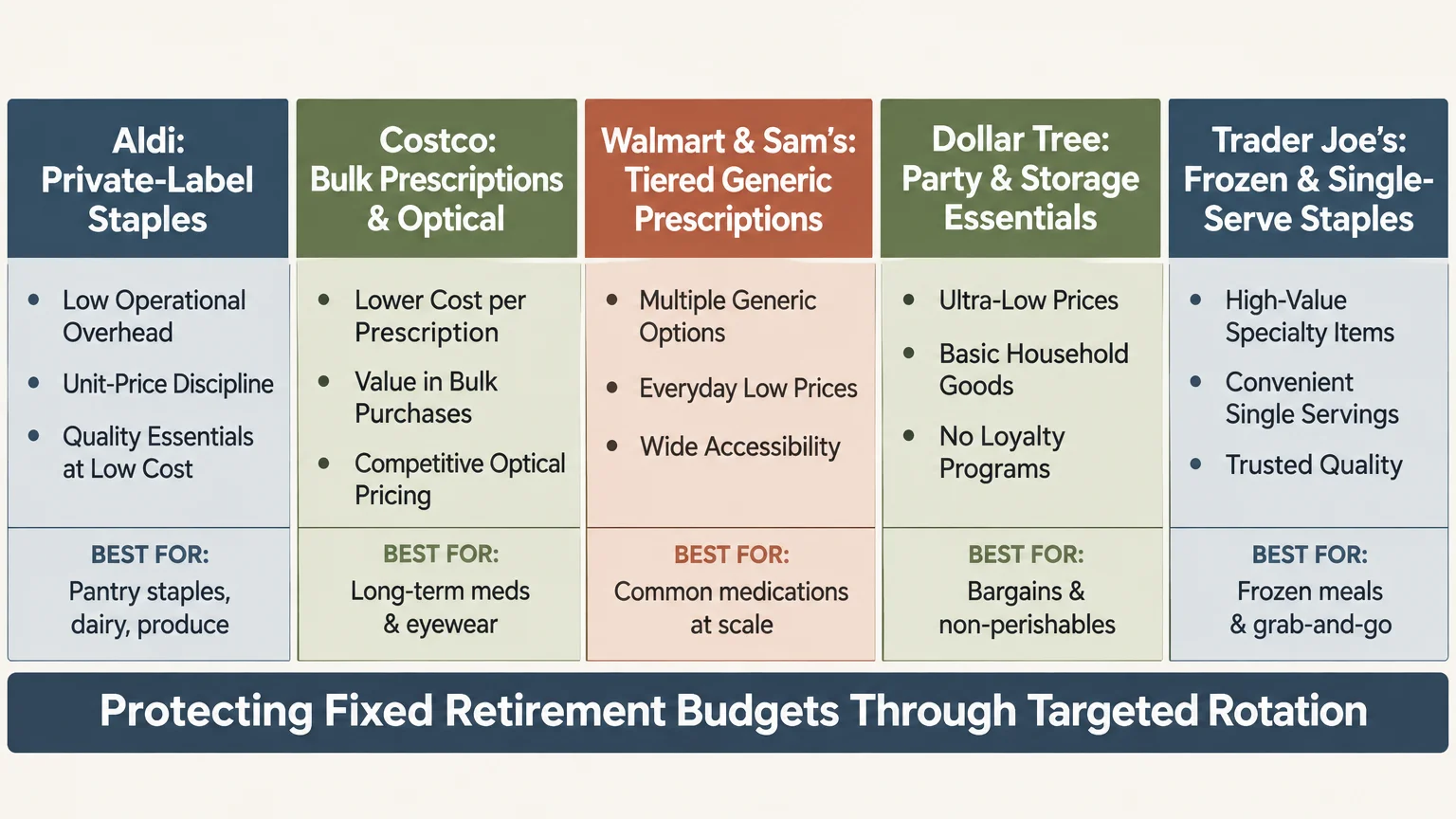
Retirees who keep costs low treat shopping like a targeted system rather than a chore. Anchor weekly groceries at Aldi, lean on Costco or the $120 Walmart+/Sam’s Club bundle for healthcare and bulk non-perishables, and cherry-pick Dollar Tree toiletries by weight.
Layer senior discount days at Goodwill, Kohl’s, Ross, and Walgreens onto Tuesday and Wednesday errands, and keep Trader Joe’s frozen meals on standby to replace costly restaurant nights. Combining those stores for frugal retirees creates a resilient shield against inflation.
Start small this week by comparing three items you buy every month—your laundry detergent, your favorite coffee, and one prescription or personal care staple—across two stores on this list. Watching real unit prices drop puts permanent cash back into your retirement budget.
Frequently Asked Questions
Do I need both a Costco and a Sam’s Club membership in retirement?
Most two-person households only need one warehouse membership to capture bulk savings on paper goods, fuel, and pharmacy care. Choose Costco if its hearing, optical, and Medicare OTC perks save you money, or pick the $120 Walmart+ and Sam’s Club Plus bundle for delivery convenience.
How can I tell if a multi-price Dollar Tree item is actually a bad deal?
Always scan the item at an in-store price checker first, then divide the total price by the number of ounces or sheets on the label. Compare that exact unit cost against Walmart or Aldi on your phone before walking to the register.
Are senior discount days at Walgreens and Kohl’s always the cheapest option?
Not automatically, because regular shelf prices at drugstores and department stores often carry higher starting markups than hard-discount grocers or Walmart. Always compare the post-discount price against everyday baseline retailers before assuming a percentage-off banner guarantees savings.
Is Aldi produce really safe and fresh compared with full-price supermarkets?
Yes, though high store turnover means you should inspect bags carefully for bruising and check sell-by dates on meats and dairy. Pairing Aldi’s everyday low prices with smart refrigerator storage lets you capture up to 22% private-label savings without sacrificing meal quality.
For consumer protection information, visit the Federal Trade Commission (FTC) and the Consumer Financial Protection Bureau (CFPB). For product safety and reviews, consult Consumer Reports.
Disclaimer: This article is for informational purposes only and does not constitute financial advice. The content reflects the author’s opinion and research at the time of writing. Always do your own research before making financial decisions.