
You can instantly unlock hundreds of dollars in hidden savings this year without spending an extra dime, simply by activating the overlooked benefits already built into your cash back credit cards. Most cardholders view their accounts merely as transactional payment tools that deliver a modest 1.5% to 2% rebate at the register. However, credit card agreements quietly bundle powerful consumer safeguards, complimentary insurance policies, and merchant discounts that directly offset routine living expenses. By understanding how to trigger these underused perks, you transform everyday financial management into an effortless defensive shield that preserves your household budget.

The Hidden Value Sitting in Your Wallet
Rising household expenses force many families to examine every line item in their monthly budget. Yet millions of consumers inadvertently subsidize major financial institutions by ignoring the ancillary protections attached to their everyday cards. According to a recent LendingTree rewards survey, nearly 70% of rewards cardholders maintain unredeemed cash back, points, or miles, with 31% stockpiling $100 or more in unclaimed value. Furthermore, a Bankrate consumer rewards study revealed that approximately 23% of cardholders did not redeem a single reward over an entire 12-month period.
Major financial institutions currently hold more than $33 billion in combined unredeemed rewards liabilities on their corporate balance sheets. When cardholders overlook these benefits, banks retain those funds as corporate breakage. The Consumer Financial Protection Bureau continuously monitors credit card disclosures, yet card issuers rarely publicize the secondary perks that cost them money when consumers file claims. Moving beyond basic swipe cash back allows you to capture the actual financial utility engineered into your payment cards.
Seven Overlooked Cashback Perks That Save Real Money
1. Automatic Cell Phone Protection
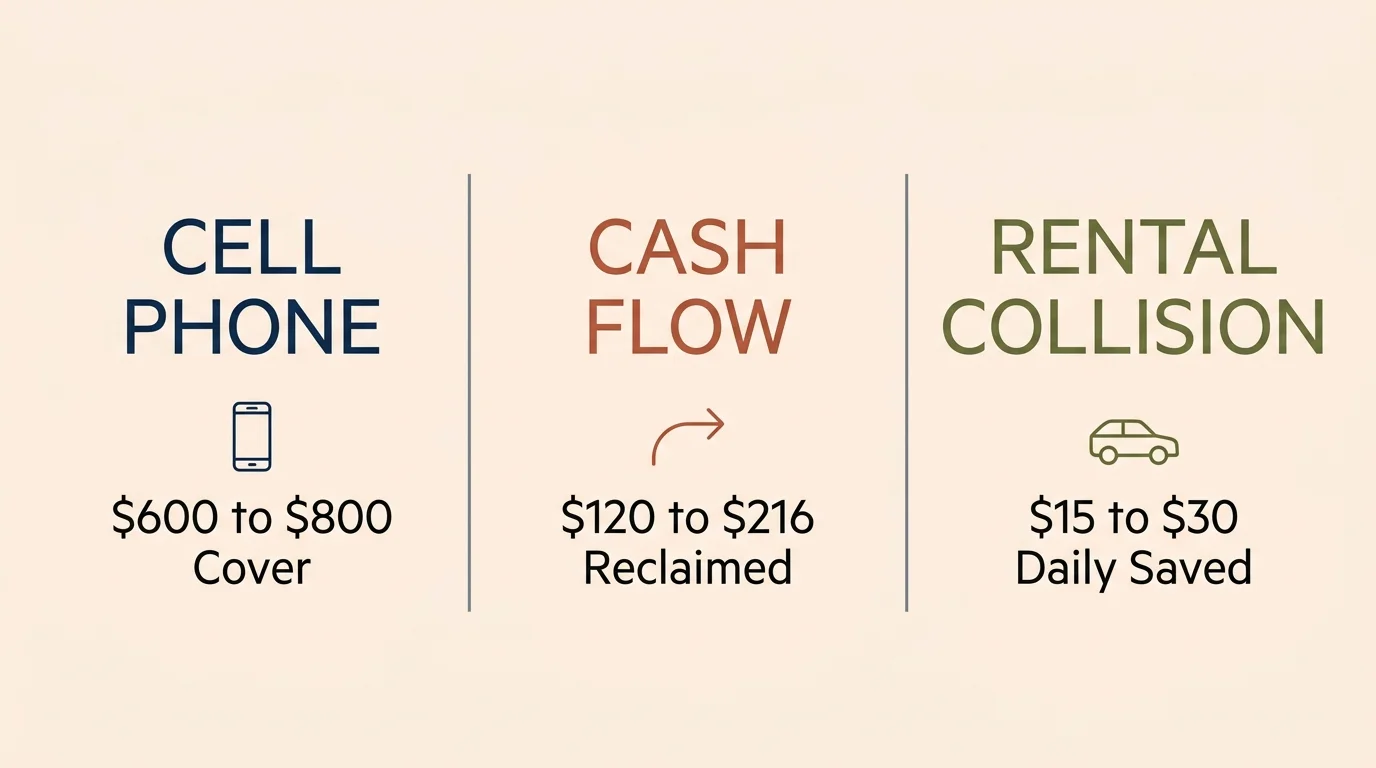
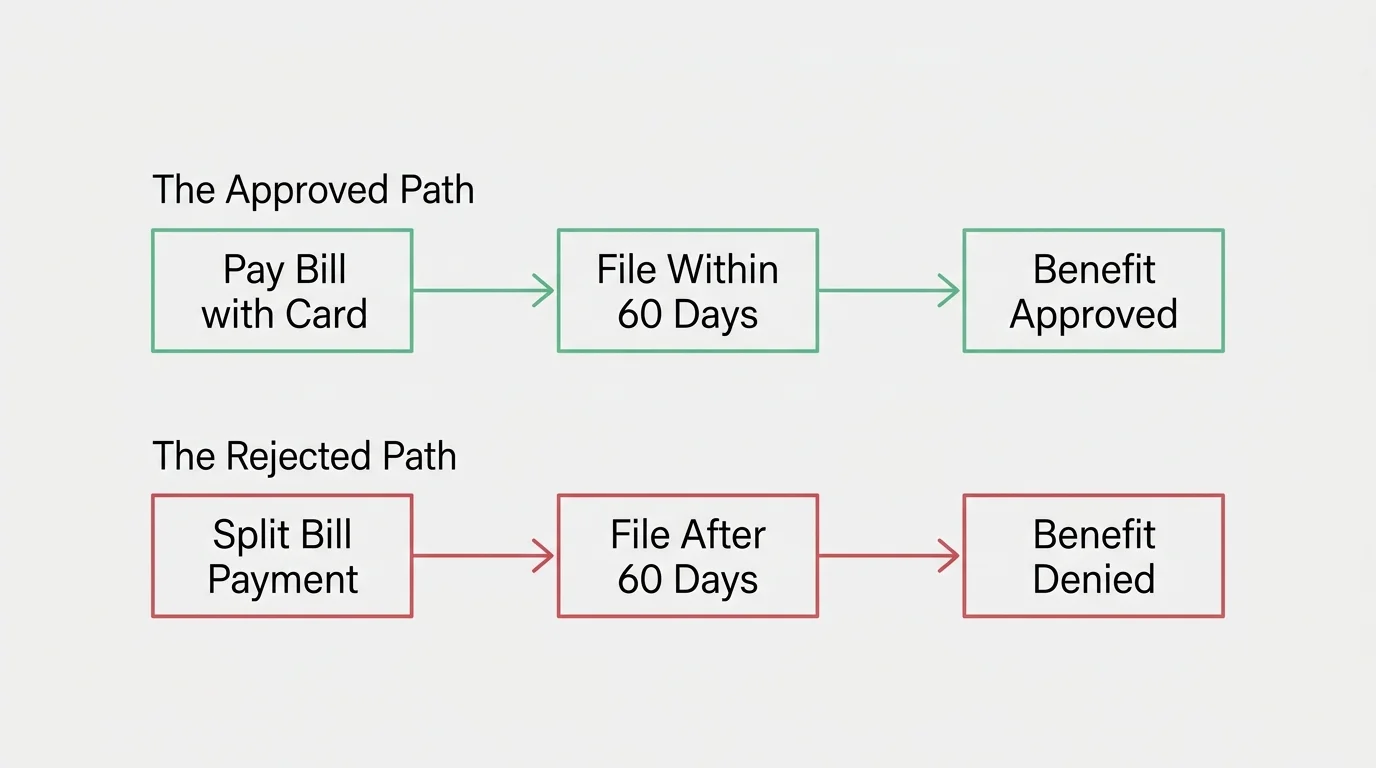
Replacing a damaged smartphone screen or malfunctioning charging port easily costs several hundred dollars out of pocket. Many popular no-annual-fee cash back cards—such as the Wells Fargo Active Cash and select Mastercard or Visa Signature cards—provide automatic cell phone protection when you pay your monthly wireless bill with the card. This benefit typically covers between $600 and $800 per claim against accidental damage or theft, allowing up to two approved claims per 12-month period. Deductibles remain modest, generally ranging from $25 to $50 per incident. By switching your recurring wireless autopay to an eligible cash back card, you can cancel carrier insurance policies that drain $10 to $18 each month, instantly reclaiming $120 to $216 per line in annual household cash flow.
2. Auto Rental Collision Damage Waivers
Car rental desks rely heavily on high-pressure sales tactics to pitch optional collision damage waivers, which regularly add $15 to $30 per day to your travel bill. When you pay for the entire rental transaction with an eligible cash back card and decline the agency’s collision coverage at the counter, your card’s built-in coverage activates automatically. Most standard consumer cash back cards provide secondary coverage within the United States, meaning the card issuer reimburses your personal auto insurance deductible and administrative fees resulting from theft or collision damage. On a typical five-day vacation or road trip, declining the counter waiver preserves between $75 and $150 in cash without sacrificing essential financial protection.
3. Extended Warranty Protection
Electronics retailers frequently urge shoppers to purchase expensive multi-year service contracts at checkout. If you pay with a card offering extended warranty protection, your card issuer automatically extends the original manufacturer warranty by one additional full year on eligible warranties of three years or less. This coverage typically covers repair or replacement costs up to $10,000 per claim, capped at the original purchase amount charged to your card. Bypassing commercial retail protection plans on televisions, kitchen appliances, and computers saves you 10% to 20% on major retail transactions while securing equivalent repair backing.
4. Purchase Protection Against Theft and Accidental Damage
Few retail experiences sting worse than dropping a brand-new tablet on concrete or having a delivered package stolen from your porch within weeks of purchase. Card-provided purchase protection safeguards newly acquired items against theft or accidental damage for the first 90 to 120 days from the transaction date. Eligible claims generally pay out between $500 and $1,000 per incident, with annual account maximums reaching up to $50,000. Filing a claim requires providing your receipt, card statement, and a repair quote or police report, offering total reimbursement when standard merchant return policies refuse to help.
5. Card-Linked Merchant Offers
Most major card issuers operate proprietary digital discount portals inside their mobile applications, commonly known as Chase Offers, Amex Offers, or BankAmeriDeals. These programs provide targeted rebates and statement credits ranging from 5% to 20% cash back—or fixed statement credits like $15 off a $75 grocery or apparel purchase. These savings stack directly on top of your card’s standard cash back earn rate and any store coupon codes you apply at checkout. However, banks require manual, one-click digital activation within the app before you make your purchase, making a bi-weekly check of your issuer’s offer portal an effortless way to harvest free statement credits.
6. Return Protection on Refused Items
Clearance items and final-sale merchandise often carry strict, zero-return store policies that leave consumers stuck with ill-fitting clothes or incompatible home goods. When a merchant refuses to accept an item in like-new, working condition within 60 to 90 days of purchase, card return protection steps in to refund the cost. Issuers typically reimburse $250 to $300 per eligible item, up to an annual limit of $1,000 per account. If the card administrator requests the item back, they provide shipping instructions, ensuring you never absorb the cost of an inflexible store return policy.
7. Quarterly Rotating 5% Category Activations
Leading rotating cash back products, such as the Discover it Cash Back and Chase Freedom Flex, provide 5% cash back on rotating everyday merchant categories each quarter. These categories cover everyday necessities like grocery stores, wholesale clubs, gas stations, and dining, capped at $1,500 in total purchases per quarter. Maximizing these categories yields $75 in cash back every three months, totaling $300 in annual rebates. The primary reason consumers miss this money stems from the manual activation requirement. Card issuers mandate that you opt in each quarter via email or mobile app before spending; unactivated purchases default to the basic 1% rate.

Expert Perspectives on Rewards Psychology and Behavioral Traps
Behavioral economists note that credit card companies design ancillary perks with intentional friction, relying on consumer inertia to keep claim payouts minimal. When benefits require proactive steps—such as retaining receipts, clicking activation links, or submitting repair invoices—the average consumer defaults to inaction. Financial planners emphasize that treating your credit card agreement like a practical consumer protection portfolio changes this dynamic. By viewing built-in coverages as an auxiliary layer of your emergency fund, you insulate your monthly cash reserves against unexpected replacement costs.
Reclaiming value from existing financial instruments requires no increase in income, making it one of the most reliable wealth-preservation moves available to working households. Savvy consumers build lightweight habits around their credit cards rather than relying on memory. When you automate calendar alerts for category activations and store digital receipts in dedicated cloud folders, you eliminate the cognitive friction that banks rely on to protect their balance sheets.

Action Lab: A Step-by-Step Household Savings Audit
Consider how a typical dual-income household can optimize their existing wallet in a single afternoon. Start by auditing your monthly recurring subscriptions and moving your $150 wireless bill to a cash back card offering cell phone protection, allowing you to drop two $14 carrier insurance fees for an immediate annual savings of $336. Next, schedule calendar reminders on the first day of each quarter to activate your 5% rotating categories, routing routine fuel and supermarket trips through those cards to secure the full $300 annual bonus.
When booking an annual family trip, reserve the rental vehicle on an eligible rewards card to safely decline the counter collision waiver, saving $110 over a five-day rental. Finally, log into your mobile banking portal twice a month to activate targeted merchant offers for routine spending on home goods and clothing, netting an estimated $60 in statement credits across the year. Without spending a single extra dollar or taking on new debt, this systematic four-step audit secures $806 in combined annual savings and rewards.
Guardrails: Critical Mistakes That Cancel Your Card Benefits
Unlocking the full value of cash back cards requires disciplined usage; otherwise, simple procedural missteps will erase your financial gains. According to the Federal Reserve consumer credit report, the average credit card interest rate exceeds 21%, meaning carrying an ongoing balance quickly wipes out any 2% or 5% rewards you generate. Always pay your full statement balance each month to ensure interest charges never negate your earnings.
Documentation represents another major stumbling block when filing perk claims. Card benefit administrators require itemized receipts, monthly statements displaying the exact transaction, and official paperwork such as repair diagnostic reports or police reports for theft. Store electronic copies of major receipts in a dedicated digital folder immediately after purchasing high-value items. Additionally, be aware of exclusions; common card protections do not cover motorized vehicles, perishable goods, or commercial business purchases made on personal consumer accounts.
Frequently Asked Questions About Underused Perks
Does filing a protection claim raise my credit card interest rate or hurt my credit score? No. Benefit claims through your card issuer operate independently of your credit profile and account terms. Filing a purchase protection, cell phone, or extended warranty claim has zero impact on your credit score, your credit limit, or your annual percentage rate.
What is the primary difference between primary and secondary rental car coverage? Secondary coverage requires you to file a claim with your personal auto insurance provider first, covering only your remaining deductible and out-of-pocket administrative fees. Primary coverage pays out before your personal insurance, shielding your personal policy premiums from rate hikes after an accident.
Do I lose extended warranty or purchase protection coverage if I close the card later? Yes. Most card issuers require your account to remain open and in good standing at the time you file a claim. If you cancel the credit card used for the original purchase, you forfeit your access to card-provided extended warranty and purchase protection benefits.
Where can I find the complete benefits guide for my specific cash back card? You can download your specific Guide to Benefits by logging into your online banking portal, navigating to account details, or calling the customer service number on the back of your card to request a digital copy.
Put Your Card Benefits to Work Today
Extracting maximum value from your cash back credit cards does not require hours of complicated financial management. Take fifteen minutes tonight to log into your online banking accounts, review your benefits summary, and move your monthly cell phone bill to an eligible card. Toggle on available merchant offers before your next shopping trip, and mark category activation deadlines on your personal calendar. Every built-in perk you activate keeps hard-earned money in your household budget—putting institutional benefits to work for your family rather than leaving unclaimed dollars in bank accounts.