You can significantly boost your household cash flow while raising a grandchild by accessing a lesser-known provision called the Social Security child-in-care benefit. If you care for an eligible child under age 16, this federal program allows you to claim monthly caregiver payments regardless of your age. Raising a young relative brings deep emotional reward, but it also introduces sudden financial challenges into your household. Understanding how these caregiver monthly payments work ensures you claim every dollar your family deserves. By learning the dependency rules, financial support thresholds, and application procedures today, you can relieve immediate budget pressure while securing vital resources for your grandchild’s future growth.
The State of Grandparent Caregiving in America
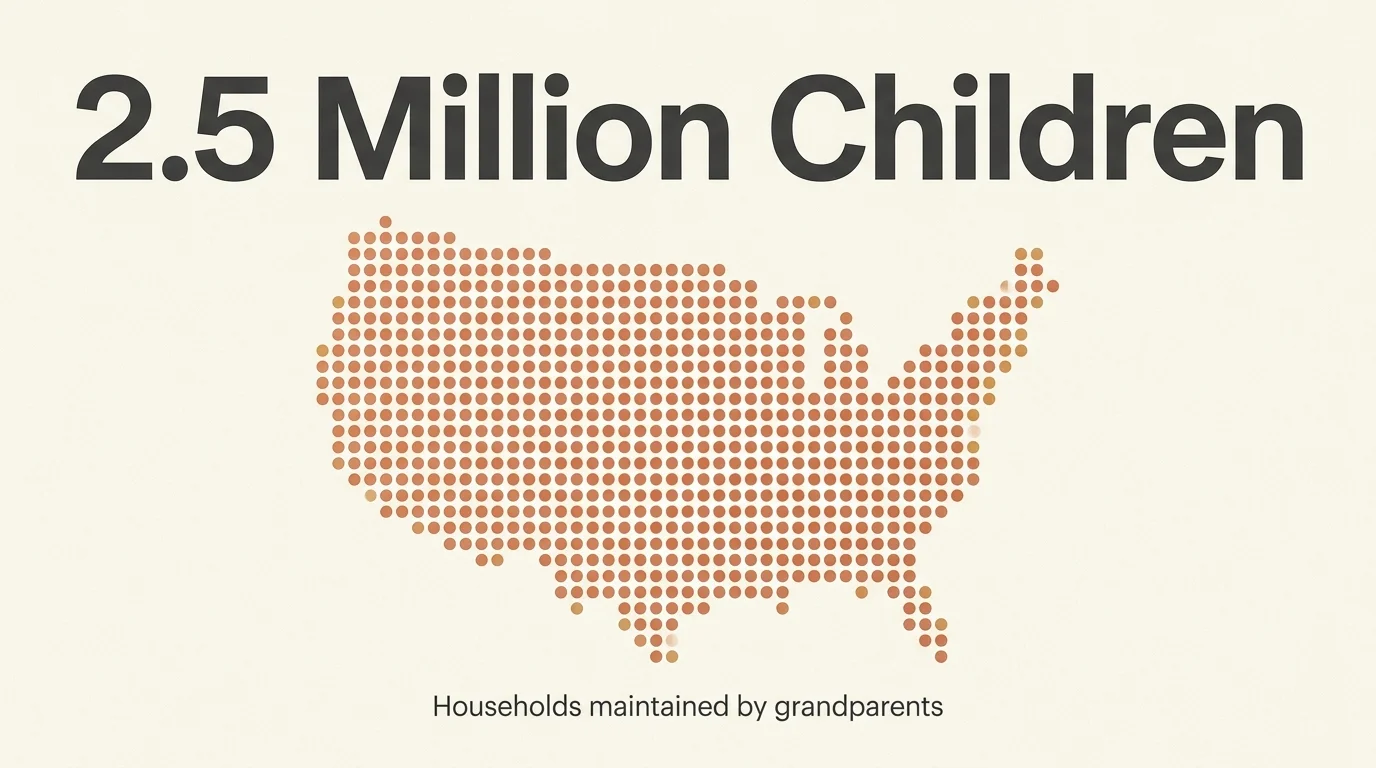
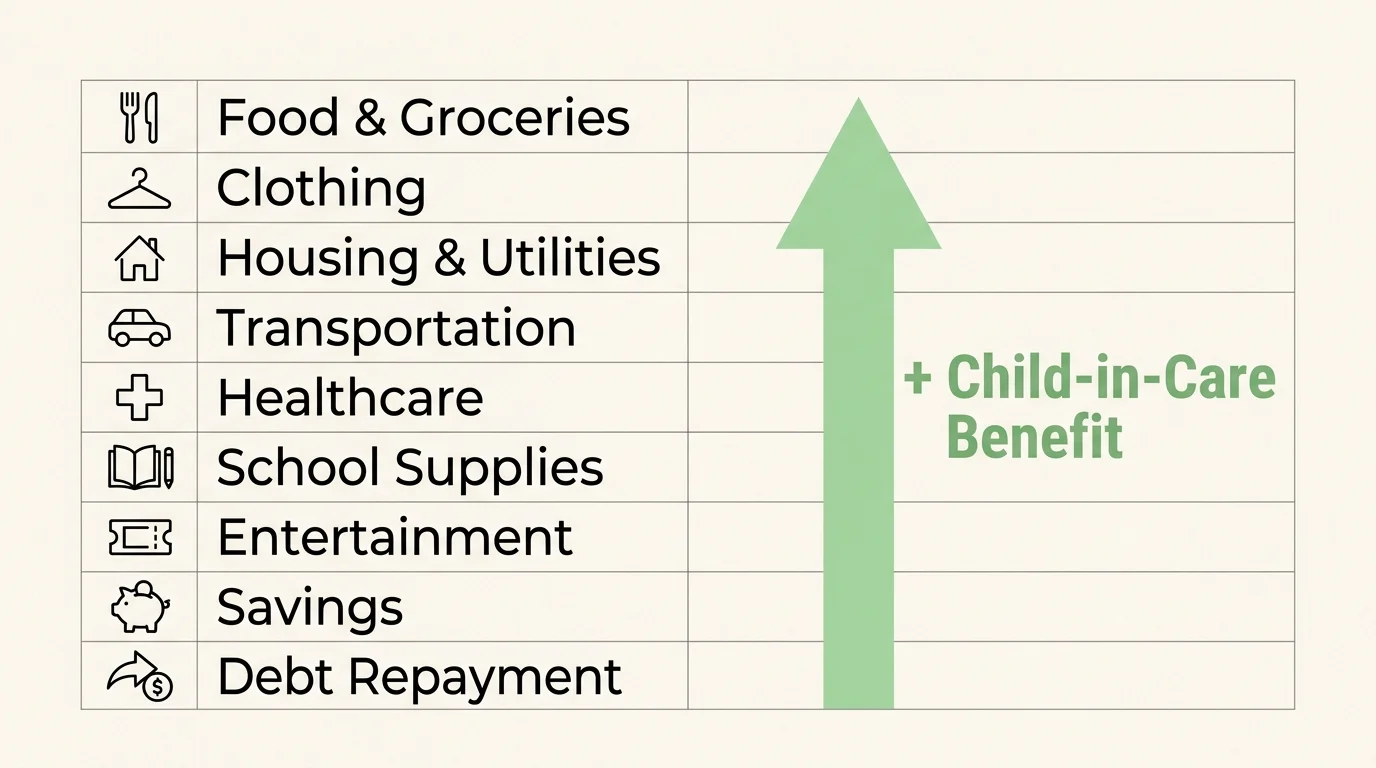
According to data from the U.S. Census Bureau, approximately 2.5 million children under age 18 across the United States live in households maintained by a grandparent who bears primary responsibility for their basic needs. When you open your home to raise a grandchild, your financial priorities shift overnight. Unexpected expenses for school supplies, clothing, pediatric care, and daily nutrition quickly stretch household cash flow. Research from the Federal Reserve underscores that middle-income families frequently face severe budget strain when dependants join the household unexpectedly.
Federal safety nets exist to cushion this exact financial burden, yet many families overlook them completely. Social Security operates as a comprehensive social insurance framework designed to support families across multiple generations. When you take on the daily responsibilities of parenting a young grandchild, specific provisions in federal law recognize your vital role. Unlocking these resources requires clear knowledge of how benefit formulas operate and how your household dynamic fits into federal guidelines.
Decoding the Child-in-Care Benefit Mechanics
Standard Social Security spousal rules typically require an individual to reach age 62 before claiming benefits on a partner’s record. However, federal law built a key exemption into the system through the child in care spousal benefit rules. Under this provision, if you care for an eligible child under age 16, you can qualify for unreduced caregiver benefits at any age, provided your spouse receives Social Security retirement or disability payments.
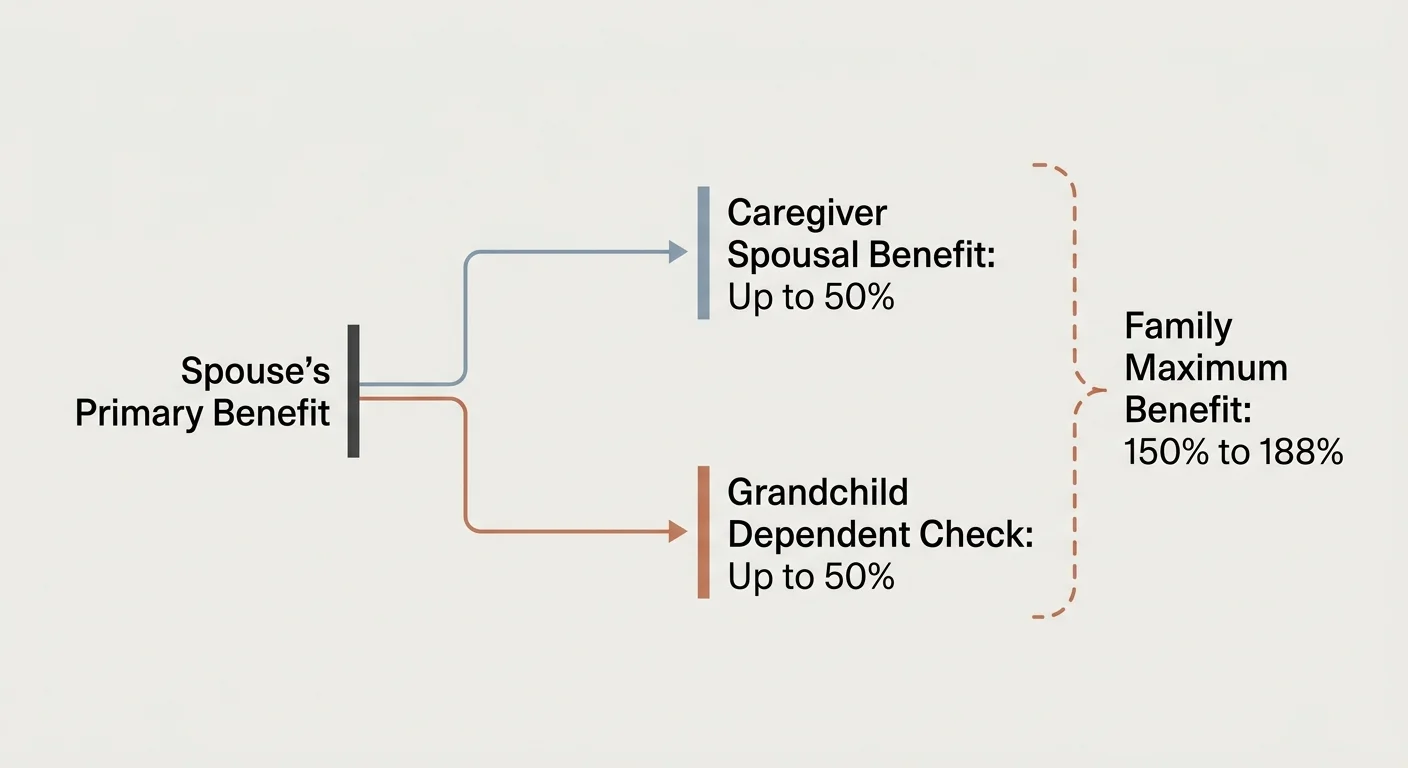
As a qualifying caregiver, you can receive up to 50% of your spouse’s Primary Insurance Amount—the baseline monthly benefit your spouse qualifies for at full retirement age. Simultaneously, your eligible grandchild may qualify for a separate dependent check worth up to 50% of that same baseline figure. If you are a surviving spouse caring for an eligible grandchild, that monthly payment climbs to 75% of the deceased worker’s primary benefit.
Total household collections remain subject to the Family Maximum Benefit limit, which caps combined family payments between 150% and 188% of the worker’s primary insurance amount. If total calculated benefits exceed this cap, Social Security proportionally reduces secondary payments to stay within legal bounds.

Strict Rules for Grandchild Eligibility
Securing grandparent Social Security benefits requires meeting distinct criteria. Simply holding legal guardianship over a grandchild does not satisfy federal standards; guidelines demand a specific legal or financial link before releasing monthly payments on your record.
To establish eligibility for a grandchild, you must meet one of two structural pathways. First, you qualify if you have legally adopted the grandchild. Second, you qualify if the grandchild’s biological parents are either deceased or fully disabled.
In addition, you must satisfy the financial support test outlined by the Social Security Administration. You must demonstrate that the child lived with you before turning 18 and that you provided at least 50% of the child’s financial support for at least one full year immediately before you became entitled to retirement or disability benefits. If the grandchild is under one year old, you must have provided at least half of their support since birth.
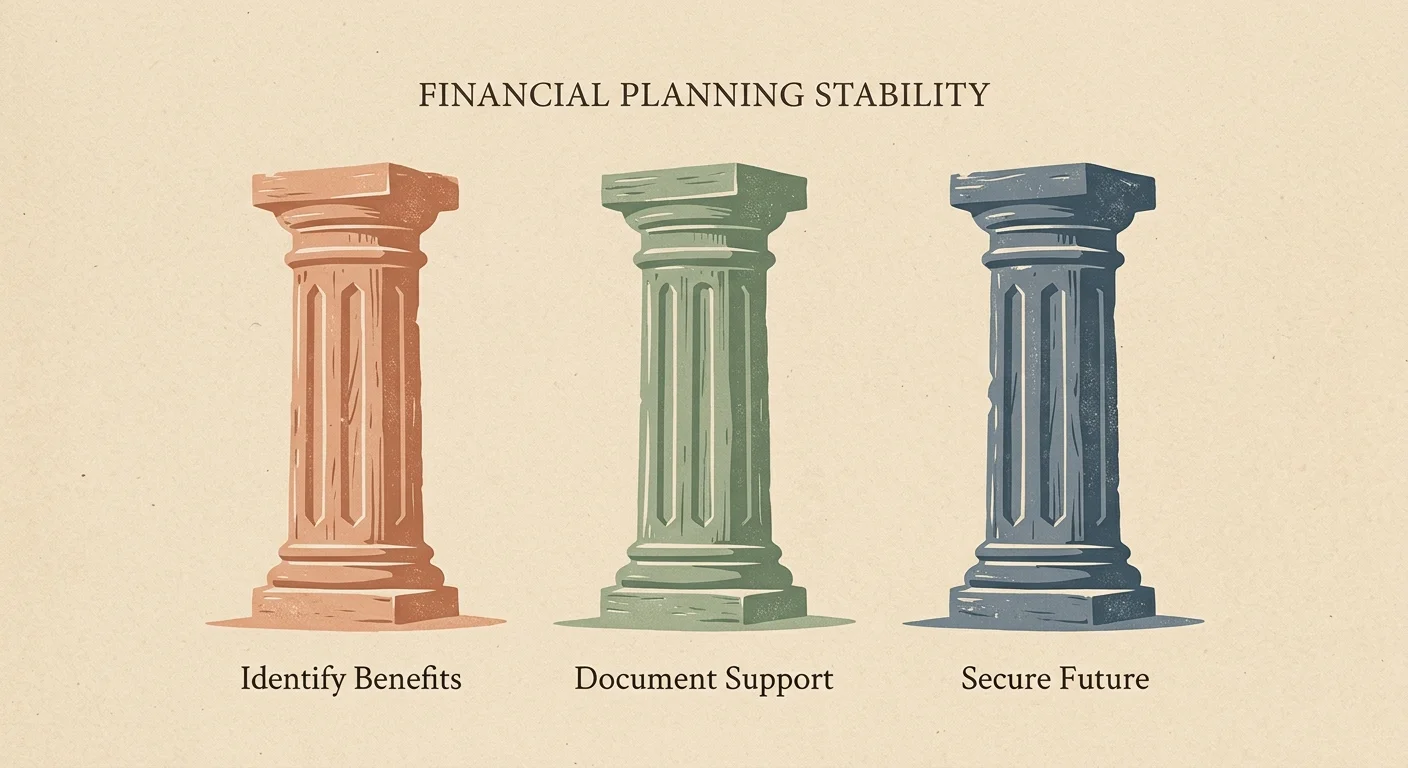
Three Core Strategy Pillars for Financial Stability
Navigating family caregiving demands an organized financial framework that balances immediate daily expenses with long-term security. Implementing practical strategies ensures every dollar flowing into your home works efficiently.
Conducting a Granular Household Audit
Start by listing all child-related expenses over the past six months, ranging from recurring childcare bills to school clothing. Categorize these costs into essential needs and flexible extras to expose spending leakage. Comparing these costs against your predictable income helps you pinpoint the exact dollar gap that qualifying for child in care benefits can help fill.
Automating Savings and Segregating Funds
When monthly Social Security payments arrive, direct a portion immediately into a dedicated account earmarked strictly for caregiving expenses. Guidance from the Consumer Financial Protection Bureau highlights that maintaining separate financial buckets prevents accidental overspending on routine operational costs. Automating transfers to a savings account creates an accessible cushion for emergency medical costs or school activities.
Managing Earned Income and Caps
If you work while receiving child-in-care benefits before reaching full retirement age, you must monitor federal earnings limits. For 2026, the annual earnings test limit stands at $24,480, or $2,040 per month. If your earnings exceed this threshold, Social Security withholds $1 in benefits for every $2 earned above $24,480.

Real-World Voices: Wisdom from Financial Experts
Financial planners and behavioral economists emphasize that taking on caregiving roles in later life requires clear boundaries and strategic planning. Certified financial planner Marcus Vance notes that many grandparents deplete personal emergency funds to support grandchildren before exploring official federal programs. Vance emphasizes that claiming designated federal entitlements preserves personal retirement capital, allowing grandparents to maintain independence while providing stability for the child.
Behavioral finance experts also highlight the emotional friction surrounding multi-generational spending. Grandparents often feel reluctant to file for federal programs due to complex family dynamics or administrative anxiety. However, financial counselor Elena Rostova points out that applying for benefits is an act of proactive stewardship. Utilizing federal benefits designed for Social Security benefits for caregiving grandparents protects household balance sheets against inflation and unexpected shocks, transforming financial strain into a sustainable living arrangement.
Action Lab: A Step-by-Step Budget Calculation
To see how this works in real life, consider a concrete household scenario. Imagine Sarah, an age 58 caregiver who legally adopted her 8-year-old grandson, Leo. Sarah’s spouse, Arthur, age 66, collects a primary Social Security benefit of $2,200 per month. Because Sarah cares for Leo, who is under age 16, she applies for child-in-care spousal benefits on Arthur’s record, while Leo applies for a child dependent benefit.
Under standard benefit rules, Sarah’s theoretical child-in-care benefit equals 50% of Arthur’s $2,200 primary insurance amount ($1,100 monthly). Leo’s dependent benefit also equals 50% ($1,100 monthly). Combined, their unadjusted family total would reach $4,400 monthly. However, Arthur’s record carries a Family Maximum Benefit cap set at 175% of his primary insurance amount ($3,850 total).
To respect this cap, Social Security subtracts Arthur’s full $2,200 primary benefit from the $3,850 maximum, leaving $1,650 to divide equally between Sarah and Leo. Consequently, Sarah receives $825 per month in child-in-care benefits, and Leo receives $825 per month in child benefits. This brings $1,650 in fresh monthly income into the household—providing $19,800 annually to support Leo’s upbringing.

Critical Guardrails and Costly Pitfalls
Avoiding common administrative traps preserves your household cash flow and prevents benefit demand notices from federal agencies. The most severe trap involves the strict age 16 caregiver cutoff. While your grandchild’s individual dependent benefit continues until age 18—or age 19 if enrolled full-time in high school—your personal child-in-care payment automatically terminates on the child’s 16th birthday unless the child has a qualifying disability that began before age 22.
Another frequent pitfall involves confusing legal guardianship with legal adoption. Obtaining legal guardianship grants authority over school and medical choices, but Social Security will deny grandchild benefit claims under guardianship unless the biological parents are deceased or disabled. If you plan to claim benefits based on your record, consult a legal professional to verify whether formal adoption or legal support records best fit your circumstances.
Finally, keep immaculate records of your financial support. Failing to document that you provided at least 50% of your grandchild’s maintenance costs for the required 12-month period can delay claims processing or cause application rejections.
Frequently Asked Questions
Can I receive child-in-care benefits if I am under age 62?
Yes, you can receive child-in-care benefits at any age, provided you care for an eligible child under age 16 who qualifies on your spouse’s Social Security record. The standard age requirement of 62 does not apply under this provision.
What happens to my payment when my grandchild turns 16?
Your personal child-in-care caregiver benefit stops automatically when the child reaches age 16, unless the child has a qualifying disability that started prior to age 22. However, the child’s individual dependent benefit continues until age 18, or age 19 if attending secondary school full time.
Does legal guardianship qualify my grandchild for Social Security benefits?
No, legal guardianship is not enough. To claim benefits for a grandchild on your record, you must either legally adopt the child or demonstrate that both biological parents are deceased or disabled, while meeting the 50% support test.
How does working affect my child-in-care payments?
If you work while receiving child-in-care benefits before full retirement age, your benefits face annual earnings limits. In 2026, if you earn over $24,480 annually ($2,040 monthly), Social Security withholds $1 in benefits for every $2 earned above that limit.
Taking Action Today
Raising a grandchild is a profound act of devotion, and you do not have to shoulder the financial burden alone. Federal social insurance programs offer structural funding designed specifically to help families thrive during complex transitions. Take immediate control of your financial journey by gathering your living arrangement documentation, support receipts, and family legal records tonight. Schedule an appointment with your local Social Security Administration office or review your online profile at SSA.gov to evaluate your eligibility. Every practical step you take today secures concrete resources, easing immediate budget pressure and building a stable, resilient home for your grandchild’s future.