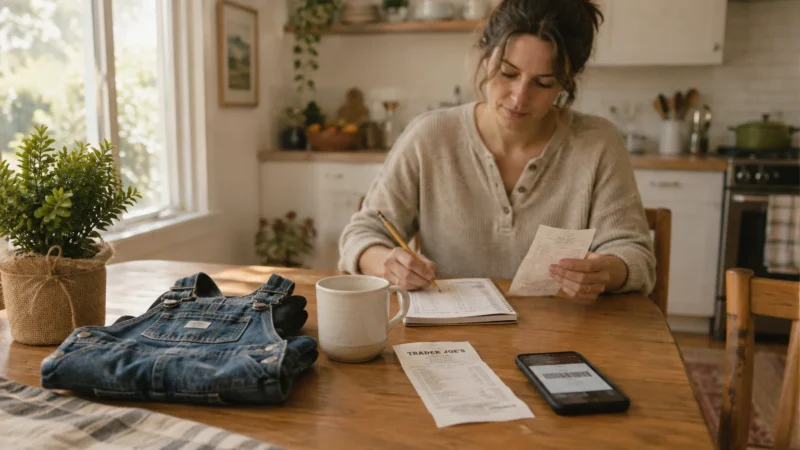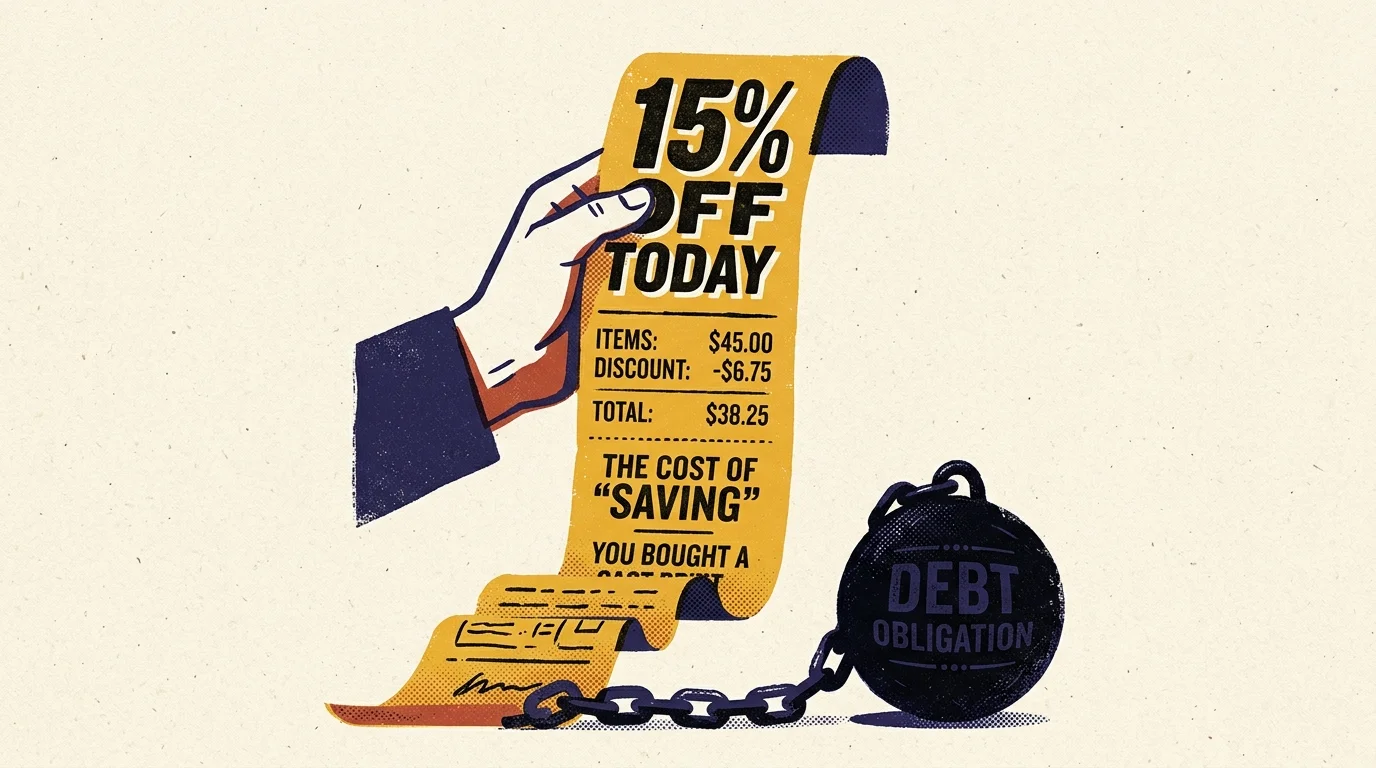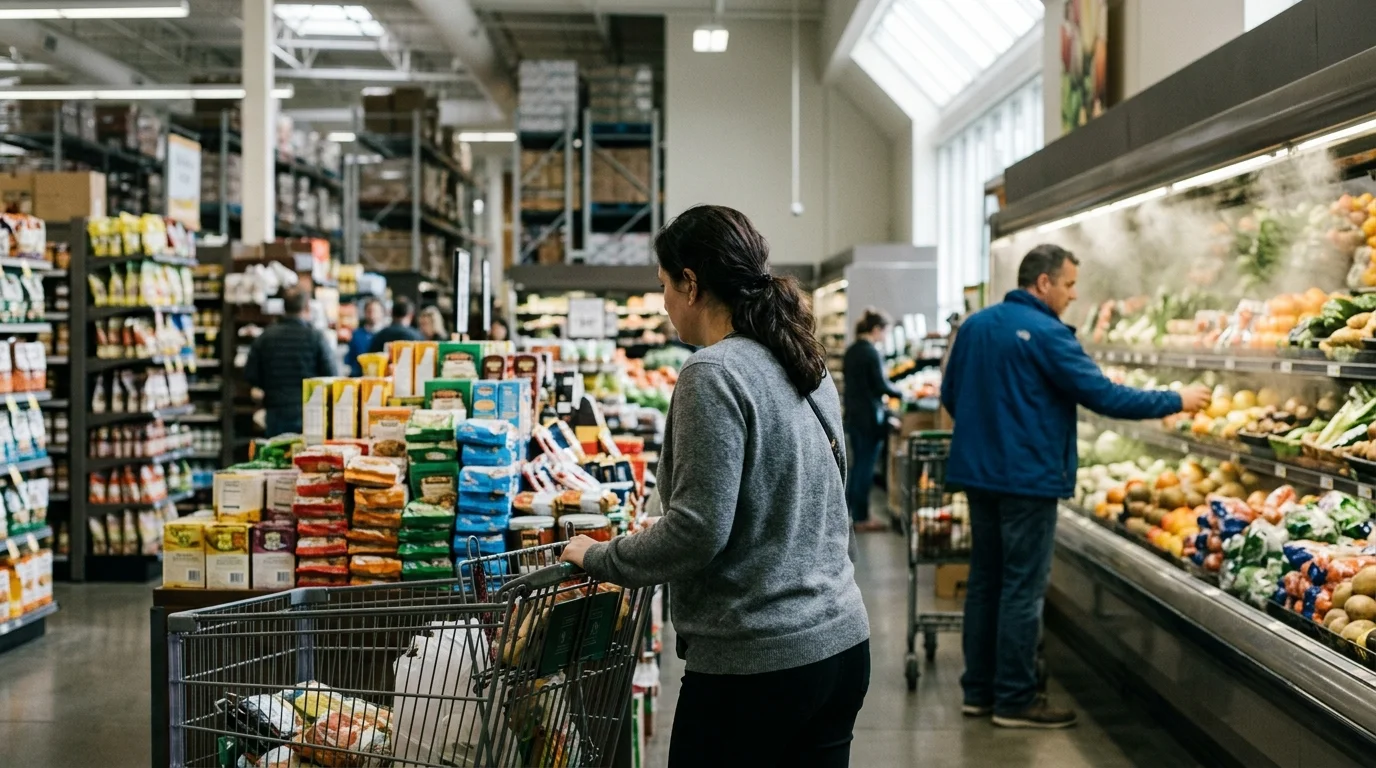
You can trim your monthly food bill by hundreds of dollars simply by recognizing how corporate architects manipulate your purchasing habits inside the store. Modern supermarkets rely on sophisticated behavioral science to steer your steps, slow your movement, and nudge high-margin items directly into your basket before you realize your budget is off track. Data from consumer research firms shows that unbudgeted impulse purchases account for up to twenty percent of an average household grocery bill. By understanding these subtle spatial psychological triggers, you regain control over your hard-earned money and protect your monthly cash flow without compromising on the quality or nutrition of the food your family eats every day.
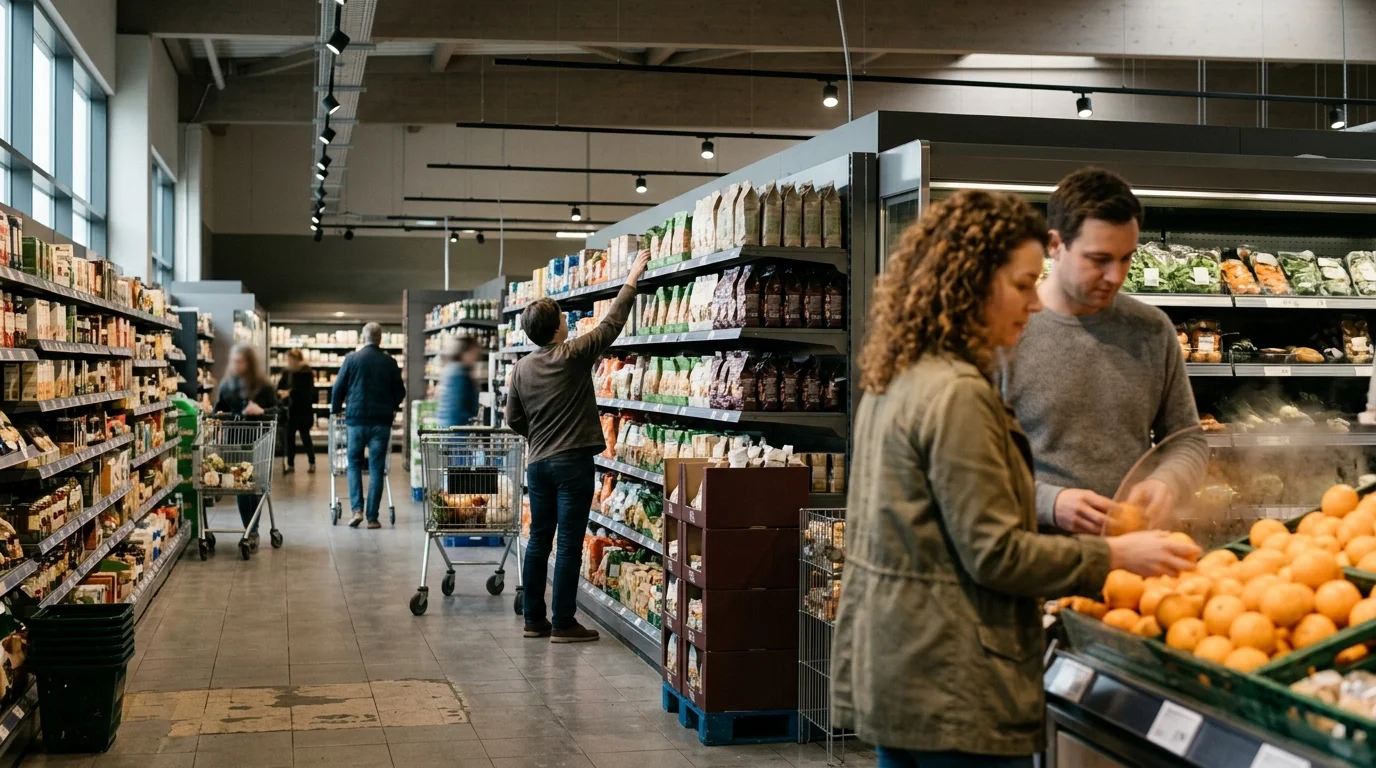
The Hidden Architecture of Supermarket Science
When you step through the sliding glass doors of your local market, you enter a carefully calibrated marketing environment. Retail floor planners do not arrange product aisles for your convenience; they design every square foot to maximize profit per customer visit. According to research from the USDA Economic Research Service, food expenditures represent a substantial portion of disposable income for middle-income households. Grocers operate on slim profit margins—often between one and three percent—so they rely on volume and high-margin specialty products. They use layout, lighting, aroma, and sound to lower your analytical resistance. When your visual focus relaxes, your spending filters weaken, leading to unbudgeted items in your basket. Recognizing these layout tactics helps you protect your hard-earned money.
Ten Layout Tricks Designed to Drain Your Wallet
1. The Fresh Produce Entrance Trap
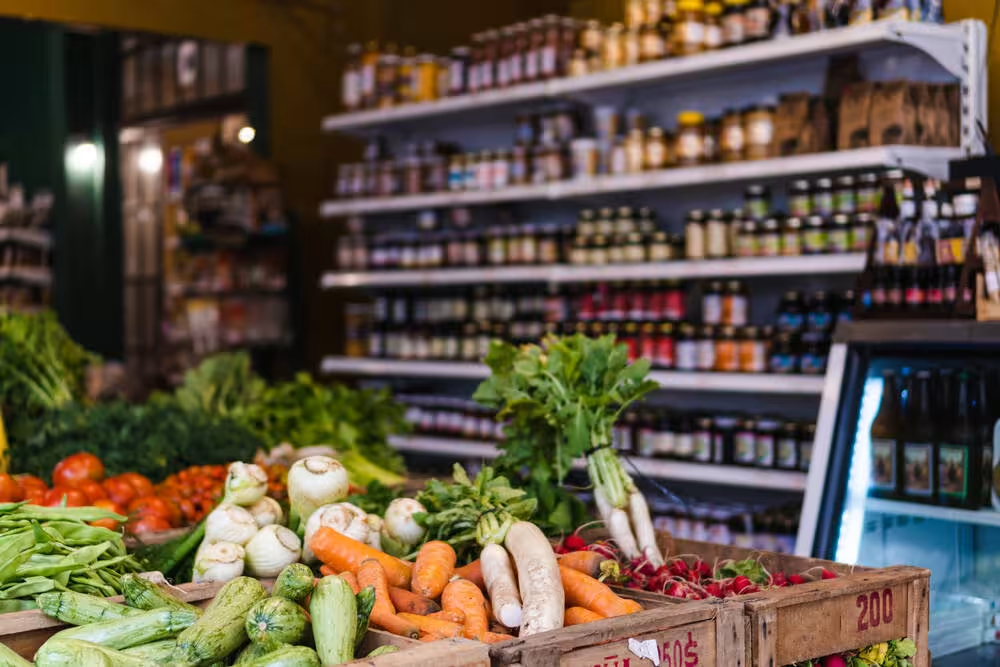
Supermarkets place fresh flowers, vibrant fruits, and aromatic bakeries right near the front entrance. This creates an immediate perception of freshness and health, setting an upbeat tone for your visit. Psychologically, this triggers the license effect. Buying crisp apples or fresh spinach early in your trip makes you feel accomplished. That positive feeling lowers your subconscious guilt when you pass high-margin cookies or sodas in later aisles. Stick strictly to your produce list to keep your spending on track.
2. The Great Perimeter Staples Maze
Essential staples like milk, eggs, fresh meat, and butter sit along the back walls of the store. Retail architects place high-frequency items far from the entrance to force you across the entire building. Every extra aisle you pass increases the chance that an unplanned item lands in your cart. You enter for a gallon of milk and leave with forty dollars of snacks. Counter this trick by walking directly along the outer perimeter thoroughfare, keeping your focus strictly on your target item.
3. The Eye-Level Profit Zone
Grocers follow a universal rule: eye level is buy level. Shelves placed between four and five feet off the ground represent prime commercial real estate. Manufacturers pay slotting fees to place expensive brand-name goods and high-margin processed foods right at adult eye level. Cheaper store brands and bulk economy sizes sit on top or bottom shelves. Children’s items sit lower down, directly at a child’s eye level. Always scan shelves from top to bottom before choosing a product.
4. The Expanding Shopping Cart Effect
Shopping carts have expanded significantly over recent decades. Larger carts create a subtle psychological illusion of emptiness. Human brains naturally want to fill open space, so placing a few items inside a massive cart feels incomplete. Research shows that doubling cart capacity causes shoppers to buy up to forty percent more goods. Grab a hand basket when buying fewer than ten items, or place open reusable tote bags inside your cart to establish clear visual boundaries.
5. Slow Tempo Atmospheric Control
Background music in grocery stores is carefully chosen. Retailers select slow, rhythmic music—around 60 to 70 beats per minute—to match a calm heart rate. This auditory trigger subconsciously slows your walking pace. Moving slowly through aisles causes you to browse longer and inspect more products. Studies indicate that slower walking speeds increase total basket size by up to thirty-eight percent. Wear headphones with upbeat music to maintain a brisk, efficient pace throughout your trip.
6. Endcap Display Illusions
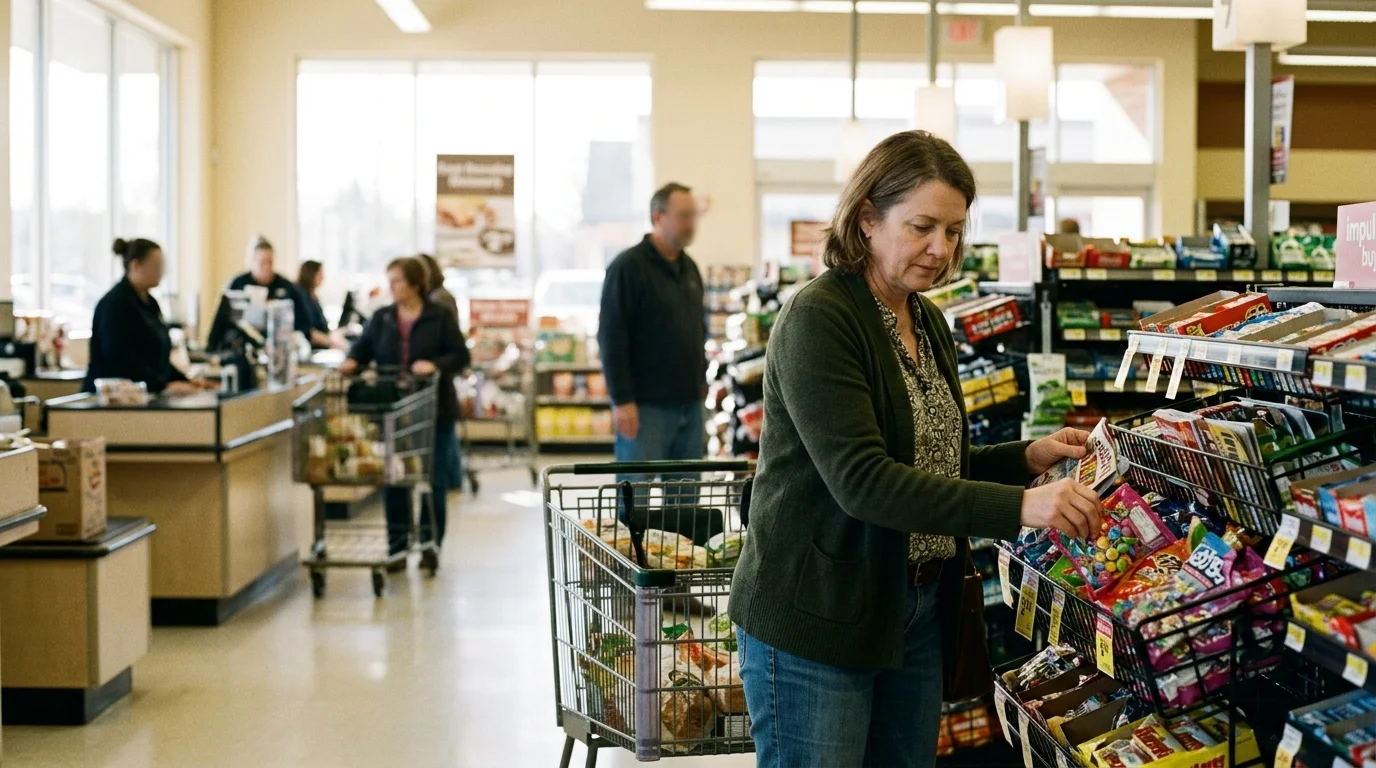
Featured displays at the end of aisles, known as endcaps, look like special clearance sales. Stores use bold signage and bulk stacks to signal big discounts. However, endcaps rarely feature genuine bargains. Manufacturers regularly pay premium rates to highlight full-price items or minimal markdowns on endcaps because shoppers assume endcap placement equals savings. Always check the regular aisle shelf tag to confirm whether an endcap item actually carries a discounted price before putting it in your cart.
7. The Checkout Bottleneck Squeeze
Checkout lanes represent an inescapable spending trap. Stores design narrow lanes flanked by candy, cold sodas, magazines, and small gadgets. By the time you reach the register, decision fatigue has lowered your self-control after making dozens of choices in the aisles. Standing motionless in line surrounded by cheap treats makes impulse buying effortless. Protect your budget by turning away from display racks, loading items onto the belt immediately, or using self-checkout lanes to keep your hands actively engaged.
8. Deceptive Multi-Buy Pricing Signage
Signs reading “10 for $10” or “3 for $12” push shoppers to overbuy. Your brain interprets these multi-buy banners as a requirement to buy the full quantity to get the deal. In reality, unless the tag explicitly states “must buy all items,” you receive the discounted rate for a single unit. Calculate the single-item cost and buy only what you need, avoiding excess volume that leads to wasted food and spent cash.
9. Narrowed Aisles and Speed Bumps
Layout engineers build artificial bottlenecks in high-margin store sections. By placing display tables or narrowing walkway width near gourmet foods, they force you to slow down or wait for others to pass. These physical speed bumps compel your eyes to rest on expensive specialty items longer than intended. Stay mindful of artificial crowd jams; step back and maintain your focus rather than letting forced wait times turn into unplanned spending.
10. The Constant Layout Reshuffle
Just as you memorize product locations, stores deliberately shuffle their floor plan. Supermarkets reorganize shelves to break your automated habits. When you navigate on autopilot, you move quickly and buy only list items. Shuffling product locations forces you to wander unfamiliar aisles, exposing your eyes to hundreds of extra products. Defeat layout reshuffles by using the store’s mobile app to locate items quickly or asking an employee directly instead of searching endlessly.
Practical Cash-Flow Strategies to Outsmart the Store
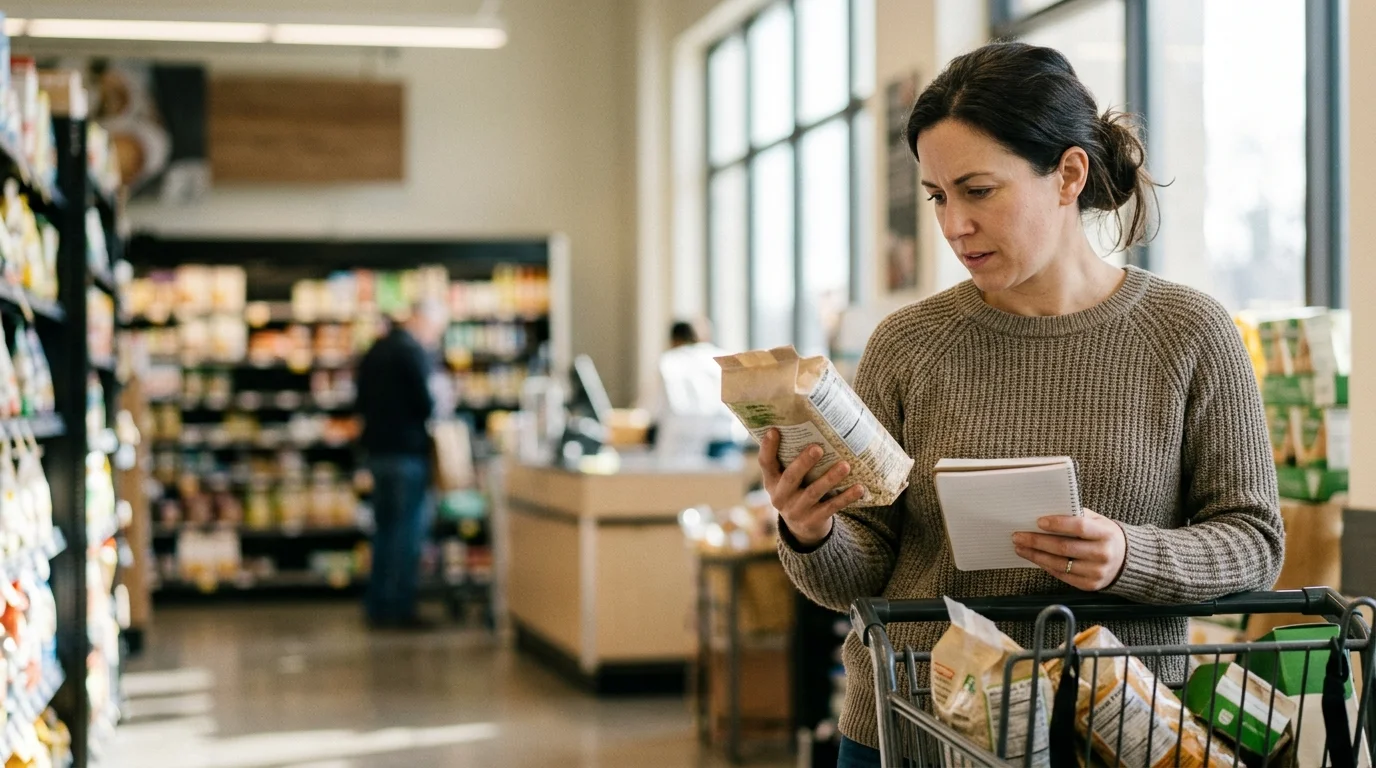
Understanding layout tricks is essential, but combining that knowledge with strong cash-flow habits yields the best results. Tools from the Consumer Financial Protection Bureau emphasize the value of tracking variable household costs to maintain financial stability. Viewing grocery shopping as a controlled financial task protects your broader budget goals.
Conduct a pantry audit before making your list to avoid buying duplicates. Economic tracking by the Federal Reserve Bank of St. Louis shows how food price volatility impacts household savings, making list adherence vital. Furthermore, always check unit prices—the tiny cost per ounce or pound printed on shelf tags—rather than focusing solely on the sticker price. Regulatory standards from the Federal Trade Commission help ensure clear unit pricing, allowing you to easily spot when store brands offer superior value over advertised name brands.
The Action Lab: Real-World Grocery Savings Calculation
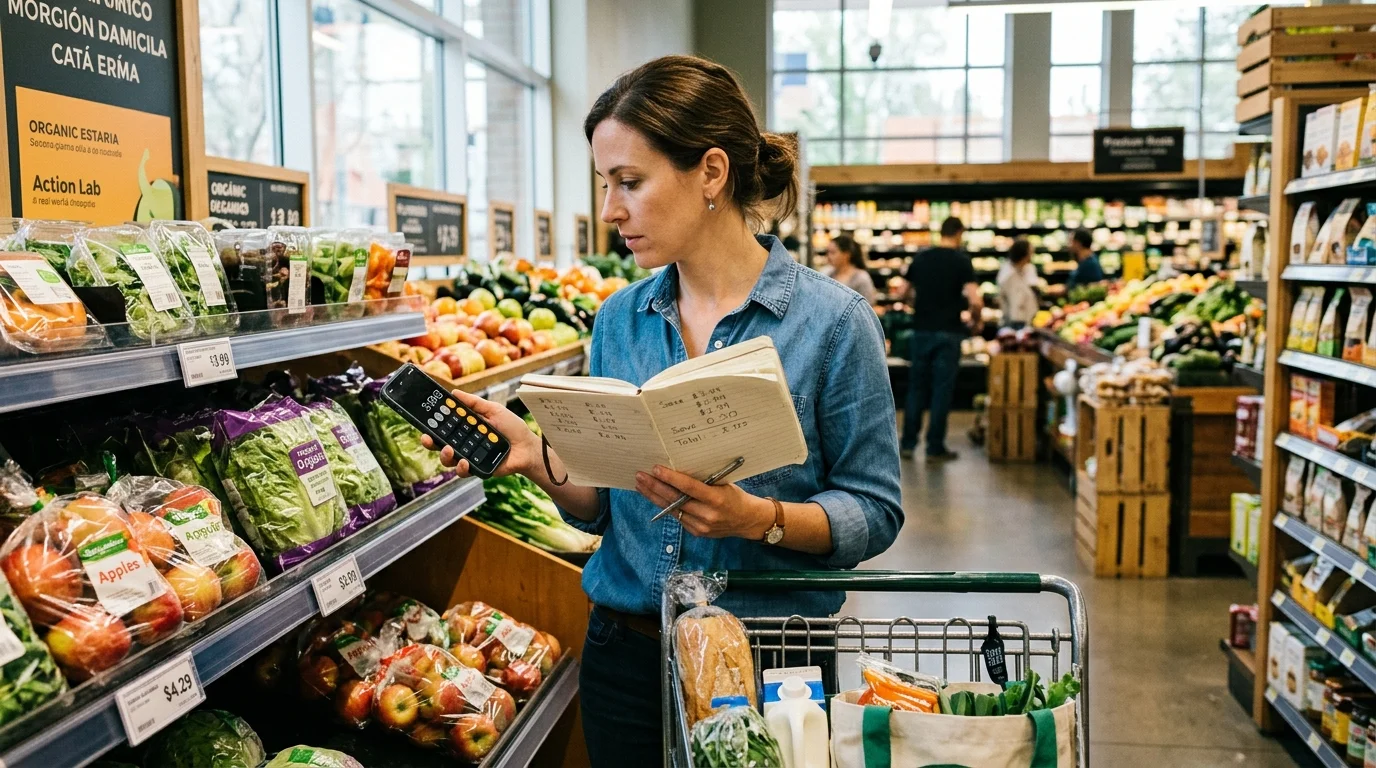
Let us calculate the financial impact of outsmarting store layout tactics. Consider a middle-income household spending $800 monthly on groceries. Industry data indicates that impulse buys and layout traps account for roughly twenty percent of total grocery expenditure. That equals $160 per month in unnecessary spending.
By implementing targeted counter-strategies—such as scanning top and bottom shelves, skipping endcaps, using hand baskets, and avoiding checkout traps—you can eliminate that twenty percent waste. This returns $1,920 to your household budget every single year.
Redirecting that $160 monthly savings into a high-yield savings account or conservative investment index earning a seven percent average annual return yields significant long-term growth:
In three years, you accumulate $6,380 in emergency reserves. In five years, your fund reaches $11,350 for major financial milestones. In ten years, your discipline generates $27,700 in compound wealth.
A few minor behavioral adjustments inside the grocery store translate directly into meaningful long-term wealth building.
Common Pitfalls That Drain Your Savings
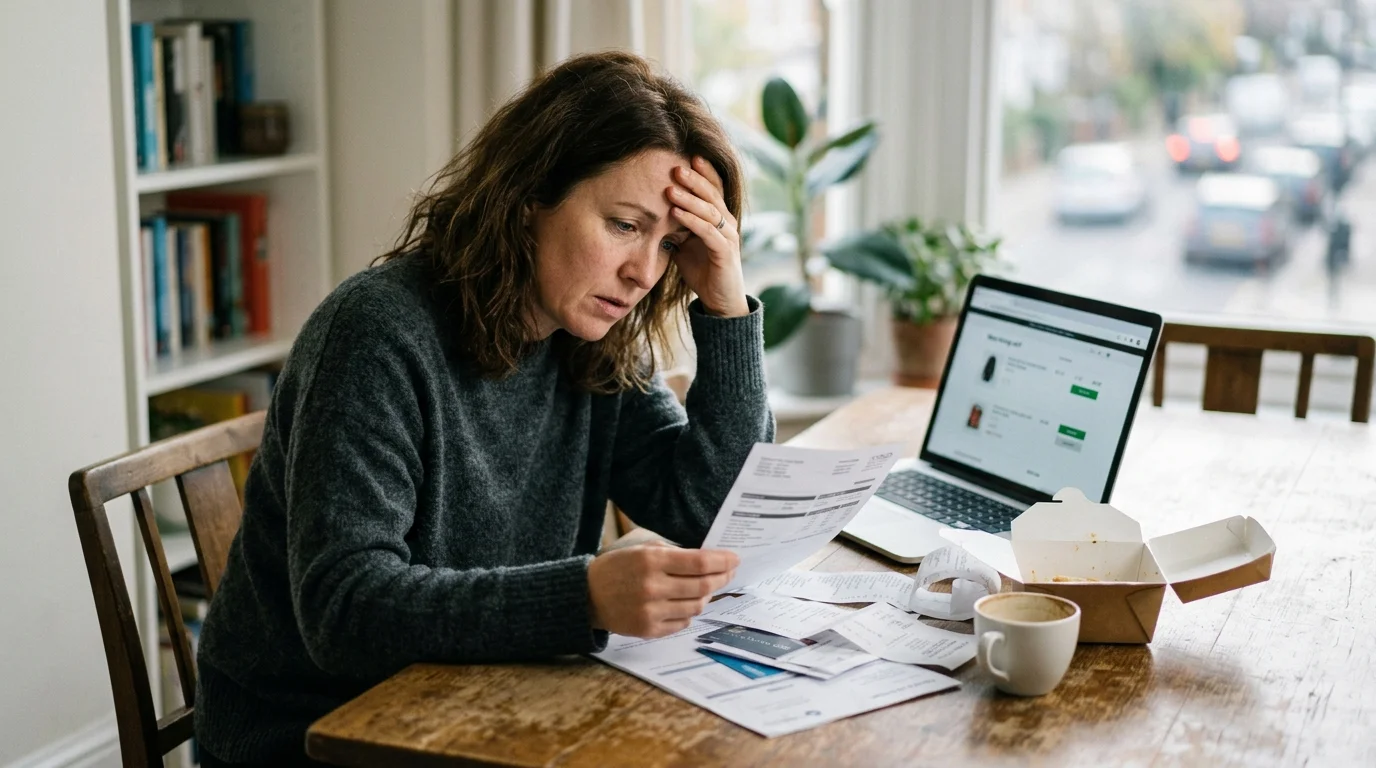
Avoiding common shopping mistakes keeps your financial momentum strong. Shopping on an empty stomach remains a major error; hunger heightens your sensitivity to fresh bakery smells and visual food triggers, weakening your resolve. Eat a quick meal or snack before entering the store.
Brand bias presents another costly pitfall. Many consumers assume generic or store-brand products lack quality. Industry research from the FMI – Food Industry Association shows that private-label items are often produced by major manufacturers using identical ingredients, offering twenty to thirty percent savings without sacrificing quality. Lastly, avoid buying fresh perishables in bulk unless you have a clear preservation plan, as spoiled produce erases any bulk savings achieved at the register.
Frequently Asked Questions
Does ordering groceries online eliminate store layout tricks?
Online ordering removes spatial traps like bakery scents and checkout aisles, but introduces digital traps like suggested add-ons, pop-up promotions, and sponsored search placements. You can outsmart digital store layouts by searching for exact item names, sorting results strictly by price per unit, and ignoring pop-up recommendations during checkout.
How do I verify if an endcap item is genuinely discounted?
Walk past the endcap into the main aisle to check the item’s permanent shelf tag. Compare the unit price on the main shelf with the endcap tag. If both prices match, the endcap is a promotional placement rather than a true sale. Authentic discount tags clearly show the previous price alongside the reduced offer.
What is the most effective way to resist checkout impulse buys?
Establish a quick physical routine: unload your cart onto the conveyor belt immediately and step forward toward the register terminal. Keep your hands occupied by reviewing your digital shopping list or preparing your payment method. Turning your back to display racks removes visual temptation while you wait.
Are store brand items always cheaper than brand items with coupons?
Not always, but store brands are cheaper most of the time. Combining high-value coupons with store sales can occasionally lower name-brand prices below generic options. However, choosing store brands provides a reliable twenty to thirty percent discount every day without spending hours clipping coupons or matching promotional sales cycles.
Take Control of Your Next Shopping Trip
You now hold the knowledge needed to neutralize corporate supermarket layout tactics. On your next trip, you will immediately spot the fresh entrance traps, navigate around perimeter detours, and bypass high-margin items placed at eye level.
Take on a simple challenge for your upcoming shopping run: grab a hand basket, put on upbeat music, scan the bottom shelves, and follow your written list without deviation. By taking charge of your route and avoiding spatial traps, you keep your money in your wallet and direct those extra savings toward your long-term financial independence.