Securing a reliable cellular connection should not consume a significant portion of your fixed monthly income. You can easily cut your telecom expenses by identifying and switching to senior cell phone plans designed specifically for your lifestyle and data habits. Many middle-income retirees unknowingly pay for unlimited high-speed data they never use, draining their wallets month after month. By taking a magnifying glass to your actual wireless needs and leveraging exclusive mobile discounts, you can redirect those wasted dollars toward travel, family, or building your emergency fund. This straightforward guide delivers actionable steps to audit your current bill, navigate the confusing landscape of wireless deals, and secure substantial retiree savings without sacrificing coverage or overall connectivity.

The Real Cost of Staying Connected on a Fixed Income
Managing household expenses becomes an entirely different exercise once you transition from a regular salary to a fixed retirement income. You likely notice the rising costs of groceries, utilities, and property taxes taking a larger bite out of your monthly budget. However, telecom expenses frequently fly under the radar. Many consumers sign a cell phone contract during their peak earning years and simply let the plan auto-renew for a decade without ever questioning the recurring charges. This complacency carries a steep price tag; a standard unlimited plan from a major carrier can easily cost a single individual over eighty dollars a month, or nearly one thousand dollars annually.
Recent insights from the Consumer Financial Protection Bureau highlight how optimizing recurring household bills is a highly effective way for older adults to maintain financial stability. Because your cellular bill is a fixed monthly cost, securing a lower rate provides a permanent boost to your cash flow rather than a temporary one-time windfall. Finding phone plans for seniors is not about accepting inferior service; rather, it is about right-sizing your telecom package to match your current lifestyle. When you commute less and spend more time at home, your reliance on mobile data drops drastically, making those premium unlimited plans entirely unnecessary.
Strategy Pillar One: Conduct a Comprehensive Data Audit
Before you can shop for aggressive mobile discounts, you must first understand exactly what you are currently buying. The telecom industry thrives on selling consumers peace of mind through unlimited data packages. However, you pay a massive premium for that limitless ceiling. To secure meaningful retiree savings, you must conduct a thorough audit of your monthly cellular usage. Grab your most recent cell phone bill and look past the total amount due; you want to locate the section detailing your data consumption, usually measured in gigabytes.
Analyze Your Wi-Fi Habits
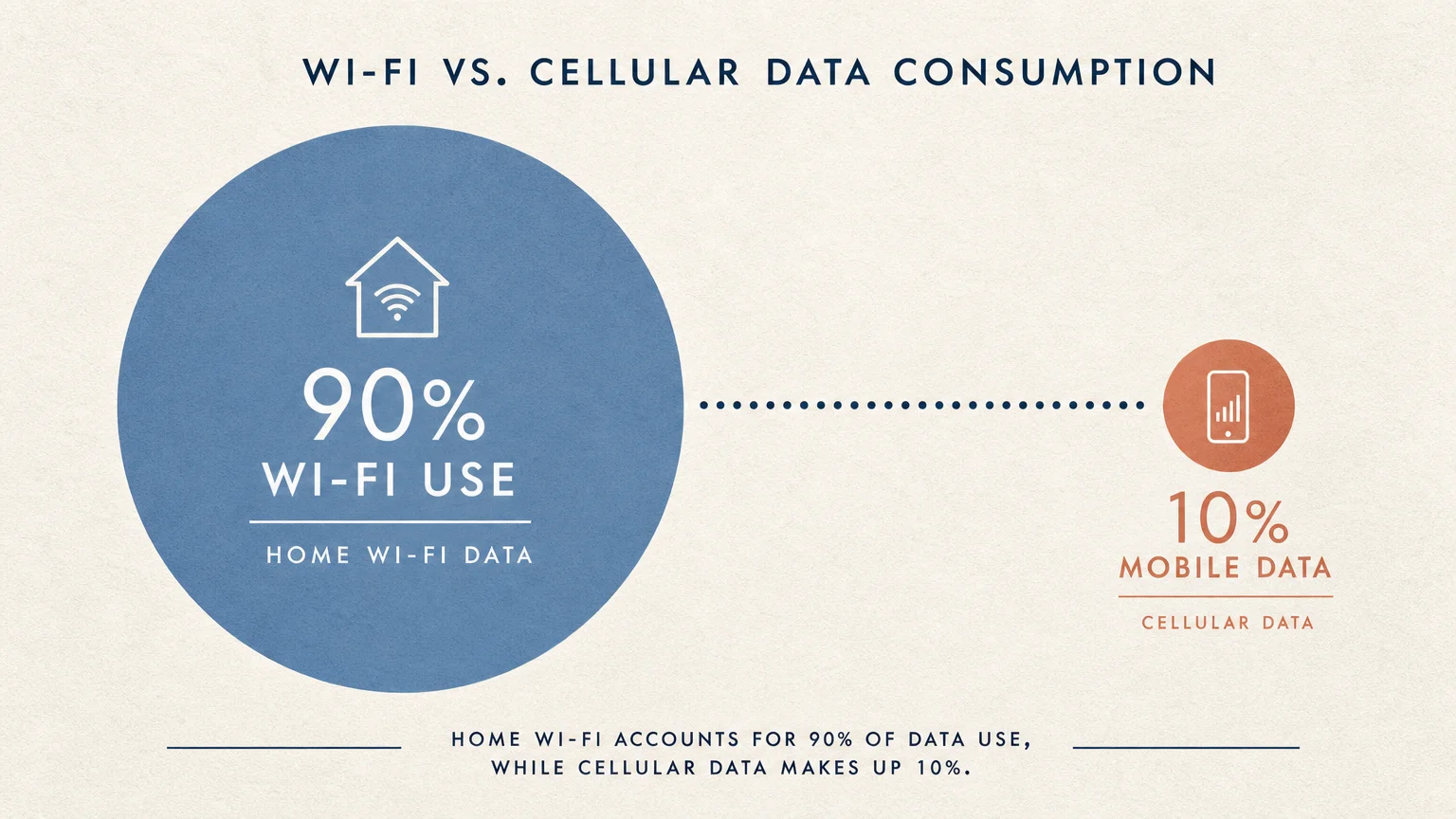
If you cannot find your data usage on your paper bill, your smartphone tracks this information directly in its settings. On an iPhone, navigate to the Settings application and tap Cellular to view your data usage for the current billing period. Android users can find similar metrics by opening Settings, selecting Network and Internet, and tapping Internet. You will likely discover a surprising truth: you use far less mobile data than you assume. Most basic web browsing, email checking, and text messaging consume almost no bandwidth. High data consumption generally comes from streaming video or downloading large files while away from a wireless internet connection.
Because many retirees spend a significant portion of their days at home, their smartphones automatically connect to their home Wi-Fi networks. When your phone operates on Wi-Fi, it uses your home internet service rather than the cellular network, meaning none of your activities count against your mobile data cap. If your audit reveals that you only use two or three gigabytes of cellular data per month, paying for a limitless data plan is identical to paying for a twenty-course banquet when you only intend to eat a light salad. Recognizing this discrepancy is your first major step toward reclaiming your money.

Strategy Pillar Two: Evaluate the Major Network Senior Programs
Once you understand your true data needs, your next step is to evaluate the proprietary senior cell phone plans offered by the three major networks: T-Mobile, AT&T, and Verizon. These dominant carriers aggressively market specific plans to older adults, typically starting at age fifty-five. T-Mobile leads the pack with its heavily advertised 55+ unlimited plans, which offer significant discounts for individuals and couples seeking premium features like international roaming and hotspot capabilities. If you travel frequently or split your time between different states, these discounted premium plans provide excellent value while keeping you connected to a top-tier network.
Navigating the Big Three Limitations
While the major carriers offer enticing wireless deals, you must read the fine print carefully. AT&T, for example, ties many of its best senior discounts to an active AARP membership. Many individuals rely on guidance from prominent advocacy organizations for older adults when hunting for corporate discounts, so securing that membership can instantly lower your monthly AT&T bill. Conversely, Verizon historically restricts its dedicated 55+ unlimited plans to residents of specific states, most notably Florida. If you live in Ohio or Oregon, you might find yourself locked out of Verizon’s best age-based pricing tiers.
Furthermore, these major carrier discounts still revolve around unlimited data. Even with a senior discount applied, you might be paying fifty or sixty dollars a month. If your earlier data audit revealed that you barely touch your cellular bandwidth, these plans—despite their discounted status—still represent an overpayment. They are excellent choices for highly active, data-hungry retirees, but they rarely serve as the most economical option for the average middle-income household.
Strategy Pillar Three: Capitalize on Alternative Network Providers
To achieve the most dramatic retiree savings, you must look beyond the three major network brands and explore the robust market of Mobile Virtual Network Operators. An MVNO is a smaller cellular provider that does not build or maintain its own physical cell towers. Instead, these companies buy massive amounts of network bandwidth at wholesale prices from T-Mobile, AT&T, or Verizon, and then resell that access to consumers at a fraction of the cost. When you use an MVNO, you are connecting to the exact same premium networks you already trust, but you skip the overhead costs associated with flashy retail stores and massive advertising budgets.
Providers like Consumer Cellular have built their entire business model around serving the older demographic, offering exceptional customer support and flexible data buckets that cater perfectly to low-usage individuals. Other providers, such as Mint Mobile or US Mobile, offer plans starting as low as fifteen dollars a month. The catch with some of these ultra-budget providers is that they require you to purchase your service in bulk—such as paying for six or twelve months of service upfront—to lock in the lowest monthly equivalent rate. If you have the cash flow to handle a one-time annual payment of roughly two hundred dollars, you essentially eliminate your monthly cell phone bill for an entire year.

Real-World Voices and Industry Insights
Behavioral economists frequently study why consumers willingly overpay for services year after year. The primary culprit is the status quo bias; human beings naturally resist change, especially when that change involves complicated technology. We fear losing our phone numbers, dropping important calls from family members, or spending hours trapped on hold with customer service. The telecom industry relies heavily on this hesitation, collecting billions of dollars annually in what experts call the loyalty penalty. Long-term customers routinely pay higher legacy rates while the best promotional pricing is reserved exclusively for brand-new subscribers.
Independent analysts and consumer research advocates frequently emphasize that remaining loyal to a single telecom company rarely yields financial benefits. Financial planners strongly advise clients nearing retirement to sever their emotional attachments to specific corporate brands. Treating your cellular service as a pure commodity—something to be shopped and negotiated annually—shifts the power dynamic back into your hands. By treating the process of switching providers as an afternoon project rather than an insurmountable hurdle, you shatter the status quo bias and instantly improve your financial trajectory.
Action Lab: Your Step-by-Step Transition Plan
Transitioning to a new provider requires a methodical approach to ensure you experience zero disruption in your service. Consider a hypothetical couple currently paying one hundred and thirty dollars a month for a shared unlimited plan on a major network. After conducting their data audit, they discover they use a combined total of four gigabytes of data monthly. They decide to switch to a shared MVNO plan that offers five gigabytes of data for thirty dollars a month. By making this single administrative change, they instantly generate one thousand two hundred dollars in annualized tax-free savings.
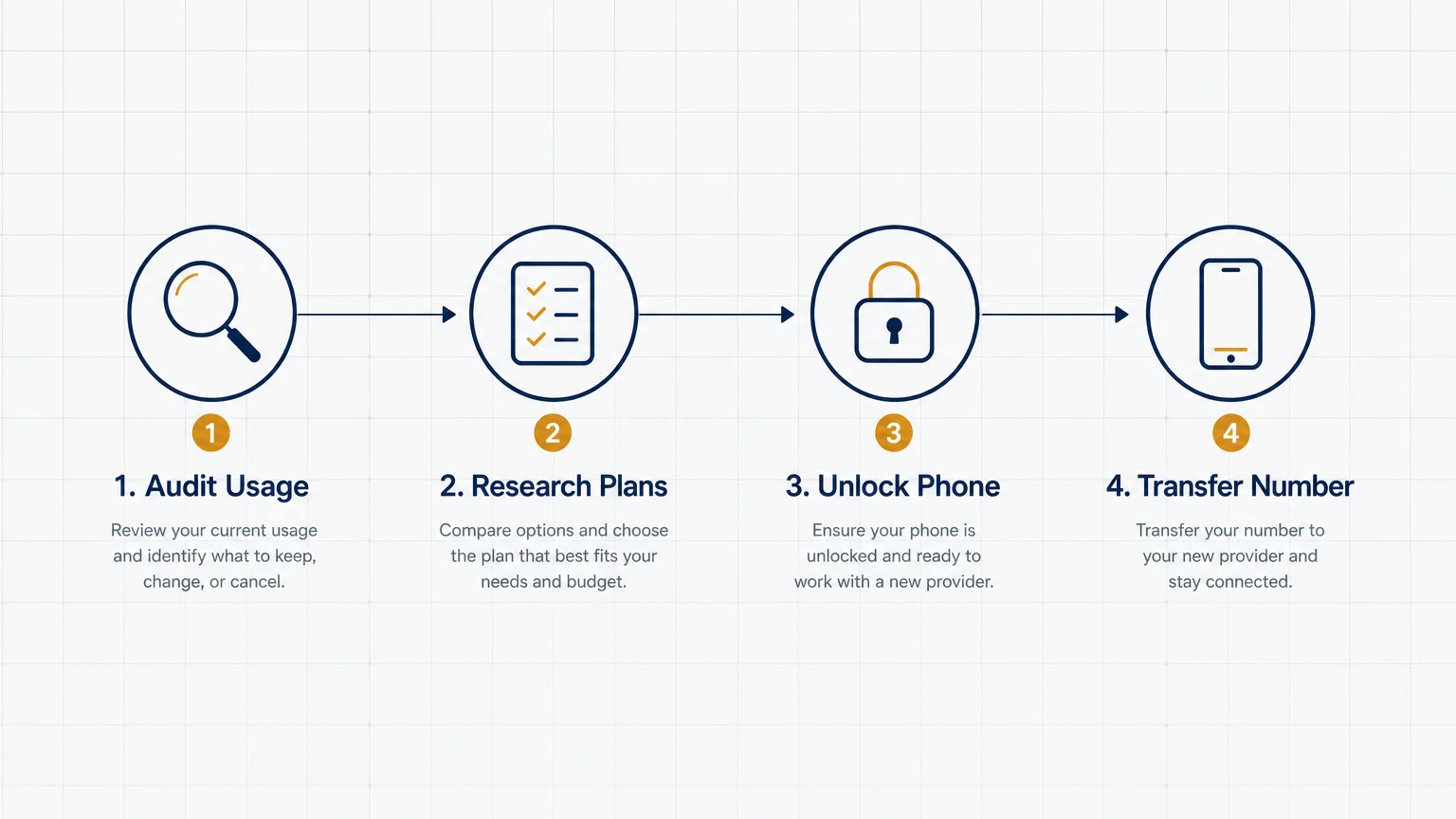
To execute this transition smoothly, your first action is to confirm that your current smartphone is fully paid off and permanently unlocked by your existing carrier. An unlocked phone is legally permitted to accept a SIM card from a competing network. Next, you must contact your current provider to request a Number Transfer PIN; this unique security code acts as your digital permission slip, allowing your new provider to legally port your existing phone number over to their network. Finally, you order your new service online.
When your new physical SIM card arrives in the mail—or if you activate a digital eSIM directly through your phone’s settings—you simply follow the activation prompts provided by your new company. The most critical rule to remember during this process is that you must never cancel your old service yourself. The act of porting your number will automatically trigger the cancellation of your old account once the transfer is complete. If you prematurely cancel your old account, you risk losing your long-time phone number forever.

Guardrails and Common Switching Pitfalls
As you navigate the landscape of mobile discounts, you must remain vigilant against predatory sales tactics and hidden administrative fees. Retail stores for major carriers are heavily incentivized to sell you new hardware. If you walk into a store asking for a cheaper senior plan, the sales representative will likely attempt to bundle that new plan with a financed smartphone, ultimately raising your monthly bill rather than lowering it. Unless your current device has a failing battery or no longer receives critical security updates, you should adamantly refuse any offers for new equipment. Bring your own device to your new plan to maximize your savings.
Additionally, you must scrutinize the final checkout screen for unexpected activation fees. Review the Federal Communications Commission guidelines regarding truth in billing to ensure you understand exactly what taxes and government surcharges apply to your region. Some budget providers advertise a ten-dollar monthly plan, but attach several dollars in hidden recovery fees that inflate the final cost. Always read the complete pricing breakdown before entering your credit card information. Shopping exclusively online rather than in physical retail stores is the most effective way to avoid high-pressure upsells and secure the exact promotional pricing advertised.
Frequently Asked Questions About Senior Wireless Deals
Can I really keep my current phone number when switching to a budget provider? Absolutely. Federal telecommunications law mandates that consumers have the right to port their phone numbers to a competing service provider. As long as your account remains active and in good standing with your original carrier, your new provider handles the entire transfer process behind the scenes. The transition typically takes less than ten minutes, ensuring your friends and family never lose touch with you.
Will I experience dropped calls or terrible coverage if I leave the big three carriers? No, you will not sacrifice network quality. Alternative network providers do not build inferior, secondary cell towers; they lease excess capacity on the exact same towers owned by Verizon, AT&T, and T-Mobile. If you currently enjoy excellent coverage in your neighborhood with a major carrier, you simply need to select a budget provider that leases tower space from that specific network to maintain the exact same geographical coverage footprint.
Do I need to purchase a special senior-friendly mobile device to get these discounts? You almost never need to buy a new device. The vast majority of modern smartphones manufactured within the last five years are universally compatible across all major network bands. Whether you own an Apple iPhone, a Samsung Galaxy, or a Google Pixel, your current device will work perfectly with a new discounted plan, provided the device is fully paid off and network unlocked by your previous carrier.
Are unlimited data packages completely useless for retirees? They are not entirely useless, but they are rarely cost-effective. If you live in a rural area without access to high-speed home internet, or if you spend half the year traveling the country in a recreational vehicle, an unlimited data plan might be a genuine necessity. However, for the average older adult who spends the majority of their time connected to a secure home Wi-Fi network, paying for unlimited cellular data is a mathematically unsound financial decision.
Take Control of Your Telecom Expenses Today
Trimming your monthly overhead does not require extreme frugality or giving up the conveniences you love. By applying a critical eye to your utility expenses, you uncover hidden opportunities to strengthen your financial foundation. Cell phone plan discounts designed specifically for seniors offer a painless avenue to reduce your outbound cash flow while keeping you seamlessly connected to the people who matter most. Take fifteen minutes this evening to pull up your latest cellular bill, analyze your true data usage, and explore the robust competitive market of wireless providers. The effort is minimal, but the compounded savings will serve your retirement budget for years to come.