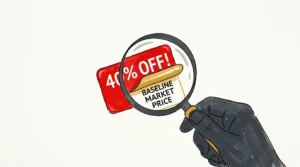
Sticking with familiar service providers, insurers, and banks feels like sensible money management, but staying put quietly drains hundreds of dollars from your household budget every month. Companies routinely reserve their best pricing, lowest interest rates, and premier perks for new sign-ups, leaving long-term customers to shoulder inflated baseline costs. This hidden penalty—known as the loyalty tax—erodes your purchasing power without delivering added value. By recognizing where corporate algorithms exploit your routine habits, you can immediately reclaim that lost cash flow. A few strategic adjustments across your recurring bills will put substantial savings back into your family account this year.
The Hidden Economics of the Loyalty Penalty
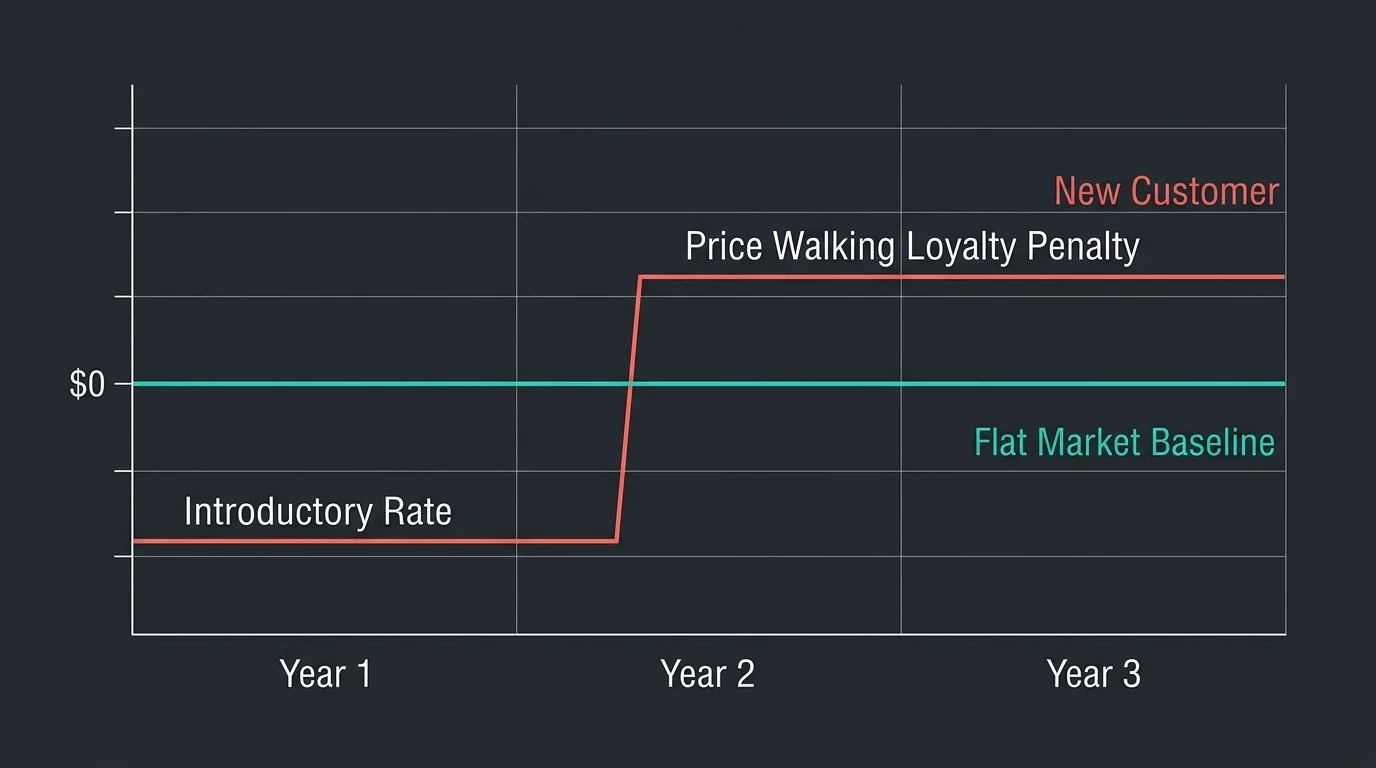
Modern corporate pricing structures rely on sophisticated customer segmentation. When you first sign up for an internet package, insurance policy, or subscription, businesses treat you as an acquisition target, heavily discounting introductory rates to win your business. Once you become an established customer, predictive models determine that the friction of researching competitors and switching providers will discourage you from leaving. Consequently, the company begins raising your rates incrementally over time.
This practice turns your reliability into a profit center. According to a Financial Conduct Authority pricing study, long-term policyholders frequently pay vastly higher rates than new customers for identical coverage. Recognizing that corporate pricing rarely rewards loyalty in reverse transforms how you evaluate recurring household invoices.

7 Warning Signs You Are Paying the Loyalty Tax
Identifying where you overpay requires auditing recurring expenses operating on autopay. Below are seven distinct indicators that your household is subsidizing new customer discounts.
1. Your Insurance Premiums Rise Despite Zero Claims
If your auto or home insurance premium creeps upward at renewal despite an accident-free record, you are experiencing price walking. Insurers use algorithms to predict how likely you are to switch providers when faced with a modest price hike. In jurisdictions without strict bans, insurers raise rates simply because data suggests you will tolerate it. When the UK banned price walking in 2022, regulators estimated it would save consumers £4.2 billion over ten years. Unexplained renewal increases signal that tenure works against you.
2. Your Broadband and Telecom Promotional Rates Expired
Telecommunications providers excel at exploiting contract expirations. Most broadband contracts begin with attractive promotional discounts lasting twelve to twenty-four months. Once that initial term lapses, providers automatically roll your account onto standard variable or legacy rate tiers. Consumer advocacy research highlights that broadband subscribers face an average annual penalty of over forty percent once promotional periods conclude. Service providers rarely push existing customers toward newer, cheaper bandwidth tiers, leaving you paying inflated rates for outdated speeds.
3. Your Traditional Savings Account Earns Under One Percent
Leaving emergency funds in a long-standing branch account guarantees near-zero returns. Financial market surveys reveal that legacy branch savings accounts routinely pay meager yields between 0.01% and 0.50% APY, while modern high-yield accounts pay over four percent. According to Federal Reserve interest rate data, large commercial institutions maintain significant interest rate spreads between what they earn on deposits and what they pass to long-term savers. Banks rarely upgrade legacy accounts to current market rates automatically.
4. You Carry the Same Credit Card You Opened Years Ago
Nearly one-third of credit cardholders have never reviewed or replaced their primary card. Holding an older card often leaves you stuck with outdated rewards, uncompetitive purchase annual percentage rates (APRs), or lingering annual fees. Recent Consumer Financial Protection Bureau research underscores how card issuers rely on balance inertia; consumers carrying revolving debt on older accounts frequently pay rates averaging eighteen to twenty percent. Sticking with a legacy card costs hundreds of dollars compared to modern low-rate cards.
5. Your Mortgage Rate Sits Above the Current Market Baseline
Lenders offer discounted interest rates and fee waivers to attract new home buyers while leaving existing borrowers on standard variable rates. Watchdog data from central banking authorities indicates that existing mortgage holders frequently pay forty to fifty-eight basis points more in interest than brand-new borrowers taking out identical loans. On an average mortgage, that subtle difference costs an existing homeowner between $1,500 and $2,500 annually. If you have not reviewed your mortgage terms recently, your lender profits from your silence.
6. Auto-Renewing Subscriptions Creep Upward Each Year
Digital subscriptions rely heavily on negative option billing, where enrollment continues indefinitely until you intervene. Streaming networks, software suites, and gyms routinely introduce annual price hikes of ten to thirty percent, betting you will overlook the increase. To combat deceptive retention practices, the Federal Trade Commission click-to-cancel rule mandates that canceling an auto-renewing service must be as effortless as signing up. If your bank statement reveals recurring fees creeping higher without consent, you are paying a loyalty penalty.
7. Supermarket Shelf Prices Require Digital App Clearance
The retail grocery landscape increasingly separates consumers into two pricing tiers. Supermarket chains have replaced straightforward shelf discounts with dynamic pricing gated behind smartphone apps and digital coupons. Shoppers who value privacy or rely on traditional cash transactions frequently pay markups of ten to twenty-five percent on basic essentials compared to app-enabled member pricing. Remaining loyal to a single store without auditing its digital coupon walls means paying elevated baseline prices.

Strategic Solutions: Reclaiming Your Household Cash Flow
Escaping the loyalty tax does not require sacrificing your favorite services or spending hours on paperwork. You can eliminate unearned penalties through three structured operational adjustments.
Conduct a Systematic Contract Audit
Set aside sixty minutes twice a year to review every recurring contract, policy, and subscription. Gather declarations pages for insurance, recent telecom statements, and current loan balances. Compare your active rates against live market offerings across three competing providers. Having accurate competitor pricing provides undeniable leverage before you initiate retention conversations.
Deploy the Retention Department Leverage Script
When contacting service providers, bypass general customer service and ask directly for the cancellations or retention department. Retention specialists possess authorization to apply unadvertised promotions, statement credits, and loyalty waivers. Use clear phrasing: Explain that you value their service and prefer staying, but you found an equivalent competitor package priced significantly lower. State the competitor rate, ask if they can match it immediately to keep your business, and pause while they review concessions.
Automate Continuous Rate Shopping
Prevent future markups by building automated checkpoints into your digital calendar. Whenever you accept an introductory promotional rate, immediately schedule a calendar reminder thirty days before that discount expires. Use that prompt to evaluate competing market rates and renegotiate before your account rolls into an inflated legacy tier. Pairing digital alerts with automated high-yield savings transfers guarantees that your money consistently earns peak market returns.

Real-World Voices: Overcoming the Psychology of Inertia
Behavioral economists point out that human decision-making suffers from status quo bias—our tendency to leave things unchanged unless an overwhelming catalyst forces action. Businesses understand that the psychological friction of switching banks or finding a new auto insurer feels larger than the monthly dollar leak leaving your account.
Financial counselors emphasize that re-framing this dynamic empowers consumers. Rather than viewing contract renegotiation as a confrontational chore, treat it as paying yourself an exceptional hourly wage. Spending forty-five minutes securing a forty-dollar monthly reduction effectively pays an after-tax hourly rate exceeding five hundred dollars. Reclaiming cash flow requires periodic assertiveness rather than radical lifestyle deprivation.
Action Lab: A Single-Weekend Household Savings Overhaul
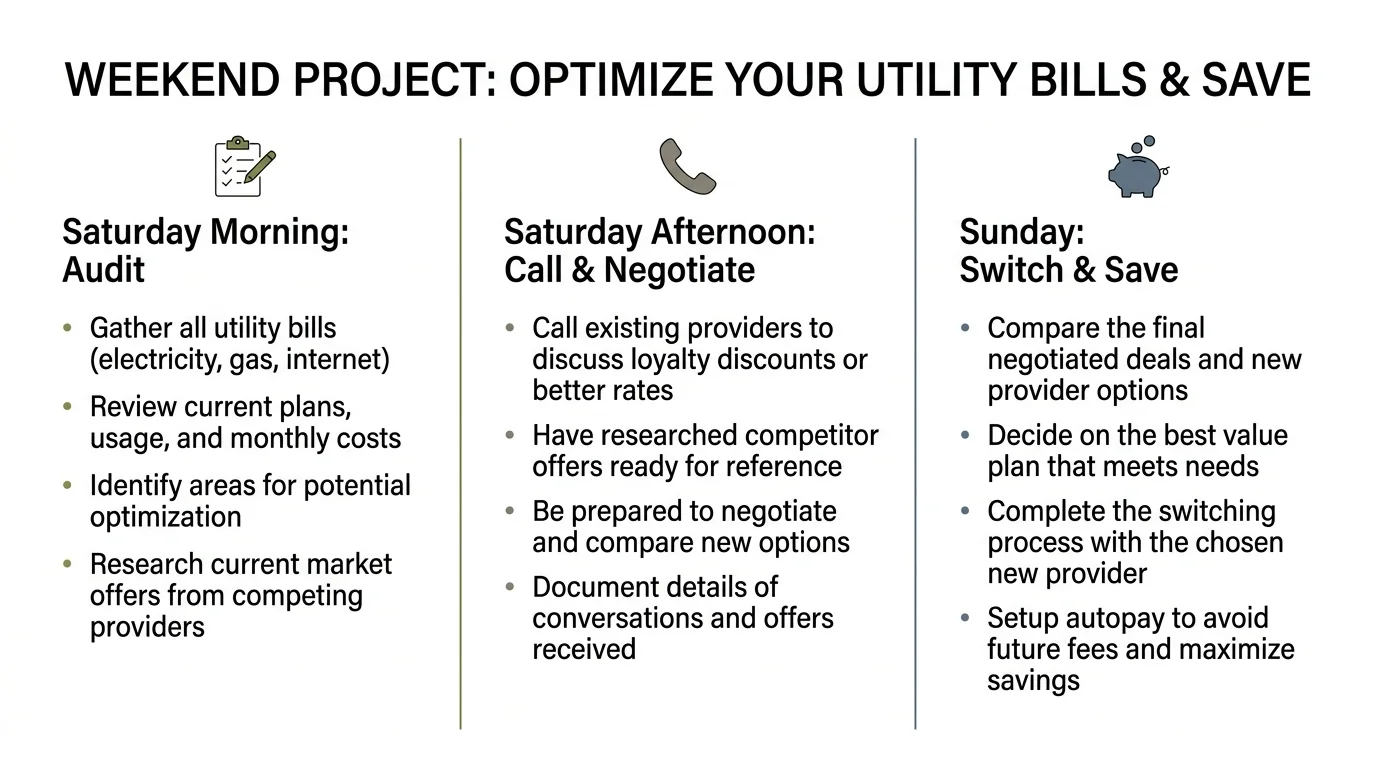
To see how minor adjustments compound into substantial annual savings, consider Mark and Elena, a working couple managing a suburban household budget. Over a single weekend, they executed a targeted loyalty tax audit across four categories.
First, they contacted their auto insurer after noticing a fifteen percent renewal increase despite an accident-free record. Citing a competitor quote secured an updated tier that reduced their premium by $45 monthly, saving $540 annually. Next, they audited their broadband plan, discovering their promotional rate had expired. A brief retention call moved them to an updated fiber package, cutting their monthly bill by $35 and recovering $420 per year. Finally, shifting their $10,000 emergency fund from a legacy savings account yielding 0.05% into an online account yielding 4.50% generated $445 in additional interest. In total, they reclaimed $1,405 in annual cash flow in three hours.

Common Traps and Guardrails to Avoid
While challenging the loyalty tax yields rapid returns, avoid common pitfalls that can undermine progress. Always verify whether terminating an existing contract triggers early termination fees that exceed your projected savings. When evaluating lower-cost insurance alternatives, carefully inspect coverage limits, deductibles, and exclusionary clauses to ensure you maintain identical protection levels rather than sacrificing financial security for a cosmetic rate drop.
Similarly, exercise caution with credit card balance-transfer promotions. Introductory zero-percent offers often carry upfront transfer fees of three to five percent and sharp interest cliffs if you fail to extinguish the balance before the promotional window closes. Track expiration dates carefully.
Frequently Asked Questions About the Loyalty Tax
Does shopping around for new providers hurt your credit score?
Shopping for utilities, broadband, or insurance does not affect your credit score because these providers generally run soft credit inquiries. When shopping for mortgages, auto loans, or credit cards, scoring models group multiple hard inquiries within a fourteen to forty-five-day window into a single inquiry event, protecting your overall credit rating while you compare rates.
How often should you audit your recurring household bills?
Conducting an audit twice per year provides ideal protection against silent price hikes and promotional expirations. Scheduling audits in spring and autumn allows you to review insurance policies ahead of renewal periods, verify subscription billing changes, and align your savings accounts with prevailing benchmark interest rates.
Will service providers really lower prices if you simply call and ask?
Yes, service providers consistently grant rate reductions to customers who ask strategically. Retention departments operate with specific customer-acquisition-cost metrics; keeping an existing customer at a discounted margin is almost always cheaper for the business than acquiring a replacement through advertising campaigns.
Is brand loyalty ever financially beneficial for consumers?
Brand loyalty provides tangible value only when loyalty programs deliver compounding returns that outpace competitor pricing, such as high-value travel rewards or consolidated multi-policy insurance discounts. Continually evaluate whether those perks truly exceed the baseline markup you pay for remaining loyal.
Take Control of Your Monthly Spending
The loyalty tax operates in the shadows of everyday commerce, capitalizing on your busy schedule and trusting that you will not challenge rising costs. Every dollar surrendered to corporate inertia is a dollar that could build emergency reserves, accelerate debt elimination, or fund meaningful family goals.
Take control of your household cash flow today. Select one recurring bill from your latest monthly statement—whether telecom, auto insurance, or credit card terms—and challenge the pricing before the week ends. Reclaiming your hard-earned income requires decisive action and refusing to pay a premium for your own loyalty.