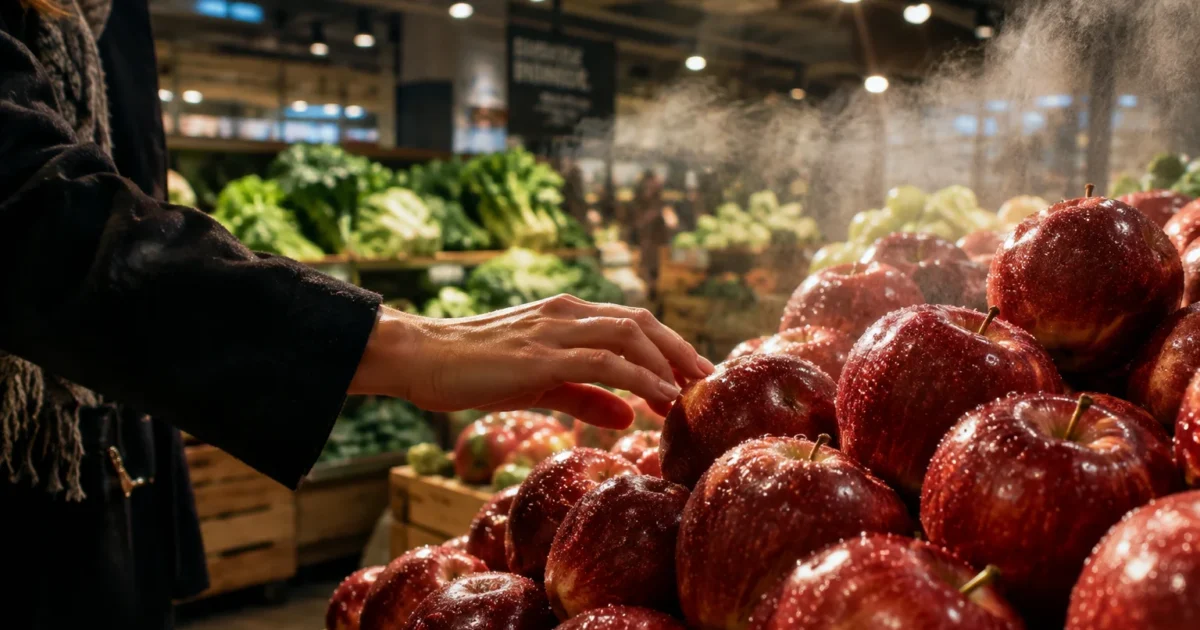
Supermarkets use psychological traps and optical illusions to make aging produce look crisp, vibrant, and farm-fresh. Learning to spot these grocery store produce tricks keeps hard-earned money in your wallet.
When you understand how stores make produce look fresh, you stop overpaying for decaying food. Supermarket marketing tricks deliberately mask spoilage while artificially inflating the checkout weight of your shopping cart.
Retailers engineer every visual cue in the produce aisle to manipulate your buying choices. Here are ten insider methods grocers use to deceive your eyes and take your cash.
Tip #1: Produce Misting Systems That Inflate Item Weight
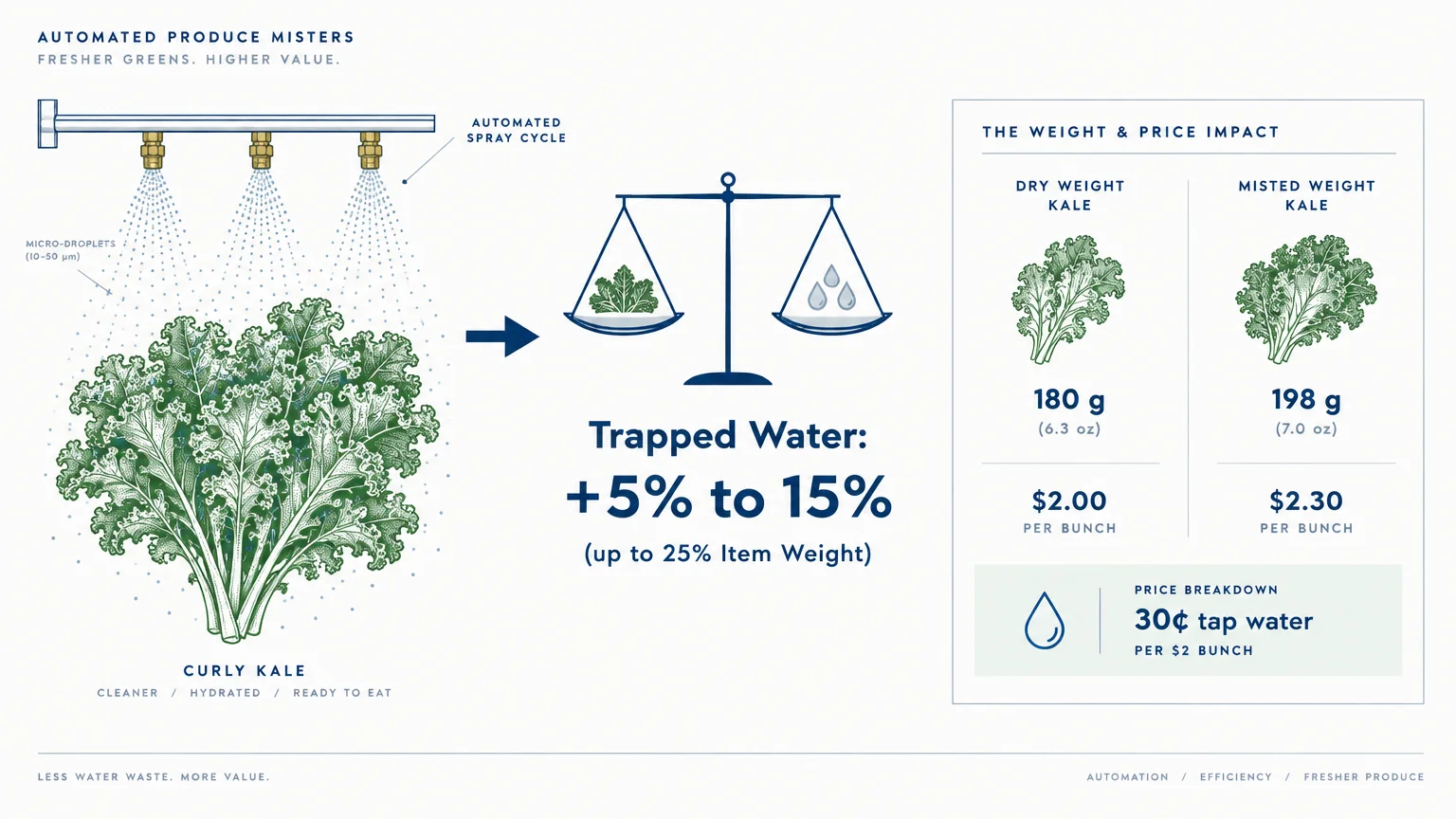
Those gentle ceiling misters and theatrical thunder sound effects may seem like a luxury service. In reality, produce misting in grocery stores serves the retailer far more than it helps you.
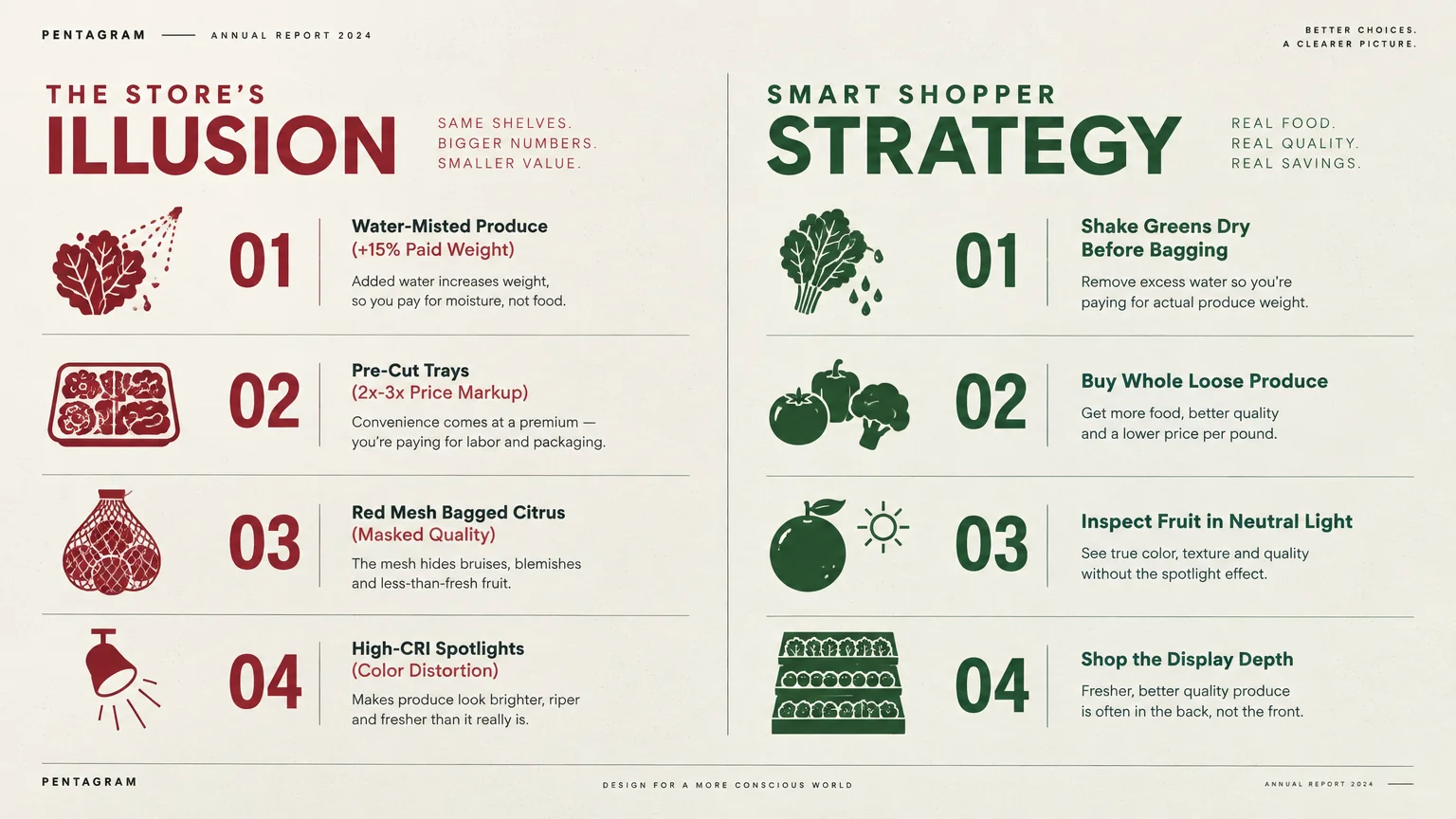
Automated sprayers coat leafy greens, broccoli, and fresh herbs in heavy layers of surface moisture. This trapped water adds 5% to 15%—and occasionally up to 25%—to the item weight.
Because you purchase these items by the pound, you pay premium produce prices for simple tap water. A two-dollar bunch of wet kale might carry thirty cents worth of water weight.
Trapped water also damages the longevity of your vegetables once you leave the store. Excessive moisture speeds up bacterial breakdown and accelerates mold growth in your home refrigerator.
Always shake your leafy vegetables vigorously before placing them into plastic bags. You can also pat greens dry with paper towels as soon as you unpack your groceries at home.
Removing this excess moisture extends vegetable life by several days. Taking this simple step protects your food budget from unnecessary spoilage.
Tip #2: Color-Manipulating Mesh Netting and Optical Illusions
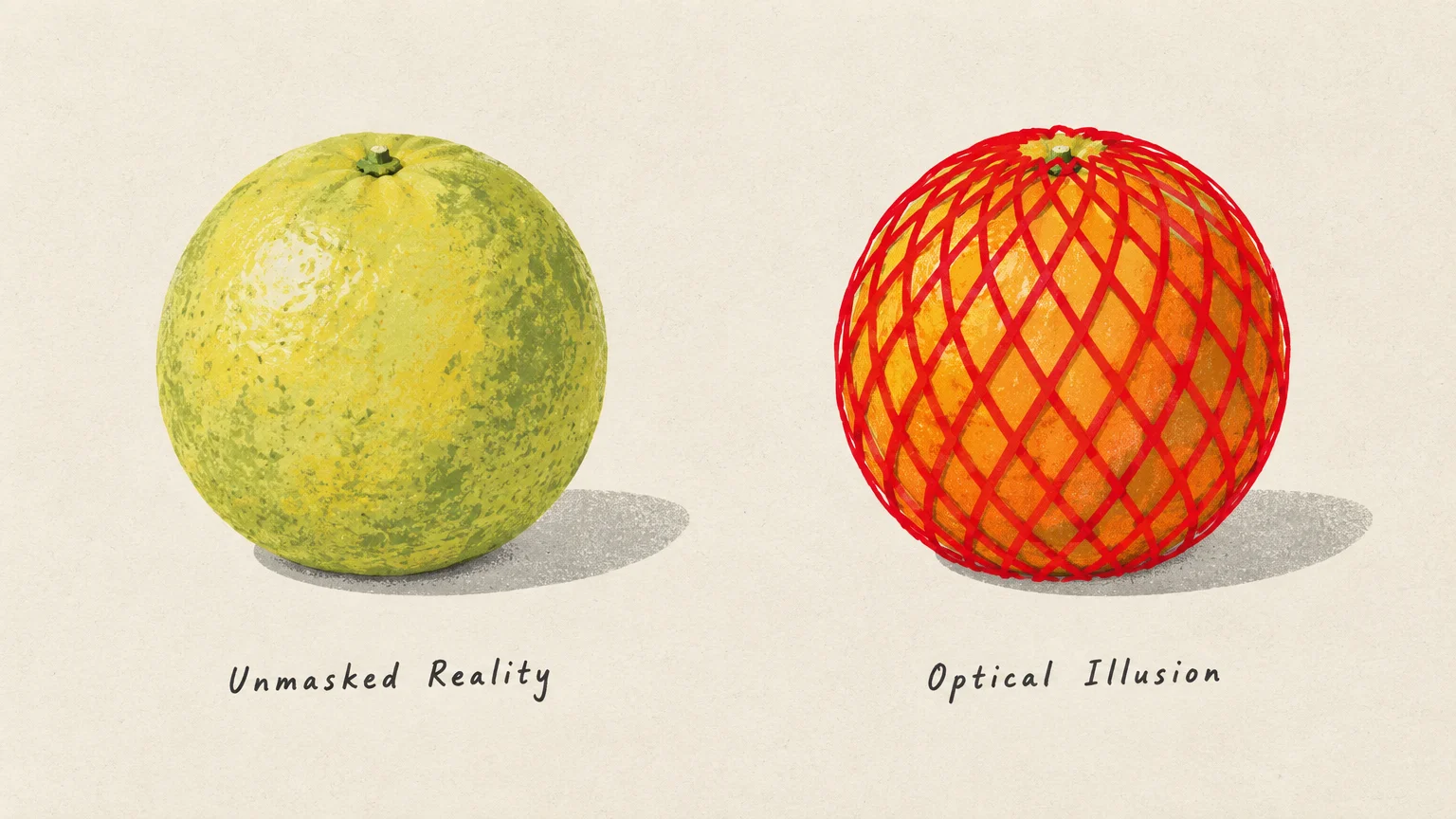
When you browse the citrus section, notice how grocers package oranges in bright red mesh bags. Lemons sit in yellow mesh, while limes stay inside emerald green netting.
Retailers exploit a neurological phenomenon known as the Munker-White illusion. Your brain blends the foreground grid color with the fruit underneath through a process called color assimilation.
An orange with pale yellow or greenish skin suddenly looks deeply saturated, uniform, and ripe through red netting. The netting masks unripe, dry, or substandard citrus beneath an artificial optical glow.
Grocers also charge a premium for the supposed convenience of bagged fruit. In reality, you receive lower-grade citrus that looks deceptively premium inside its colorful prison.
Always inspect individual fruit outside the bag under neutral light before buying. Purchasing loose citrus lets you assess true skin color, skin firmness, and actual fruit density.
Loose fruit often costs less per pound once you subtract spoiled units found in bulk bags. Selecting individual items guarantees that you only pay for quality food.
Tip #3: High-CRI Retail Display Lighting That Conceals Flaws
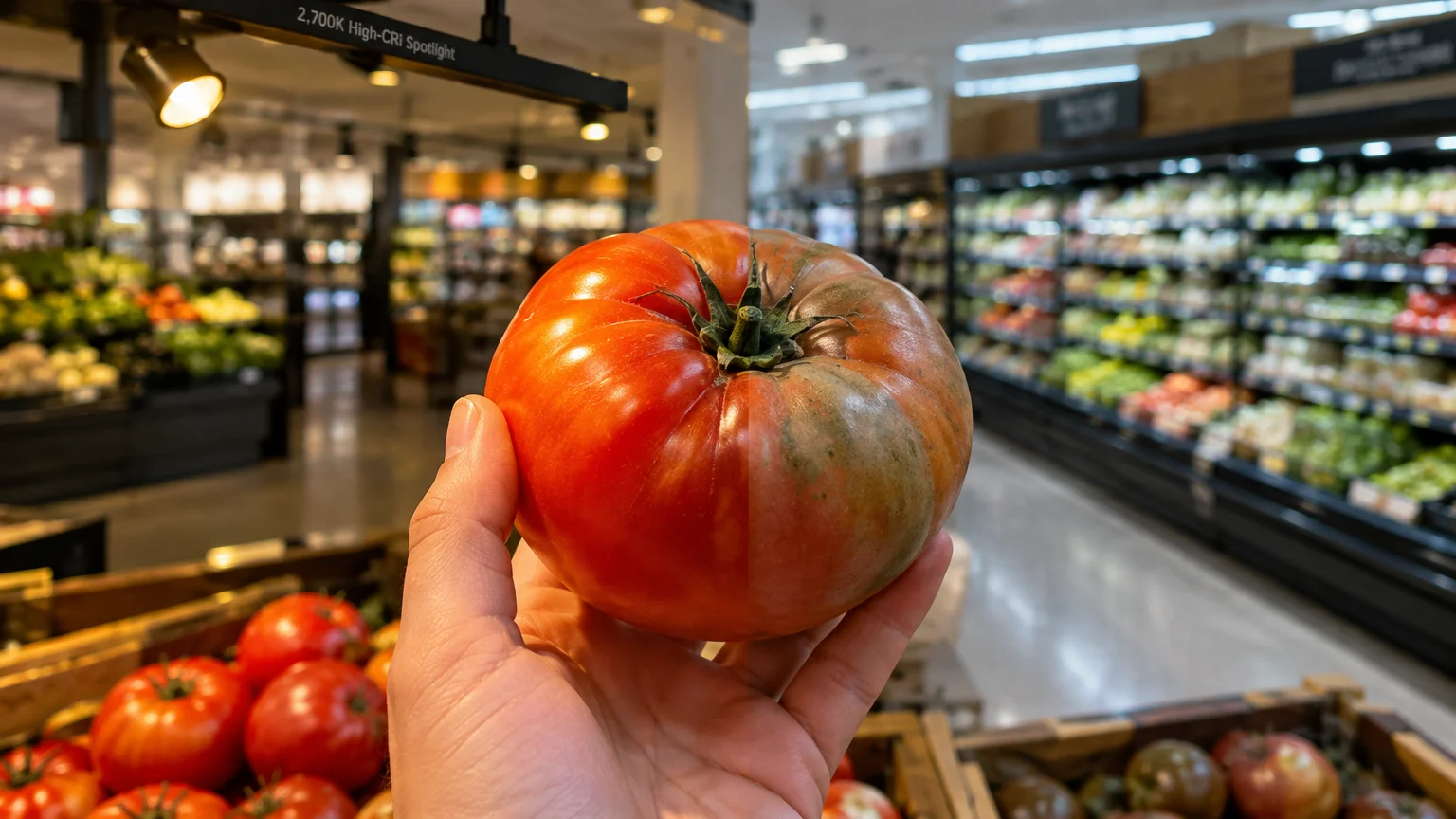
Supermarket lighting engineers do not install standard overhead bulbs over produce displays. Instead, they position specialized LED track lights with high Color Rendering Index ratings of 90 or higher.
Grocers install warm 2,700K to 3,000K lamps and red-spectrum-enhanced LED chips directly over apples, strawberries, and tomatoes. These targeted wavelengths artificially intensify red hues and mask brown oxidation spots.
Green vegetables sit under cool, vibrant spectrums that disguise yellowing edges and wilting leaves. The produce looks exceptionally radiant under store lights, but it dulls instantly under your kitchen fixtures.
Never trust your eyes under supermarket spotlights. Step away from the main display into an aisle with neutral lighting to check the actual color of your produce.
Touch and smell provide far more reliable data than store-manipulated visual cues. Fresh produce should feel firm, heavy for its size, and yield an authentic, earthy aroma.
Trusting your hands instead of your eyes protects you from buying over-ripened stock. If an apple feels soft or yields easily under thumb pressure, leave it on the shelf.
Tip #4: Chemical Wax Coatings That Fake Fresh Harvest Glaze
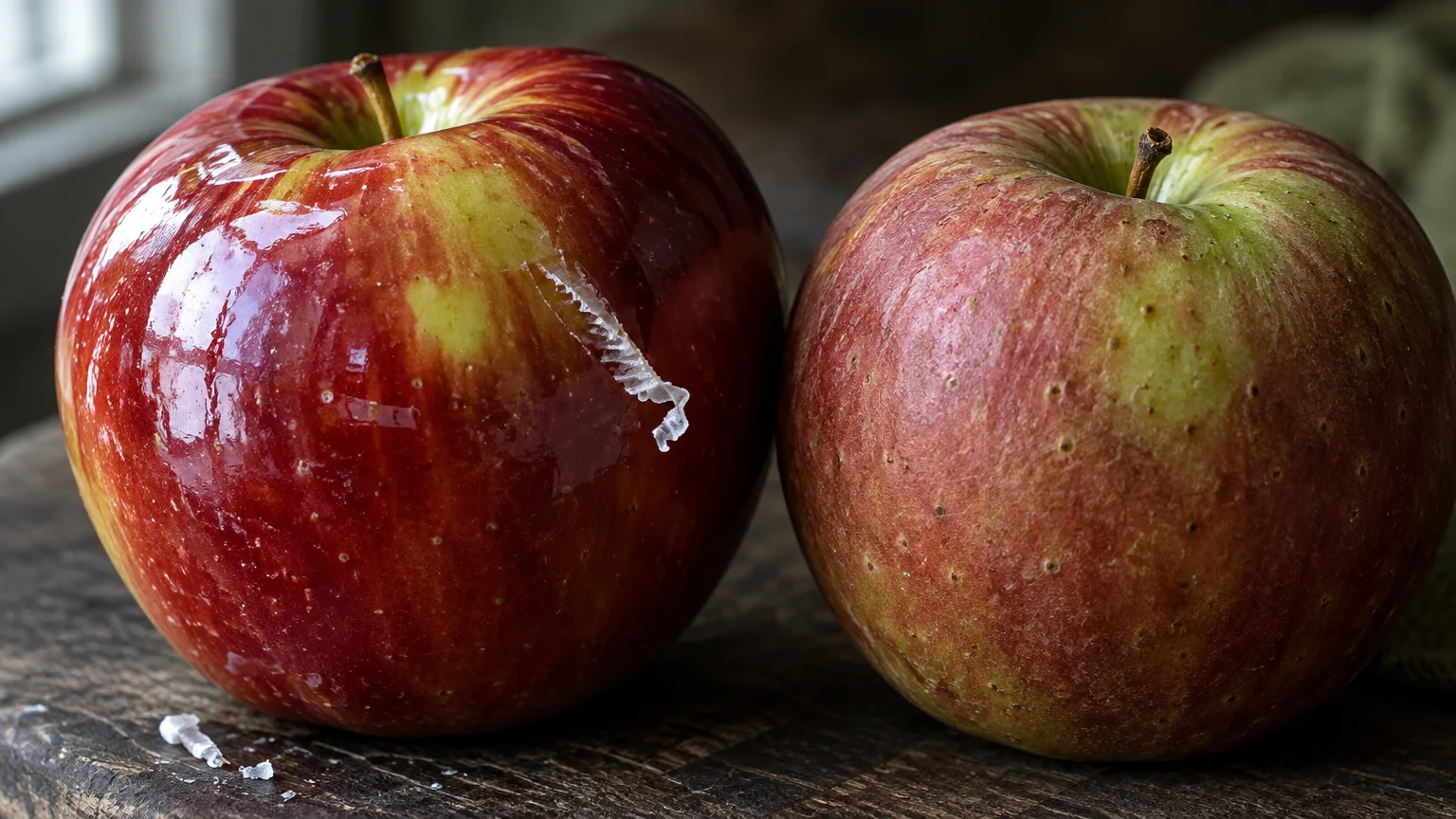
That glossy, mirror-like shine on apples, cucumbers, and bell peppers does not come from nature. Grocers and packers wash off the natural protective bloom and replace it with artificial wax coatings.
Processors apply carnauba wax, shellac, or petroleum-based coatings to prevent moisture loss and create an artificial gleam. This layer traps internal gas and locks in aging fruit flesh for weeks.
Under FDA regulation 21 CFR 101.22(j), retailers must legally disclose post-harvest waxes on display placards. However, supermarkets frequently obscure or omit this signage on bulk bin displays.
An apple coated in food-grade wax can sit in storage for months without showing surface shriveling. You end up buying mealy, nutritionally degraded fruit masked by a glossy synthetic barrier.
Look past the artificial shine and test the skin for firmness by pressing gently near the stem. Wash all waxed produce thoroughly with warm water and a scrub brush before consumption.
A dull, unwaxed apple from a local market often tastes sweeter and contains more viable nutrients. Natural skin texture is always a better indicator of freshness than manufactured gloss.
Tip #5: Salvaging Near-Spoiled Produce into Pre-Cut Containers
Pre-cut fruit cups and sliced vegetable trays look like convenient shortcuts for healthy snacking. Yet behind the plastic packaging lies one of the most profitable supermarket marketing tricks.
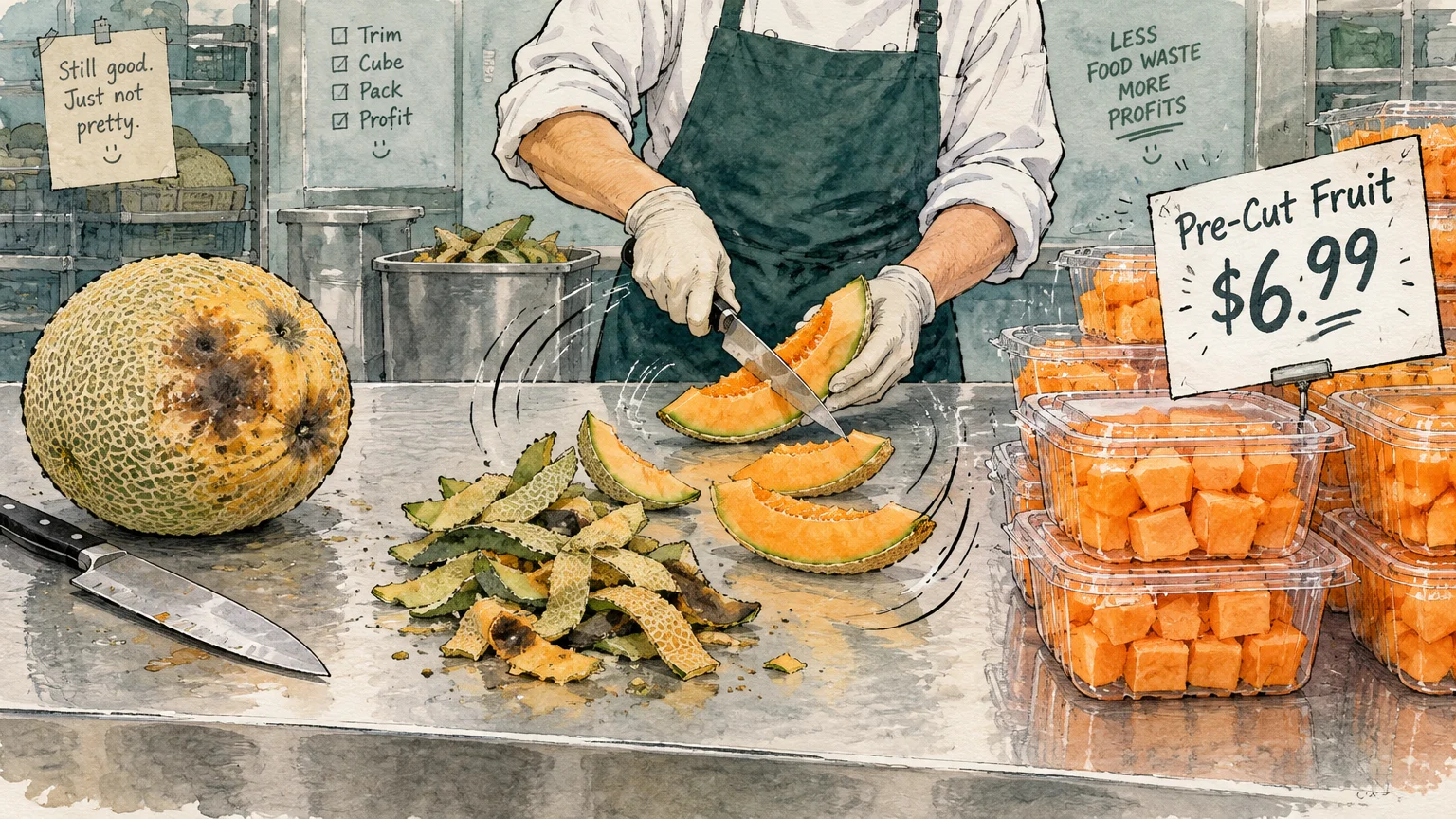
Retailers frequently salvage whole fruit that is nearing its expiration date to produce these packaged cups. Produce workers carve away bruised spots, soft rot, or exterior mold before dicing the remaining flesh.
Grocers then slap a 40% to 100% markup on the diced items. Retail profit margins on pre-cut fruit cups routinely reach 50% to 60%.
Slicing open protective skins exposes delicate plant tissues to rapid oxidation and cellular breakdown. Pre-cut fruit degrades rapidly, loses vital vitamins, and spoils within days of purchase.
Buy whole produce and take five minutes to slice it yourself at home. You save massive amounts of cash while avoiding second-chance produce on the verge of total collapse.
Whole melons and pineapples last weeks longer in your pantry than pre-cut slices in plastic bowls. Doing your own prep work keeps your money where it belongs.
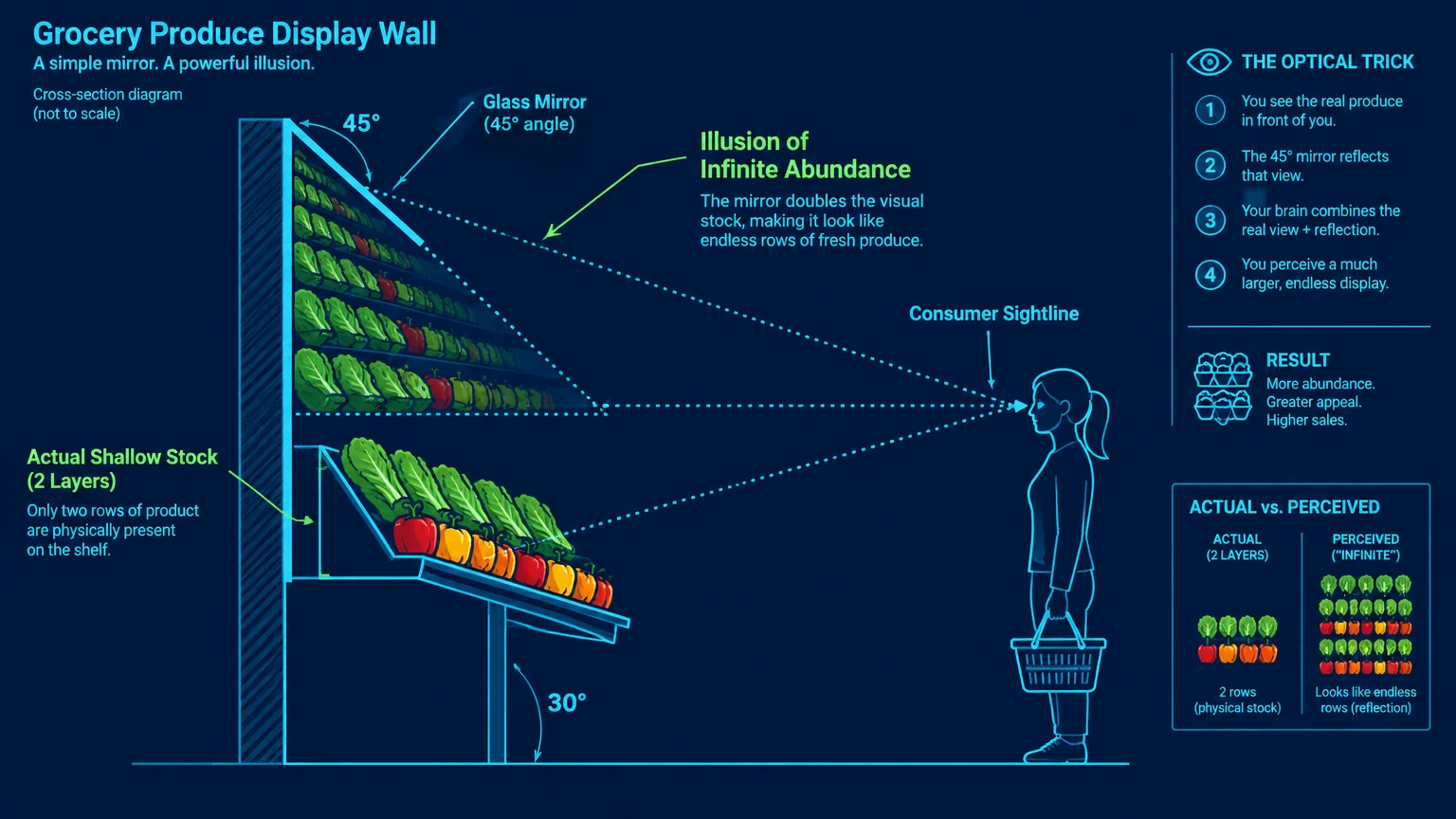
Tip #6: Angled Mirrors and The Illusion of Fresh Abundance
Human biology associates overflowing bounties of food with freshness, quality, and peak harvest seasons. Supermarkets capitalize on this ancient instinct by installing tilted mirrors directly above produce display tables.
Angled mirrors double the visual volume of leafy greens and root vegetables on display. A thinning shelf looks like a deep, overflowing bin brimming with newly delivered greens.
Grocers also insert false bottoms, risers, and foam pads into display crates. These hidden platforms push a thin layer of produce to the top, simulating deep wooden harvest boxes.
This engineered abundance prevents shoppers from noticing stagnant inventory that has sat unsold for several days. It creates an artificial sense of turnover where none actually exists.
Look underneath the top layer rather than trusting the overall display volume. Older stock frequently sits pushed toward the back edges or beneath the top decorative arrangement.
Ignore the grand optical display and examine the base of the produce bins. If the underlying shelves look sparse or dry, the produce may have sat out for days.
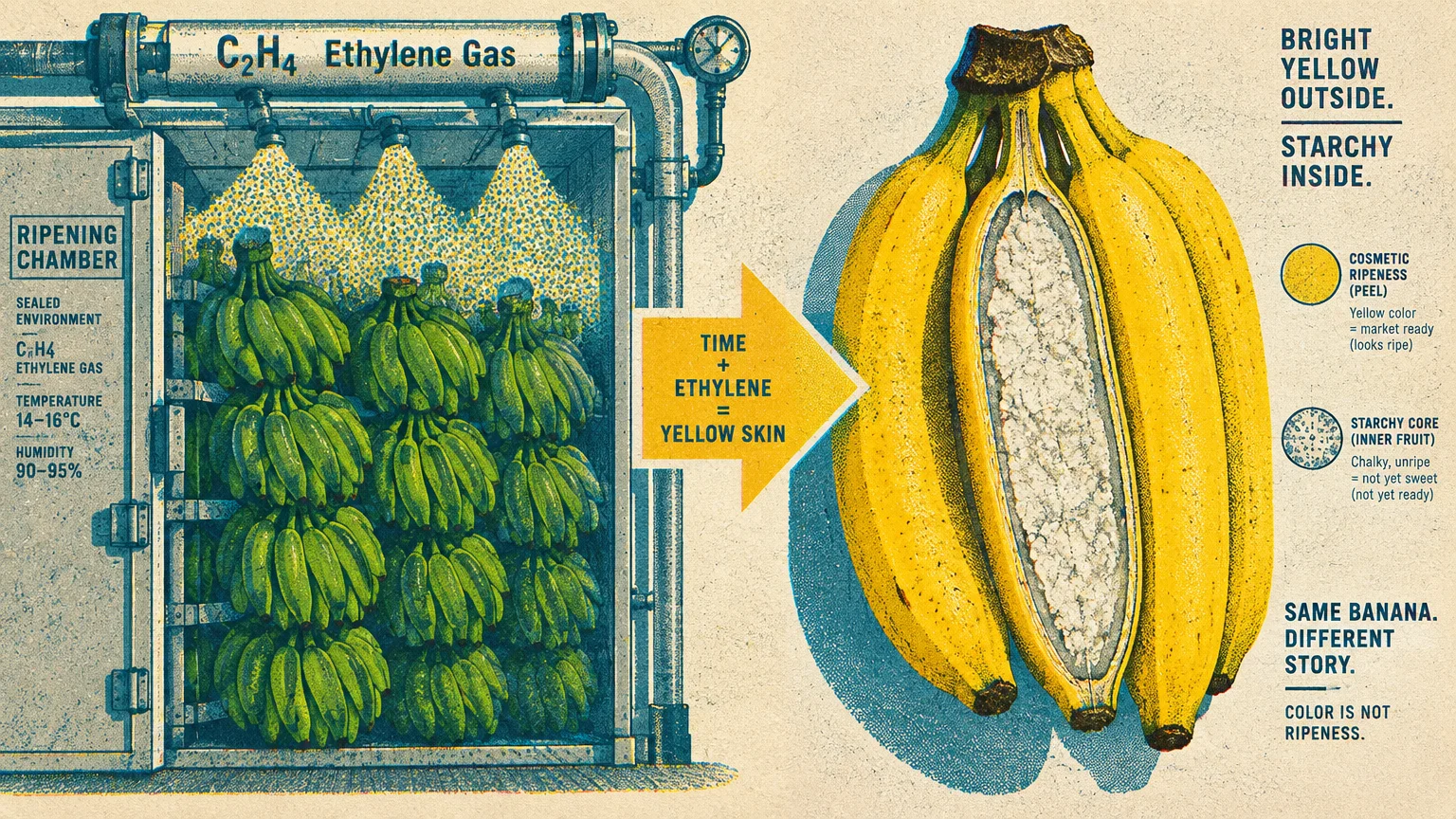
Tip #7: Artificial Degreening and Gassing with Ethylene
Most commercial bananas, tomatoes, and avocados never ripen naturally on the vine or tree. Growers harvest them completely green and rock-hard so they survive long-distance transit.
Once the cargo reaches distribution hubs, distributors place the produce inside pressurized ethylene gassing chambers. Ethylene is a natural plant hormone that triggers exterior pigment changes.
This chemical bath strips green chlorophyll from tomato rinds and banana skins, turning them bright red or yellow. However, artificial gassing often fails to convert starches into natural sugars inside the fruit.
You end up buying a tomato that looks ripe on the surface but tastes like bland, mealy cardboard. The fruit looks ready to eat, but it lacks genuine nutritional maturity.
When evaluating tomatoes and stone fruits, rely on scent and weight rather than bright uniform color. Real vine-ripened produce emits a rich, fragrant sweetness from the stem end.
If a bright red tomato has no scent at all, it was ripened in a gas chamber. Pick items that smell aromatic and yield gently to a soft touch.
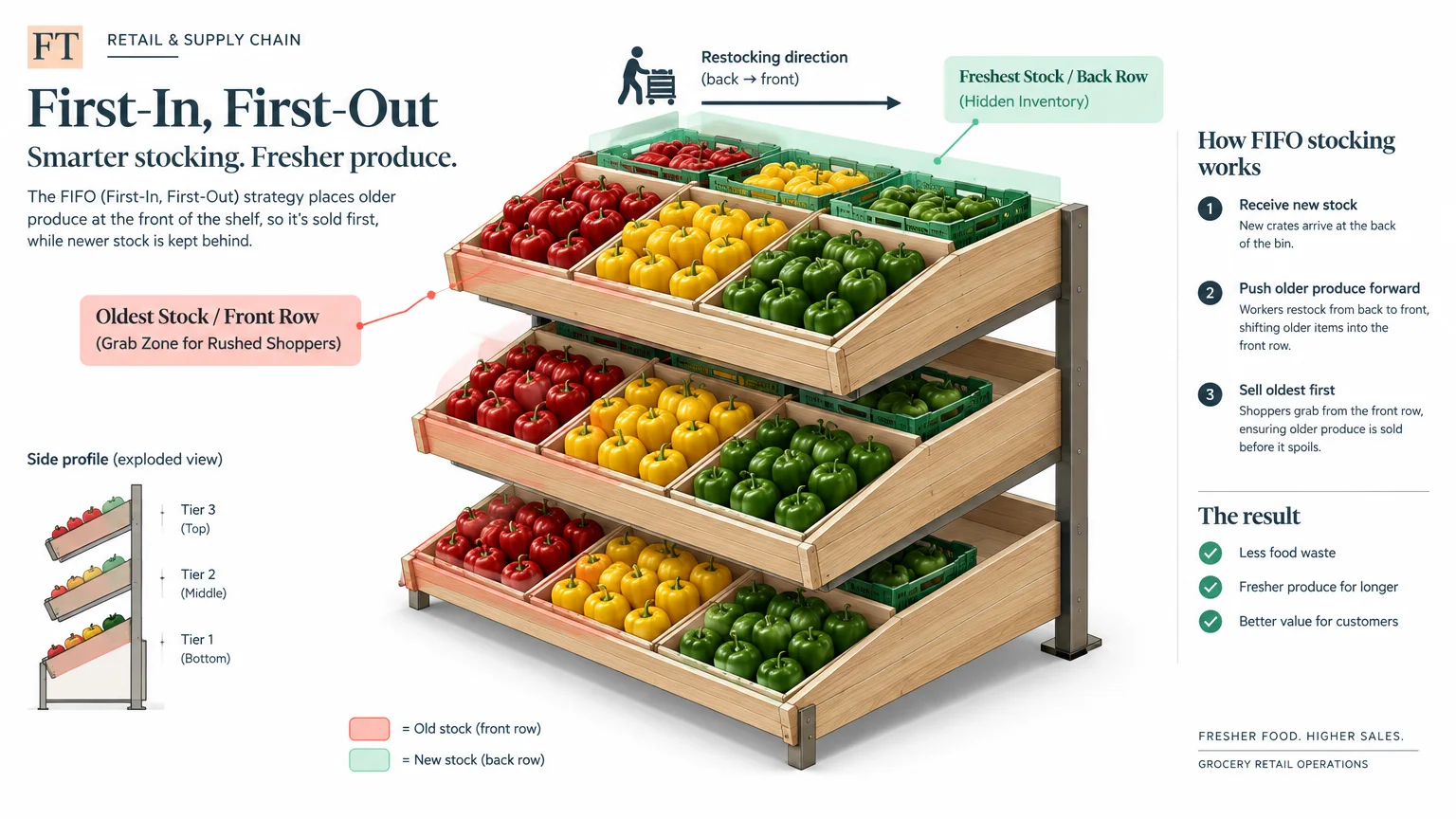
Tip #8: False-Front Shelving and Strategic Product Rotation
Supermarket managers train staff in shelf dummying to maintain the illusion of a packed store. Workers arrange produce in a thin front wall while leaving the back shelves completely empty.
This tactic works alongside strict First-In, First-Out inventory rotation procedures. Produce clerks push older, wilting items to the front edge where rushed shoppers grab them without thinking.
The freshest cases of produce hide at the back of the shelf or remain stacked inside walk-in coolers. Clerks actively bury newer inventory beneath older stock to minimize store spoilage costs.
Unsuspecting consumers take home produce that is already several days past its peak lifespan. This practice drives up household food waste while preserving the supermarket profit margin.
Reach past the front row to inspect produce sitting deeper inside the display. Back-row items often possess firmer textures, longer stems, and superior overall shelf life.
Checking dates on pre-bagged items and reaching backward can add three to five days of freshness. Never settle for the first item your eyes land upon.
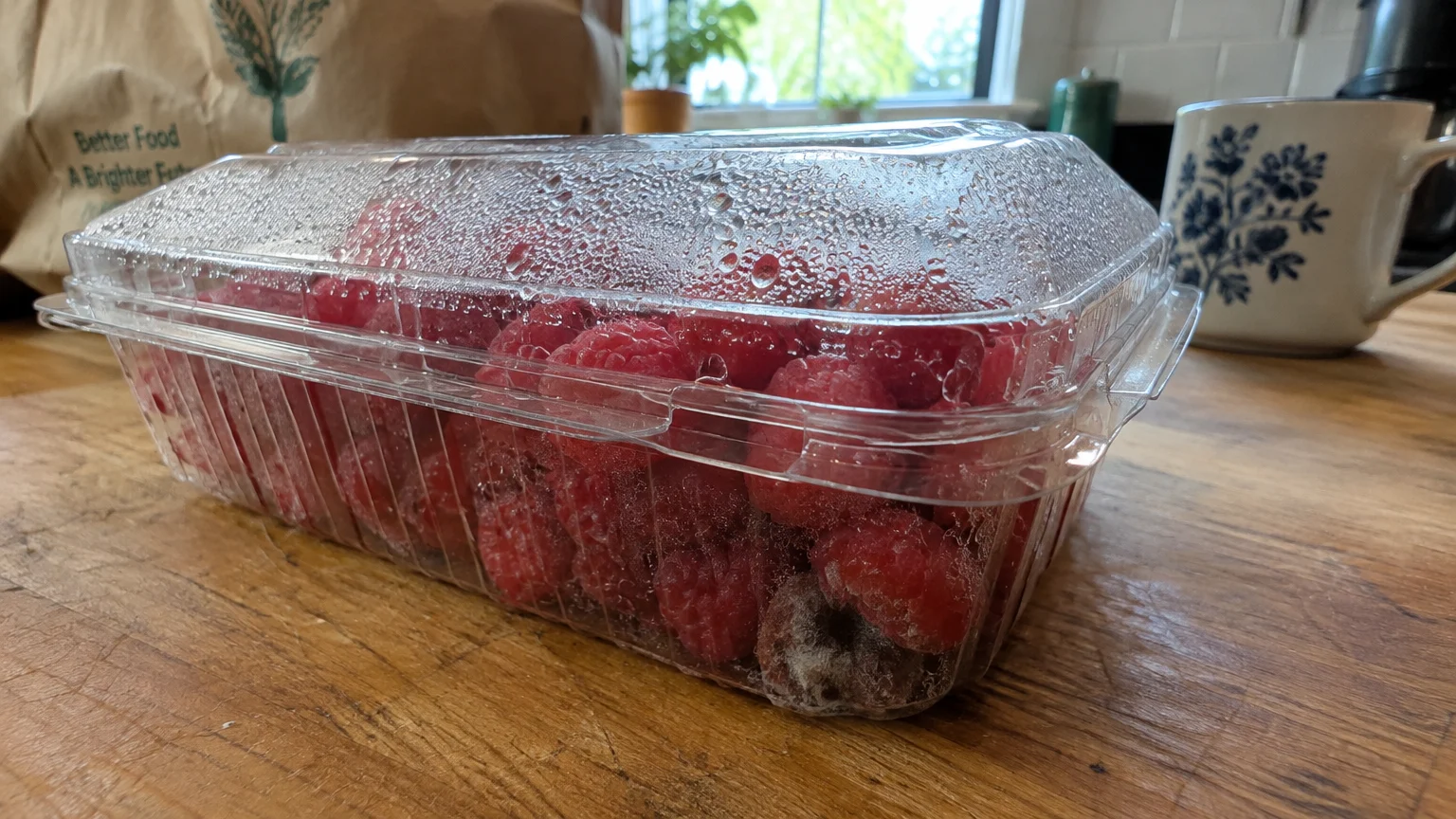
Tip #9: Sealed Plastic Clamshells That Trap Moisture and Decay
Clear plastic clamshells for berries and grapes look sanitary, clean, and convenient. Yet these transparent containers often disguise substandard product while accelerating decay.
Packers place large, flawless strawberries at the top of the container while burying moldy berries in the center. Because the rigid plastic restricts inspection, you cannot easily smell or touch the fruit beneath.
Sealed plastic packaging also traps ambient humidity and respired gases inside the container. This miniature greenhouse effect causes condensation droplets to form and breed rapid fungal mold.
When one trapped berry rots inside an enclosed clamshell, spores quickly spread throughout the entire container. You end up throwing away half the container within forty-eight hours of opening it.
Flip berry containers upside down before purchasing to check for juice stains, smashed fruit, and fuzz. Avoid any package exhibiting trapped condensation along the interior plastic walls.
Unpack berries immediately after returning home and discard any damaged units. Storing surviving berries in a ventilated glass container lined with paper towels prevents early mold spread.
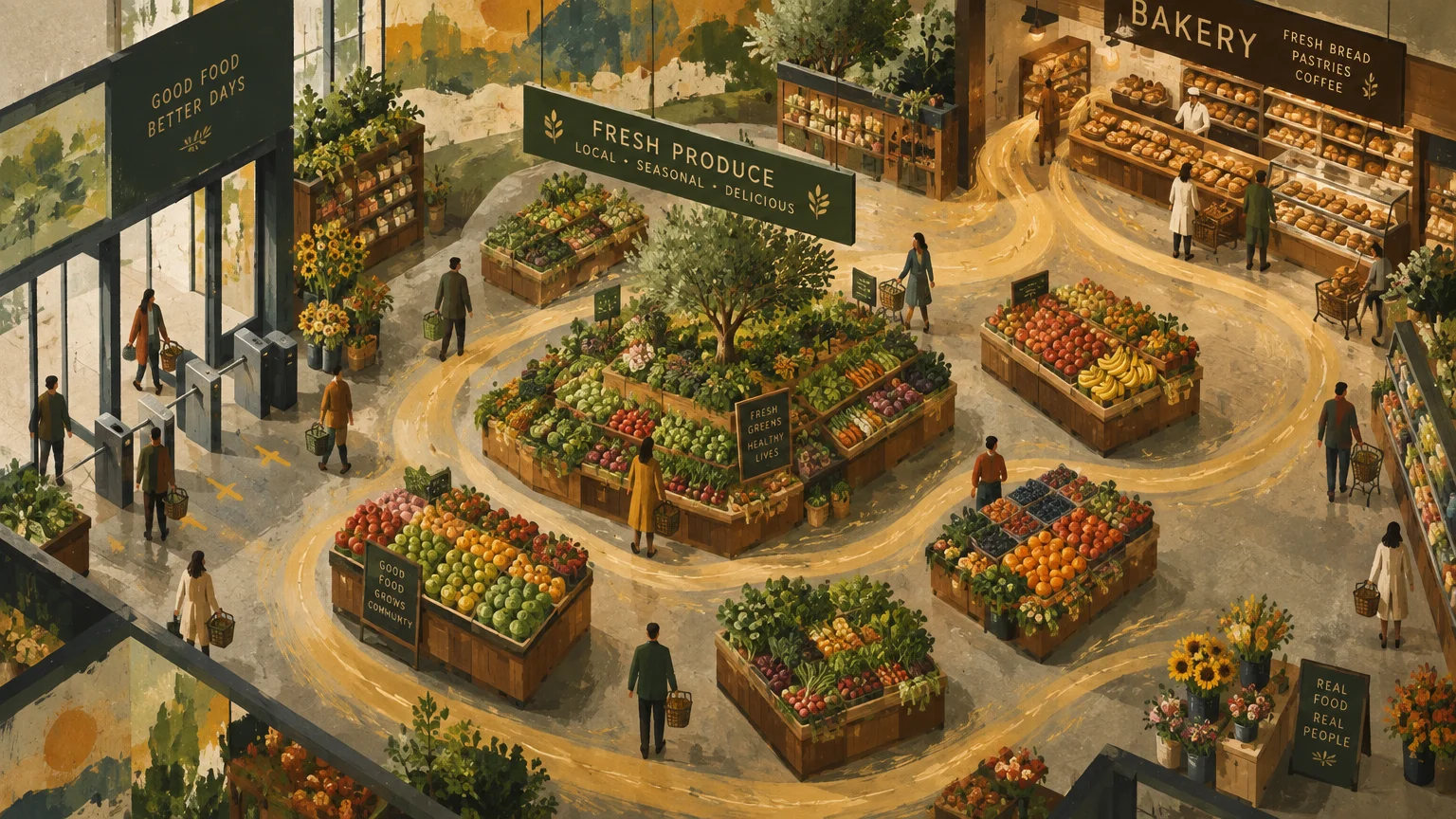
Tip #10: Aisle Layouts and Olfactory Scent Manipulation
Supermarkets almost always position fresh produce directly inside the primary store entrance. This floor plan is not an accident; it is an engineered psychological priming technique.
Walking into a brightly lit, colorful produce aisle establishes an immediate unconscious perception of freshness. Your brain assumes the entire grocery store offers healthy, farm-fresh goods.
Retailers frequently place fresh-cut floral displays or bakeries directly adjacent to produce departments. Sweet floral aromas and warm bread scents mask musty smells from decomposing produce boxes.
The pleasant sensory environment lowers your critical shopping defenses and encourages impulse spending. You feel relaxed, spend more time browsing, and overlook subtle signs of age on the shelves.
Stick to a strict grocery list and avoid letting aromatic staging dictate your purchasing decisions. Evaluate each individual item on its physical merits rather than the store atmosphere.
Shopping with a focused plan prevents sensory manipulation from driving up your grocery bill. Keep your focus on actual product quality rather than the staged environment.
The Bottom Line: What This Means for Your Wallet
Supermarket optical tricks and display techniques are not harmless merchandising quirks. They directly transfer financial losses from store balance sheets into your household budget.
According to the Environmental Protection Agency, household food waste costs an individual American $728 annually. For an average family of four, discarded food totals a staggering $2,913 every year.
That waste amounts to roughly $56 flushed down the drain every single week. USDA Economic Research Service data confirms that fresh fruits and vegetables represent the largest share of this waste.
When you purchase artificially misted greens or waxed, dying fruit, spoilage begins the moment you get home. You pay full price for tap water and decaying plant cells.
Knowing how to pick fresh produce empowers you to outsmart commercial retail psychology. Inspect produce with your fingers, check real weights, and never let store lighting dictate your dinner.
Small adjustments in how you evaluate produce add up to hundreds of dollars saved annually. Pay attention to the tricks, shake off the water, and buy only what lasts.
Frequently Asked Questions
Why do grocery stores spray water on produce?
Misters keep leafy greens hydrated so they appear crisp rather than limp. However, the primary benefit to the retailer is adding heavy water weight to items priced by the pound.
The excess moisture also accelerates mold and rot once the vegetables enter your refrigerator. Shake your greens thoroughly before placing them into your cart.
Is the wax on supermarket fruit safe to eat?
Retailers use food-grade waxes such as carnauba, shellac, and petroleum coatings that meet basic safety guidelines. While non-toxic, these coatings seal in aging fruit and trap dirt and pesticides.
The FDA mandates wax disclosure placards under 21 CFR 101.22, but supermarkets rarely display them prominently. Always scrub shiny fruit with warm water before eating.
How can I tell if produce is genuinely fresh under store lights?
Remove the item from direct overhead spotlights and examine it under normal store lighting. Specialized high-CRI track lights artificially intensify bright red and green colors.
Rely on your senses of touch and smell instead of relying purely on sight. Fresh produce should feel firm, possess notable weight, and carry a sweet, earthy scent.
Are pre-cut vegetables worth the extra cost?
Pre-cut vegetables carry markups ranging from 40% to over 100% compared to whole produce. Furthermore, stores often dice items nearing their sell-by dates to reduce inventory loss.
Pre-cut items spoil faster because slicing damages cell walls and accelerates oxidation. Buying whole produce saves significant money and ensures longer shelf life at home.
For consumer protection information, visit the Federal Trade Commission (FTC) and the Consumer Financial Protection Bureau (CFPB). For product safety and reviews, consult Consumer Reports.
Disclaimer: This article is for informational purposes only and does not constitute financial advice. The content reflects the author’s opinion and research at the time of writing. Always do your own research before making financial decisions.