
Holding onto a home that no longer serves your financial goals can quietly drain your net worth and stall your retirement plans. Selling your house when the numbers dictate a move frees up critical cash flow, reduces maintenance stress, and allows you to reallocate equity into higher-yielding investments. Yet memories tied to growth charts on doorframes and family milestone celebrations often cloud sound financial judgment. When nostalgia outweighs economic logic, homeowners risk ignoring market realities and overpaying for upkeep. Recognizing the psychological drivers behind real estate decisions helps you make a clear-headed transition that protects your household wealth and unlocks new financial freedom.
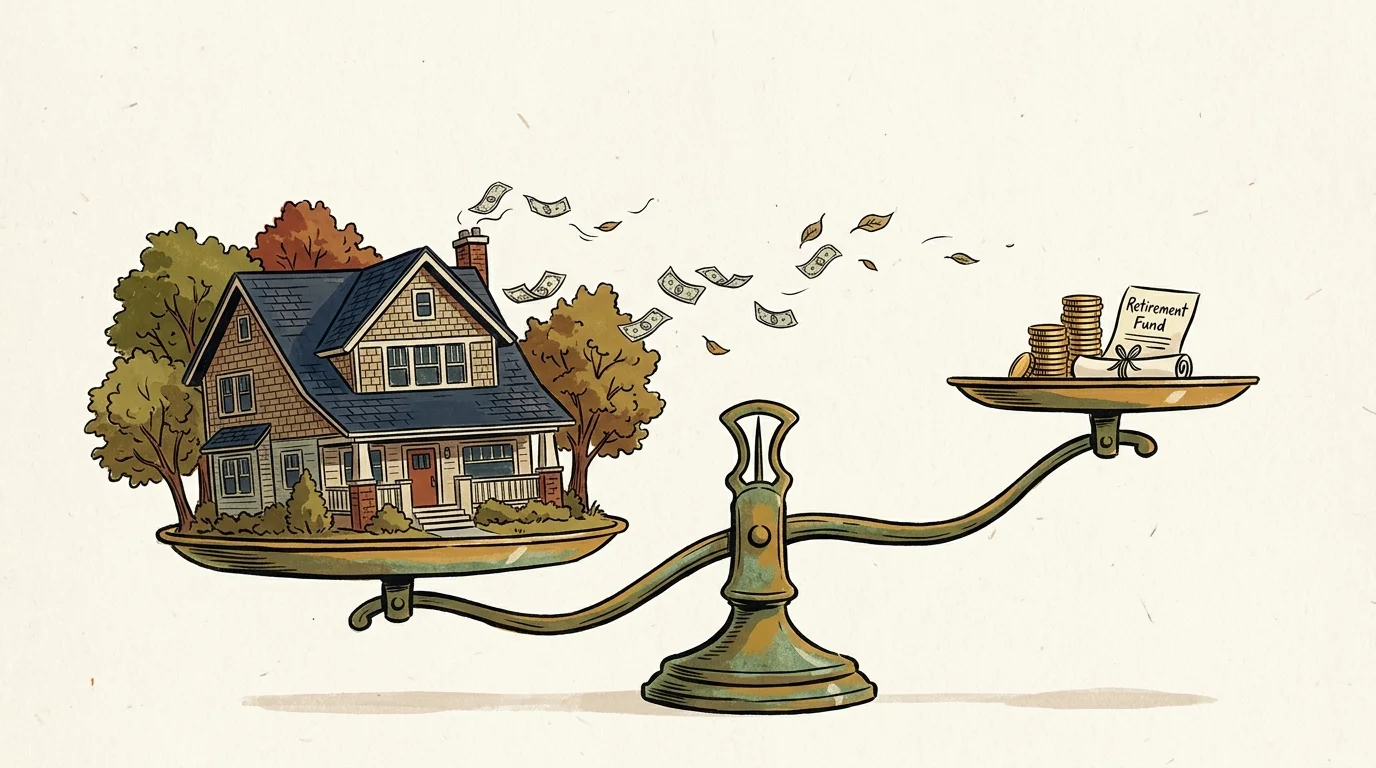
The Financial Reality of Nostalgia: Why Staying Costs More Than You Think
Your home represents far more than brick, mortar, and timber; it anchors your personal narrative and holds years of cherished memories. However, treating a primary residence purely as a sentimental vault can lead to severe financial blind spots. Recent financial accounting research from the Federal Reserve balance sheet metrics reveals that real estate accounts for the largest share of net worth for average middle-income households. When you lock up too much of your net worth in a single physical structure, you take on significant concentration risk and expose your monthly budget to rising carrying costs.
Housing expenses extend well beyond your principal and interest payments. Rising property taxes, escalating home insurance premiums, and constant maintenance expenses silently chip away at your disposable income. According to Consumer Financial Protection Bureau housing insights, hidden maintenance and carrying costs often eat up three to five percent of a home’s total value annually. If you keep holding an oversized or high-maintenance property out of sentimental attachment, you sacrifice valuable compound interest opportunities in tax-advantaged retirement accounts, emergency funds, or debt payoff strategies.

The 7 Telltale Signs You Are Emotionally Attached to Your Home
1. You Reject Fair Market Comps in Favor of Personal Value
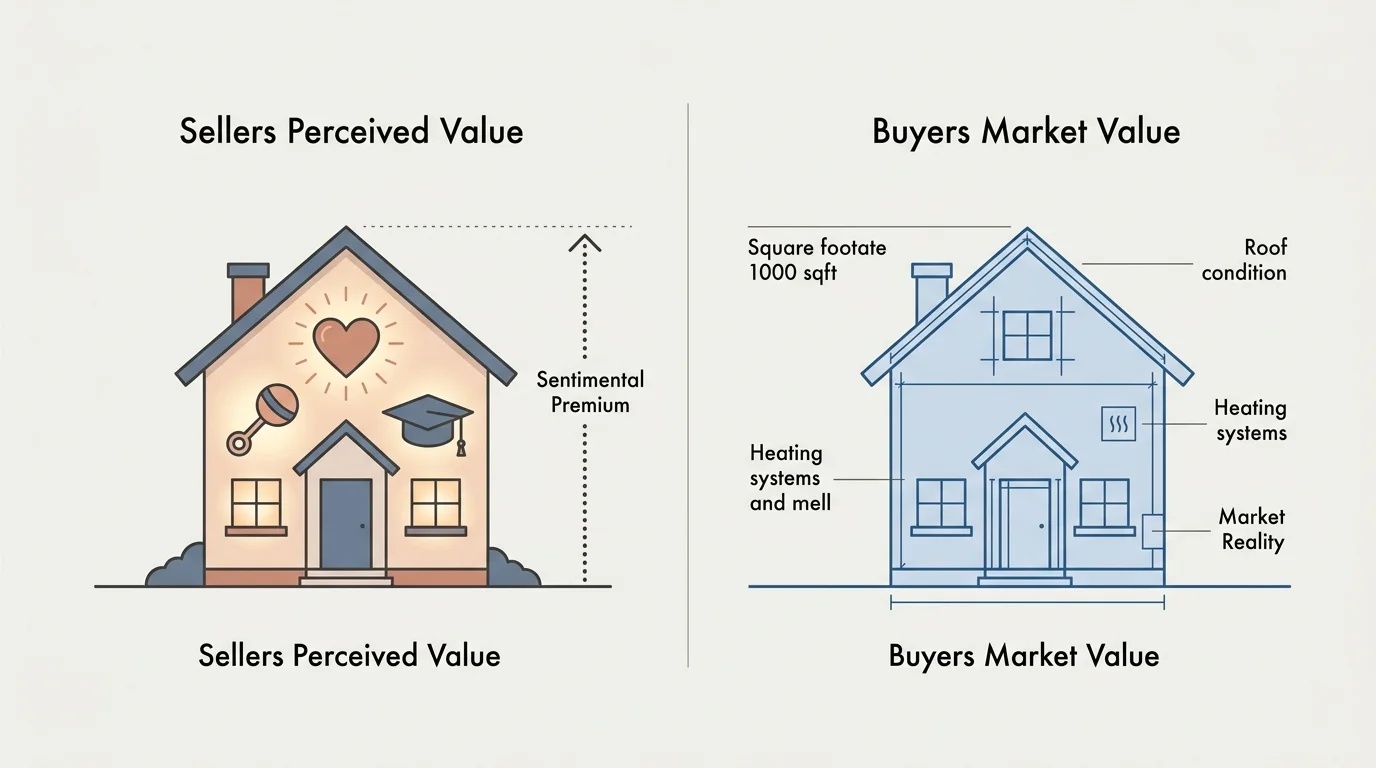
When a real estate professional presents recent comparable sales in your neighborhood, you immediately find reasons why your house is worth fifty thousand dollars more. You rationalize that your hand-painted nursery, custom backyard arbor, or years of painstaking garden work add immense tangible monetary value. In reality, buyers buy square footage, location, and updated infrastructure, not your sentimental sweat equity. If you insist on setting a listing price based on what the home means to you rather than what active buyers currently pay, emotional attachment is steering your pricing strategy.
2. You Take Buyer Feedback and Lowball Offers as Personal Insults
An offer below your asking price or a prospective buyer’s critique of your outdated kitchen cabinet finishes feels like an attack on your family’s lifestyle. You react with indignation, refuse to counter, or dismiss interested buyers entirely because they do not appreciate the care you poured into the home. Professional investors evaluate property dispassionately; they look at capital expenditures and repair costs. If you view price negotiations as a personal judgment rather than a standard business transaction, your feelings are clouding your financial judgment.
3. You Ignore Carrying Costs and Phantom Maintenance Expenses
You tell yourself that your home is completely affordable because you paid off the mortgage or locked in a low fixed interest rate years ago. Yet you routinely ignore the thousands of dollars leaking out of your checking account for regional property tax hikes, elevated utility bills for empty rooms, structural roof repairs, and ongoing landscaping services. These ongoing drains represent real cash flow that could build your emergency savings or fund flexible living. Ignoring these phantom expenses to justify staying is a classic hallmark of emotional attachment.
4. Your Home Has Become an Empty Nest That Dictates Your Budget
Your children moved out years ago, leaving three bedrooms and two full baths completely unused for months at a time. You spend your weekends vacuuming empty space, heating and cooling unused rooms, and managing a massive yard that no longer fits your daily lifestyle. Rather than right-sizing your living arrangements to liberate capital for travel, career pivots, or retirement, you let an oversized footprint dictate your monthly budget and weekend chores.
5. You Refuse to Declutter or Stage Because It Erases Memories
Preparing a home for the market requires depersonalizing rooms so prospective buyers can envision their own lives unfolding within the walls. If the thought of taking down family photo galleries, packing away childhood trophies, or removing distinctive custom wall paint fills you with dread, you are resisting the transition. Treating your home like a static museum prevents you from marketing it effectively, leaving the listing to languish on the market and gather dust.
6. You Delay Sunk-Cost Repairs While Sacrificing Other Goals
Aging roofs, leaking plumbing, and failing HVAC systems require major capital infusions that yield zero emotional satisfaction. When you pull money out of your retirement accounts or accumulate high-interest credit card debt to keep an aging structure afloat, you commit a dangerous financial mistake. Sacrificing your future financial security to preserve a building demonstrates that sentimental attachment has eclipsed basic personal balance sheet management.
7. You View Selling as Betraying Your Past Rather Than Funding Your Future
You catch yourself thinking that selling your family home means closing the door on your past or erasing precious memories. You worry that family traditions will vanish if you no longer host holiday dinners in that specific dining room. This framing traps you in a defensive mindset. Real estate is simply a container for experiences; the memories remain yours regardless of who holds the deed. Viewing a sale as a betrayal rather than an exciting capital reallocation signal proves that emotion is driving your real estate choices.

Strategic Pillars to Decouple Emotion From Real Estate
Conduct a Hard Cash-Flow Audit
Start by analyzing every single expense tied to your home over the past twelve months. Combine your property taxes, homeowners insurance premiums, utility bills, routine maintenance fees, and capital repair costs into one comprehensive sum. Subtract this total from your net household income to determine the true percentage of cash flow your home consumes. Comparing this actual figure against standard financial guidelines provides a stark, objective reality check that removes emotional speculation from the equation.
Reframe Your Home as an Asset, Not an Identity
Shift your perspective by evaluating your house as an illiquid asset inside an investment portfolio. If a single stock in your retirement portfolio underperformed for years while consuming high management fees, you would rebalance into a more efficient fund without second thought. Apply that exact rational balance sheet management to your real estate equity. Reallocating equity into liquid savings, index funds, or lower-cost housing protects your long-term purchasing power.
Create a Transition Runway
Build a clear financial and emotional off-ramp before listing your property. Draft a realistic timeline for downsizing, interview top-producing local agents who rely on hard market data, and research destination neighborhoods that offer lower living costs. Establishing a clear visual plan for your next life chapter converts anxiety about what you are leaving behind into genuine excitement for the flexibility you are gaining.
Real-World Insights: What Behavioral Economists Say
Behavioral economists frequently study why homeowners struggle to sell residential property even when market indicators signal an immediate move. The core culprit is a cognitive bias known as the endowment effect, where individuals value items they own significantly higher than identical items they do not own. You can review detailed academic analyses through the Investopedia endowment effect analysis, which explains how ownership distorts objective valuation across asset classes.
Dr. Richard Thaler and other prominent decision scientists highlight that loss aversion amplifies this bias; humans feel the pain of a loss twice as intensely as the joy of an equivalent gain. When applied to real estate, sellers focus heavily on giving up historical memories or perceived future appreciation, completely overlooking the ongoing loss of cash flow and investment growth. Recognizing this psychological trick helps you override instinctual resistance and make choices backed by numbers rather than emotional habits.

Action Lab: Calculating Your True Carrying Cost
Let us walk through a concrete example to calculate the true cost of staying put versus right-sizing. Imagine you own a suburban house valued at five hundred thousand dollars with two hundred thousand dollars of remaining mortgage balance. Your monthly principal and interest payment is fourteen hundred dollars. However, your property taxes add six hundred dollars a month, insurance costs two hundred dollars, utilities average four hundred dollars, and routine maintenance averages four hundred dollars. Your total monthly cash outlay equals three thousand dollars.
Now consider downsizing to a modern three hundred thousand dollar condo or townhome. By selling your current property and realizing three hundred thousand dollars in home equity, you can pay off your remaining mortgage balance, pay closing costs, and put down a massive seventy percent down payment on the new home. Your new smaller mortgage, combined with lower taxes, insurance, and maintenance, drops your total monthly housing obligation to eighteen hundred dollars. That simple strategic move puts twelve hundred dollars of cash back into your checking account every single month while unlocking extra liquid capital to invest in low-cost index funds.

Guardrails and Pitfalls to Avoid When Unloading Property
Avoid expensive over-improvement before going to market. Many emotionally attached sellers spend tens of thousands of dollars installing high-end custom finishes, hoping to justify an inflated listing price. Instead, consult with professional real estate agents to focus strictly on essential repairs and neutral cosmetic updates that provide a direct return on investment. According to market data from the National Association of Realtors data statistics, over-customized homes stay on the market significantly longer and suffer steeper price reductions than neutral, market-ready properties.
Another common pitfall is hiring a family friend or relative as your listing agent simply because you feel comfortable around them. Selling a major asset demands an objective professional who will deliver honest market pricing, enforce strict feedback protocols, and negotiate aggressively on your behalf without indulging your personal biases. Always select an agent based on recent sales performance and local market expertise rather than social comfort.
Frequently Asked Questions
How do I know if downsizing will actually save me money in today’s market?
Calculate your total net equity after accounting for real estate commissions and moving fees. Compare your current combined housing outlay including taxes, insurance, and maintenance against the total projected costs of your new home to confirm positive monthly cash flow.
What should I do if my spouse is emotionally attached but I am ready to sell?
Focus the discussion on shared long-term life goals rather than criticizing emotional bonds. Present an objective spreadsheet showing total carrying costs and demonstrate how selling unlocks funds for joint ambitions like early retirement or travel.
How can I prepare emotionally before putting my house on the market?
Host a final farewell gathering with loved ones to celebrate past memories and take photos of special house features. Consciously shift your mindset to view the home as a financial instrument funding your next adventure.
Should I keep my house as a rental property instead of selling it?
Only keep the home as a rental if it meets strict real estate investment criteria, including positive cap rates and cash flow after property management fees. Converting an emotional home into a rental often leads to frustration when tenants wear down custom features.
Your Next Move: Take the Opportunity Cost Challenge
Take control of your household finances today by calculating the opportunity cost of staying in your current home. Pull out your last twelve months of utility bills, tax statements, insurance policies, and maintenance receipts, and add them up to find your true monthly carrying cost. Compare that figure against your long-term retirement targets and dream lifestyle goals. When you realize how much financial freedom is trapped inside your home’s equity, you will feel empowered to let go of the past, list your property with confidence, and build a more flexible, wealthy future.