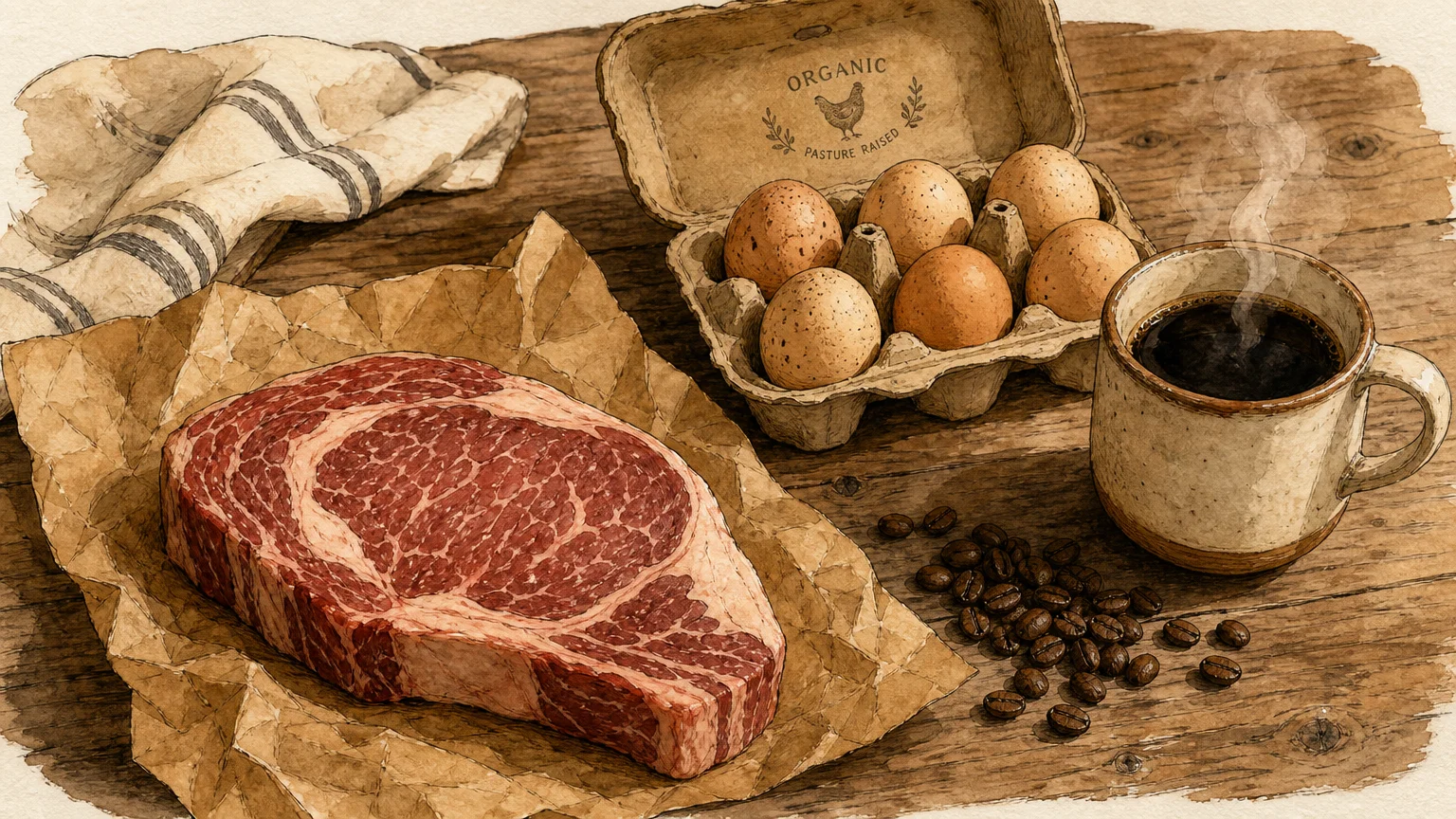
Understanding which grocery staples face extreme price volatility helps you secure your food budget against unexpected food inflation. When global supply chains fracture or agricultural conditions shift, items like beef, eggs, and coffee experience the fastest and sharpest cost increases at the checkout counter. Walking down the supermarket aisle lately feels like navigating a financial minefield, where typical weekly meal prep suddenly drains your paycheck much faster than it did last year. By identifying the exact products most vulnerable to sudden economic shifts, you can proactively adjust your shopping habits. Mastering this specific area of household expenses provides an immediate buffer against broader financial stress, keeping your pantry fully stocked without compromising your daily quality of life.

State of the Wallet: Why Your Grocery Bill Feels Unpredictable
Grocery shopping no longer feels like a predictable chore; it often resembles a volatile stock market trading session. When you review your monthly spending, the grocery category likely represents one of your largest and most erratic out-of-pocket expenses. This financial unpredictability stems from a complex web of economic pressures affecting the global food supply. When fuel costs rise, transportation networks pass those expenses directly onto the consumer. When adverse weather patterns strike major agricultural hubs, crop yields plummet, forcing suppliers to charge a premium for the remaining harvest. You feel the immediate sting of these macro-level events every time you scan an item at the register.
Federal economists continuously track these shifts, noting that food prices consistently outpace other household expenses during periods of economic turbulence. Monitoring these shifts requires reading the latest consumer price index reports, which clearly illustrate how quickly food inflation eats into middle-income wages. When wages stagnate but the cost of keeping your refrigerator full accelerates, you must adapt your strategy. Relying on last year’s grocery budget to fund this year’s meal plan guarantees financial frustration. Instead, you need a proactive approach that anticipates price spikes before they wreck your monthly cash flow.
The 3 Everyday Groceries Most Vulnerable to Price Spikes
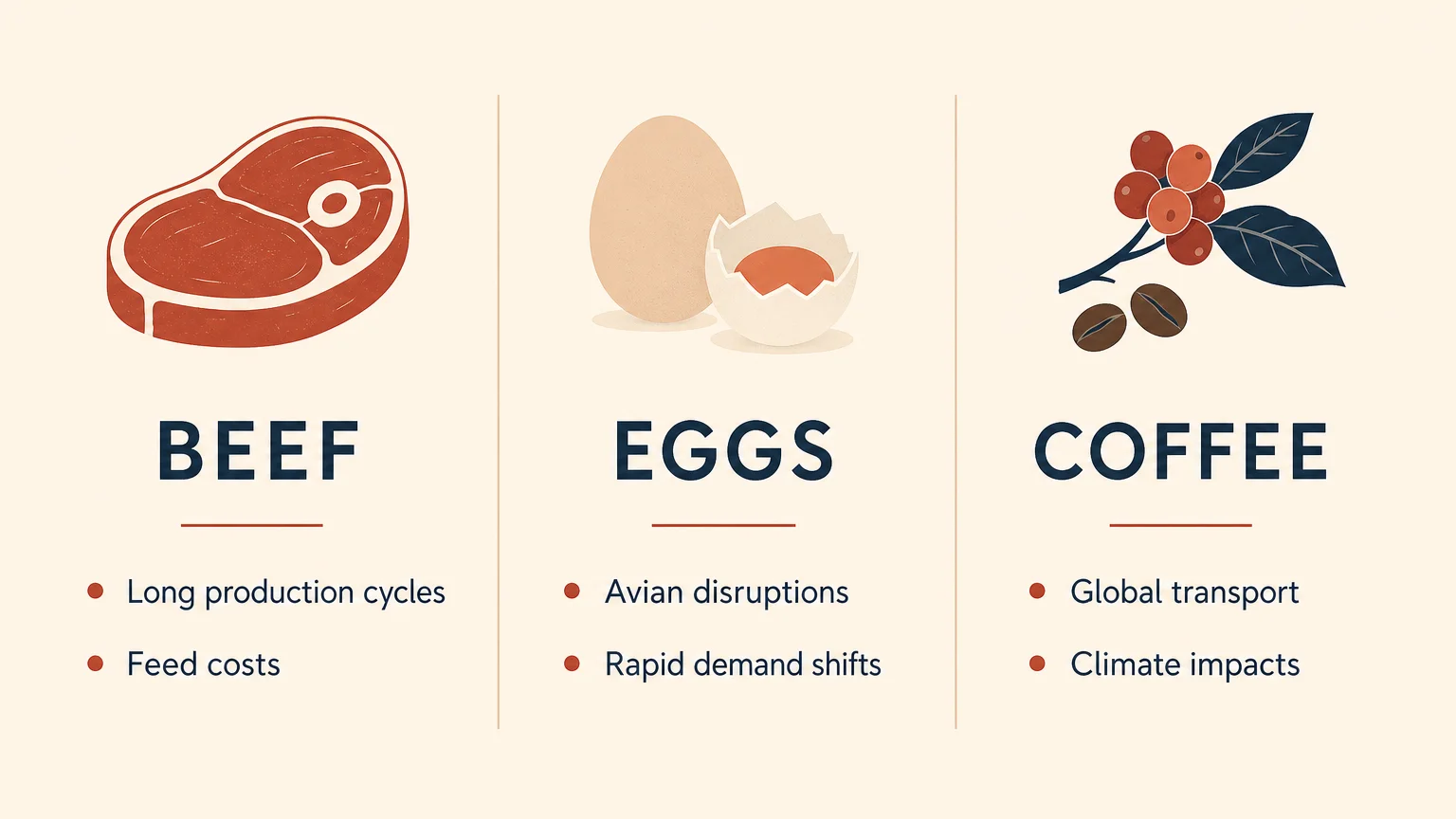
Not all grocery items react to economic uncertainty with the same intensity. While boxed pasta and canned vegetables maintain relatively stable pricing, certain high-demand staples respond aggressively to market disruptions. Recognizing these volatile items allows you to spot trouble early and pivot your meal planning accordingly.
1. Beef and Premium Animal Proteins
Beef consistently stands out as one of the most inflation-sensitive items in the modern supermarket. Raising cattle requires immense resources, including vast amounts of specialized feed, substantial water consumption, and significant agricultural acreage. When grain prices surge due to geopolitical conflicts or regional droughts, ranchers pay significantly more to feed their herds. They immediately pass these elevated overhead costs down the supply chain, culminating in steep price hikes at your local butcher counter.
Furthermore, cattle operations operate on long biological timelines. Ranchers cannot instantly produce more cattle to meet sudden spikes in demand. This slow production cycle, paired with high transportation costs for heavy, refrigerated freight, makes beef incredibly vulnerable to market shocks. When you notice beef prices climbing, you are witnessing the delayed ripple effect of agricultural disruptions that occurred months prior. Recognizing this pattern empowers you to temporarily shift your dietary preferences toward more stable protein sources until market conditions normalize.
2. Eggs and Poultry Products
Few grocery items experience the rapid, dramatic price swings characteristic of a standard carton of eggs. Unlike beef, which suffers from long-term supply chain delays, egg prices react almost instantly to immediate environmental threats. The primary culprit behind sudden egg inflation involves aggressive outbreaks of avian influenza. When commercial flocks encounter these highly contagious viruses, farmers must cull millions of egg-laying hens overnight. This drastically reduces the national egg supply within a matter of days.
Because eggs serve as a fundamental baking ingredient and a relatively cheap daily protein source, consumer demand remains highly inelastic. You still need eggs to bake bread, bind meatballs, and serve quick breakfasts, regardless of what the price tag says. When inelastic demand collides with a suddenly restricted supply, prices skyrocket. Staying informed about agricultural health events by tracking agricultural commodity trends helps you anticipate these sudden spikes. When an outbreak hits the news, savvy shoppers immediately begin evaluating alternative breakfast options and vegan baking substitutes.
3. Coffee and Imported Commodities
Your morning cup of coffee carries a complex geopolitical and environmental price tag. Coffee beans grow in highly specific climates, primarily concentrated in regions historically prone to severe weather fluctuations like Brazil, Vietnam, and Colombia. When unprecedented frosts or severe droughts damage the crops in these concentrated growing zones, the global supply of coffee beans constricts dramatically. Because coffee represents a globally traded commodity, futures markets react fiercely to bad weather reports, driving up the baseline cost of raw beans before they even leave the country of origin.
Beyond the agricultural challenges, coffee must cross oceans to reach your pantry. Shipping container shortages, port strikes, and rising international freight costs heavily influence the final retail price of your favorite roast. Because most middle-income households view coffee as a non-negotiable daily necessity rather than a luxury, retailers comfortably pass these increased logistical costs directly to you. Navigating this volatility requires flexibility; switching from premium single-origin beans to reliable bulk blends during turbulent times can preserve a surprisingly large portion of your monthly grocery allocation.

Strategy Pillars: Securing Your Pantry Against Inflation
Understanding which items spike in price is only half the battle; the other half requires implementing tactical defenses. You can build a robust financial shield against rising food costs by adopting three distinct operational strategies in your own kitchen.
Conducting a Kitchen Cash-Flow Audit
You cannot optimize what you do not measure. Begin by treating your kitchen like a small business managing its inventory. A kitchen cash-flow audit involves thoroughly reviewing your grocery receipts from the past thirty days to identify exactly where your food dollars leak. Highlight every instance where you purchased beef, eggs, or coffee. Calculate the exact percentage of your total grocery bill dedicated to these volatile categories. This exercise instantly reveals your financial exposure to food inflation.
Once you understand your baseline spending, physically audit your pantry, refrigerator, and deep freezer. Many households continuously purchase items they already own simply because their storage areas lack organization. Group similar items together and bring older products to the front of the shelves. By taking stock of your existing inventory, you prevent duplicate purchases and force yourself to consume the food you have already paid for, immediately reducing your next grocery bill.
Automating Your Core Grocery Staples
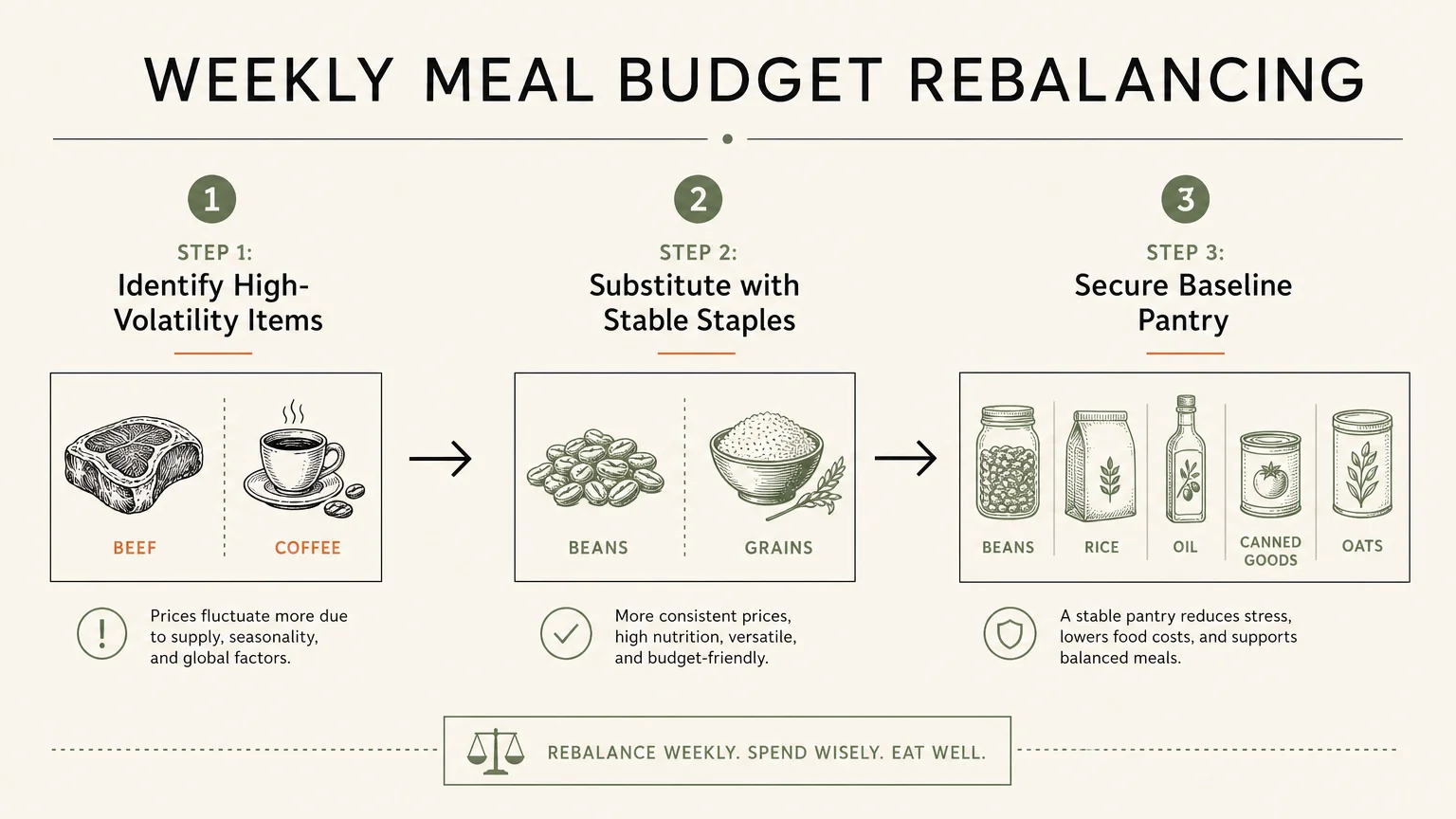
Automation serves as a powerful tool for smoothing out erratic price fluctuations. While you cannot easily automate the purchase of fresh produce or fresh meats, you can absolutely automate the procurement of non-perishable staples. Evaluate your monthly consumption of rice, dried beans, canned tomatoes, oats, and household paper goods. Instead of buying these items at fluctuating retail prices during your weekly supermarket run, establish a bulk purchasing routine.
Identify local wholesale clubs or online subscription services that offer substantial discounts for bulk, recurring orders. Purchasing a twenty-pound bag of rice once a quarter locks in your price point and isolates a significant portion of your diet from month-to-month inflation. This strategy requires a slight upfront capital investment, but it aggressively lowers your unit cost over time. Securing your base carbohydrates and non-perishable proteins in bulk ensures that even if meat and egg prices double overnight, you still have the foundational elements required to feed your family.
Mastering Mindful Spending at the Supermarket
Mindful spending requires you to actively override the psychological traps designed into modern supermarket layouts. Stores purposely place high-margin, volatile items at eye level and position essential dairy and meat products at the back of the building, forcing you to walk past countless temptations. To combat this, you must enter the store with a rigid meal plan and a strictly defined shopping list. If an item does not appear on your list, it does not enter your cart.
Mindfulness also involves strategic substitution. If you planned to make a beef stew but notice chuck roast prices have surged by forty percent, you must pivot. Swap the beef for cheaper, darker cuts of chicken or heavily incorporate root vegetables and lentils to achieve a similar hearty texture. Training yourself to view recipes as flexible templates rather than strict rulebooks provides the ultimate defense against sudden price spikes at the meat counter.

Real-World Voices on Navigating Rising Food Costs
Financial professionals consistently warn against rigid budget categories during inflationary periods. Behavioral economists observe that consumers often experience immense psychological friction when attempting to adhere to a static grocery budget while external prices surge. When a family repeatedly fails to keep their grocery bill under an arbitrary two-hundred-dollar limit due to inflation, they often abandon the budget entirely out of frustration. Financial planners stress that understanding household financial stress requires building elasticity into your budget.
Experts recommend implementing a sliding scale for variable expenses. If your grocery bill must increase by fifty dollars this month to accommodate rising staple costs, you must immediately identify which discretionary category—such as dining out or entertainment—will decrease by fifty dollars to offset the difference. This balancing act prevents grocery inflation from silently funding credit card debt. Savvy households treat their total monthly income as a fixed pie; when the grocery slice inevitably widens, another slice must simultaneously shrink.
Action Lab: Rebalancing Your Weekly Meal Budget
Let us translate these concepts into a tangible exercise you can execute tonight. Assume your family enjoys taco night every Tuesday. Historically, you purchase two pounds of premium ground beef at six dollars per pound, spending twelve dollars total on your primary protein. Now, imagine a supply chain shock drives ground beef up to nine dollars per pound. Your protein cost just skyrocketed to eighteen dollars for a single meal.
Instead of absorbing that six-dollar price hike, you apply the substitution strategy. You purchase only one pound of ground beef for nine dollars and supplement the recipe with a single can of black beans costing one dollar. You mash the beans and blend them seamlessly into the seasoned beef mixture. Your total protein cost drops to ten dollars. You have successfully reduced your expense below your original baseline while maintaining the exact same volume of food.
Calculate the impact: saving eight dollars on one meal seems trivial, but projecting that behavior across a month yields profound results. Applying this hybrid-protein strategy to four different meals a week saves you roughly thirty-two dollars weekly, or over one hundred and twenty-eight dollars a month. That newly freed capital provides crucial breathing room for your broader household budget.
Guardrails & Pitfalls: Mistakes That Drive Up Grocery Prices
Attempting to outsmart grocery inflation often leads to behavioral missteps that inadvertently waste money. The most prominent trap involves panic-buying perishables. When news breaks about an impending egg shortage, anxious shoppers frequently purchase three or four cartons at once. Unless you operate a commercial bakery, you cannot consume four dozen eggs before they expire. Throwing spoiled food into the trash acts as a heavy, silent tax on your finances, completely negating any savings you achieved by buying in bulk.
Another dangerous pitfall involves blind brand loyalty. During periods of economic stability, you might exclusively purchase a premium name-brand coffee or a specific label of poultry. When inflation hits, brand-name manufacturers typically raise prices much faster than generic or store-brand alternatives. Refusing to step down to a store brand out of habit forces you to absorb the maximum impact of price spikes. You must rigorously test store brands against your usual favorites; in many cases, the products originate from the exact same manufacturing facilities, separated only by packaging and price tags.
Finally, avoid the temptation to chase sales across multiple grocery stores. Driving across town to save fifty cents on eggs while burning an extra gallon of gasoline represents a net financial loss. Time and fuel carry hard costs. Consolidate your shopping to one or two geographically convenient stores that offer the best baseline prices, rather than chasing promotional flyers across different zip codes.
Frequently Asked Questions About Grocery Inflation
Why do fresh produce prices fluctuate less dramatically than animal proteins?
Produce generally requires a much shorter production cycle and fewer resource inputs than animal farming. While a severe drought can certainly damage an apple orchard or a lettuce crop, farmers can often pivot and replant faster-growing crops within a single season. Raising cattle or managing massive poultry flocks demands years of infrastructure, vast amounts of daily feed, and significant veterinary care. Every additional step between the raw agricultural input and your dinner plate introduces another opportunity for costs to compound. When the global supply chain falters, complex animal proteins always reflect the damage faster and more severely than simpler, soil-based crops.
How can I predict when grocery prices are about to jump?
You do not need an economics degree to anticipate market movements; you simply need to pay attention to macro trends. Watching the commodities markets for grain, corn, and soy provides a reliable leading indicator. Since these crops feed livestock, a spike in corn prices guarantees a spike in beef and poultry prices a few months later. Additionally, paying attention to national weather reports in major agricultural hubs allows you to foresee shortages. If California experiences catastrophic flooding or the Midwest suffers a prolonged drought, you can confidently assume the corresponding produce and protein prices will rise. Reviewing monetary policy impacts also helps you grasp the broader inflationary environment.
Does shopping at warehouse clubs actually protect against food inflation?
Shopping at warehouse clubs offers excellent protection against inflation, provided you strictly control your purchasing behavior. These clubs lock in massive vendor contracts, allowing them to shield consumers from weekly price volatility. However, warehouse clubs are designed to encourage impulse purchasing through bulk packaging. If you visit a warehouse club to buy bulk rice and toilet paper, but leave with a giant television and three tubs of perishable dip you will never finish, you have entirely defeated the purpose. Warehouse clubs protect your budget only when you restrict your purchases to non-perishable staples you already consume regularly.
Are store brands significantly more resilient to price spikes than name brands?
Store brands generally demonstrate superior resilience against aggressive price spikes. National brands spend billions of dollars on marketing, advertising, and premium packaging—costs they must aggressively recoup when raw material prices rise. Store brands rely on the supermarket’s existing distribution network and require virtually zero advertising overhead. Consequently, supermarkets can absorb minor supply chain shocks without immediately raising the retail price of their private-label goods. Embracing store brands provides an immediate, highly effective buffer against the volatility associated with heavily marketed national products.
Take Control of Your Grocery Run
Navigating the supermarket during periods of high inflation demands vigilance, flexibility, and a willingness to break old habits. The rising costs of beef, eggs, and coffee serve as clear signals that the broader economic environment requires your active attention. By auditing your current pantry, automating the purchase of reliable staples, and utilizing creative substitutions at the dinner table, you reclaim authority over your household budget. You do not have to remain at the mercy of unpredictable supply chains. Take ten minutes tonight to review your last grocery receipt, identify your most expensive habits, and implement one structural change for your next shopping trip. Meaningful financial progress starts with your very next meal.