Wednesday, June 10

20 Aldi Finds That Are Worth Every Penny

Lowering your weekly grocery bill by switching to Aldi is the fastest way to reclaim cash flow and ease middle-income financial stress. With food prices demanding a larger share of your paycheck, identifying the best Aldi products transforms a basic chore into a highly effective budget strategy. You can stretch your dollars significantly without sacrificing taste or nutrition when you know exactly what to buy. Navigating the aisles requires a solid plan to avoid impulse traps while securing high-quality staples, organic produce, and specialty items. By optimizing your grocery haul, you instantly free up capital to fund your emergency savings or pay down high-interest debt, proving that smart household management is a cornerstone of long-term wealth building.
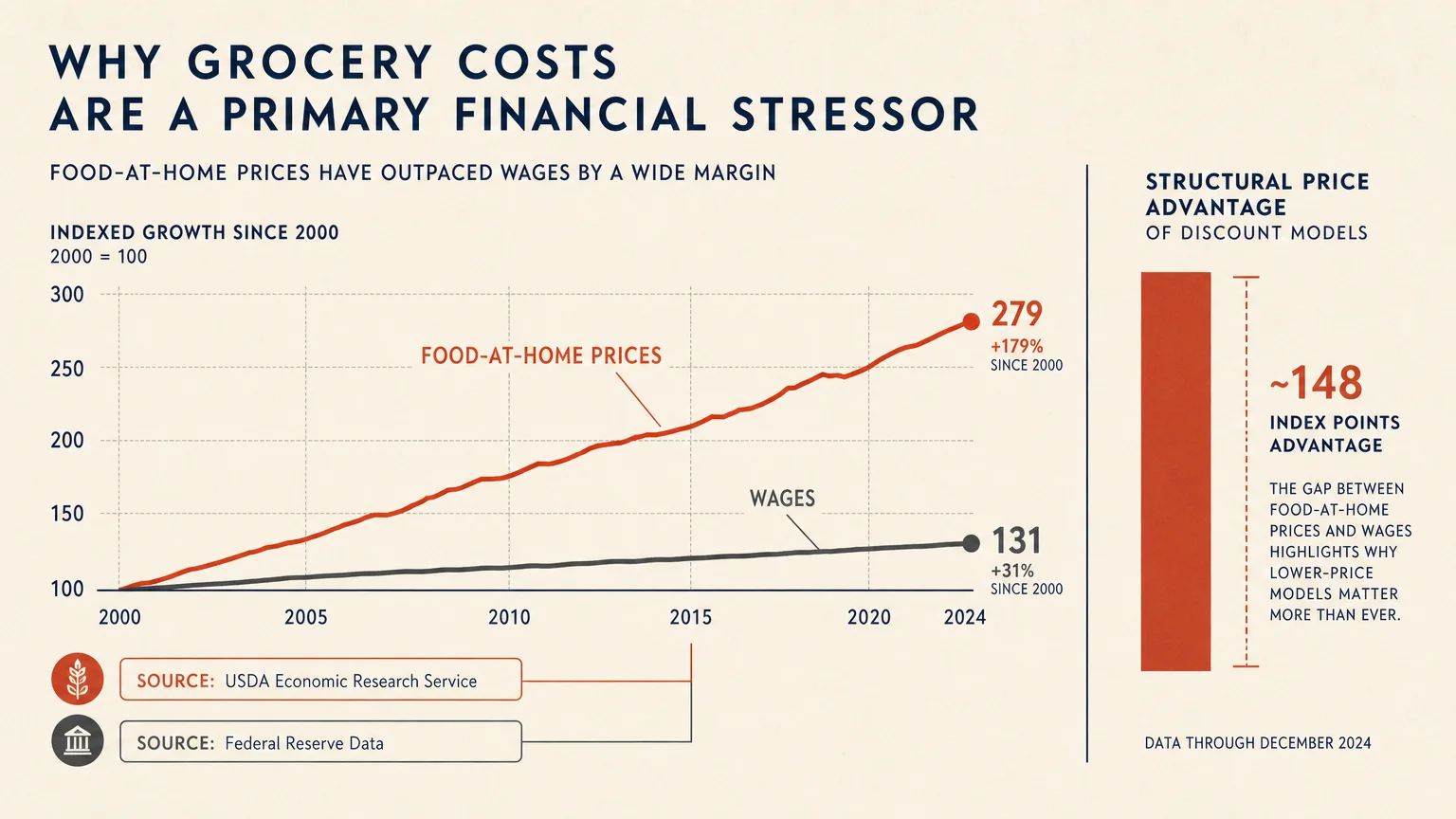
An infographic showing food prices rising faster than wages, citing USDA and Federal Reserve data.
This graph shows food prices rising much faster than wages, highlighting the growing need for budget-friendly shopping.

State of the Wallet: The New Economics of Budget Grocery Shopping

Managing a household budget requires confronting the reality of modern food costs. You feel the pinch at the checkout counter every single week; wages often fail to keep pace with the rising cost of basic necessities. Recent data from the Federal Reserve highlights that a significant portion of families point to grocery costs as their primary financial stressor. Furthermore, according to the USDA Economic Research Service, food-at-home prices have established a permanently higher baseline over the past few years, forcing families to rethink their consumption habits.

This economic pressure transforms grocery shopping from a mundane errand into a critical financial exercise. When you allocate hundreds of dollars a month to feed your family, finding a store that offers a structural price advantage becomes your strongest defense against inflation. Aldi provides that precise advantage through a uniquely efficient operational model. By limiting their inventory to a curated selection of private-label goods, displaying items in original shipping boxes, and requiring a quarter deposit for carts, the company drastically reduces overhead. They pass these operational savings directly to you. Transitioning your primary shopping to Aldi allows you to maintain your standard of living while dramatically reducing your outbound cash flow. You capture the margin between premium grocery store prices and discount store efficiency, keeping more money in your checking account for long-term financial goals.


An ink and watercolor illustration of a person auditing grocery costs with Aldi pantry staples like beans and oats.
A man uses a magnifying glass to audit his Aldi receipt alongside essential pantry staples.

Strategy Pillar One: Conducting a Cash-Flow Audit Through Pantry Staples

Conducting a routine cash-flow audit means examining your recurring expenses for inefficiencies, and your kitchen pantry is the perfect place to start. Traditional supermarkets mark up shelf-stable staples aggressively, silently draining your budget. You can plug these leaks by stocking up on the foundational ingredients that make home cooking viable and cost-effective. Replacing name-brand cooking oils with Simply Nature Organic Extra Virgin Olive Oil yields immediate savings without compromising the rich flavor of your homemade vinaigrettes or sautéed vegetables. You secure a high-quality, cold-pressed oil for a fraction of the cost you would pay elsewhere.

Pairing that cooking fat with inexpensive proteins accelerates your cash-flow recovery. Dakota’s Pride Canned Beans are essential Aldi Finds that cost merely pennies per serving. Keeping black beans, garbanzo beans, and kidney beans in your cupboard gives you the building blocks for hearty soups and rice bowls, drastically lowering your overall cost per meal. When you combine these versatile legumes with bulk bags of Millville Rolled Oats, you establish a reliable baseline of complex carbohydrates that fuel your family through busy weekday mornings for just a few cents a day.

Baking at home is another powerful method for keeping your discretionary spending low, provided you do not overpay for the raw materials. Purchasing Baker’s Corner Baking Staples—including flour, sugar, and baking soda—ensures your weekend pancake breakfasts or homemade bread routines remain economically sound. To elevate these budget-friendly meals, you need robust seasoning. Building a comprehensive spice rack at a conventional grocer can cost a small fortune, but Stonemill Spices and Seasonings allow you to add garlic powder, cumin, and paprika to your dishes for roughly half the typical retail price. Auditing your pantry and swapping these five foundational items to their Aldi equivalents creates an immediate, highly noticeable reduction in your weekly grocery spend.

A close-up photo of hands prepping fresh organic broccoli and protein on a cutting board, emphasizing healthy budget staples.
Chopping fresh broccoli alongside organic chicken breast tenders creates a reliable, budget-friendly foundation for healthy meals.

Strategy Pillar Two: Automating Savings With Reliable Proteins and Produce

Financial planners frequently recommend automating your savings so you build wealth without actively thinking about it. You can apply this exact same logic to your meal planning by standardizing your weekly protein and produce purchases. Relying on high-quality, affordably priced core ingredients automates your grocery savings, ensuring you hit your household budget targets every week without decision fatigue. Meat and fresh produce usually represent the most expensive categories on any grocery receipt, making them the most critical areas for tight cost control.

Securing lean protein is a priority for most households, and Never Any! Fresh Chicken Breasts provide a dependable, antibiotic-free option that easily anchors your weekly dinners. Because the price per pound consistently undercuts major national chains, you can buy in bulk, freeze the surplus, and protect yourself against future price fluctuations. For households that prefer seafood, the Fremont Fish Market Wild Caught Salmon offers an accessible entry point to omega-3 rich meals; keeping these frozen fillets on hand prevents the temptation to order expensive takeout on exhausted weeknights. Adding a package of Appleton Farms Thick Cut Bacon to your cart delivers premium flavor for weekend breakfasts or as a savory addition to homemade burgers, proving that budget shopping does not require culinary sacrifice.

Building balanced meals around these proteins requires fresh, vibrant sides. Aldi excels in this category with Simply Nature Organic Greens. Grabbing large tubs of baby spinach or spring mix provides the nutrient density your family needs at a price point that makes daily salads financially sustainable. You can stretch these greens even further by incorporating Earth Grown Veggie Burgers into your lunch rotation, offering a quick, plant-based alternative that reduces your overall meat consumption and lowers your grocery bill.

Busy families also rely on grab-and-go nutrition to survive hectic schedules. Stocking your refrigerator with Happy Farms String Cheese gives both children and adults a fast, protein-rich snack that prevents expensive mid-day convenience store runs. For school lunches and quick dinners, picking up Specially Selected Premium Sliced Meat ensures you have deli-quality turkey or ham ready for sandwiches, allowing you to completely bypass the steep markup of a traditional supermarket deli counter.

An illustration showing a shopping cart full of staples with a few brightly colored specialty snacks on top.
An Aldi shopping cart balances everyday essentials with premium specialty finds like Comté cheese and craft chocolate.

Strategy Pillar Three: Mindful Spending on Snacks and Specialty Goods

Mindful spending is not about absolute deprivation; it is about allocating your financial resources toward things that bring you authentic joy while ruthlessly cutting costs elsewhere. You can absolutely enjoy luxury food items and weekend indulgences without derailing your financial progress. Aldi shines brilliantly in the specialty goods department, allowing you to replicate high-end culinary experiences at home for a fraction of the cost of a restaurant visit or a boutique grocery run.

Creating a sophisticated charcuterie board for weekend entertaining is a classic budget trap at conventional stores, but it becomes a highly affordable reality at Aldi. Selecting an assortment of Specially Selected Gourmet Cheeses alongside the tangy, versatile Emporium Selection Goat Cheese Logs gives you premium textures and flavors without the premium price tag. You can build an impressive spread for your guests while maintaining strict adherence to your monthly cash-flow plan. When you pair these artisanal cheeses with a bottle of Winking Owl Wine, you unlock one of the most celebrated Aldi deals available; this incredibly affordable private-label wine routinely outperforms bottles that cost three times as much.

Satisfying your sweet tooth and snack cravings also requires a highly strategic approach. Tossing a few bars of Moser Roth Dark Chocolate into your cart provides a rich, ethically sourced European chocolate experience that feels entirely decadent. For savory cravings, Clancy’s Kettle Chips deliver the intense crunch and robust flavor of boutique brand chips at a distinctly lower price point. When Friday night arrives and cooking fatigue sets in, sliding a Mama Cozzi’s Take and Bake Pizza into the oven saves you the heavy expense of ordering delivery, keeping your weekend budget perfectly intact.

Your morning routines deserve the exact same mindful optimization. Brewing a cup of Barissimo Fair Trade Coffee guarantees you start your day with a high-quality roast, completely eliminating the urge to spend five dollars at a drive-through cafe. Finally, keeping a package of Benton’s Caramel Coconut Fudge Cookies hidden in your pantry gives you a perfect, budget-friendly replica of famous scout cookies whenever the craving strikes.

A macro photograph of a quarter being inserted into an Aldi shopping cart, symbolizing behavioral economics.
Inserting a quarter into the red cart lock demonstrates the behavioral economics behind every Aldi shopping trip.

Real-World Voices: The Behavioral Economics of Grocery Stores

Financial experts recognize that the physical environment where you shop heavily influences your spending behavior. Traditional supermarkets are meticulously designed to maximize your impulse purchases, utilizing sensory marketing and overwhelming end-cap displays to extract more money from your wallet. The Consumer Financial Protection Bureau frequently highlights the critical importance of tracking and managing spending triggers to maintain long-term financial health.

Aldi inherently neutralizes many of these psychological triggers through its radically simplified store layout. Because they stock a limited number of items per category, you avoid the decision fatigue that typically wears down your willpower. You are not forced to compare twenty different brands of peanut butter; you simply grab the high-quality private label option and move on. This streamlined process keeps you focused on your core shopping list, drastically reducing the likelihood of filling your cart with unplanned, expensive items. Behavioral economists consistently note that minimizing choices in a retail environment leads to higher consumer satisfaction and significantly lower checkout totals.

A bar chart comparing premium supermarket costs to Aldi costs, highlighting the 'Cash Flow Recovery' margin.
This bar chart illustrates how Aldi’s operational savings translate into significant monthly cash flow recovery.

The Action Lab: Calculating Your Aldi Advantage

Understanding the theory of grocery savings is helpful, but seeing the mathematical impact on your household wealth is transformative. Let us walk through a practical cash-flow calculation to demonstrate your true Aldi advantage. Suppose your current grocery bill at a conventional supermarket averages two hundred dollars per week. By shifting your primary shopping to Aldi and focusing on the twenty specific staples outlined above, a conservative estimate suggests you will reduce your grocery bill by twenty-five percent.

This optimization lowers your weekly grocery expense to one hundred and fifty dollars, freeing up fifty dollars a week in hard cash. That equates to roughly two hundred and sixteen dollars a month in newly recovered capital. If you capture that margin and redirect it toward your financial goals, the results compound rapidly. According to educational materials from the Federal Deposit Insurance Corporation, automating your savings into a high-yield account accelerates your wealth accumulation. Setting up an automatic monthly transfer of two hundred dollars into a savings account empowers you to build a substantial emergency fund in less than a year. Over five years, that simple shift in grocery logistics generates over twelve thousand dollars in principal savings alone. You are literally eating your way to better financial security.

An illustrated store map showing a 'safe path' through grocery aisles to avoid impulse spending traps.
Navigate the grocery store maze with this illustrated guide to avoid impulse traps and find the essentials.

Guardrails and Pitfalls: Navigating the Aisles Safely

Even with its inherent budget advantages, shopping at Aldi requires strict discipline to avoid specific financial pitfalls. The most notorious hazard is the middle section of the store, affectionately known by regular shoppers as the Aisle of Shame. This corridor is packed with rotating seasonal goods, ranging from discounted patio furniture to novelty kitchen gadgets and scented candles. While these items often represent genuine bargains, purchasing them without a plan is a direct violation of mindful spending principles. Buying a twenty-dollar dutch oven you do not actually need entirely negates the savings you just earned on your chicken and produce.

Another common pitfall is overbuying perishables simply because they feature a remarkably low price tag. A low price does not justify food waste. If you buy three bags of organic spinach because they are on sale but only eat one before the others spoil, you have actively damaged your budget. To protect your cash flow, rely on highly structured meal planning. According to nutritional and budgeting resources from the Penn State Extension, writing a list based on your actual weekly recipes and strictly adhering to it is the absolute most effective way to prevent costly food waste.

Frequently Asked Questions About Aldi Shopping

Do I need a paid membership to shop at Aldi?

You do not need any form of membership or loyalty card to shop at Aldi. Unlike wholesale clubs that charge an annual fee to access their discounted prices, Aldi is open to the general public. Every single customer receives the exact same low prices at the register, simplifying the checkout process and eliminating the tedious need to track digital coupons or rewards points.

Why do I have to pay a quarter to use a shopping cart?

The quarter deposit system is a brilliant operational efficiency that directly lowers your grocery bill. By requiring a twenty-five-cent deposit to unlock a cart, Aldi strongly incentivizes customers to return the carts to the corral to retrieve their coin. This completely eliminates the need for the store to hire staff to round up stray carts in the parking lot. The company passes those labor savings directly to you through lower overall food prices.

Are Aldi private label brands actually good quality?

Yes, the private label items are exceptionally high quality. Aldi sources many of its products from the exact same manufacturers that produce premium national brands; they simply place a different label on the packaging. Furthermore, Aldi has strictly banned synthetic colors, added MSG, and partially hydrogenated oils from all of its exclusive brand food products, ensuring your family consumes clean, safe ingredients.

How do returns work if I dislike a specific item?

Aldi operates under a highly consumer-friendly policy known as the Twice as Nice Guarantee. If you are not completely satisfied with the quality of any private-label food item, you can return it to the store. The cashier will not only refund your original purchase price, but they will also provide a replacement product completely free of charge. This policy entirely eliminates the financial risk of trying new budget foods.

Moving Forward: Your Next Grocery Trip

Taking control of your finances rarely involves winning the lottery; it stems from making deliberate, optimized choices during your routine weekly errands. Armed with these twenty Aldi Finds, you possess a tangible blueprint for stretching your paycheck and easing the intense pressure on your household budget. The next time your pantry runs low, treat your grocery run as an active investment in your family’s financial future. Stick strictly to your list, intentionally bypass the seasonal impulse buys, and watch your checking account balance stabilize over time. You have the ultimate power to combat inflation and build real wealth, and it starts with the simple act of choosing where and how you buy your daily groceries.

Leave a Comment

Your email address will not be published. Required fields are marked *

Related Posts