
Returning an unwanted holiday gift used to be effortless, but big-box retailers now scrutinize every transaction. Walking up to customer service no longer guarantees a hassle-free cash refund or store credit.
Retailers expect shoppers to bring back roughly 17% of holiday purchases this season. To combat billions in losses, automated systems now flag suspicious shopping patterns and issue an unexpected return fraud denial.
You can protect your cash by understanding the exact behaviors that trigger customer service rejections. Here is how modern retail return tracking screens your transactions and how to ensure stores accept your items.
Tip #1: Returning Items Repeatedly Without a Valid Receipt
Presenting items without proof of purchase instantly triggers heightened scrutiny at major retail service desks. Both retail giants log your government-issued photo ID into internal databases before processing non-receipted requests.
Walmart returns without a receipt require an ID verification check against a centralized, secure database. If cleared, you receive an exchange or gift card, but unconfirmed reports track a cap of roughly three no-receipt returns per 45 days.
Target operates under equally tight guardrails. Approved non-receipted transactions yield an in-store Merchandise Return Card that requires your matching identification to redeem.
Trackers show Target limits unverified returns to roughly $100 over a rolling 365-day period. Always link purchases to digital store accounts to avoid reaching these unadvertised limits.
Tip #2: Missing Tight Category Deadlines on Electronics
Assuming general holiday return windows apply to every item will cost you dearly at checkout. Retailers exclude high-fraud merchandise from broad extensions, applying aggressive cutoffs instead.
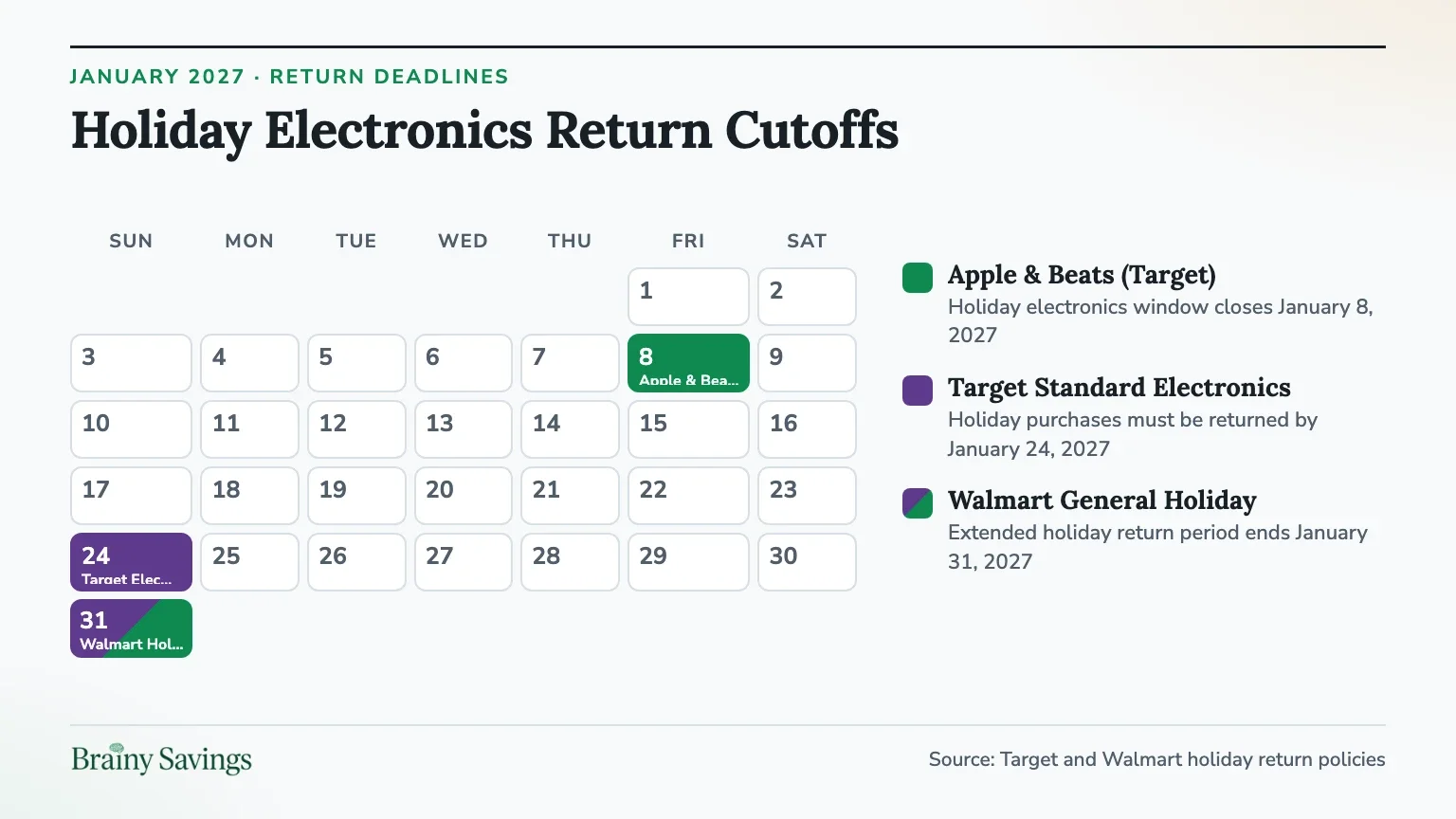
Walmart extended general holiday purchases made between October 1 and December 31, 2026, through January 31, 2027. However, wireless phones still carry a strict 14-day window that catches many shoppers unprepared.
The standard Target refund policy grants 90 days, but holiday electronics face compressed clocks starting December 26, 2026. Standard electronics must arrive by January 24, 2027, while Apple and Beats products expire on January 8, 2027.
Open a mobile phone after purchasing, and Target may charge a $35 restocking fee. Verify category-specific calendar cutoffs before assuming you have until late January to make your return.

Tip #3: Bringing Back Used, Altered, or Opened Merchandise
Returning goods that show signs of wear or missing packaging triggers immediate rejection. Appriss Retail reports that policy abuse like wardrobing created $86 billion in retail losses in 2025.
Because retailers spend an average of 30% of an item’s value processing returns, employees aggressively examine product condition. Clerks inspect serial numbers, factory seals, and garment tags before authorizing refunds.
Walmart actively monitors customer activity and denies returns for items showing excessive use or alteration. Their corporate policy explicitly permits managers to refuse refunds even when you possess a valid receipt.
Target explicitly declines items that arrive worn, washed, or missing crucial parts. Keep all original packaging, tags, and accessories intact until you are completely certain you will keep the item.

Tip #4: Generating High-Frequency Return Patterns on Your Account
Modern retail return tracking monitors overall shopping behavior across debit cards, credit accounts, and loyalty profiles. Returning an unusually high percentage of what you purchase marks your profile as high risk.
The National Retail Federation reports that 85% of retailers now deploy artificial intelligence and machine learning to detect return abuse. Algorithms analyze purchase-to-return ratios, transaction timing, and cross-store visit velocity.
While neither retailer publicly confirms using third-party scoring networks like The Retail Equation, internal security systems continuously evaluate your return habits. If your profile flags for excessive or repetitive returns, managers hold full authority to issue a complete return fraud denial.
Spread purchases across stores or inspect items carefully before buying to keep your return-to-purchase ratio low. High-volume returns raise automated flags that are difficult to overturn once assigned to your name.
The Bottom Line: What This Means for Your Wallet
Massive retail losses have permanently ended the era of consequence-free return desks. With an estimated $172 billion in holiday returns projected for this season, retailers protect their margins through aggressive screening.
You can protect your wallet by keeping digital receipts, respecting strict electronic deadlines, and preserving factory packaging. Treat customer service desks with transparency, because once an automated system flags your identification, reversing that decision requires substantial effort.
Frequently Asked Questions
Can Target or Walmart ban you from making returns?
Yes, both retailers reserve the right to limit or refuse returns, exchanges, or refunds for suspected fraud or excessive return behavior. These bans can occur even if you have valid receipts.
What can you do if a third-party return system flags your ID?
If a store utilizes a reporting company like The Retail Equation, the Fair Credit Reporting Act protects you. You can request a free annual Return Activity Report and dispute inaccurate records.
Do Target Circle members get extra time for holiday returns?
Yes, Target Circle Card holders and Circle 360 members receive 30 additional days on eligible items. This perk extends electronics to 60 days and standard goods to 120 days.
Does Walmart require an ID if I have my receipt?
Walmart typically processes receipted returns without an ID scan. However, store managers can still request identification if automated systems detect suspicious or high-frequency transaction patterns.
For consumer protection information, visit the Federal Trade Commission (FTC) and the Consumer Financial Protection Bureau (CFPB). For product safety and reviews, consult Consumer Reports.
Disclaimer: This article is for informational purposes only and does not constitute financial advice. The content reflects the author’s opinion and research at the time of writing.
Always do your own research before making financial decisions.