Timing your major purchases to align with the retail industry’s markdown schedule instantly extends the buying power of your fixed income. You can easily save hundreds of dollars a year simply by knowing exactly which month offers the steepest discounts on everything from household appliances to winter outerwear. Inflation places immense pressure on retirement budgeting, forcing you to stretch every paycheck without sacrificing the comfort and quality of life you worked decades to achieve. When you approach bargain shopping strategically rather than randomly, you transform an ordinary shopping calendar into a reliable tool for senior savings. This disciplined approach guarantees you keep more cash in your checking account while still securing the high-quality items you genuinely need.
State of the Wallet: The Economic Reality for Middle-Income Retirees
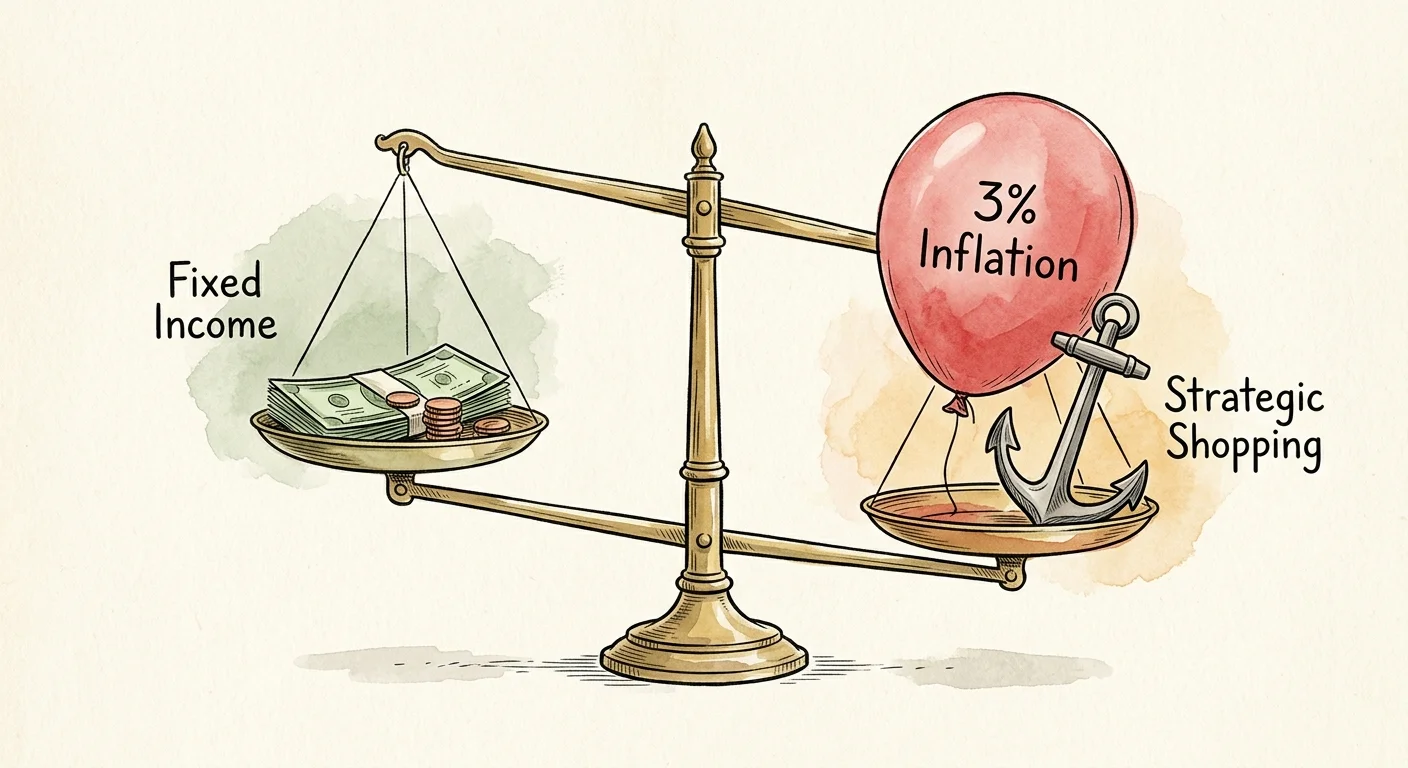
Managing money in retirement requires an entirely different approach than budgeting during your prime earning years. When you rely on Social Security, a pension, or a fixed withdrawal from your retirement accounts, your income does not automatically scale up when grocery and energy prices surge. According to recent Consumer Price Index data, the rising costs of healthcare, housing, and basic necessities consistently chip away at the discretionary funds of older Americans. A seemingly modest three percent annual inflation rate drastically reduces your purchasing power over a five-year period, leaving you with far less wiggle room for household upgrades, gifts for grandchildren, or personal comfort items.
This economic reality makes seasonal sales an essential component of your financial strategy rather than just a casual hobby. Bargain shopping for deep discounts is no longer about clipping physical coupons for pocket change; it is about executing a macro-level strategy to time the market for durable consumer goods. By shifting your spending habits to match predictable retail cycles, you absorb the shock of inflation without downgrading your lifestyle. The psychological toll of financial stress lightens significantly when you wrest back control over your spending schedule, transforming a reactive budget into a proactive wealth-preservation tool.

Strategy Pillar One: Mastering the First-Quarter Shopping Calendar
The first three months of the year offer some of the most reliable discount windows for specific categories of durable goods. January brings the legendary white sales, a retail tradition dating back over a century, where stores offer massive markdowns on bedding, towels, and home linens. Retailers desperately want to clear out their warehouses after the holiday rush and reset their inventory for the upcoming spring season. This makes late January an exceptional time to refresh your household textiles at a fraction of their normal cost.
February follows with steep discounts on winter apparel. Stores absolutely must make room on their racks for spring clothing by mid-February, which means heavy winter coats, thermal wear, and waterproof boots drop in price by as much as sixty percent. This is the perfect moment to perform a cash-flow audit. Review your bank statements from the holiday season, identify any unnecessary spending leaks, and redirect those funds toward a sinking fund for next winter’s essentials. If you realize your current winter coat is fraying, purchasing a high-quality replacement in February rather than next November keeps a significant amount of money in your pocket.
March steps into the spotlight as the ideal time for luggage and travel accessories. With the holidays long gone and summer vacations still months away, demand for suitcases plummets. Retailers respond by slashing prices to stimulate sales. If your retirement plans include travel, leveraging the March lull allows you to upgrade your gear without straining your travel budget.

Strategy Pillar Two: Navigating Mid-Year Seasonal Sales and Prime Opportunities
The warmer months of May through August require a slightly different approach, as the focus shifts toward home appliances and digital technology. Memorial Day weekend in late May serves as the prime launchpad for major household appliance sales. Manufacturers typically release their new refrigerator, washer, and dryer models in the spring. To free up showroom space, retailers liquidate their older, perfectly functional inventory during the long weekend. If your appliances are aging, surviving until late May ensures you capture these deep markdowns.
July is no longer just a quiet summer month; it has evolved into a massive mid-year retail event largely driven by major e-commerce platforms. Black Friday-level deals on electronics, smart home devices, and small kitchen appliances flood the market during this period. The most effective way to capitalize on July sales is through smarter saving automations. Set up a direct, automatic transfer from your checking account to a dedicated savings account every single month starting in January. When July arrives, you will have accumulated the exact amount of cash you need to upgrade your tablet or television without dipping into your core emergency fund.
August closes out the mid-year cycle with back-to-school sales. While you might not need a new backpack or a geometry set, these sales represent the best time of year to purchase a new laptop, desktop computer, or basic office supplies. Retailers fiercely compete for student dollars by heavily discounting technology, and astute seniors can easily swoop in and secure a top-tier computer for managing finances or staying connected with family at rock-bottom prices.

Strategy Pillar Three: Maximizing Year-End Bargain Shopping and Mindful Spending
The final quarter of the year is characterized by relentless marketing campaigns, making mindful spending your most valuable asset. October through December features the highly publicized Black Friday and Cyber Monday events, followed immediately by aggressive post-holiday liquidations. It is incredibly easy to buy things you do not genuinely need simply because the price tag claims the item is seventy percent off. The anticipation of a bargain often overrides rational budgeting decisions.
To navigate this chaotic shopping calendar, you must create a strict shopping list in October. Write down exactly what you need to purchase and document the baseline prices of those items at multiple stores. When late November arrives, you will possess the data required to know if that television or vacuum cleaner is actually on a historic sale, or if the retailer artificially inflated the base price just weeks prior to make the discount look larger.
Furthermore, the days immediately following Christmas offer unparalleled opportunities for senior savings on seasonal decor, wrapping paper, and specialty food items. Purchasing your holiday supplies for the following year on December 26th at an eighty percent discount requires storage space and foresight, but it completely removes a major expense from your budget for the following December.

Insights from Behavioral Economists on Mindful Spending
Retail environments, both physical and digital, are meticulously engineered to bypass your logic and trigger an emotional spending response. Behavioral economists frequently study a concept known as anchoring bias, which retailers use to their immense advantage. Anchoring bias occurs when a store shows you an artificially high original price — say, $1,000 — crossed out next to a sale price of $600. Your brain anchors to the perceived $400 savings rather than the reality that you are still spending $600. According to Federal Trade Commission guidelines on deceptive pricing, consumers should evaluate an item based entirely on its utility and the final asking price, entirely ignoring the supposed percentage discount.
Digital retailers amplify this pressure by utilizing scarcity tactics. You will frequently encounter countdown timers ticking away the seconds on a deal, or bright red text warning you that only two items remain in stock. These elements intentionally induce a state of panic, pushing you to bypass your retirement budgeting rules and make a split-second purchase. Understanding these psychological triggers empowers you to step back, close your web browser, take a deep breath, and evaluate whether the purchase genuinely aligns with your long-term financial stability.

Action Lab: Calculating Your True Senior Savings
Let us walk through a concrete example of how timing your purchases fundamentally transforms your cash flow. Imagine your twelve-year-old washing machine starts making unsettling grinding noises in early February. You could panic, rush out to a big-box store, and buy a replacement immediately for $900. However, by paying a local handyman a small fee to patch it up, or by utilizing a local laundromat for your heaviest loads until the Memorial Day sales event, you can often purchase that exact same machine for $600.
That strategic delay creates a direct, tangible savings of $300. The most critical step in this process is deciding what happens to that saved money. If you leave that $300 floating aimlessly in your checking account, it will inevitably vanish into everyday expenses like groceries, gas, or dining out. Instead, immediately transfer that $300 into a dedicated high-yield savings account the moment your new washing machine is delivered.
If you execute this exact strategy across three major household purchases a year — waiting for a seasonal sale on an appliance, a piece of technology, and a home maintenance tool — you easily bank over $1,000 annually. Keep a simple ledger on your kitchen counter to track these victories. This tangible, written record reinforces your bargain shopping habit, proving to you month after month how effectively you manage your retirement funds.

Guardrails and Pitfalls: Protecting Your Retirement Budget
While chasing deep discounts is financially rewarding, it carries distinct risks that can undermine your retirement budget if you are not careful. The most dangerous trap is financing a sale item through a high-interest credit card. If you purchase a heavily discounted television but carry the balance on your credit card for eight months, the accrued interest entirely consumes the money you saved at the register. Recent Federal Reserve reports indicate that credit card interest rates are sitting at historic highs, making revolving debt incredibly punishing for retirees on fixed incomes.
You must also exercise extreme caution with modern “Buy Now, Pay Later” financing services embedded in almost every online checkout process. These services fracture a single purchase into multiple payments over several weeks. While they seem convenient, managing multiple installment plans simultaneously severely complicates your monthly cash flow, dramatically increasing the risk of overdraft fees or missed payments. The Consumer Financial Protection Bureau strongly advises older adults to monitor their cash flow rigorously before committing to these fractured payment schedules.
Finally, inspect the return policies on clearance items with ruthless scrutiny. A ninety percent discount is financially worthless if the item is defective, does not fit, or fails to function, and the retailer has designated the purchase as a final, non-refundable sale. Always confirm that standard manufacturer warranties remain fully valid on clearance models before handing over your credit card.
Frequently Asked Questions About Senior Discount Timing
Do senior discounts stack with seasonal sales?
In most instances, major retailers do not allow you to stack a standard age-based markdown on top of a Black Friday or clearance price. The point-of-sale system will usually apply whichever single discount provides the deeper price cut. However, local independent businesses are occasionally more flexible. Keep the math simple and always politely ask the cashier if they can apply your senior discount to the promotional price just in case the store policy allows it.
How do I know if a sale price is genuinely the lowest of the year?
You can effortlessly track historical pricing data using free online browser extensions or websites that monitor the cost of specific items over a twelve-month period. When you check the price history chart for a product, you will instantly spot if the retailer quietly raised the base price right before a holiday event just to make the upcoming discount look larger. This data protects you from falling for fake sales.
Are outlet malls better for senior savings than timing retail sales?
Outlet malls are not always the bargain havens they appear to be. Many premium clothing and home goods brands specifically manufacture lower-quality product lines exclusively for their outlet locations, using inferior fabrics or cheaper components. You often secure a much better long-term value by waiting for a premium brand to hold its end-of-season clearance sale at its primary retail location, ensuring you get superior durability for your money.
Should I use credit cards to maximize shopping rewards during sales?
Using a cash-back or travel rewards card makes excellent financial sense only if you possess the discipline to pay the balance in full before the billing cycle ends. If you carry a balance into the next month, the double-digit interest rates will obliterate your rewards and your initial point-of-sale savings. Treat your credit card exactly like a debit card by spending only the money that currently sits available in your checking account.
Challenge Yourself to Wait for the Perfect Window
Look around your home today and identify one significant item you plan to replace within the next twelve months. It might be a fading television, a struggling dishwasher, or a worn-out winter coat. Mark the ideal month to purchase that item on your wall calendar right now, and commit to ignoring that replacement until the target month arrives. This simple act of delayed gratification puts you firmly back in the driver’s seat of your financial life. Every single dollar you keep out of a retailer’s pocket is another dollar financing your peace of mind and long-term security. By leaning into these predictable seasonal rhythms, you fiercely protect your nest egg and build a sustainable, comfortable lifestyle that honors a lifetime of hard work.