You can legally return a dead shrub twelve months after purchase, and you can exchange outgrown kids’ shoes a year later. Retailers quietly build generous perks into their fine print, yet millions of shoppers throw away hard-earned money instead.
Corporate marketing departments rarely advertise these consumer protections because high claim rates cut directly into quarterly margins. Understanding how store returns really work gives you an immediate financial edge every time you reach the cash register.
We analyzed policy manuals across major retail chains to uncover the lesser known return policies that save real money. Here is your actionable guide to mastering store return policy secrets.
Tip #1: Target’s 365-Day Private Label Guarantee
Most shoppers assume Target enforces a standard 90-day return window across its entire inventory. That assumption costs everyday families hundreds of dollars each year in unused value.
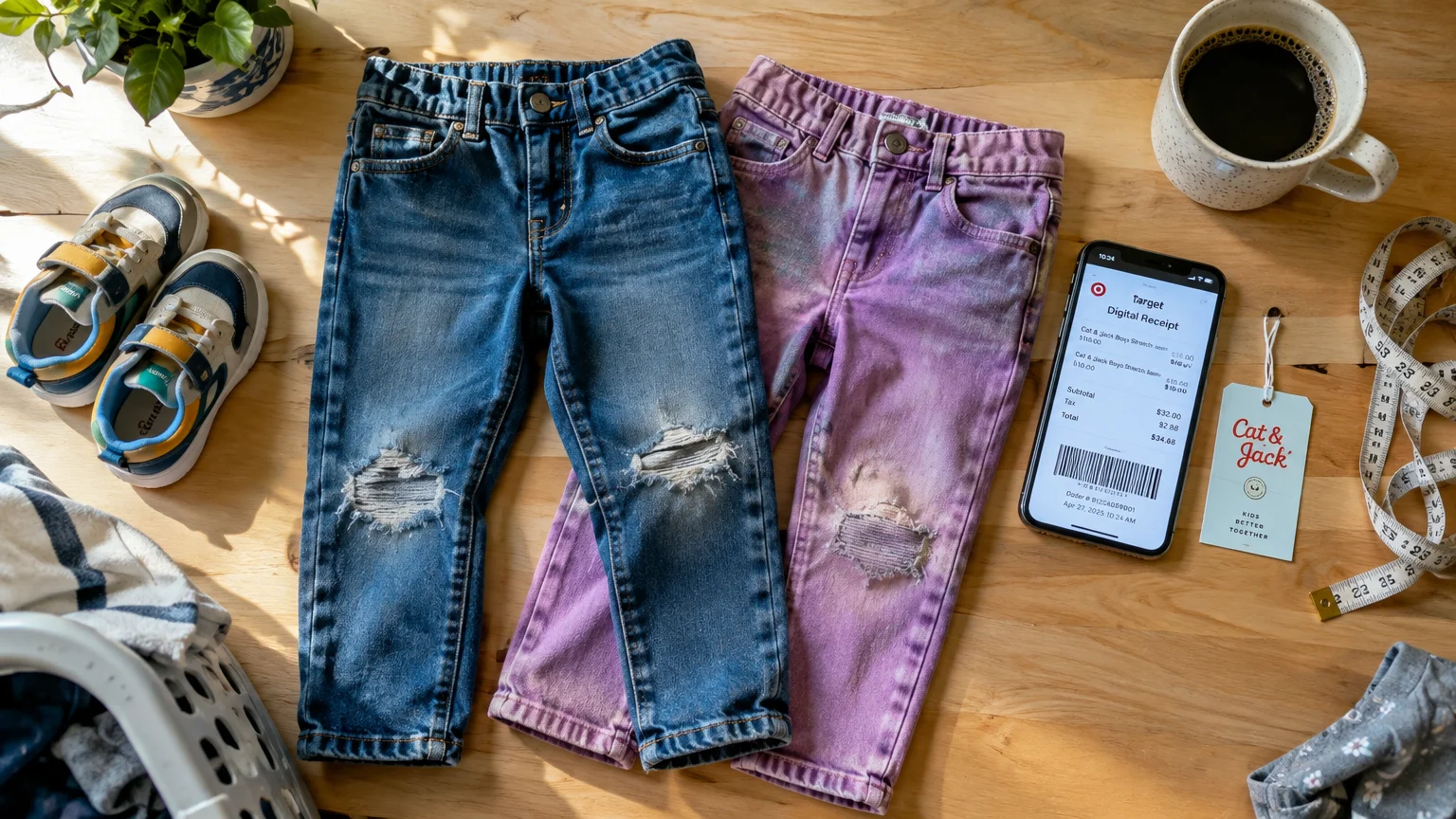
Target offers an incredible 365-day return window on more than 45 of its private-label brands. If you are not completely satisfied with an owned brand item, you can return it within a full year for a refund.
This policy covers household names like Cat & Jack, Good & Gather, Up & Up, and All in Motion. Parents frequently utilize this guarantee when children wear holes through Cat & Jack knees before the year ends.
Target honors this satisfaction guarantee even if your child simply outgrows the clothing within twelve months. You receive full credit to replace the items with larger sizes.
You cannot simply bring in bags of unmarked clothes without documentation, however. The company recently tightened verification rules to prevent rampant return fraud.
You must present proof of purchase at customer service. Fortunately, scanning your digital Target Circle barcode at checkout automatically stores your receipts inside the app for seamless tracking.
Non-receipted returns face strict annual caps and frequent denials. Keep your digital transactions tidy to unlock this powerful retail perk whenever your kids outgrow their wardrobes.
Target also allows full refunds on perishable grocery items under the Good & Gather banner. If produce spoils prematurely or pantry goods fail to meet taste expectations, simply present your digital receipt for an immediate refund.

Tip #2: The Home Depot’s 1-Year Plant Guarantee
Landscaping your yard represents a substantial financial investment that carries undeniable biological risks. Harsh winters, summer droughts, and poor soil can kill expensive shrubs within weeks.
The Home Depot protects your garden budget with an exceptional 365-day plant guarantee. The retailer will replace or refund perennials, trees, and shrubs for up to an entire year after purchase.
If an expensive Japanese maple or boxwood shrub perishes after nine months, do not throw it into the compost bin. Dig it up and bring it straight back to the garden center.
You must bring the dead plant and its root ball back to the store. Customer service associates need physical proof of the plant’s demise before processing the transaction.
You also need your original purchase receipt or the credit card you used at checkout. Cashiers can easily look up transactions on your card within the store’s central database.
Pay close attention to botanical categories when shopping for your yard. This generous one-year guarantee does not apply across every garden aisle.
Standard annuals and indoor houseplants remain subject to the standard 90-day return window. Ensure you check plant tags carefully before purchasing to maximize your coverage.
Maximizing store return policies like this turns risky exterior renovations into guaranteed improvements. You can landscape your property with confidence, knowing dead greenery will not drain your savings.
Tip #3: Costco’s Hidden 90-Day Tech Exception
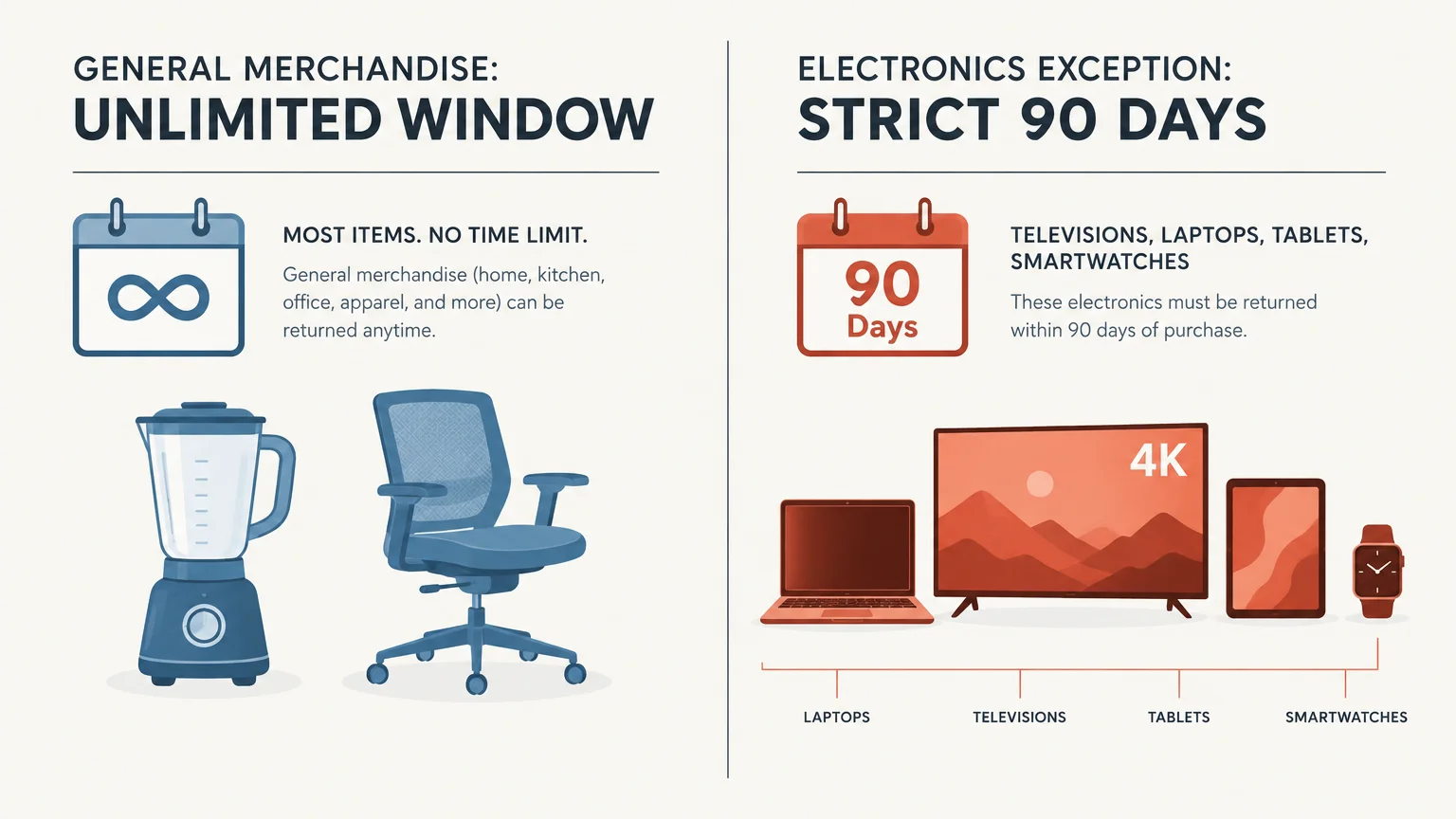
Costco built its legendary reputation on an essentially unlimited, risk-free satisfaction guarantee. Members frequently boast about returning decade-old blenders or stained couches without encountering pushback.
This legendary leniency creates an expensive blind spot for tech buyers. In reality, Costco enforces a strict 90-day return window on all major electronics.
The 90-day restriction covers televisions, desktop computers, laptops, tablets, major appliances, smartwatches, and cameras. The countdown timer starts on the exact day you purchase or receive delivery.
If your 85-inch television develops screen issues on day 95, customer service will decline a direct return. You must instead rely on Costco Concierge Services or manufacturer warranties for repairs.
Costco enacted this firm cutoff after realizing customers were treating the warehouse as a free upgrade program for flat-screen televisions. The company absorbed massive inventory losses before updating its rules.
General household goods, furniture, and pantry supplies still enjoy an open-ended return timeline. You can even cancel your annual membership for a 100% refund at any point during the year.
Costco mitigates the 90-day tech restriction by extending manufacturer warranties to two full years on major electronics. Their complimentary concierge service provides free technical support and assists with warranty claims after returns expire.
This single piece of knowledge prevents costly arguments at the customer service desk. Respect the 90-day boundary, and Costco remains one of the safest shopping environments in retail.
Tip #4: REI Co-op’s Tiered Return Policy
Outdoor recreation equipment demands serious capital investment. A single four-season tent or high-performance hiking pack can easily cost several hundred dollars.
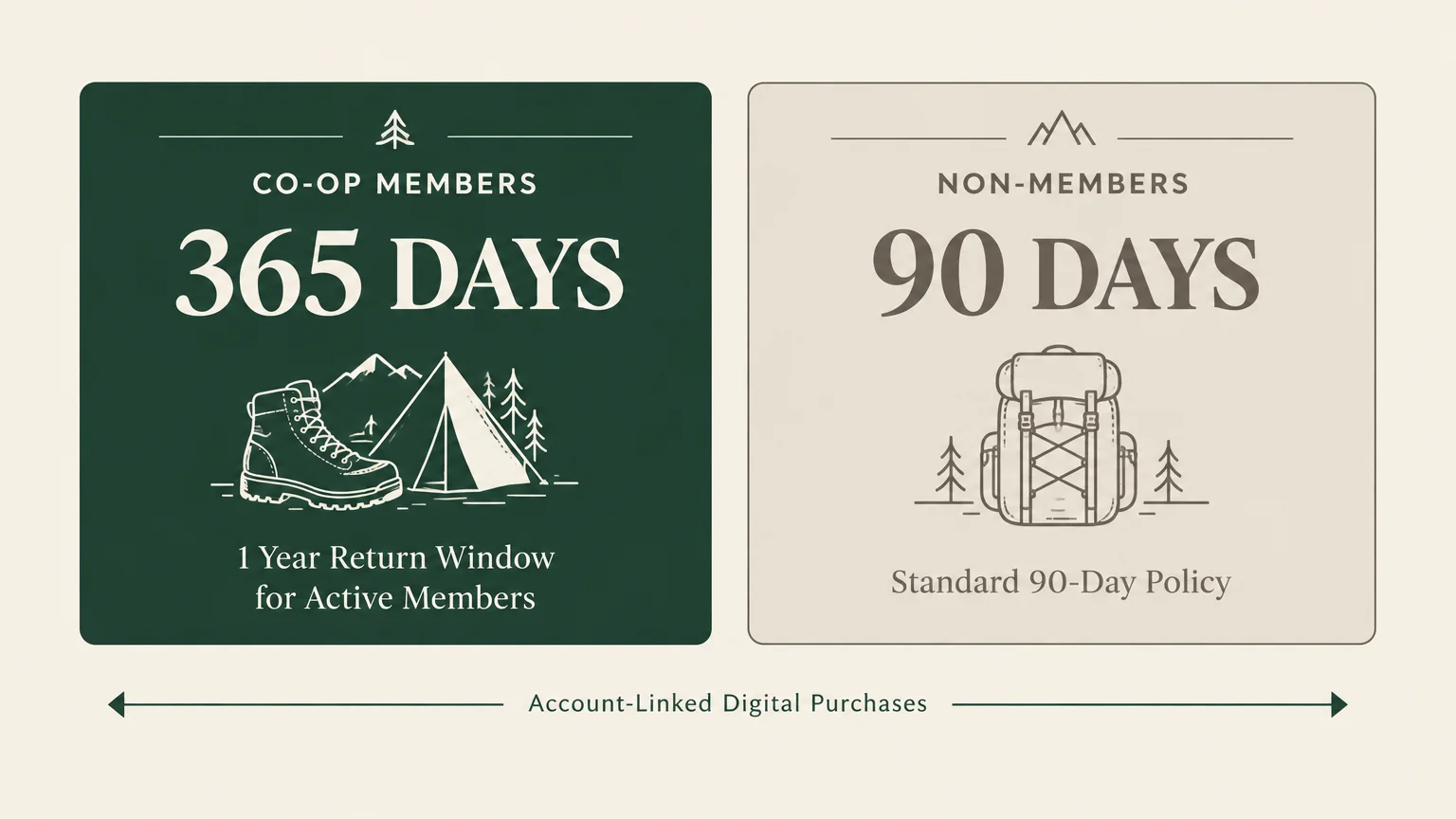
REI Co-op offers one of the most generous return policies in retail, but only if you join their club. The store uses a two-tiered system that heavily favors registered members.
Members who pay a one-time $30 lifetime fee receive a comprehensive 365-day return window on gear. Non-members receive only 90 days to test and return purchases.
The member policy permits you to test boots on rough mountain trails or pitch tents in wet conditions. If the gear fails to meet your performance standards, you can return it clean.
Stores expect returned gear to arrive clean and undamaged by deliberate neglect. Normal wear from genuine field testing is completely acceptable under the co-op guarantee.
Take note of critical category exceptions that apply to everyone. Outdoor electronics, including GPS devices, cycling computers, and fitness trackers, carry a strict 90-day limit for all shoppers.
A single successful gear return easily recovers the $30 lifetime membership fee. Joining before buying technical hiking gear provides an immediate twelve-month safety net for your outdoor budget.
Because member purchases attach directly to your member number, you never have to preserve physical paper receipts for REI returns. Associates can instantly pull up your entire purchase history directly on the store terminal.

Tip #5: IKEA’s Assembled Furniture Grace Period
Building flat-pack furniture tests patience, relationship stability, and spatial awareness. Nothing hurts more than spending four hours assembling a wardrobe only to discover it overwhelms your room.
Most furniture retailers refuse to accept opened boxes, or they assess brutal 20% restocking fees on returned items. IKEA breaks the industry mold with a remarkably forgiving return structure.
IKEA allows customers 365 days to return brand-new, unopened products for a complete refund. More surprisingly, the retailer grants a 180-day window for opened and fully assembled furniture.
You can bring that fully assembled bookshelf or modular desk back to the returns department within six months. As long as the item is clean, unstained, and unmodified, you will receive your money back.
You must provide proof of purchase through a physical receipt or your IKEA Family digital membership record. Never discard your paperwork until your layout is completely settled.
The furniture cannot show signs of abuse, pet damage, or custom modifications like paint or aftermarket hardware. The store must be able to resell the piece in its As-Is circular hub.
You do not have to disassemble furniture back into flat panels before loading it into your vehicle. IKEA employees will accept the fully built item directly at the customer returns bay and inspect the joinery on-site.
Despite the hauling effort, this 180-day buffer eliminates the agonizing fear of buyer’s remorse. You can test home furnishings inside your actual living space without financial vulnerability.
Tip #6: Ulta Beauty’s Split-Window Payout Structure
Buying cosmetics and skincare products online or under bright store lighting carries substantial trial-and-error risk. Foundation shades oxidize, fragrances trigger headaches, and facial serums can provoke unexpected skin breakouts.
Ulta Beauty accommodates consumer experimentation by accepting returns on opened, gently used beauty items. You do not have to swallow the cost of a luxury moisturizer that ruins your complexion.
Stores require the returned bottle or palette to retain the majority of its original volume. Returning empty containers or scraping out product constitutes abuse and will trigger immediate rejection.
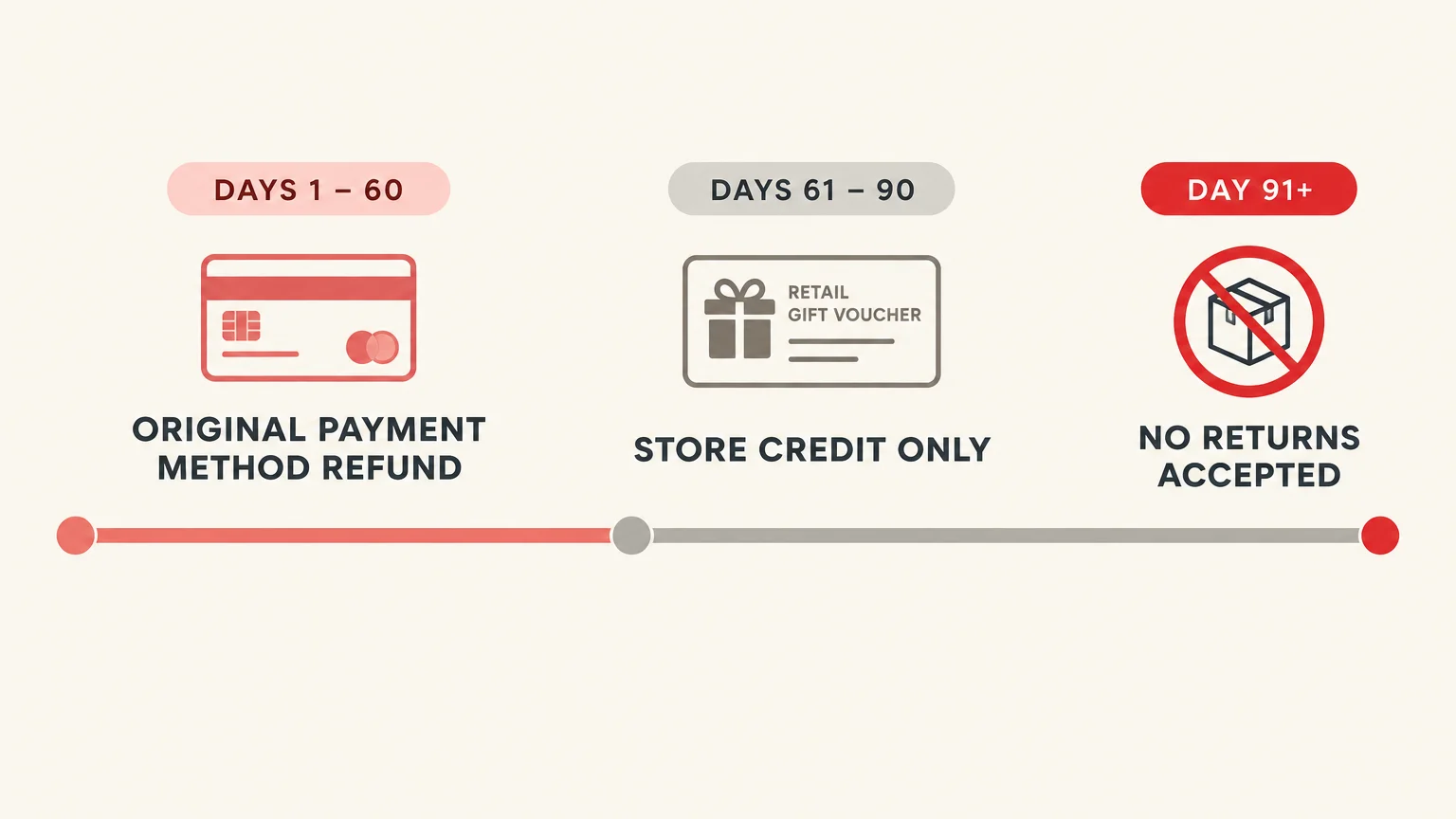
The critical secret lies in Ulta’s payout timeline. Your return method changes drastically depending on whether you arrive on day 30 or day 31.
Returns completed within 30 days of purchase qualify for a 100% refund to your original payment method. The money flows straight back to your debit card, credit card, or cash wallet.
Returns processed between 31 and 60 days qualify solely for in-store merchandise credit. If you miss that initial 30-day window, your cash remains locked inside the Ulta retail ecosystem.
Always test new cosmetics immediately after purchase rather than letting them sit unboxed on your vanity. Tracking the 30-day calendar boundary ensures you retain complete liquid control over your beauty budget.
Link your Ulta Rewards account during every single checkout. Digital account tracking protects your transaction history if you misplace the tiny paper thermal receipts.
Tip #7: Bath & Body Works’ Rolling ID Limit
Bath & Body Works enthusiasts love testing seasonal candle scents, body mists, and foaming soaps. For years, the retailer maintained a legendary, virtually unchecked exchange policy that invited widespread secondary-market exploitation.
The company overhauled its policies to protect against organized retail fraud while preserving legitimate customer flexibility. Understanding these modern guardrails prevents sudden embarrassment at the checkout desk.
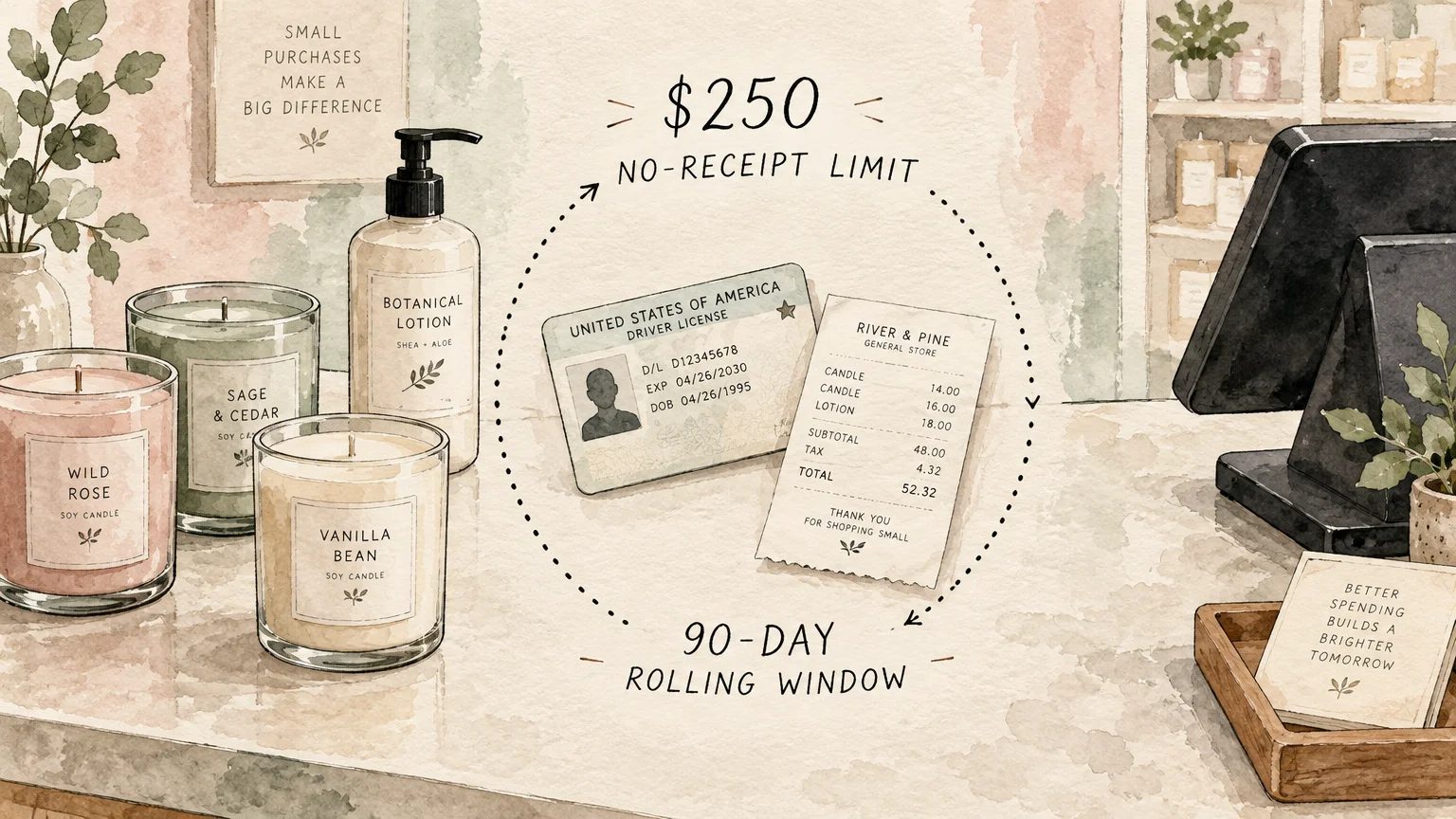
You can return items within 90 days with your original purchase receipt for a full refund. Beyond 90 days, or without documentation, store policies shift dramatically.
Non-receipted returns and exchanges are strictly capped at $250 within any rolling 90-day window. Associates must scan a government-issued photo ID into an electronic return-verification system to enforce this rule.
Third-party tracking software calculates your non-receipted return aggregate across all locations. If your transactions exceed $250 during that three-month window, the terminal automatically blocks further returns.
Kohl’s recently enacted similar restrictions to protect profit margins. Kohl’s eliminated its historic 180-day window, moving to 120 days for store cardholders and 90 days for standard payment methods.
Retailers across every shopping sector are tightening documentation requirements and integrating computerized consumer databases. Holding on to receipts or logging digital store accounts prevents you from hitting automated fraud barriers.
Treat your purchase receipts with the same discipline as cash. Clean recordkeeping keeps you well within retail limits while unlocking every valid refund you deserve.

The Bottom Line: What This Means for Your Wallet
Store return policies are contractual boundaries established by corporate executives. When you overlook policy fine print, you effectively donate your discretionary cash straight back to retail conglomerates.
Modern retailers use advanced inventory analytics to monitor customer returns and manage corporate risk. Mastering these guidelines ensures you exercise your legitimate consumer rights without triggering fraud detection algorithms.
Adopt three operational habits every time you shop. First, download the official smartphone apps for every major store you frequent to store digital receipts automatically.
Second, set calendar reminders for 30, 90, and 180-day return cutoffs on high-value merchandise. Never let an arbitrary calendar date decide whether you keep your hard-earned money.
Third, research proprietary brand guarantees before making major household purchases. Choosing private labels with extended warranties can save you hundreds of dollars on everyday clothing and tools.
Keep your financial transactions organized and never feel guilty about returning products that fail to satisfy. Retailers account for returns in their retail pricing models, so claim every dollar you are entitled to receive.
Frequently Asked Questions
Can retail stores ban you for returning too many items?
Yes, retail chains can legally refuse service or ban shoppers who demonstrate excessive return behavior. Many large retailers use third-party security systems like the Retail Equation to track consumer return frequency.
These computerized platforms calculate risk scores based on return velocity, missing receipts, and high-value merchandise patterns. If your score exceeds corporate risk thresholds, the register terminal automatically prints a return denial.
Do you always need original packaging to return merchandise?
Packaging requirements vary significantly depending on the store and product classification. Clothing and footwear generally require original tags, while unopened home goods require pristine factory packaging for full refunds.
However, retailers like IKEA, Target, and Costco regularly accept opened merchandise under specific satisfaction guarantees. Always verify store rules before throwing away branded boxes or protective plastic wrapping.
How do stores track non-receipted returns?
Cashiers track non-receipted transactions by scanning your state driver’s license or government-issued photo identification. The magnetic strip transmits your name, identification number, and address into a centralized retail database.
Stores set rolling dollar caps, such as $250 over 90 days, to curb professional retail theft rings. Once your scanned identification reaches that financial ceiling, systems automatically reject further unverified claims.
Does returning merchandise hurt your credit score?
Standard merchandise returns never appear on consumer credit reports or affect credit scores. The credit bureaus only monitor debt obligations, payment timeliness, credit utilization, and public legal records.
However, returning large purchases on a credit card reduces your statement balance immediately. That balance reduction lowers your credit utilization ratio, which can actually help boost your credit score.
For consumer protection information, visit the Federal Trade Commission (FTC) and the Consumer Financial Protection Bureau (CFPB). For product safety and reviews, consult Consumer Reports.
Disclaimer: This article is for informational purposes only and does not constitute financial advice. The content reflects the author’s opinion and research at the time of writing. Always do your own research before making financial decisions.