
Conventional financial planning tells you that stopping work guarantees immediate budget stress. The reality is that retirement triggers sudden, overlooked cost reductions across your daily life.
When you stop commuting to a desk, an entire hidden tier of employment-related expenses vanishes overnight. You no longer pay to maintain a corporate lifestyle.
From mandatory payroll taxes to hidden everyday senior discounts, these quiet price drops protect your nest egg faster than expected. Here is how your spending shifts the moment you clock out for good.
Tip #1: Payroll Taxes Drop Off Your Radar
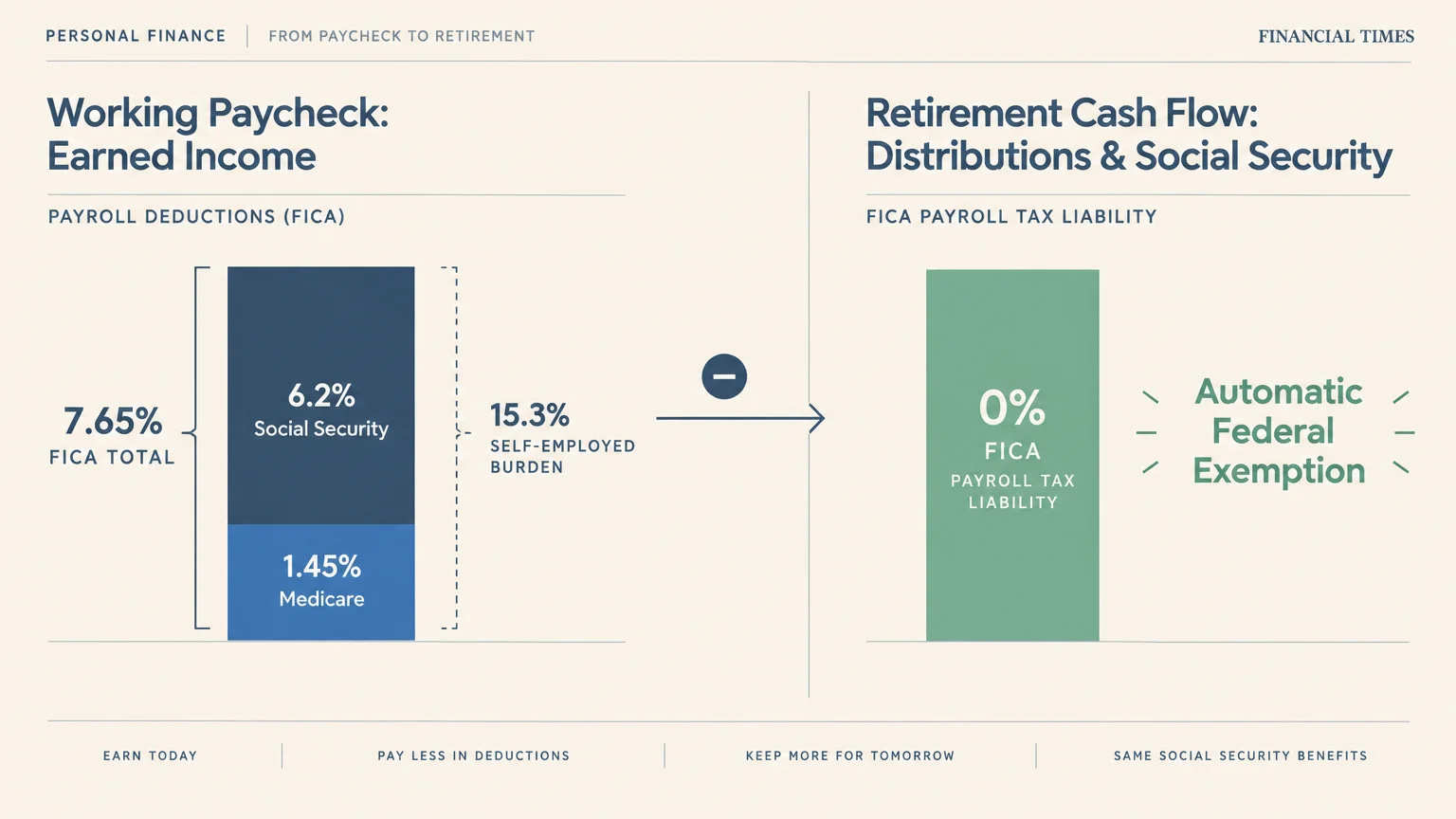
Working Americans face a mandatory 7.65% FICA payroll tax on every earned paycheck. That deduction includes 6.2% for Social Security and 1.45% for Medicare.
The moment you leave the workforce, that deduction disappears entirely. Your retirement portfolio distributions and pension payouts do not carry FICA liability.
Neither does your Social Security benefit itself. A retiree drawing sixty thousand dollars in portfolio income keeps thousands of dollars that once went straight to payroll taxes.
This single tax shift delivers an instant, built-in raise compared to your working gross income. You simply keep more of every dollar you generate.
You do not need complex tax shelters to capture this benefit. The federal tax code grants it automatically when earned income stops.
Self-employed workers experience an even larger relief. They shed the entire 15.3% self-employment tax burden when they retire.

Tip #2: Auto Insurance Slashes Your Commuter Surcharge
The average American drives roughly 13,500 miles each year during their peak career. Most of those miles involve high-risk, rush-hour commuting.
Once you retire, your vehicle usage patterns change dramatically. You can call your insurer and reclassify your vehicle from commuter use to pleasure use.
Insurers routinely drop premiums by 3% to 10% when you cross below low-mileage thresholds. Most carriers set this line between 7,500 and 10,000 annual miles.
Fewer miles also mean reduced wear, fewer oil changes, and cheaper long-term maintenance bills. Your car lasts longer because you dictate when and where you drive.
Some insurers offer pay-per-mile policies that slash costs even further. If your vehicle stays parked for days, you bank massive savings.
Completing an approved defensive driving course can knock an additional 5% to 10% off your bill. Most major insurance providers honor these easy online classes.
Tip #3: The IRS Senior Standard Deduction Lowers Your Tax Bill
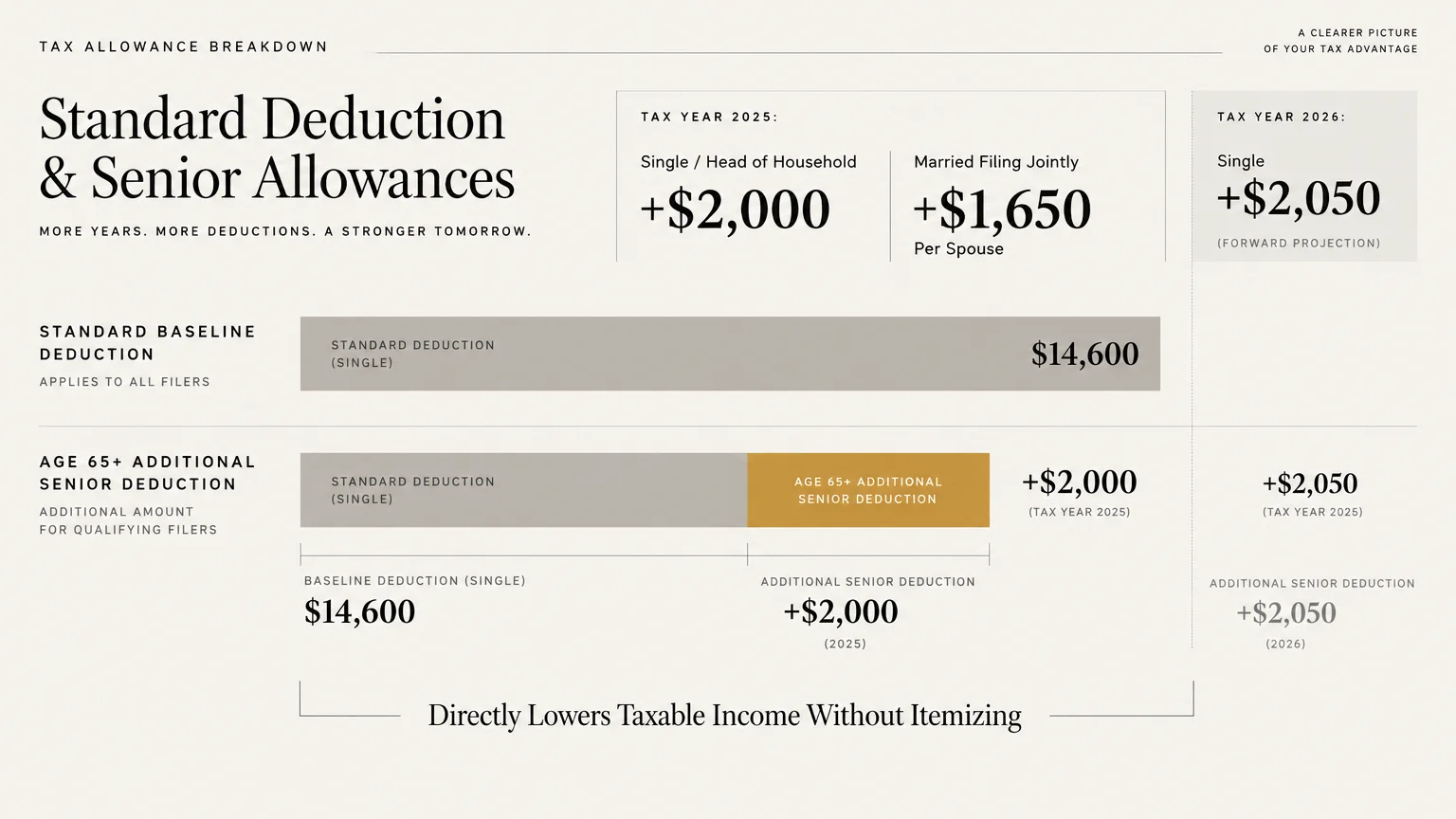
Reaching age 65 triggers an expanded standard deduction directly on your federal tax return. The IRS rewards older taxpayers with extra tax-free income allowance.
For tax year 2025, single filers and heads of household receive an extra $2,000 standard deduction. Married couples filing jointly claim $1,650 per eligible spouse.
In tax year 2026, the single deduction climbs to $2,050 while married filers retain $1,650 per spouse. That shields more of your savings from taxation.
You do not have to itemize your deductions to claim this benefit. It stacks directly on top of the standard baseline deduction automatically.
This extra buffer directly lowers taxable income, keeping your overall tax bracket lower. It leaves more liquid cash in your pocket every single spring.
Be sure to check the age-qualification box when preparing your tax return. Overlooking this single checkbox means needlessly overpaying the federal government.

Tip #4: Property Taxes Freeze or Disappear
Local property taxes represent one of the heaviest ongoing burdens for homeowners. Fortunately, municipalities offer aggressive relief programs once you turn 62 or 65.
Most states provide senior homestead exemptions that slash assessed home values for tax calculations. Some jurisdictions freeze property taxes entirely for the rest of your life.
Other states utilize circuit-breaker credits that cap your property tax liability based on current household income. These protections prevent rising real estate valuations from pushing you out.
You must actively apply through your local county assessor or tax office to claim these exemptions. They rarely apply the discount without your initial paperwork.
Filing that simple paperwork can easily save you hundreds or even thousands of dollars annually. That permanent savings stays with your home year after year.
Review your county tax portal annually to verify that your exemption status remains active. Keeping records updated prevents unexpected administrative lapses.

Tip #5: Gym Memberships Become Completely Free
Staying fit often demands hefty monthly gym dues during your working years. Those commercial membership fees disappear once you enroll in specific healthcare plans.
Many Medicare Advantage plans include zero-cost wellness programs like SilverSneakers or Renew Active. These perks cover full access to premier fitness facilities nationwide.
Over 15,000 to 17,000 commercial gyms, community centers, and local YMCAs participate in these networks. You get weight rooms, pools, and classes without paying a dime.
Canceling a $60 monthly fitness membership saves you over $700 every single year. You maintain your physical health while protecting your retirement cash flow.
Check your annual health plan documentation to see which fitness network your coverage includes. Activating your pass takes only minutes online.
Many facilities also offer specialized fitness classes tailored specifically for older adults. You gain community connections alongside free athletic equipment.

Tip #6: Lifetime Access to National Parks and Public Lands
Outdoor recreation provides unmatched adventure, but standard park admission fees add up quickly. The federal government offers retirees one of the greatest travel bargains available.
Citizens and permanent residents aged 62 and older can buy the America the Beautiful Senior Pass. A lifetime pass costs an unbeatable one-time fee of $80.
Younger adults must pay $80 every single year for standard access. Retirees pay once and enjoy unlimited admission across more than 2,000 federal recreation sites.
The pass covers entry to iconic national parks, national wildlife refuges, and national forests nationwide. It admits the pass holder and all passengers in a single vehicle.
Pass holders also secure a 50% discount on select camping, boat launching, and specialized amenity fees. That significantly cuts lodging costs on extended road trips.
If you prefer not to pay $80 upfront, you can purchase an annual senior pass for just $20. Four consecutive annual passes can be traded in for a lifetime pass.

Tip #7: College Tuition Drops to Nearly Zero
Going back to school during your working years means facing suffocating tuition bills. In retirement, higher education opens its doors at rock-bottom prices.
More than 30 states mandate free or deeply discounted university tuition for older residents. Major systems like California State University and UNC offer generous senior enrollment programs.
Residents aged 60 or 65 can audit undergraduate and graduate courses for free or nominal fees. Many institutions charge merely $10 to $20 per semester in administration costs.
You sit alongside traditional students, listen to top-tier professors, and study subjects you love. You gain world-class knowledge without taking on a single penny of debt.
Check with your local state college or university registrar to view their fee waivers. Continuing your education has never been more financially accessible.
Campuses also extend library privileges, digital software access, and athletic event discounts to senior auditors. The intellectual and social value extends well beyond the classroom.

Tip #8: Dining Expenses Shift Back into Your Control
Desk jobs fuel an expensive habit of rushed lunches, mid-afternoon coffees, and emergency takeout dinners. Commuting robs you of time and forces costly convenience spending.
Data from the Bureau of Labor Statistics shows food spending shifts dramatically after retirement. Retirees consistently cut expenses on dining away from home in favor of home-cooked meals.
You no longer rush out to grab an overpriced $18 deli sandwich between meetings. You have the time to plan, prep, and savor meals at home.
Shopping during quiet weekday mornings lets you capitalize on clearance markdowns and fresh produce sales. You avoid impulse purchases triggered by fatigue after long shifts.
When you do choose to dine out, early-bird dining specials and senior menu discounts provide substantial savings. You eat better food while spending significantly less money overall.
Cooking at home also directly supports your long-term health and wellness. You control every ingredient, portion size, and dietary preference with zero restaurant markups.

Tip #9: Professional Wardrobe and Grooming Upkeep Vanishes
Maintaining a professional appearance consumes substantial monthly cash flow during your career. Suits, dress shoes, seasonal business attire, and constant dry cleaning add up fast.
Bureau of Labor Statistics data confirms that apparel spending collapses to under 2.5% of a retiree’s budget. You swap uncomfortable corporate uniforms for comfortable, durable clothing.
You completely eliminate dry cleaning bills that once drained twenty to fifty dollars every single week. Casual wear requires simple home laundering, extending the lifespan of your garments.
Expensive cosmetic upgrades and frequent salon maintenance also shift from professional obligations to personal choices. You dictate your schedule and dress code entirely on your own terms.
Those wardrobe savings quietly preserve hundreds of dollars every month without sacrificing quality of life. You look relaxed while your bank balance stays protected.
You can also declutter your closet and sell your gently used professional wear on secondary marketplaces. Turning old suits into immediate retirement cash is an easy win.
Tip #10: Life and Disability Insurance Premiums Can Be Scrapped
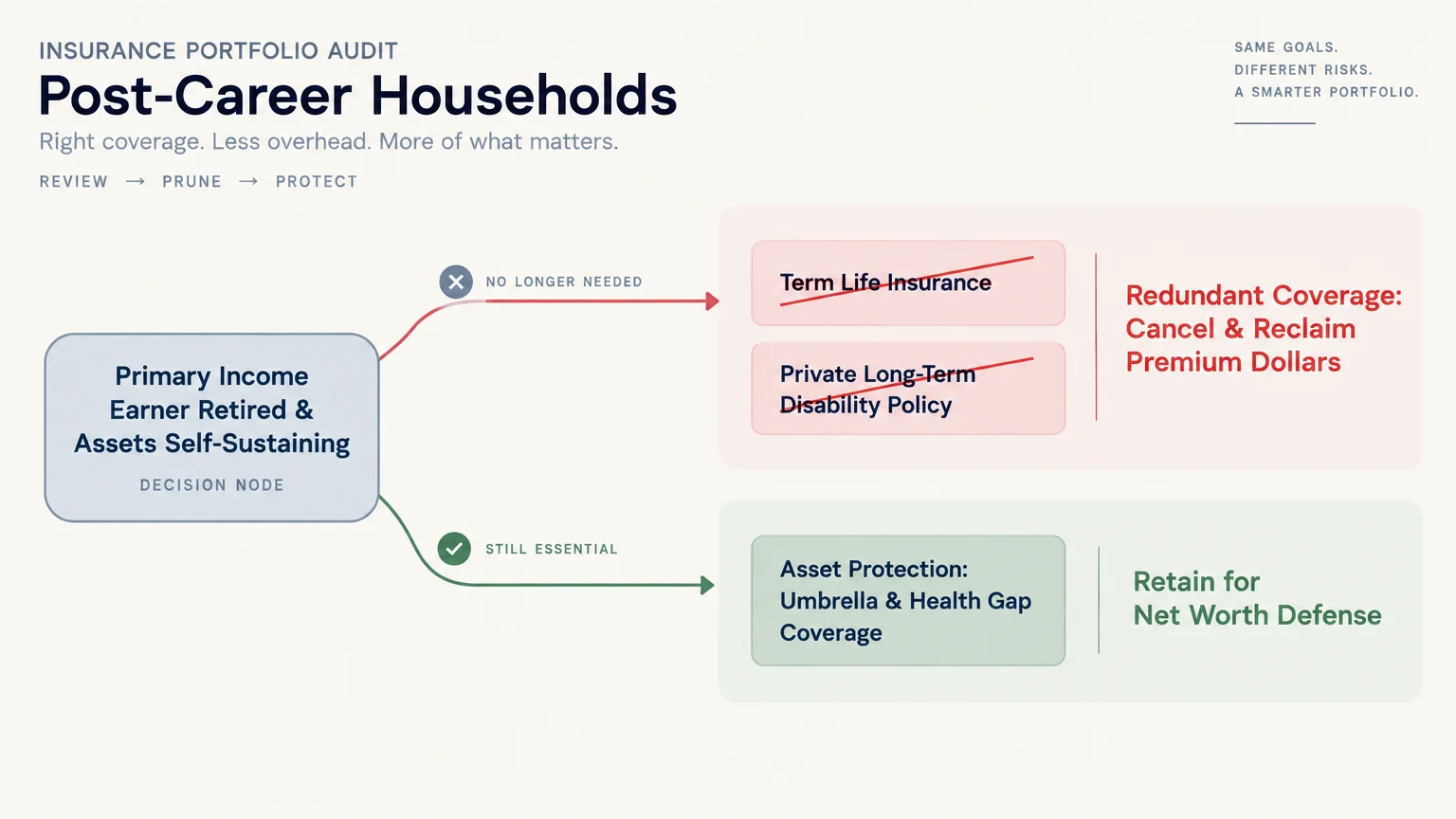
Working families rely on term life and disability insurance to replace earned income if disaster strikes. Once you retire, that underlying financial liability ceases to exist.
Your accumulated assets and investment accounts now generate your income rather than a regular biweekly paycheck. You no longer need to insure human capital you have already monetized.
Canceling term life policies and private disability coverage frees up substantial monthly cash immediately. Carrying redundant coverage only enriches insurance carriers at your expense.
Review your active policies with a fiduciary financial advisor to confirm you have reached self-insurance. Shedding unneeded premiums can redirect hundreds of dollars back into your spending pool.
Eliminate the fear-based insurance products marketed aggressively to seniors. Focus your financial resources on healthcare coverage and asset protection instead.
Every dollar saved on discarded insurance premiums can be shifted into liquid emergency cash. That strengthens your financial security far more than outdated death benefits.

Tip #11: Cellular Service Plans Slash Monthly Rates
Major telecommunications companies routinely charge premium prices to working professionals who require massive data pipelines. Retirees can exploit little-known carrier tier discounts designed for older adults.
Wireless providers offer dedicated 55+ unlimited plans that undercut their standard retail pricing. T-Mobile, Consumer Cellular, and select regional carriers offer discounts of up to 50%.
Two lines on a dedicated senior unlimited plan often cost as little as $55 to $70 monthly. Standard retail plans frequently charge double that amount for identical network coverage.
These plans include unlimited talk, text, and 5G data on the exact same nationwide towers. You experience no drop in service speed or call reliability.
Review your current wireless statement to see what tier you are paying for today. Switching to an age-qualified plan instantly lowers your monthly utility obligations.
Carriers rarely advertise these discounted rates to existing subscribers. You must initiate contact and explicitly request the age-restricted pricing tiers.

Tip #12: Travel and Transit Costs Tumble Off-Peak
Working travelers face brutal surge pricing because they must vacation during holidays, school breaks, and weekends. Retirees enjoy the ultimate financial superpower: complete calendar flexibility.
You can travel on Tuesday afternoons or during shoulder seasons when airline tickets and hotels plunge in price. Dodging peak tourist surges often cuts major travel costs in half.
Transit networks offer automatic discounts as well. Amtrak grants travelers aged 65 and older a 10% discount on most coach rail fares nationwide.
Cross-border routes shared with VIA Rail Canada drop passenger fares starting at age 60. Major hotel chains also supply instant 10% to 15% discounts upon check-in.
Combining senior discounts with off-peak booking flexibility makes luxury travel cheaper than standard working vacations. You travel more comfortably while spending far less cash.
Cruise lines and resorts frequently offer deep last-minute discounts to fill unsold inventory. Having an open calendar lets you pounce on these steep markdowns instantly.
The Bottom Line: What This Means for Your Wallet
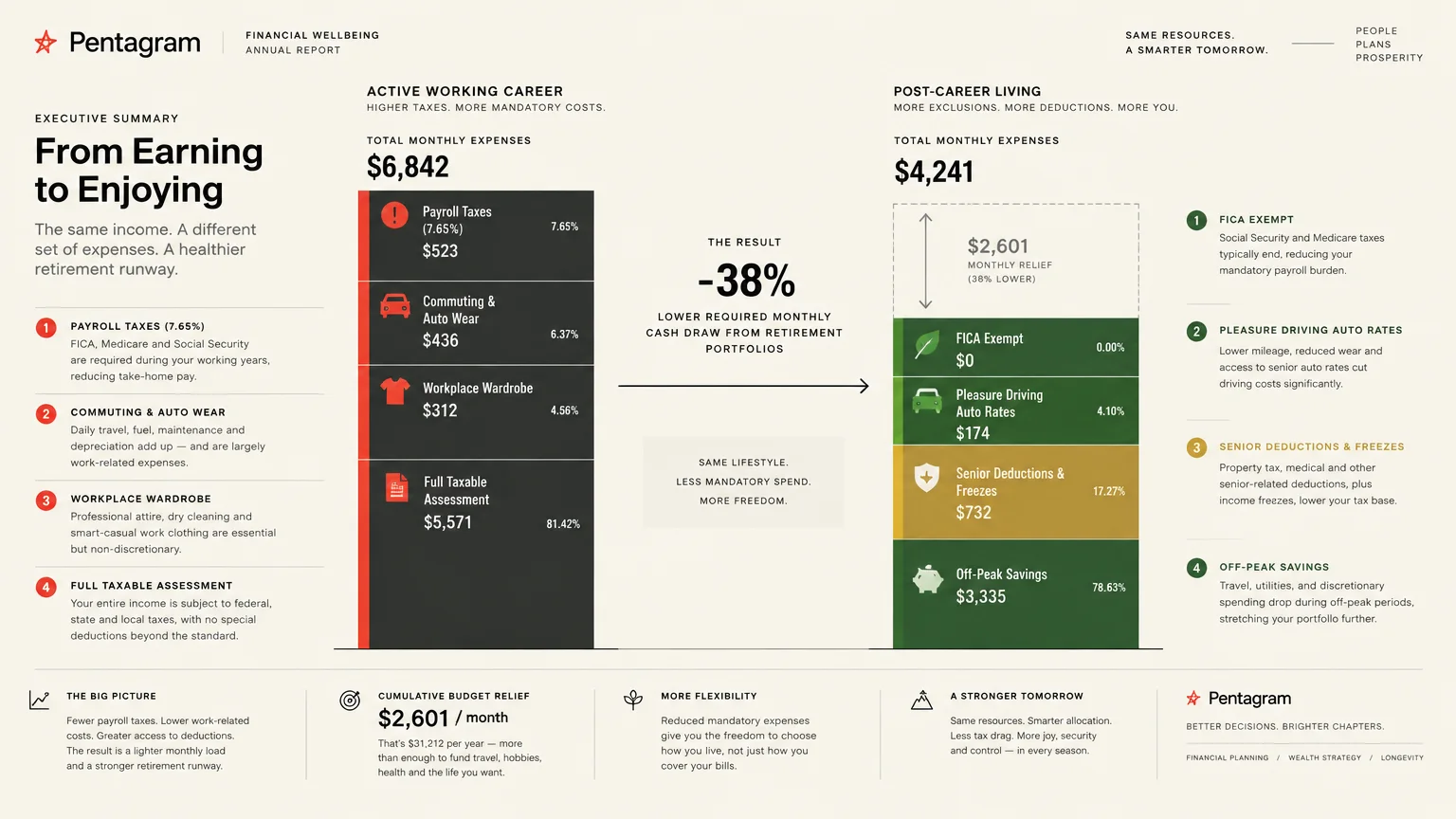
Many people delay retirement because they believe their expenses will remain entirely static. In reality, the end of your working life dismantles countless hidden costs.
When you strip away payroll taxes, commuter overhead, and professional maintenance, your core spending shrinks dramatically. You need less annual revenue to sustain your desired standard of living.
Reinvest these automatic cost savings into activities that bring you genuine joy and fulfillment. Your retirement years should deliver financial peace rather than constant budgetary anxiety.
Take inventory of your current subscriptions, taxes, and service plans today. Actively claiming these perks turns quiet discounts into substantial lifetime wealth.
A lean, optimized budget allows your investments to last longer and weather market volatility. You earn the freedom to enjoy your time without financial hesitation.
Frequently Asked Questions
Do I have to wait until age 65 to see these cost reductions?
Not at all. Many cost reductions begin the very day you stop working, regardless of your physical age.
Expenses like commuting costs, professional wardrobe care, and payroll taxes vanish immediately. Other perks like National Park passes and mobile discounts begin at ages 62 or 55.
State college tuition waivers and local property tax freezes typically unlock between ages 60 and 65. You capture savings in waves as you hit each age milestone.
Will lower spending in retirement offset rising healthcare costs?
Healthcare costs certainly rise with age, but retirement cost savings provide a vital financial cushion. Cutting commuting, clothing, and payroll taxes offsets medical out-of-pocket expenses.
Furthermore, free gym memberships and Medicare Advantage wellness perks help lower long-term health complications. Smart budgeting neutralizes medical inflation effectively.
Managing non-medical expenses proactively keeps your total budget balanced. You direct freed-up cash straight toward quality healthcare and supplemental insurance.
How do I make sure I am receiving all available property tax exemptions?
You must contact your local county tax assessor or municipal revenue office directly. State and local agencies do not apply senior exemptions to your parcel automatically.
Request applications for senior homestead exemptions, assessment freezes, and income-based property tax circuit breakers. Submitting proof of age and residency locks in your savings.
Mark application deadlines on your calendar so you never miss an annual filing window. Missing a deadline can delay your tax reduction by an entire calendar year.
Do senior discounts really move the needle on a retirement budget?
Individual discounts may seem small, but their cumulative impact across a year is substantial. Trimming auto insurance, cellphone bills, transit, and taxes saves thousands annually.
That preserved capital stays invested in your portfolio, allowing your assets to compound uninterrupted. Small everyday savings generate immense financial resilience over a multi-decade retirement.
Treating senior discounts as an integrated wealth-preservation strategy changes the math of your retirement. You retain more purchasing power while withdrawing less from your accounts.
For consumer protection information, visit the Federal Trade Commission (FTC) and the Consumer Financial Protection Bureau (CFPB). For product safety and reviews, consult Consumer Reports.
Disclaimer: This article is for informational purposes only and does not constitute financial advice. The content reflects the author’s opinion and research at the time of writing. Always do your own research before making financial decisions.