5. Standard Chicken Breast Entrees
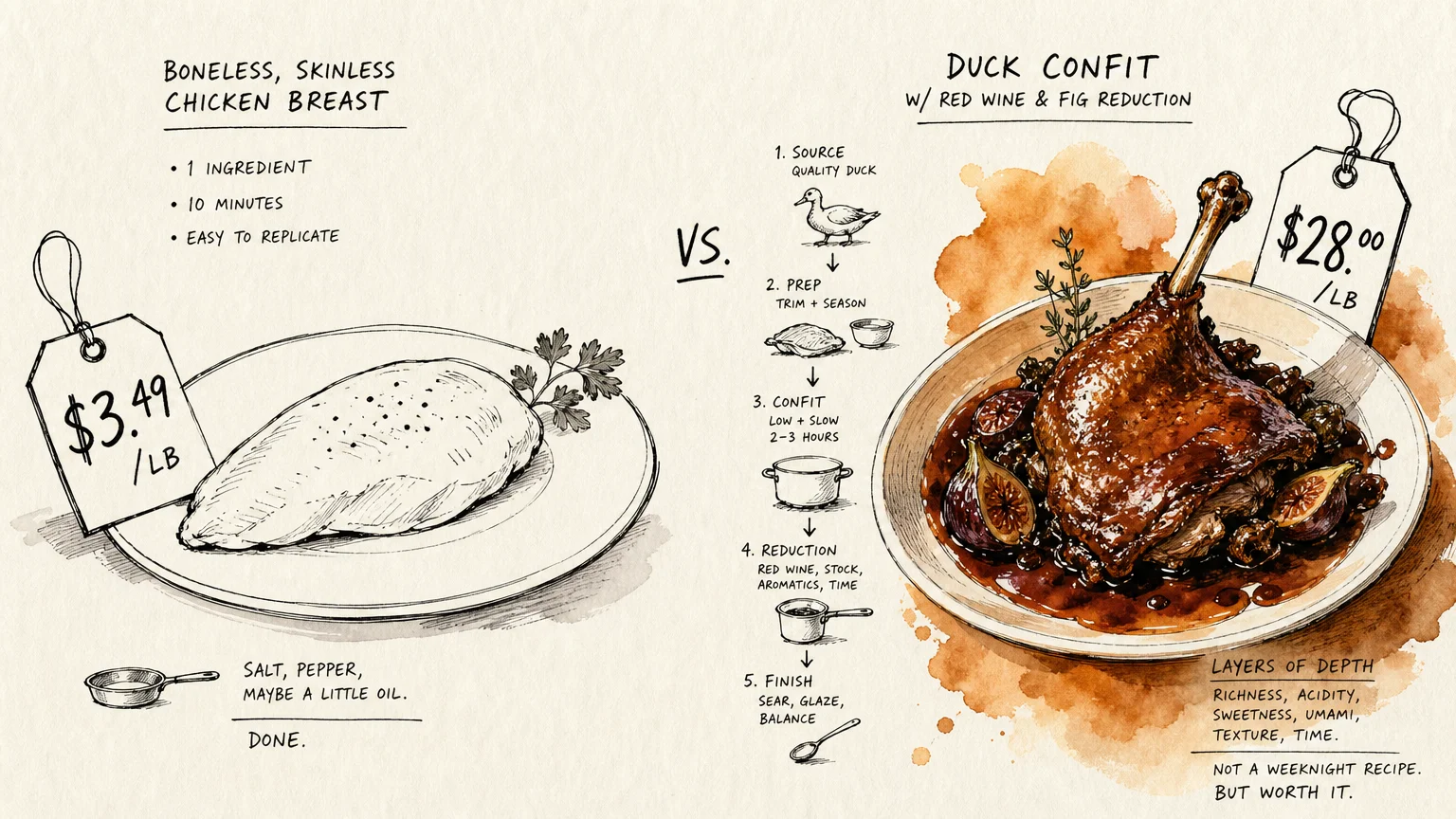
A plain, roasted chicken breast offers the worst value-to-cost ratio on a dinner menu. Chicken is incredibly cheap at the grocery store and remarkably easy to prepare at home. Restaurants rely on safe, unadventurous chicken dishes to subsidize the more expensive ingredients on their menus. When you order the chicken, you are funding the profit margins for the entire kitchen. Spend your restaurant budget on labor-intensive dishes like slow-braised short ribs, handmade pastas, or complex curries that require hours of preparation and a pantry full of specialty spices.

6. Fake Kobe Beef Sliders
True Kobe beef comes from a specific strain of Wagyu cattle raised under strict regulations in the Hyogo Prefecture of Japan. It is extraordinarily rare and expensive. Many American menus feature “Kobe-style” burgers or sliders, which is a deceptive marketing tactic to justify a massive price hike. Grounding up premium, highly marbled beef into a hamburger patty destroys the very texture you are paying for anyway. Furthermore, most of this meat is just standard domestic beef crossbred with Wagyu. Skip the overpriced buzzwords and order a standard ground chuck burger—it will taste just as good and save you twenty dollars.

7. Paid Bread Baskets
The era of complimentary bread service is slowly disappearing. Many establishments now charge five to ten dollars for a basic basket of rolls and butter. This practice serves as a direct cash grab that inflates your final bill before your appetizers even arrive. Bread fills your stomach, reducing your appetite for the main courses you actually came to enjoy. Save your money and your caloric budget for the culinary creations the chef spent time developing, rather than subsidizing the restaurant’s flour inventory.

8. Well-Done Steaks
Ordering a premium cut of beef well-done is a culinary and financial mistake. Cooking a steak past medium-rare drains the meat of its natural juices, rendering a fifty-dollar ribeye indistinguishable from a cheap sirloin. Furthermore, chefs openly admit that they reserve the finest, most perfectly marbled cuts for rare and medium-rare orders. If a steak has a slight imperfection or is nearing the end of its shelf life, the kitchen will often designate it for a well-done order, knowing the extended cooking time will mask any flaws. If you prefer well-done meat, save your money and order a braised dish that is designed to be cooked thoroughly.

9. Out-of-Season Oysters
Consuming raw shellfish requires impeccable handling and seasonal timing. Ordering raw oysters during warmer months or out of their local harvesting season drastically increases your risk of encountering dangerous vibrio bacteria. Additionally, out-of-season oysters must be shipped from distant locations, meaning the restaurant factors high freight costs into the price. You end up paying double for an inferior, potentially unsafe product. Always ask your server where the oysters originated and stick to eating them during the colder months when they are plump, local, and reasonably priced.

10. The Catch-All House Special
When a menu features a “house special” stew, casserole, or pasta toss, view it with a healthy dose of skepticism. Kitchens abhor food waste. To prevent throwing away ingredients that are about to turn, chefs will chop up various vegetables, meats, and starches, cover them in a heavy, flavorful sauce, and market the dish as a unique chef’s creation. You are essentially paying retail price for the kitchen’s leftovers. Instead, order dishes with a clear, concise list of fresh focal ingredients.

11. Over-Garnished Bloody Marys
The modern brunch scene has transformed the classic Bloody Mary into an absurd spectacle. Restaurants top these cocktails with entire slices of pizza, sliders, bacon strips, and fried chicken wings, charging exorbitant prices for the novelty. You are paying a premium for a gimmick designed to look good on social media. The actual cocktail beneath the mountain of garnishes is usually made with bottom-shelf vodka and a cheap, high-sodium tomato mix. Order a standard, expertly mixed cocktail and purchase your appetizers separately to control your spending and your sodium intake.

12. Exotic Seafood in Landlocked States
If you live a thousand miles from the nearest ocean, ordering Chilean sea bass or Hawaiian ahi tuna is a massive drain on your wallet. The logistical cost of flying fresh seafood across the country requires the restaurant to double or triple the menu price. By the time it reaches your plate, the fish has spent days in transit. You will always find better value and superior flavor by ordering proteins that are raised or grown regionally. Save your exotic seafood budget for a beach vacation.