Action Lab: Restructuring Your Restaurant Spend
Implementing this knowledge requires a deliberate cash-flow audit of your dining habits. Begin by reviewing your credit card statements from the past ninety days. Add up every transaction at sit-down restaurants, takeout counters, and coffee shops. Most households severely underestimate this number. Once you have a hard baseline, establish a firm monthly dining allowance that aligns with your broader financial goals.
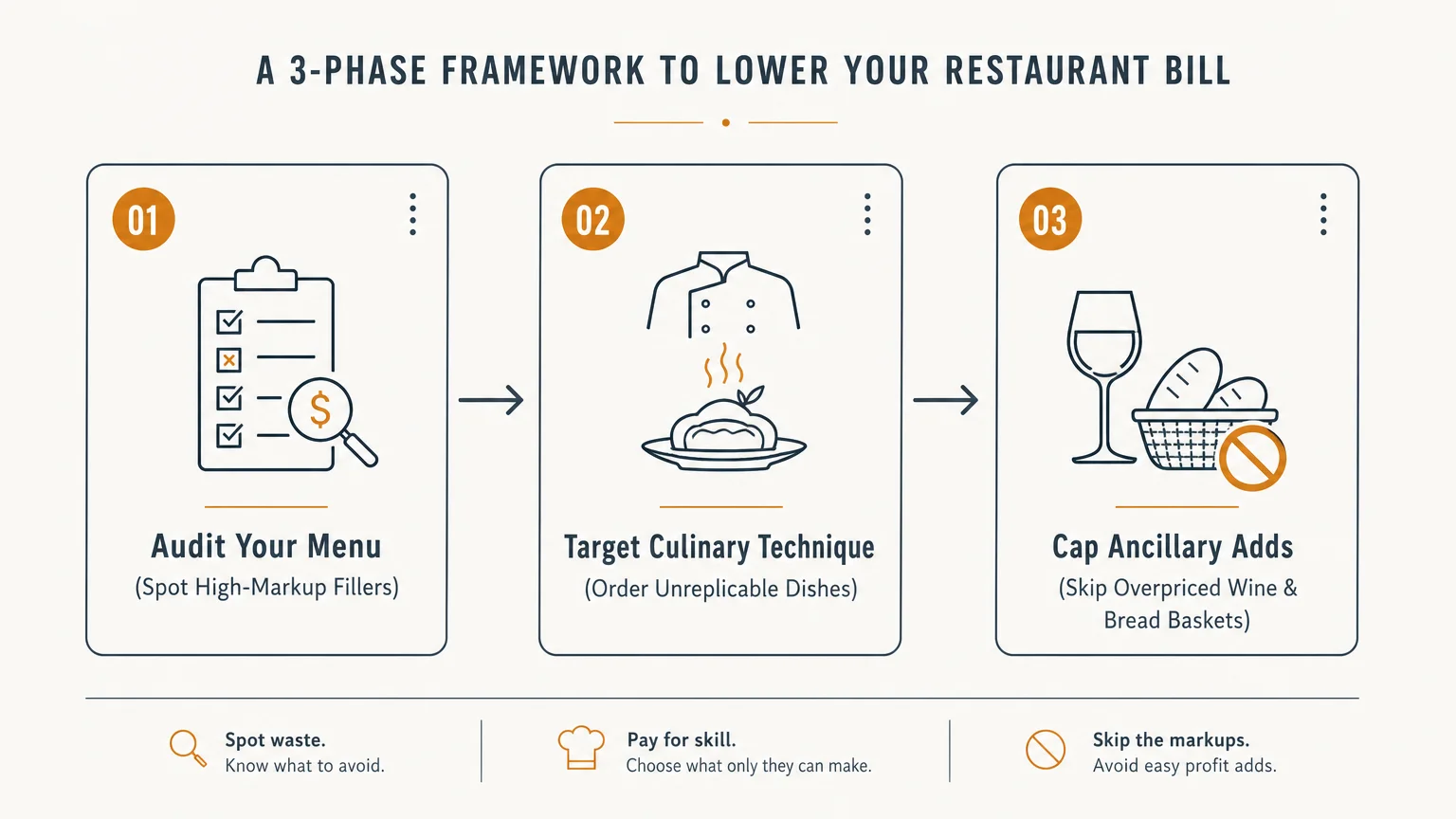
Assume your household allocates three hundred dollars a month for dining out. Instead of spreading that money across six mediocre meals where you fall victim to paid bread baskets and overpriced chicken breasts, consolidate your funds. Plan three intentional, high-quality dinners. Review the menus online before you leave the house. Look for dishes that feature slow-braised meats, complex reductions, or handmade pastas. Decide your orders away from the high-pressure environment of the dining room and the suggestive selling tactics of the waitstaff. By treating your dining budget as an investment in your quality of life, you guarantee an excellent return. You can further reinforce your saving habits by reviewing Federal Deposit Insurance Corporation savings strategies to automatically redirect the cash you save into a dedicated account.