Mastering your budget starts with your grocery cart, transforming an endless financial drain into a streamlined, cost-effective system. You can feed your household for a full week on just ten versatile foundational ingredients without sacrificing flavor or nutrition. When the checkout total creeps higher each week, stepping away from impulse buys and leaning on a strategic core list brings immediate financial relief. By focusing on nutrient-dense, multi-use staples like whole grains, adaptable proteins, and hardy vegetables, you strip away the costly excess of modern supermarkets. This approach saves you money right away while drastically reducing food waste, giving you total control over your meal planning and letting you reclaim the hours you previously spent wandering the grocery aisles.

State of the Wallet: Why Grocery Budgets Are Breaking
You push your cart through the automatic doors and immediately feel the financial pressure. According to recent consumer price index reports from the Bureau of Labor Statistics, the cost of groceries remains historically elevated, taking a significantly larger bite out of the average middle-income paycheck than it did a few years ago. Families are forced to allocate a much higher percentage of their monthly cash flow just to keep the refrigerator stocked. This phenomenon actively erodes your ability to save, invest, or comfortably pay down debt.
When a single trip to the supermarket costs the equivalent of a monthly car payment, traditional budgeting advice falls short; you need a drastic intervention. By stripping your cart down to a specific, highly versatile list of ten items, you bypass the sophisticated marketing engines designed to drain your wallet. Supermarkets are carefully engineered environments that encourage impulse spending through sensory cues and strategic product placement. When you walk in armed with an unshakeable strategy, you take back control of your household finances.
Strategy Pillars: Reclaiming Your Grocery Cash Flow
To successfully execute an extreme grocery budget, you must rethink your entire approach to acquiring food. Adopt these three foundational strategies to protect your paycheck from supermarket bloat.
Conducting a Kitchen Cash-Flow Audit
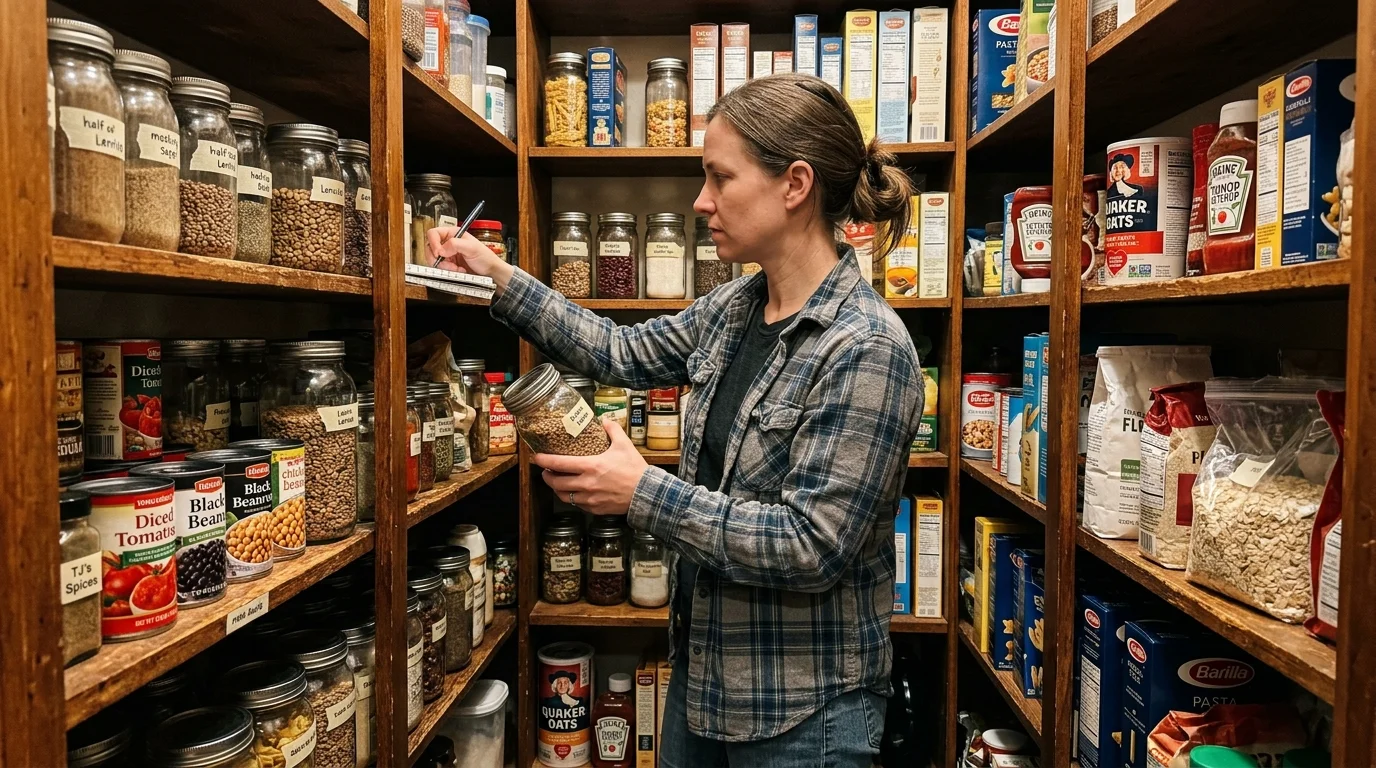
Before you even think about grabbing your reusable bags, you must conduct a thorough kitchen cash-flow audit. In personal finance, an audit involves tracking every dollar that leaves your account; in your kitchen, it means aggressively assessing the inventory you already own. You likely have hidden value sitting in the back of your pantry or the depths of your chest freezer. Take ten minutes to pull everything out and identify the half-empty bags of lentils, the frozen vegetables, and the lingering spices. This process instantly reduces your weekly grocery liability because it prevents you from buying redundant items. Furthermore, throwing away expired food is the literal equivalent of tossing dollar bills into the trash. When you build your meals around what you already possess, you optimize your existing assets and drastically lower your weekly overhead.
Automating Your Meal Planning
Financial planners constantly preach the value of automating your savings so you never have to manually transfer funds. You must apply this exact same automation principle to your meal planning. Decision fatigue is a massive driver of unexpected food spending. When five o’clock rolls around and you have no plan for dinner, you inevitably turn to expensive takeout or costly pre-packaged convenience foods. By relying on a fixed ten-item grocery list week after week, you effectively automate your nutritional decisions. You remove the burden of wondering what to cook because your raw materials remain consistent. This creates a highly predictable spending pattern, allowing you to lock in your grocery budget down to the dollar.
Practicing Mindful Grocery Spending
Mindful spending requires you to consciously direct your money toward things that bring genuine value while ruthlessly cutting the fluff. In the context of a supermarket, this means understanding unit pricing and avoiding the deceptive middle aisles. The center of the store houses heavily processed, beautifully packaged items that offer terrible nutritional value per dollar spent. Instead, stick strictly to the perimeter where whole, raw ingredients reside. Pay close attention to the price per ounce on the shelf tags rather than the retail price of the package. Retailers frequently shrink the package size while keeping the sticker price the same—a practice known as shrinkflation. By calculating the true unit cost of your food, you shield yourself from these subtle price hikes.
The 10-Item Grocery List Revealed
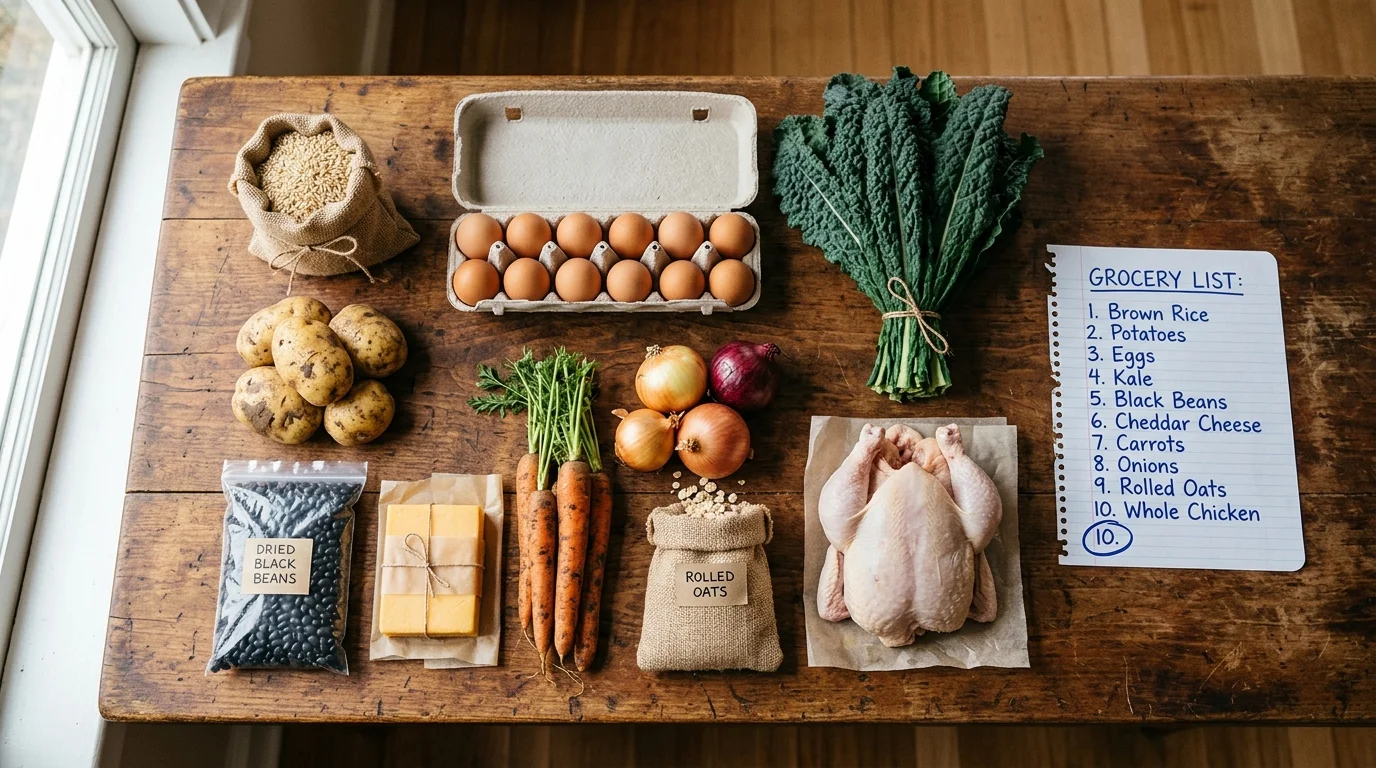
How do you survive on just ten items? The secret lies in maximum versatility and high caloric value per dollar. First, you must secure your complex carbohydrates, which serve as the cheap, filling foundation for almost every meal. A large sack of brown rice is perhaps the single best investment you can make in your grocery budget. Brown rice provides essential fiber and complex carbohydrates, cooking up bulk that stretches your more expensive ingredients. Pair this with a large container of old-fashioned rolled oats. Oats are the undisputed champion of budget breakfasts, costing mere pennies per serving. You can prepare them hot with spices you already own or soak them overnight; they provide sustained energy that prevents expensive mid-morning snack purchases.
Next, you need to acquire versatile, cost-effective proteins. A whole chicken provides unparalleled financial value compared to pre-cut, boneless, skinless breasts. You can roast the entire bird on Sunday, use the premium cuts for dinner, shred the remaining meat for weekday lunches, and finally boil the bones to create a rich, nutrient-dense stock. Complement this with a large bag of dried black beans. While canned beans offer convenience, dried beans provide triple the volume for a fraction of the cost. They deliver robust protein and fiber, easily standing in as a primary dinner entree when paired with your rice. Do not forget to grab two dozen large eggs. Eggs are a spectacular, inexpensive protein source that seamlessly transitions from a morning scramble to a fried topping over an evening rice bowl, immediately upgrading a simple dish into a satisfying meal.
Your produce selection must prioritize longevity and nutritional density over delicate, highly perishable greens. Sweet potatoes are an incredible asset for your minimalist list; they last for weeks in a cool, dark place and can be baked, mashed, or diced into hearty hashes. Combine these with a heavy bag of yellow onions, the crucial aromatic base that brings deep, savory flavor to almost everything you cook. For your greens, a large clamshell of fresh spinach offers excellent utility. You can fold fresh spinach into your morning eggs, use it as a crisp salad base for lunch, or wilt it down into your dinner grains. Round out your produce with a bag of whole apples. Apples serve as a durable, portable snack that satisfies sugar cravings without rotting in the crisper drawer after three days.
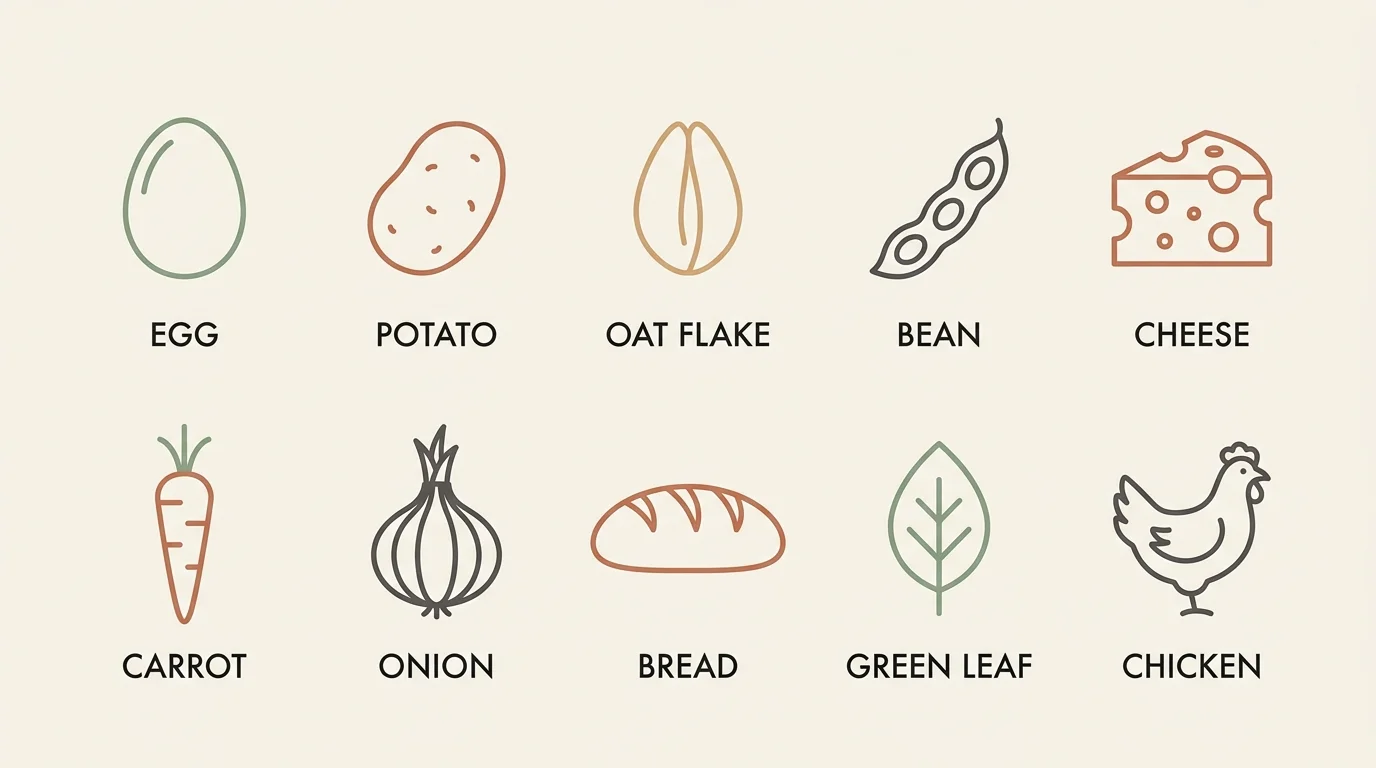
Finally, you must include a high-quality fat to bring all these components together. A bottle of extra-virgin olive oil is the tenth and final item on your list. While olive oil represents a larger upfront cost, a single bottle lasts through multiple weeks of cooking. It provides essential healthy fats, works beautifully as a base for homemade salad dressings, and allows you to roast your potatoes and chicken to perfection. These ten items—brown rice, rolled oats, a whole chicken, dried black beans, eggs, sweet potatoes, yellow onions, spinach, apples, and olive oil—form an impenetrable fortress against grocery inflation.

Real-World Voices: What Financial Experts Say About Food Costs
Behavioral economists have long studied how environmental friction influences our spending habits, and supermarkets are masterclasses in exploiting human psychology. Consumer financial experts emphasize that the sheer volume of choices in a modern grocery store naturally degrades your willpower. When you confront forty different varieties of cereal, your brain expends significant cognitive energy just making a selection, making you far more susceptible to throwing expensive, unplanned treats into your cart by the time you reach the checkout aisle.
By constraining your shopping to a hyper-specific ten-item list, you eliminate this decision fatigue entirely. Financial planners point out that the most successful budgeters do not necessarily make more money; they simply establish rigid systems that protect them from impulsive behaviors. When you adopt a minimalist grocery approach, you are effectively acting as your own chief financial officer, protecting your household bottom line from the predatory marketing tactics of the retail food industry. You shift from being a passive consumer to a highly intentional purchaser.
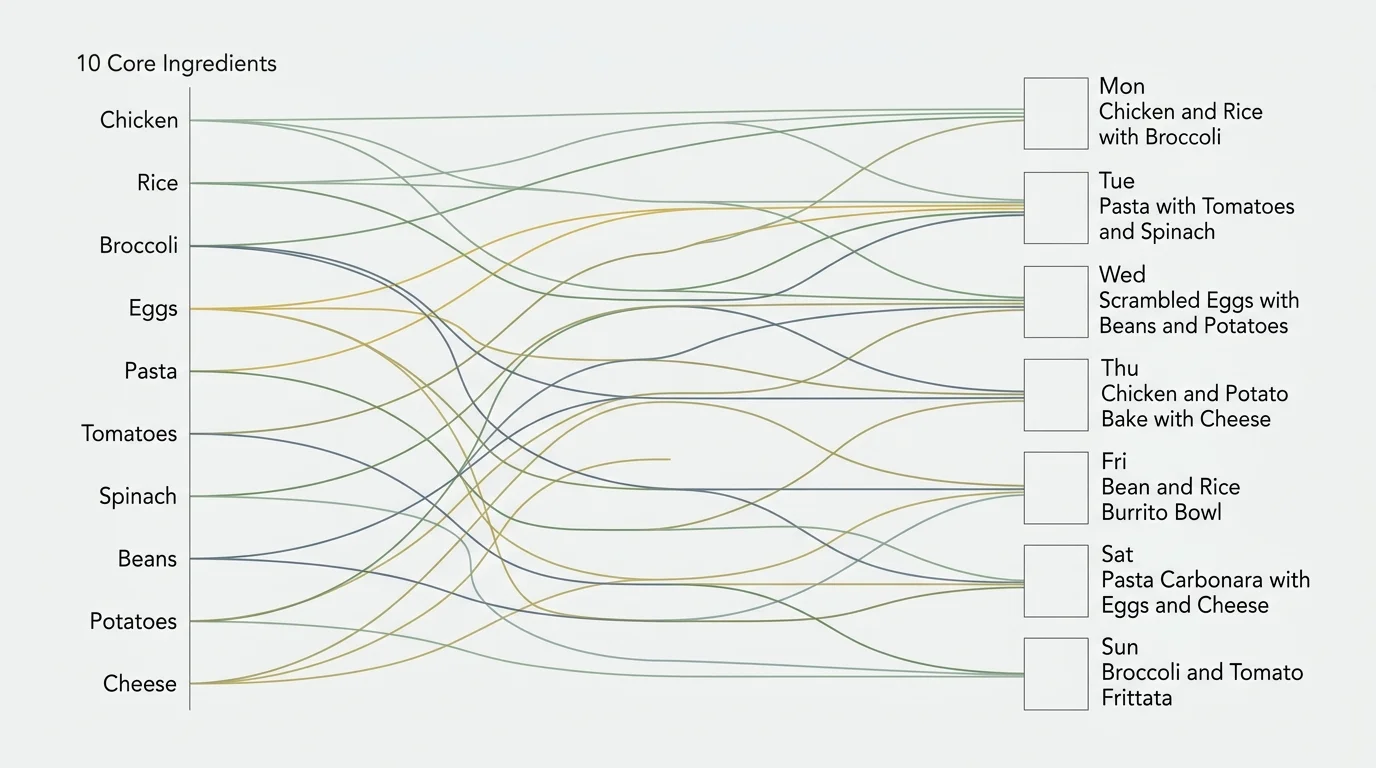
Action Lab: A Week of Meals from Ten Ingredients
Understanding the theory of a minimalist grocery list is entirely different from executing it in your own kitchen. Let us walk through a practical cash-flow exercise by mapping out a sample day of meals using exclusively your ten purchased ingredients, assuming you already have basic salt, pepper, and pantry spices at home. Your goal is to maximize the utility of every single item.
For breakfast, you start by boiling water and preparing a robust serving of your rolled oats. Instead of buying expensive flavored packets loaded with sugar, you cook the plain oats and dice half of an apple into the pot while it simmers, allowing the natural sugars to release and sweeten the dish. You have just secured a nutritious, filling breakfast for roughly thirty cents. This directly protects your daily cash flow by keeping you entirely out of the local bakery or drive-thru line on your morning commute.
When lunch arrives, you pivot to the remnants of your weekend meal prep. You take a portion of the brown rice you cooked in bulk, top it with a scoop of seasoned black beans, and add a handful of fresh spinach. To make the meal substantial, you fry a single egg in a dash of olive oil and place it on top of the bowl. When you pierce the yolk, it creates a rich, natural sauce that coats the rice and beans. This lunch costs less than a dollar to produce, successfully replacing a fifteen-dollar restaurant salad and keeping that capital firmly in your checking account.
Dinner requires utilizing your heavier proteins and starches. You take a quarter of your whole chicken—which you strategically roasted earlier in the week—and serve it alongside a baked sweet potato. You chop a yellow onion, sauté it in a small amount of olive oil until deeply caramelized, and fold in another handful of spinach just until wilted. This creates a vibrant, restaurant-quality vegetable side dish. You have successfully fed yourself three incredibly satisfying, nutritionally balanced meals using only a fraction of your ten-item inventory. When you multiply these micro-savings across an entire week, the positive impact on your monthly budget becomes mathematically undeniable.
Guardrails and Pitfalls to Avoid
While this minimalist strategy offers tremendous financial benefits, you must establish firm guardrails to prevent this system from collapsing. The single biggest threat to an extreme grocery budget is flavor fatigue. If you simply boil your rice and bake your chicken without any seasoning, you will inevitably grow miserable, break your protocol, and order expensive delivery food by Wednesday night. You must leverage your existing pantry spices—garlic powder, cumin, smoked paprika, and chili flakes—to drastically alter the flavor profile of your ten base ingredients from day to day. A failure to aggressively season your food is a direct threat to your budget.
Another massive pitfall is improper food storage, which leads directly to capital loss through spoilage. To protect your produce investment, add a dry paper towel to your fresh spinach container to absorb excess moisture and dramatically extend its shelf life. Furthermore, you must adhere to proper food storage protocols with your cooked proteins, ensuring your roasted chicken is refrigerated promptly so it remains safe to eat throughout the week. Treat your ingredients like the valuable financial assets they are, and defend your investment through meticulous storage practices.
Frequently Asked Questions About Minimalist Grocery Shopping
Many households feel apprehensive before committing to a radically reduced grocery list. These are the most common questions you must consider before implementing this budget-saving strategy.
Does this system account for basic pantry staples and spices?
This specific ten-item framework operates on the assumption that you already possess a basic working pantry. Items like salt, pepper, dried herbs, baking powder, and perhaps a bottle of vinegar or soy sauce are foundational tools that you should rarely need to replace on a weekly basis. Your weekly grocery budget should fund the bulk caloric items and fresh produce, while you only purchase new spices periodically as they run out, treating them as long-term capital investments rather than recurring weekly expenses.
Can I substitute items to accommodate my specific dietary restrictions?
You have absolute flexibility to adapt the core categories to fit your household’s biological needs. If you possess an egg allergy, you can seamlessly swap the eggs for a large block of tofu or an alternative protein source. If your family eats a gluten-free diet, the oats and brown rice are already excellent choices, but you could easily exchange the rice for quinoa. The magic of this financial strategy lies in the fixed number of versatile items, not the strict adherence to the exact ingredients listed above.
How do I handle the desire for snacks and sweet treats?
When you transition to whole, satiating foods, your biological craving for empty-calorie snacks naturally decreases. The high fiber content in the sweet potatoes, apples, and beans actively stabilizes your blood sugar. However, if you need a snack, you can easily bake apple slices dusted with cinnamon or roast a handful of cooked black beans until they become crunchy. By removing heavily processed snacks from your environment, you eliminate a massive source of passive weekly spending and improve your overall health simultaneously.
Does a ten-item list realistically work for a larger family with children?
The ten-item framework absolutely scales to accommodate larger households, though you will naturally need to purchase larger volumes of those specific items. Instead of buying one bag of rice, you might purchase a twenty-pound sack; instead of one chicken, you might roast two birds side-by-side. The goal is to limit the variety of items you bring into the house, which directly stops you from buying twenty different expensive, single-use convenience foods that only appeal to one specific child’s temporary craving.
Take the One-Week Ten-Item Challenge
Breaking out of a bloated grocery spending cycle requires immediate, intentional action. We challenge you to commit to this strict ten-item grocery list for just one single week. Do not view this as a permanent lifestyle mandate; view it as a powerful financial reset that proves exactly how much excess you can comfortably trim from your weekly spending habits. As you watch your checking account balance remain remarkably steady through the week, you will experience a profound sense of relief and accomplishment. Step into the supermarket this weekend with absolute confidence, grab your ten items, and take back total control of your hard-earned money.